Popular Courses
ECON 203
Concordia University
ECON 203
Concordia University
Macroeconomics
University Study Guides
AP Macroeconomics Exam Prep Course
AP Exam Prep
ECONOMIC 1022A/B
Western University
Macroeconomics
General Course
ECON 102
University of British Columbia
ECON*1100
University of Guelph
Macroeconomics
University Study Guides
ECON 203
University of Calgary
ECON 102
University of Alberta
ECO102H1
University of Toronto
ECO 1102
University of Ottawa
ECON 209
McGill University
ECON 1BB3
McMaster University
COMM 171
Queen's University
ECON 112
Queen's University
AP/ECON 1010 3.00
York University
ECON 295
McGill University
ECON 110
Queen's University

0:00 / 0:00
Short Run Aggregate Supply
The aggregate supply means the total supply of all the goods and services in the economy.
Why Does the Short-Run Aggregate-Supply Curve Slope Upward?
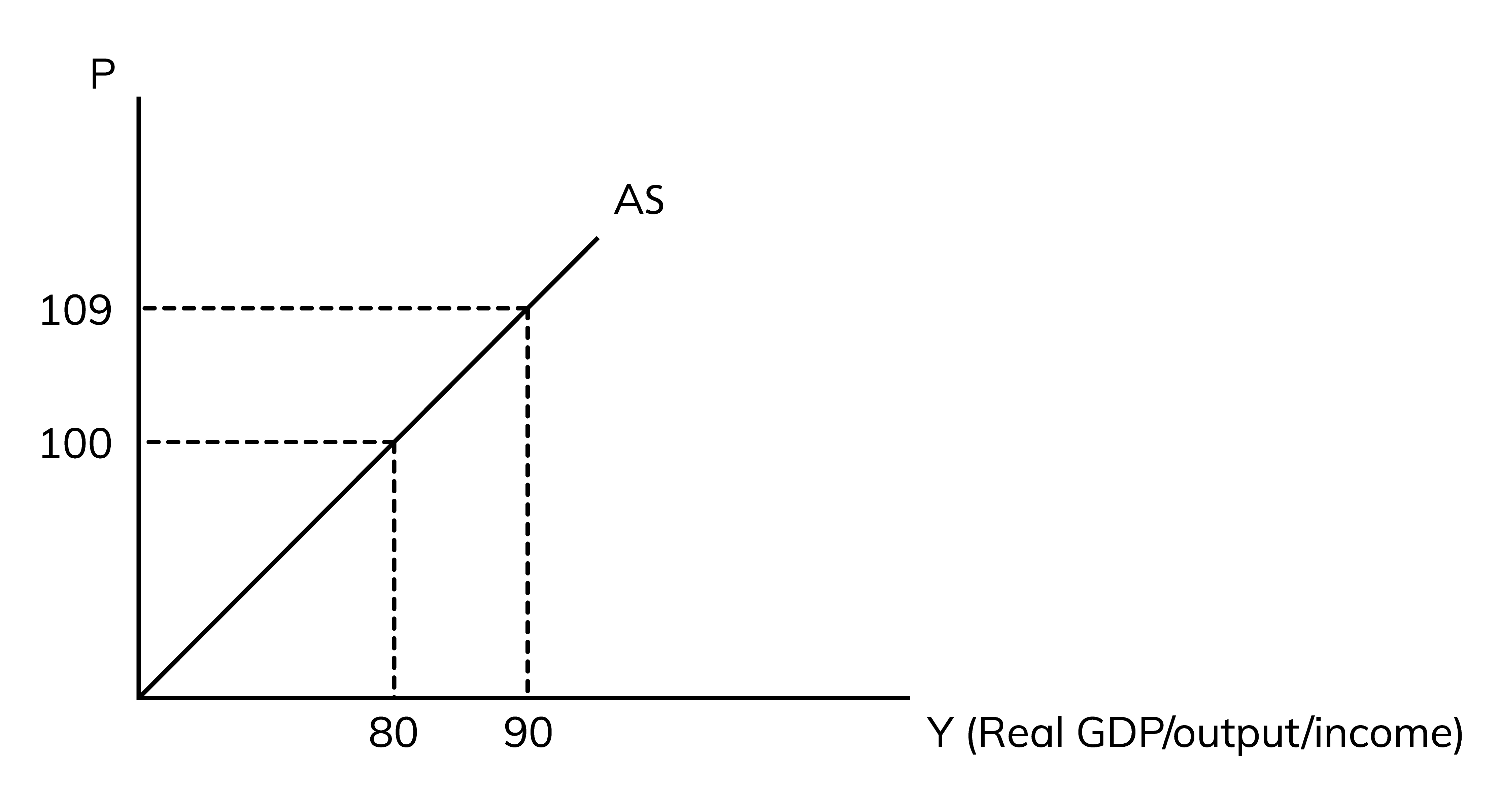
1. The Sticky-Wage Theory: An unexpectedly low price level
increases
the real wage, which causes firms to hire less
workers and produce a smaller
quantity of goods and services.
Example: If the firms promised to pay you $20 per hour for the next two years, but now price level falls, they will be making less profit so they cannot afford to hire as many workers.2. The Sticky-Price Theory: An unexpectedly low price level leaves some firms with prices that are
higher
than desired, which depresses their sales and leads them to cut back production. 3. The Misperceptions Theory: An unexpectedly low price level leads some suppliers to think their relative prices have
decreased
, which causes them to decrease
production. If you are a farmer and the price level falls, you might think that only the price of your apples went down because it takes time to realize that the price of other products has also decreased. This causes you to decrease your apple production.Shifts in AS
- Wages: A decrease in wages shifts the AS to theright.
- Price of oil and other resources: A decrease in the price of oil shifts the AS to theright.
- Changes in the Expected Price Level: A decrease in the expected price level shifts the short-run aggregate-supply curve to theright.
- Sales Tax: A decrease in sales tax shifts the AS to theright
- Productivity: An increase in productivity shifts AS to theright
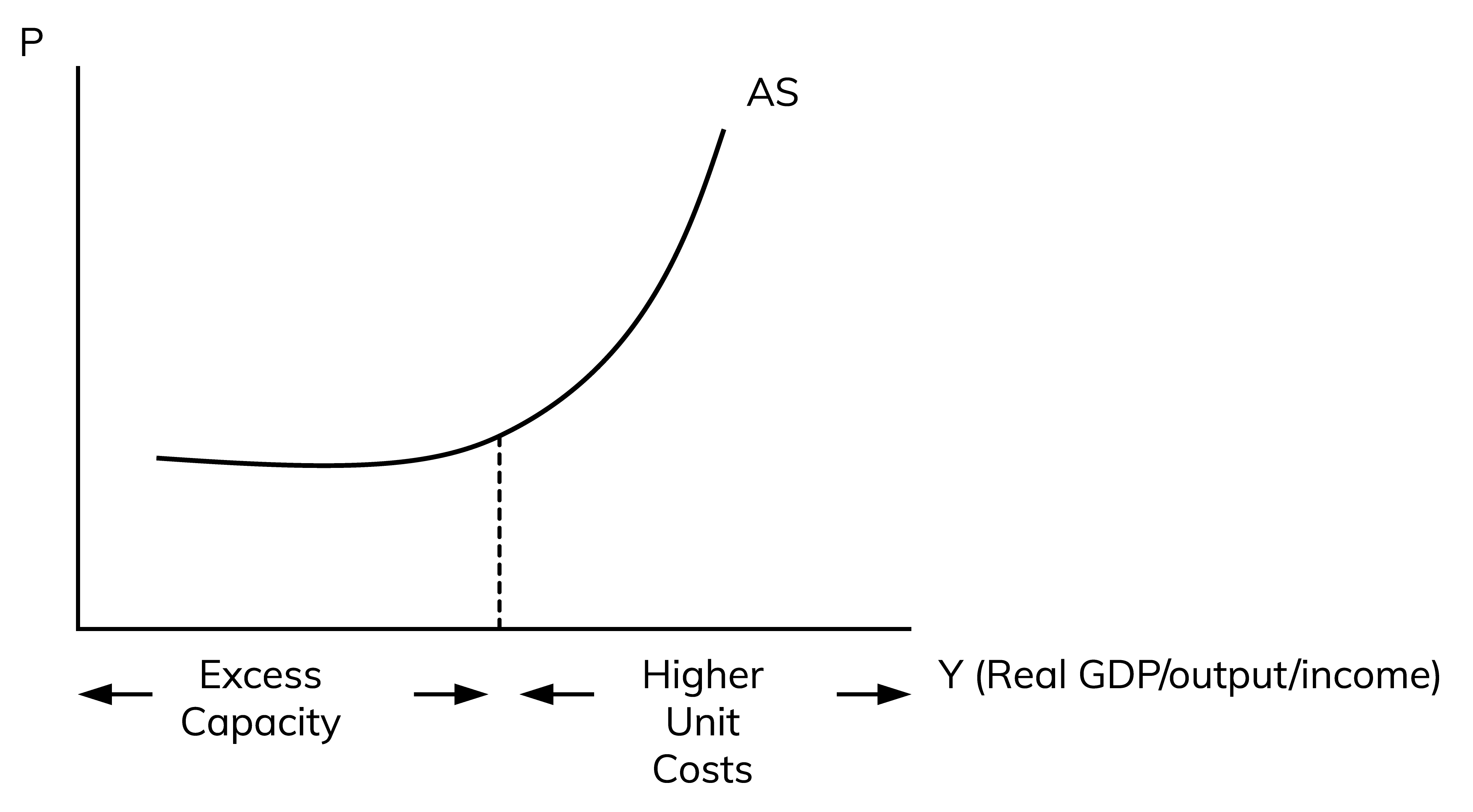
Curved AS
- Some professors make the short run aggregate supply as an upward sloping curved line.
- The horizontal part shows the part where the firms have excess capacity. This means they have extra capacity in their factories so they can increase output without having to increase their prices.
- The upward sloping part of AS shows where the firms are running out of space in their factories so the workers become less efficient and need to paid overtime which leads to higher unit costs and so they require higher prices to produce more output.
0:00 / 0:00
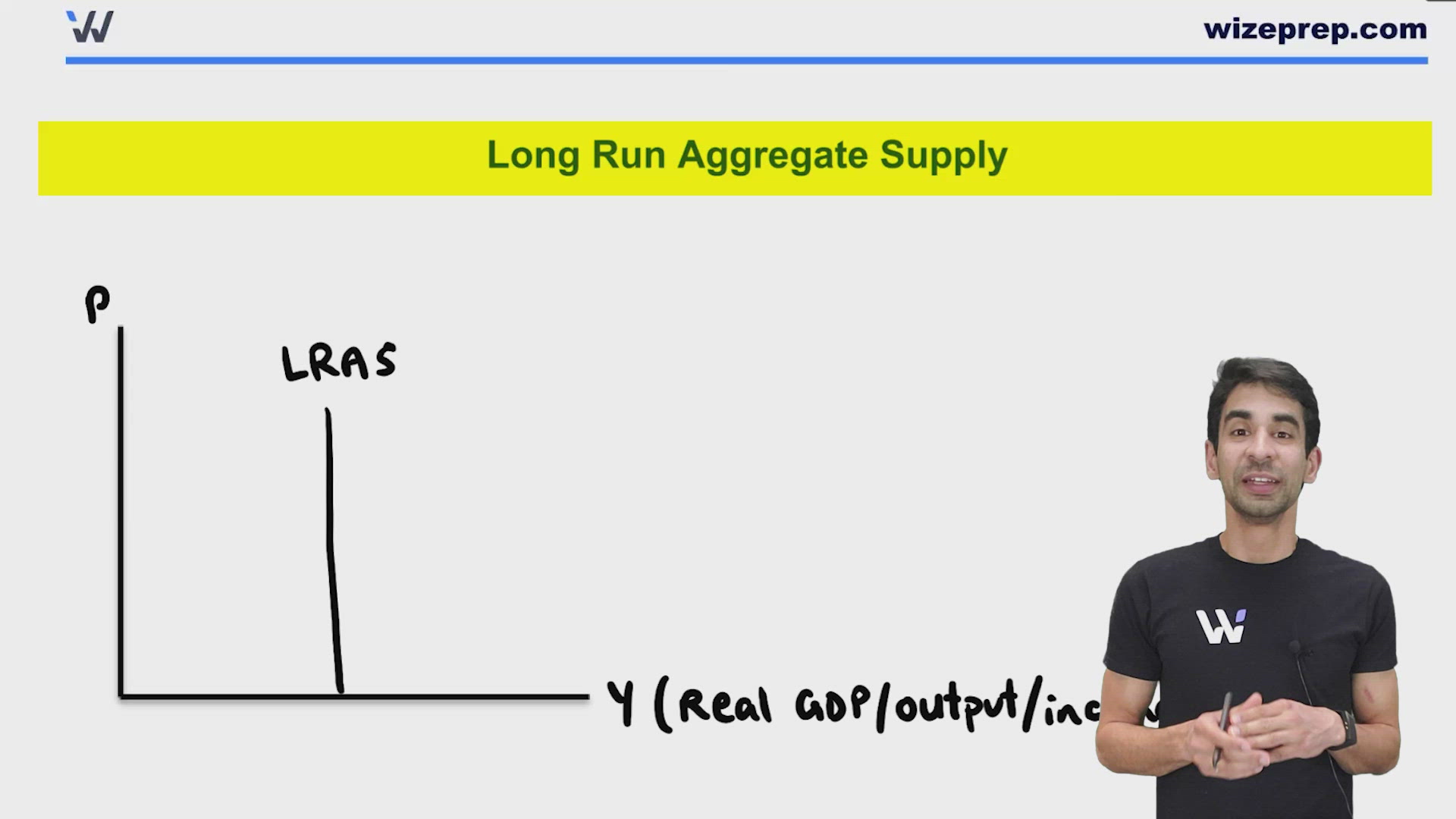
Long Run Aggregate Supply
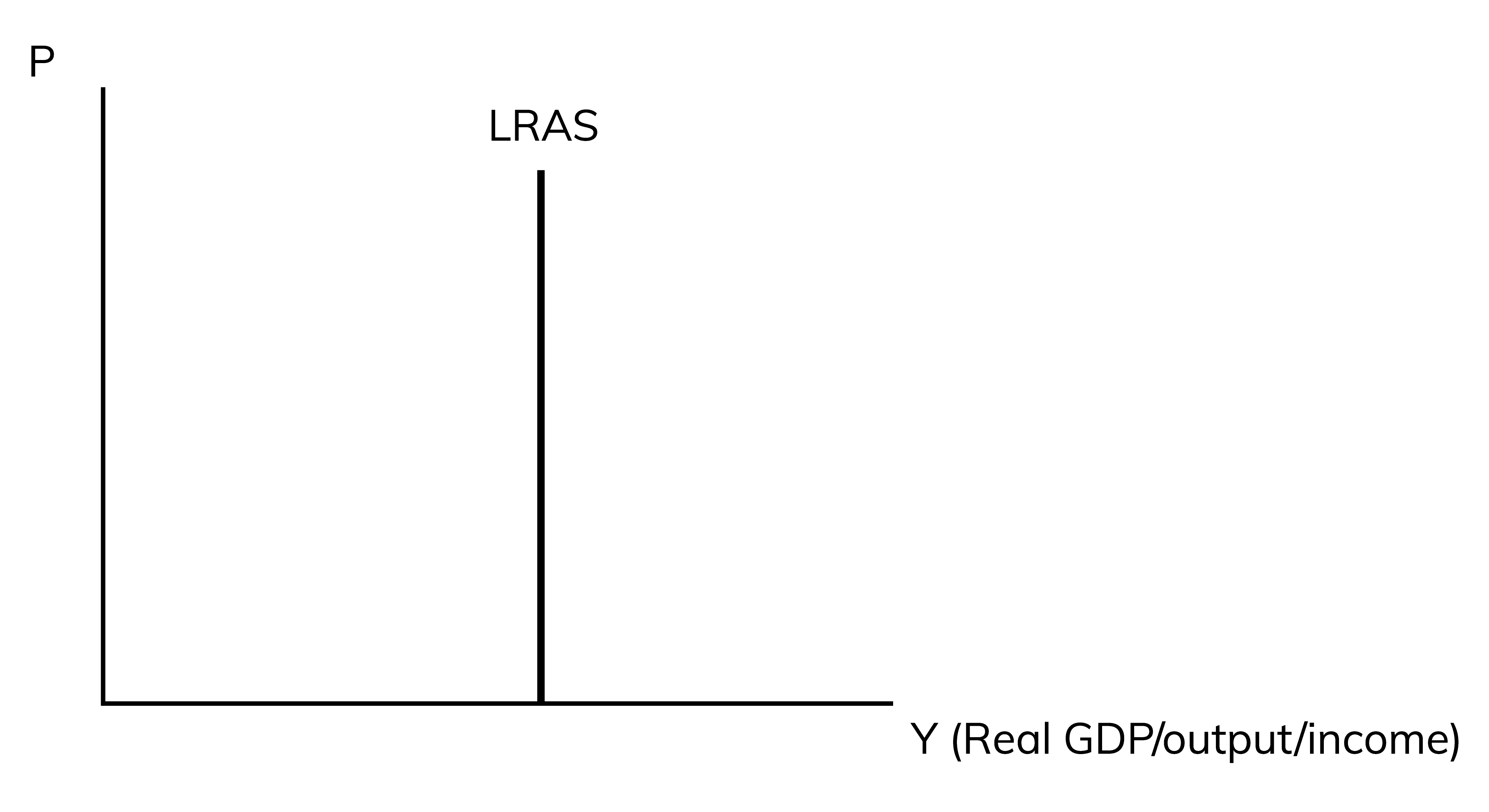
- Natural level of output - the production of goods and services that an economy achieves in the long run when unemployment is at its natural rate. It is also called the LRAS (Long Run Aggregate Supply), Y *, Potential Output, and Y-capacity.
- A change in price level will causeno shiftin the long run aggregate supply.
- If there is an increase in labor (decrease in natural unemployment rate), capital, natural resources, or improvement in technology, the Long Run Aggregate Supply will shiftright.