Wize University Microeconomics Textbook > International Trade (Exports and Imports)
Pros and Cons of Trade
Popular Courses
ECON 201
Concordia University
Microeconomics
University Study Guides
ECON 201
University of Calgary
ECON 101
University of British Columbia
Macroeconomics
University Study Guides
ECON*1050
University of Guelph
ECON 101
University of Alberta
Microeconomics
General Course
ECO101H1
University of Toronto
Microeconomics
University Study Guides
ECON 208
McGill University
ECONOMIC 1022A/B
Western University
Macroeconomics
General Course
ECON*1100
University of Guelph
Macroeconomics
University Study Guides
ECON 110A
Queen's University
ECON 203
University of Calgary
ECO 1104
University of Ottawa
EC120
Wilfrid Laurier University
ECON 102
University of Alberta
0:00 / 0:00
Pros and Cons of Trade
Pros (Benefits) of Trade:
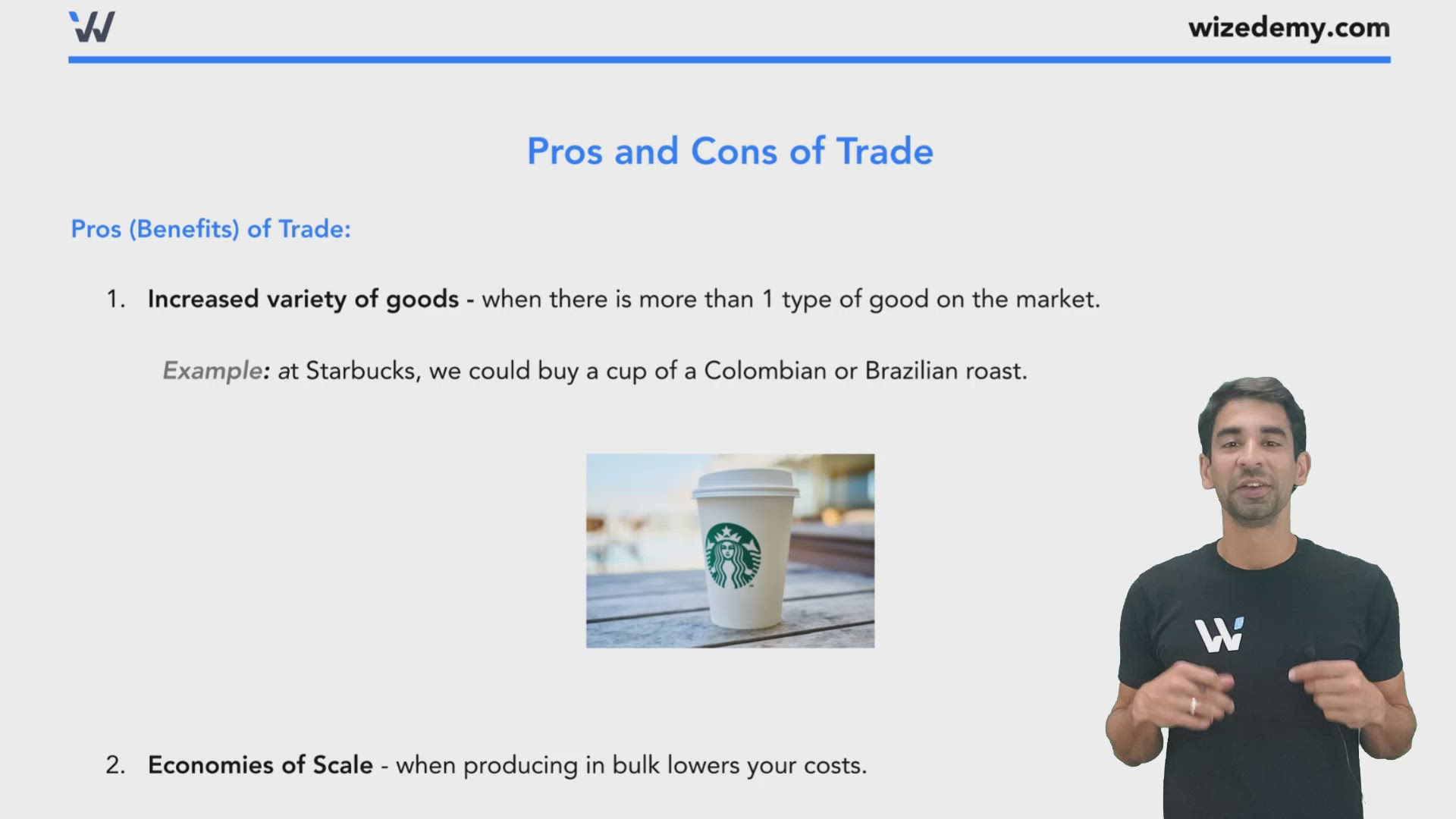
- Increased variety of goods - when there is more than 1 type of good on the market. Example: at Starbucks, we could buy a cup of a Colombian or Brazilian roast.

- Economies of Scale - when producing in bulk lowers your costs. Example: countries that are exporting to many other nations will produce on a larger scale and this will allow them to lower costs (like Walmart)
- Increased competition - good for consumers (we get better prices) Example: competition between Samsung and Apple has led to better quality products and at more reasonable prices.
- Enhanced flow of ideas - we can learn from each other Example: if Tesla has a new production method, firms in other countries can learn from this
Cons (Arguments Against) Trade:
- Jobs argument - free trade can hurt some domestic jobs. Example: if we start to import more steel from other countries because it's cheaper, it will hurt jobs in our domestic steel industry.
- National security argument - if there's a war we don't want to depend too much on another country for a specific product or resource
- Infant industry argument - new industries sometimes want protection against foreign companies to help them get started. Example: if Tesla is developing a new technology for electric cars, they might want some protection from foreign countries that might copy their technology even though Tesla is the one that spent millions doing the research and development.

- Unfair competition argument - trade is only fair if all countries play by the same rules. Some countries get subsidies from their government. Example: Developed countries can afford to give their farmers more subsidies than developing countries. This allows the developed countries to lower prices for their fruits which is unfair for the developing countries.
- Protection as a bargaining chip argument - let's say we tell a country we'll remove our tariff on their milk if they remove their tariff on our wheat.
Practice: Pros and Cons of Trade
When a country raises its tariffs on imported goods, it leads to: