Wize University Macroeconomics Textbook > Exchange Rates and the Balance of Payments
The Determination of Exchange Rates
Popular Courses
ECON 203
Concordia University
Macroeconomics
University Study Guides
ECONOMIC 1022A/B
Western University
Macroeconomics
General Course
ECON 102
University of British Columbia
ECON*1100
University of Guelph
Macroeconomics
University Study Guides
ECON 102
University of Alberta
ECO102H1
University of Toronto
ECO 1102
University of Ottawa
ECON 209
McGill University
ECON 1BB3
McMaster University
ECON 112
Queen's University
AP/ECON 1010 3.00
York University
ECON 295
McGill University
ECON 110
Queen's University
ECON 105
Simon Fraser University
ECON 1102
Dalhousie University
ECON 1002
Carleton University
ECON 1BA3
McMaster University
Fixed (Pegged) Exchange Rate Regime
- A currency that is fixed (pegged) to the currency of another country.
- Typically done by smaller countries or smaller economies to protect against exchange rate risk and hyperinflation.
- In extreme cases the smaller economy will give up its own currency all together and use a larger countries currency, like the euro or USD.
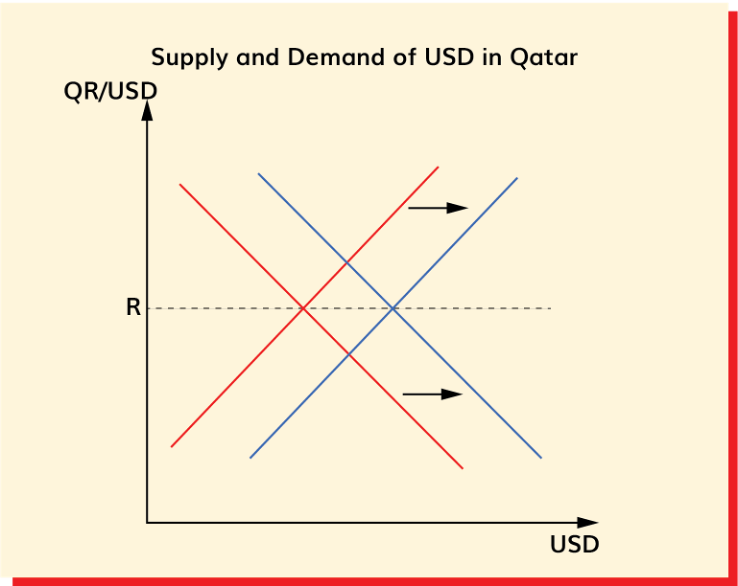
- If the demand for the foreign currency changes, the government must maintain the fixed exchange rate by adjusting the home supply of the foreign currency.
- The country must keep large amounts of the currency it is pegged to in reserve.
- Supply of foreign currency is adjusted by buying and selling the local currency.
Hard Peg
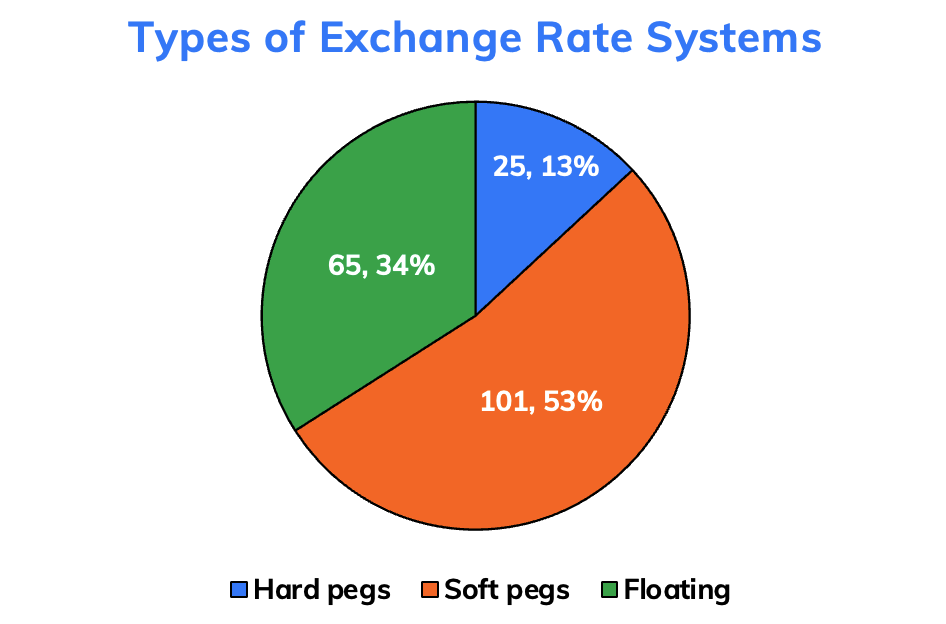
A hard peg is an exchange rate that is not allowed to vary.
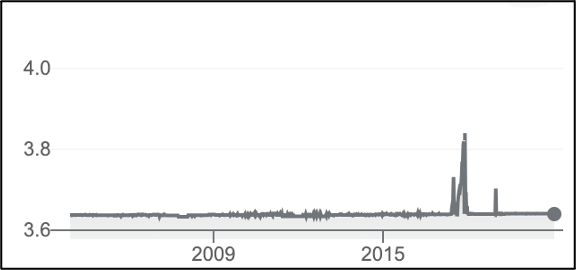
- Example: The Qatari Rial has been firmly pegged to the USD at a rate of 3.64 QR to 1 USD since 2001.
QR to USD exchange rate 2003–2020
Soft Peg
A soft peg is an exchange rate that can fluctuate from the currency it is pegged to but only within certain limits
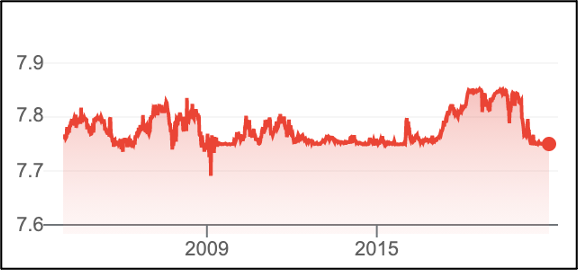
- Example: The Hong Kong dollar was pegged to the USD in 1983 at a rate of 7.8 HKD to 1 USD. The rate fluctuates between 7.75 HKD and 7.85 HKD to 1 USD.
HKD to USD exchange rate 2003–2020
Flexible Exchange Rates
- Currencies that fluctuate in value based on the supply and demand for that currency.
- The norm in most regions of the world.
- If the demand for a foreign currency increases, the foreign currency gets stronger compared to the domestic currency.
Wize Tip
When the exchange rate increases, the home currency depreciates.
When the exchange rate decreases, the home currency appreciates.
Factors that Increase and Decrease the Value of Domestic Currency
Changes in Flexible Exchange Rates
World Price of Exports
- If world price of exports increase, increases the amount of foreign currency that is needed to buy Canadian exports.
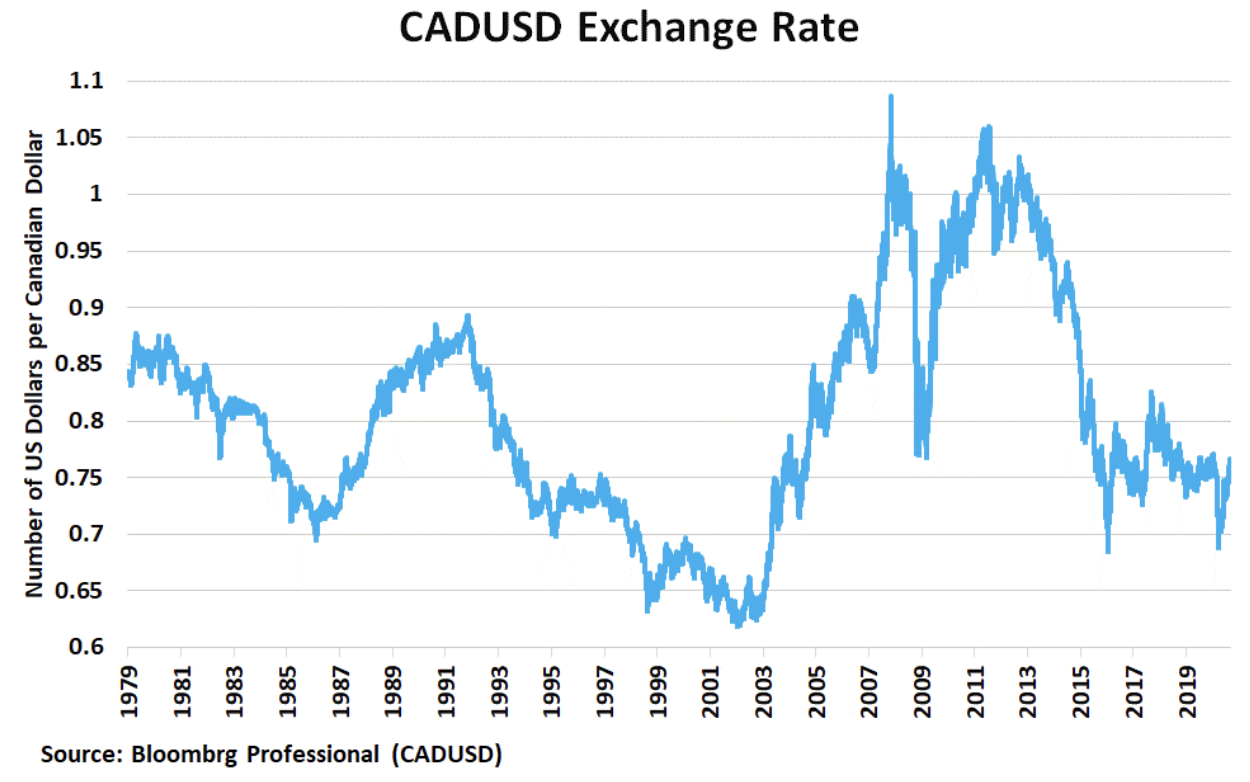
- Supply of foreign currency shifts right, exchange rate decreases, Canadian dollar appreciates.
Foreign Price of Imports
- If Canadian demand is elastic, Canadians will import less
- Demand for foreign currency shifts left, exchange rate decreases, Canadian dollar appreciates.
- If Canadian demand is inelastic, Canadians will continue to import, and pay more.
- Demand for foreign currency shifts right, exchange rate increases, Canadian dollar depreciates.
Inflation
- The currency of a country with a higher inflation rate will depreciate.
- The currency of a country with a lower inflation rate will appreciate.
Short-Term Capital Movements
- Contractionary monetary policy (rise in interest rates) attracts foreign capital.
- Demand for domestic currency increases, domestic currency appreciates.
- Expansionary monetary policy (fall in interest rates), shifts capital flows away from home country.
- Demand for domestic currency decreases, domestic currency depreciates.
- Speculation: If foreigners believe the Canadian dollar will appreciates, the demand for the Canadian dollar increases and it appreciates.
0:00 / 0:00
Practice Questions: Determination of Exchange Rates
1. Suppose the central bank of a country is making no transactions in the foreign-exchange market. In this case, it is likely that
A) the central bank has pegged the exchange rate so that the current and capital accounts sum to zero.
B) the exchange rate is being determined freely in the foreign-exchange market.
C) this country must not be engaging in international trade.
D) there must be a disequilibrium in the foreign-exchange market.
E) this country has a pegged exchange rate and persistent surpluses on its balance of payments.
2. Assume exchange rates are flexible. Net capital inflows tend to ________ of the capital-importing nation.
A) appreciate the currency
B) depreciate the currency
C) decrease the supply of foreign exchange
D) increase the demand for foreign exchange
E) decrease the official reserves
3. Under a system of flexible exchange rates, a nation which tightens its monetary policy would be likely to experience
A) a loss in international reserves.
B) a fall in the value of its currency.
C) short-term capital outflows.
D) an appreciation of its currency.
E) a surplus in its current account.
4. World commodity prices increased significantly over the years 2002-2008. Since Canada is a large exporter of commodities, it is not surprising that over this time period Canada experienced
A) a significant depreciation of its currency against the U.S. dollar.
B) a significant increase in the rate of inflation.
C) a significant appreciation of its currency against the U.S. dollar.
D) a significant decrease in the rate of inflation.
E) outflows in the capital-service account.
5. The Chinese government fixes its exchange rate above its free-market equilibrium level. Its purpose in keeping the Chinese currency depreciated is probably to
A) make it more affordable for Chinese firms to import new materials.
B) make it more affordable for Chinese households to purchase consumer goods from the United States.
C) maintain respect for the Chinese yuan.
D) help maintain a current account deficit and thus a capital inflow to China.
E) make Chinese exports more attractive to the rest of the world.
The diagram below shows the market for foreign exchange from the perspective of Canada. The demand for foreign exchange is D0 and the supply of foreign exchange varies between S2 and S1 with an average of S0.
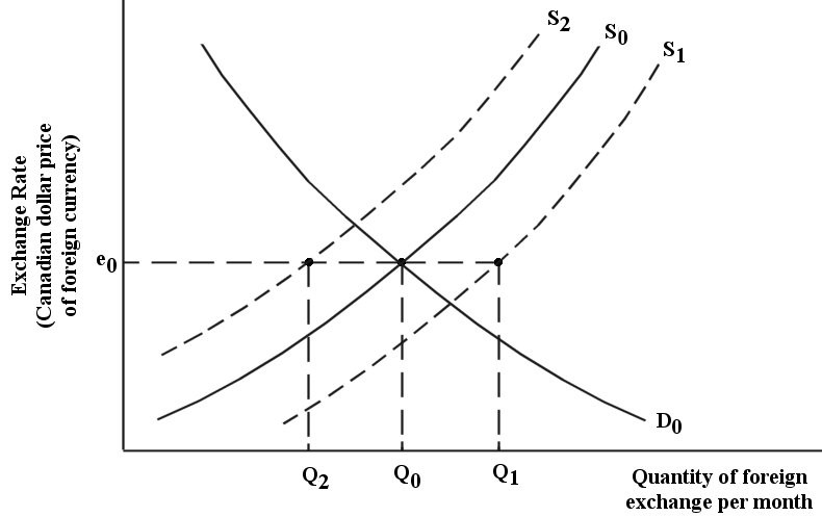
6. Suppose the Bank of Canada pegs the exchange rate at e0 and the supply curve is s2. The Bank would have to ________ foreign exchange in the amount of ________ per month.
A) sell; Q0Q1
B) sell; Q2Q0
C) purchase; Q2Q0
D) purchase; Q0Q1