Popular Courses
ECONOMIC 1021A/B
Western University
Microeconomics
University Study Guides
ECON 1B03
McMaster University
ECON*1050
University of Guelph
ECON 101
University of Alberta
Microeconomics
General Course
ECO101H1
University of Toronto
Microeconomics
University Study Guides
ECON 101
University of Waterloo
ECON 110A
Queen's University
ECN 104
Toronto Metropolitan University
AP/ECON 1000 3.00
York University
ECON 111
Queen's University
ECON 103
Simon Fraser University
ECON-1100
University of Windsor
MET EC 101
Boston University
ECON-B 251
Indiana University - Bloomington
ECN 101
Toronto Metropolitan University
ECON 102
University of Illinois at Urbana - Champaign
ECON 1010
University of Manitoba
0:00 / 0:00
Changes in Price
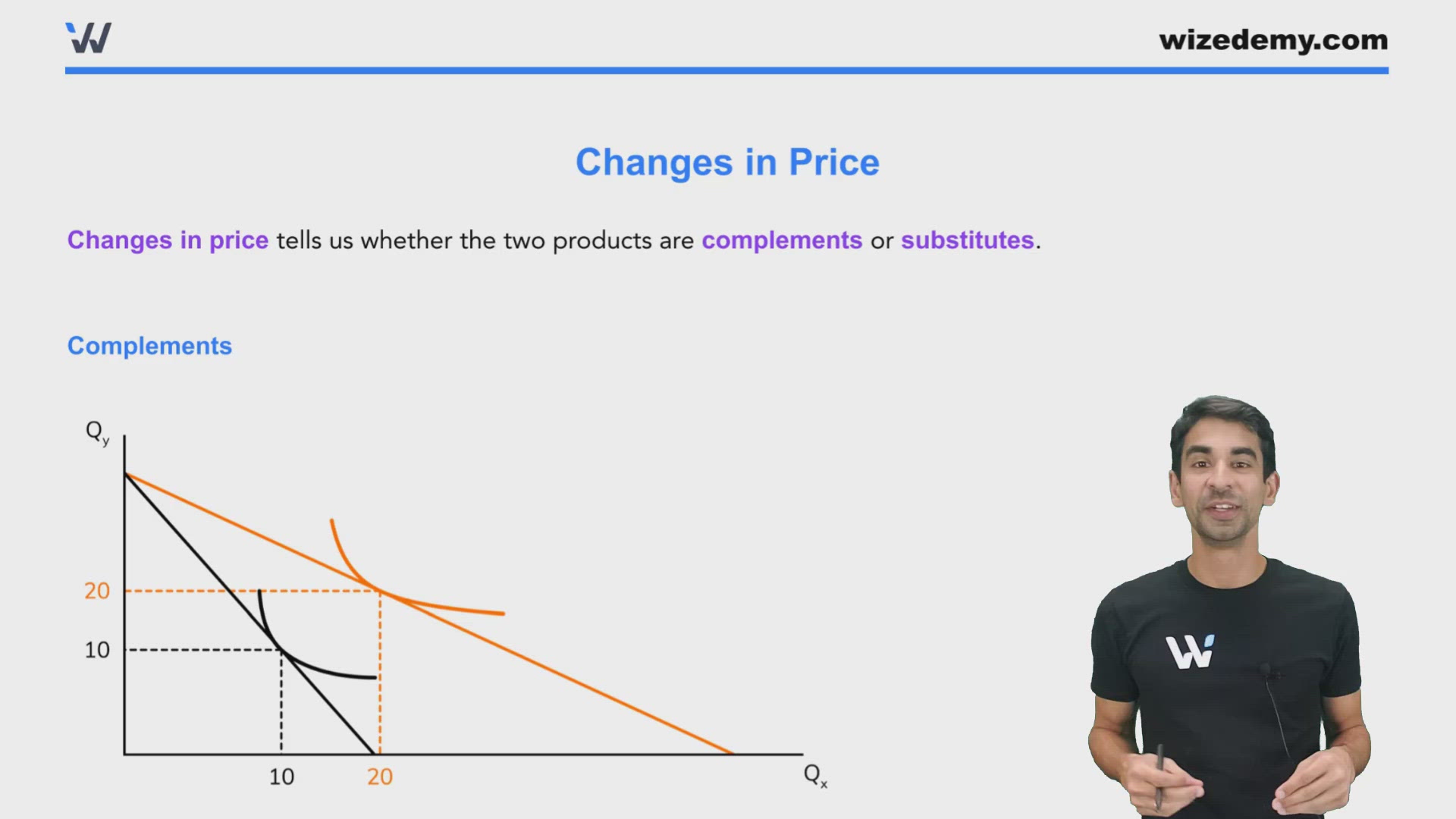
Changes in price tells us whether the two products are complements or substitutes.
Complements
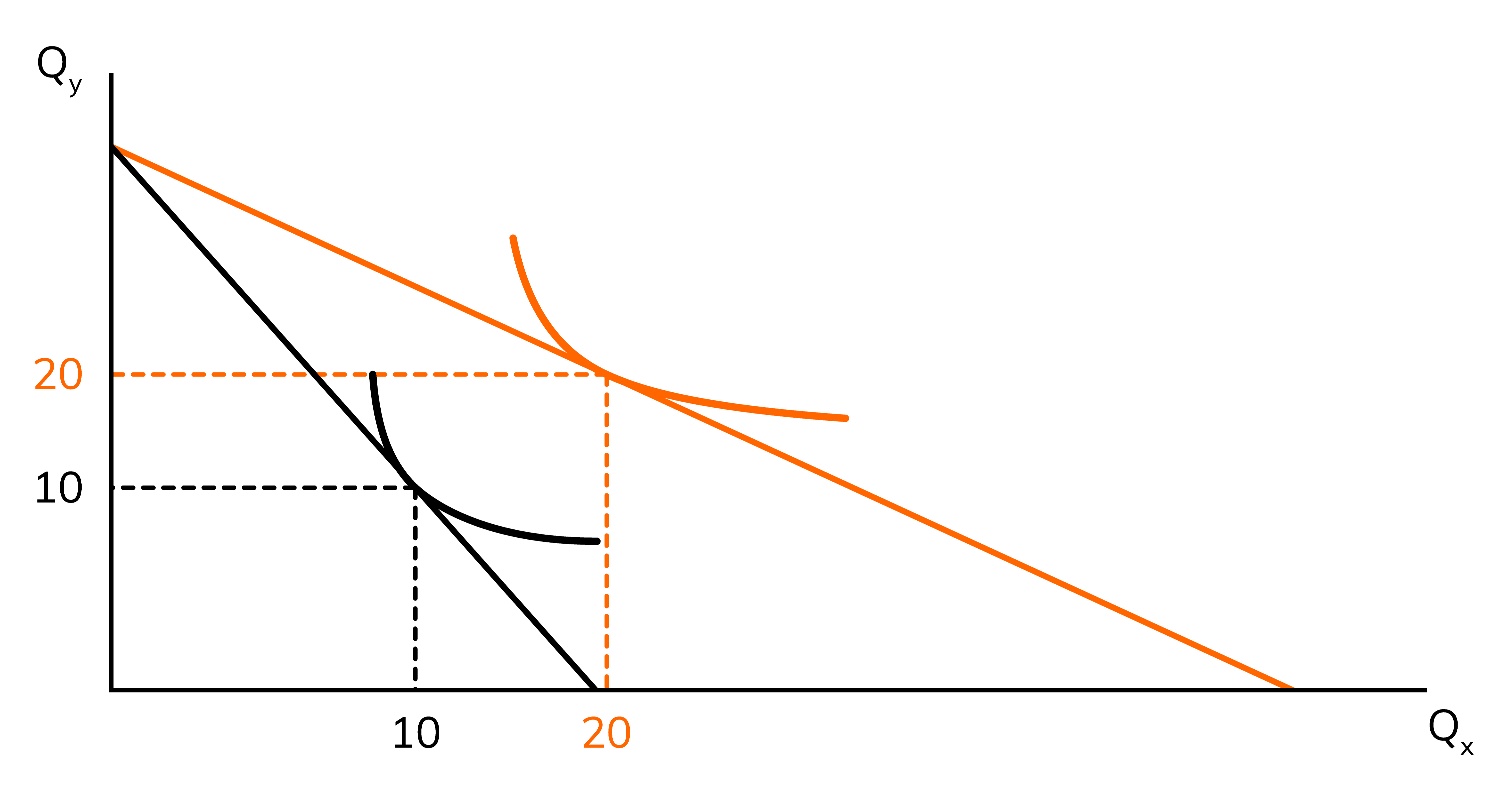
- In the diagram above, as the budget line rotates to the right it means the price of good X must havedecreased
- The consumer buysmoreunits of good X andmoreunits of good Y.
- This means the two products are complements.
Substitutes
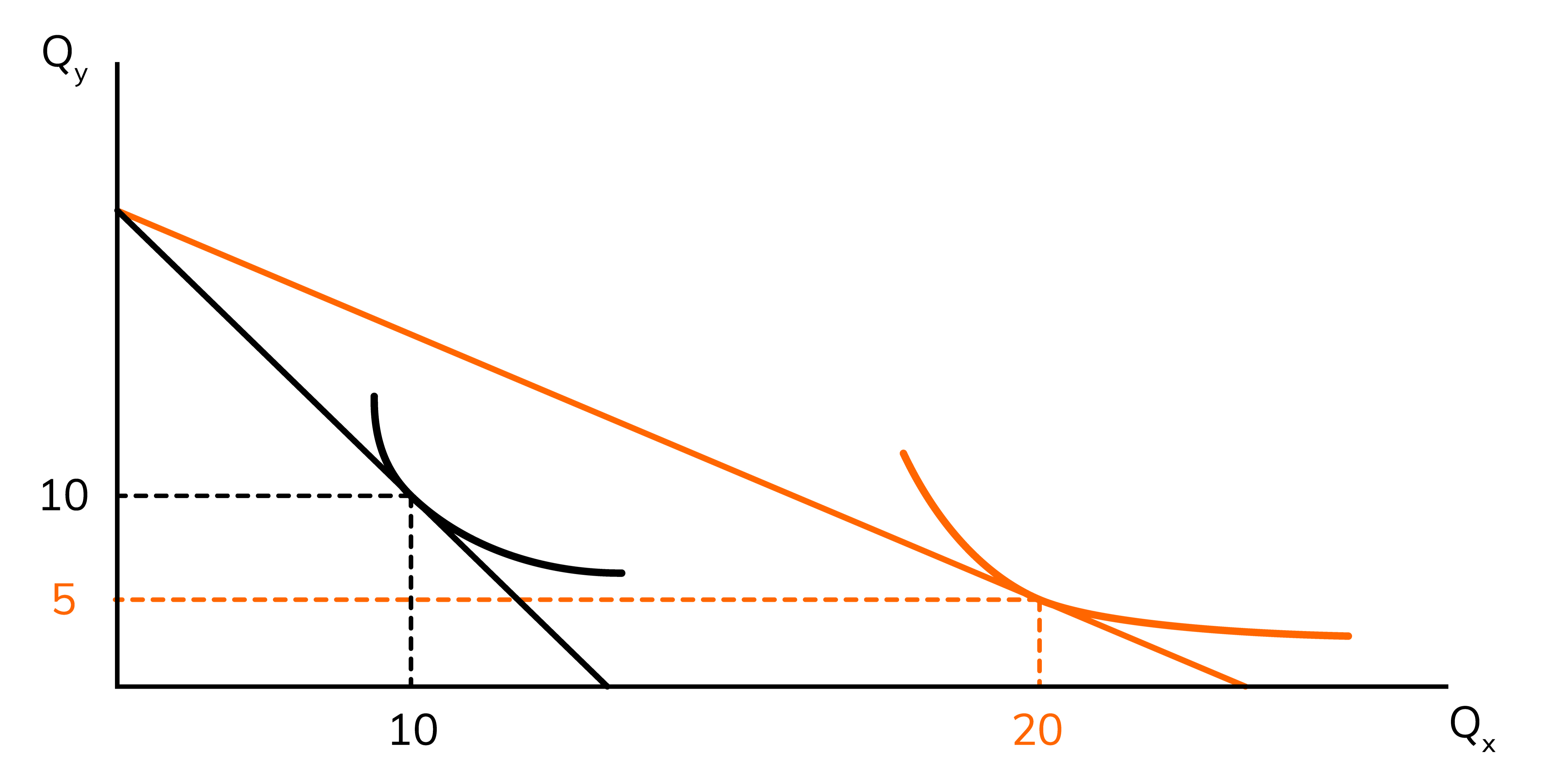
In the diagram above, as the budget line rotates to the right it means the price of good X must have decreased.
The consumer buys
more
units of good X and less
units of good Y.This means the two products are substitutes.
0:00 / 0:00
Example: Changes in Price

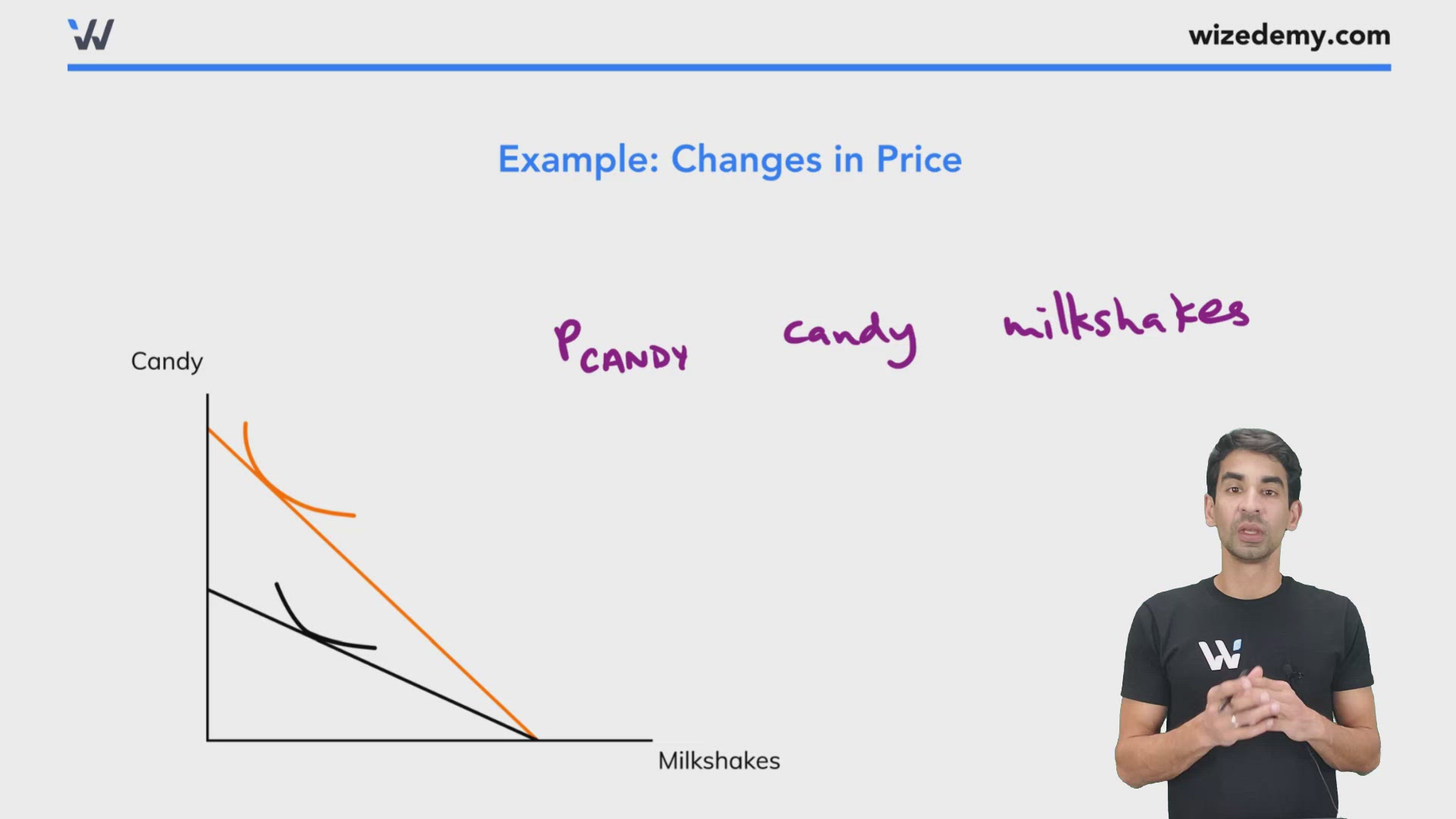
Based on the diagram above, candy and milkshakes are:
A) complements
B) substitutes
C) unrelated
D) normal goods
B
As the price of candy decreases, we buy more candy and less milkshakes which means that they are substitutes.