Wize University Microeconomics Textbook > Government Intervention and Public Policy
Problems with Government Intervention
Popular Courses
Microeconomics
University Study Guides
ECON 201
University of Calgary
ECON 101
University of Alberta
Microeconomics
General Course
Microeconomics
University Study Guides
ECON 110A
Queen's University
ECON 111
Queen's University
ECON 103
Simon Fraser University
ECON-1100
University of Windsor
MET EC 101
Boston University
ECON-B 251
Indiana University - Bloomington
ECN 101
Toronto Metropolitan University
ECON 102
University of Illinois at Urbana - Champaign
ECON 1010
University of Manitoba
ECON 1001
Carleton University
ECON 101
University of Delaware
ECON 1101
University of Minnesota
ECON 101
University of Wisconsin - Madison
ECON 1P91
Brock University
ECON 102
Pennsylvania State University
0:00 / 0:00
Problems with Government Intervention
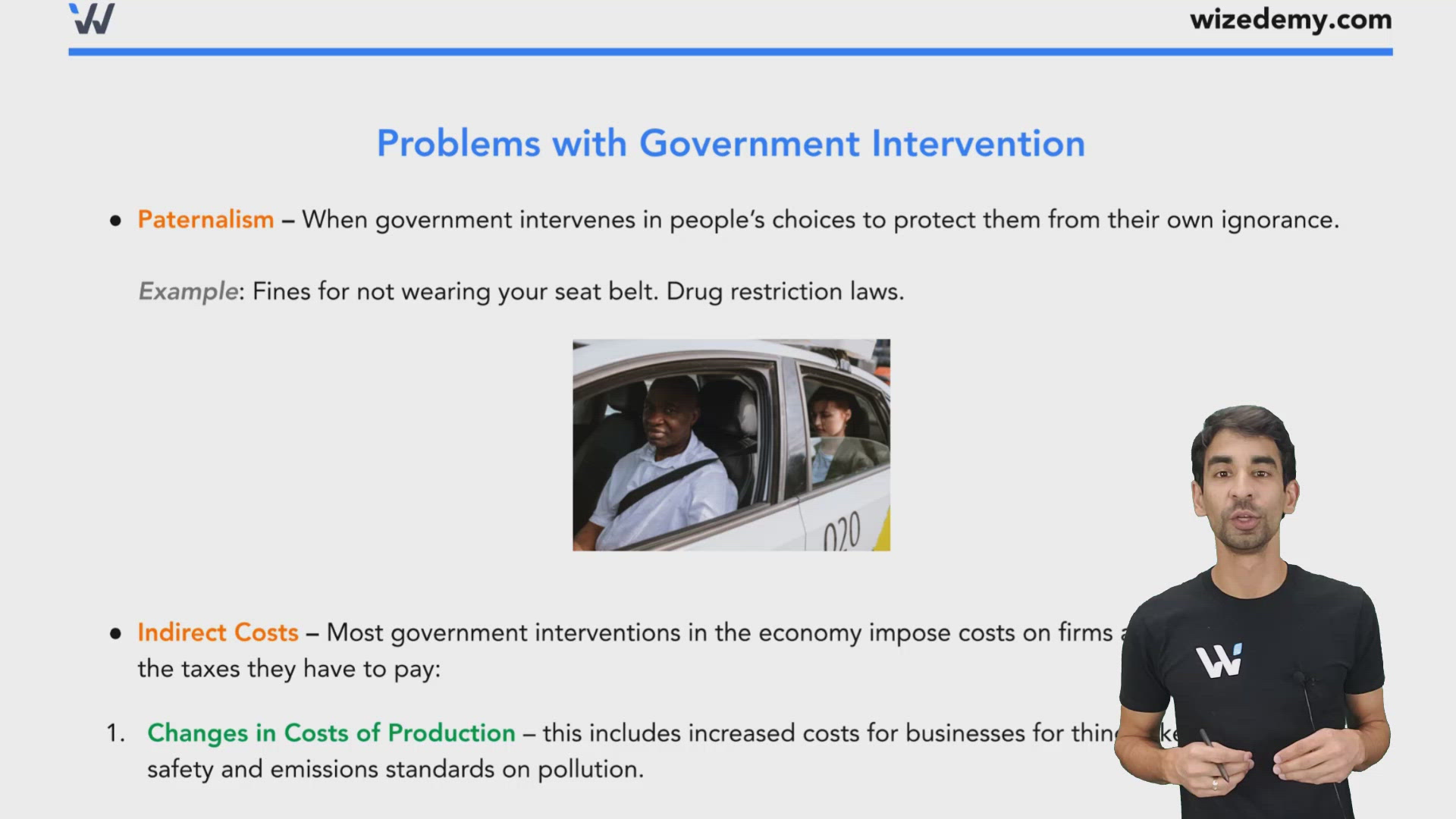
- Paternalism – When government intervenes in people’s choices to protect them from their own ignorance. Example: Fines for not wearing your seat belt. Drug restriction laws.

- Indirect Costs – Most government interventions in the economy impose costs on firms and people on top of the taxes they have to pay:
- Changes in Costs of Production – this includes increased costs for businesses for things like government safety and emissions standards on pollution.
- Costs of Compliance – this includes costs of things like red tape, legal fees and reports.
- Rent Seeking – When firms take advantage of the law and use the government to improve their own well being. Example: Sometimes farmers can intentionally keep their crops low to get more subsidies from the government.

- Decision Makers’ Objectives – Often politicians have their own special interests in mind when passing laws rather than society as a whole. Example: Some politicians might choose the policy that will get them re-elected or help lobbyists rather than what's best for the people.
- Public Choice Theory – Elected officials seek to maximize their votes. Civil servants (like police officers) seek to maximize their salary. Voters seek to maximize their own utility.
- Rational Ignorance – When voters have no incentive to become informed about some government policy because the costs of becoming informed exceed the benefits of becoming informed.
Practice: Problems with Government Intervention
The theory elected officials seek to maximize their votes, civil servants seek to maximize their salary and voters seek to maximize their own utility is called: