Wize University Statics Textbook (Master) > Equilibrium of a Particle
Conditions for Equilibrium
Popular Courses
ENGG 130
University of Alberta
CIV100H1
University of Toronto
PCS 211
Toronto Metropolitan University
ENGG 202
University of Calgary
ENGSCI 1022A/B/Y
Western University
GNG 1105
University of Ottawa
PHYS 110
University of Victoria
ENGR 242
Concordia University
ENGR 141
University of Victoria
CE 221
Michigan State University
GENG-1110
University of Windsor
ESM 2104
Virginia Tech
APS160H1
University of Toronto
0:00 / 0:00
Definitions
- Particle: An object with negligible size (not necessarily negligible mass) – so all forces act at a single point
- Body: An object with non-negligible size – meaning we have to consider the effect of moments
- Equilibrium: When an object has no tendency to translate or rotate
- Loading on a body: All forces and couple moments acting on a body including distributed loads, but excluding reaction forces.
In the first section of the course, we will be mainly focusing on particle equilibrium, or the equilibrium of a single point in space. The general equation for equilibrium is:
This is a vector equation
If a particle is not in equilibrium, then the resultant force can be represented as a summation of all forces acting on the particle.
Before dealing with forces, we will first consider the Free Body Diagram (FBD).
0:00 / 0:00
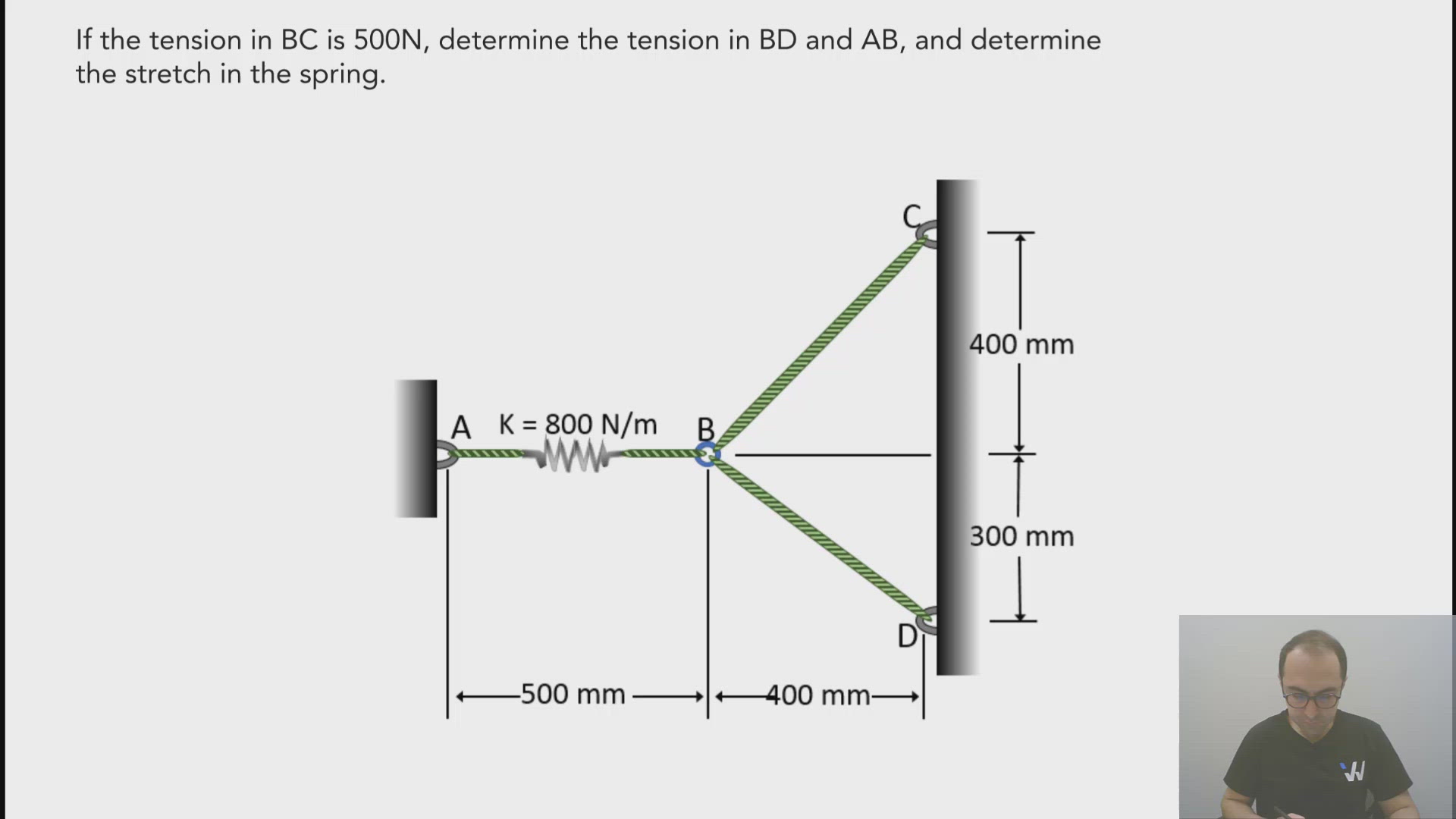
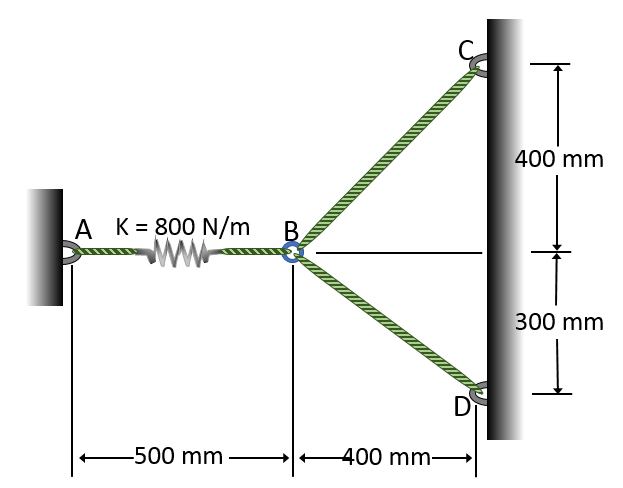
If the tension in BC is 500N, determine the tension in BD and AB, and determine
the stretch in the spring.
Solution:
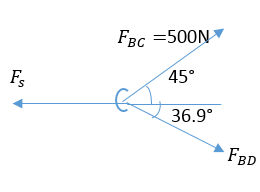
0:00 / 0:00
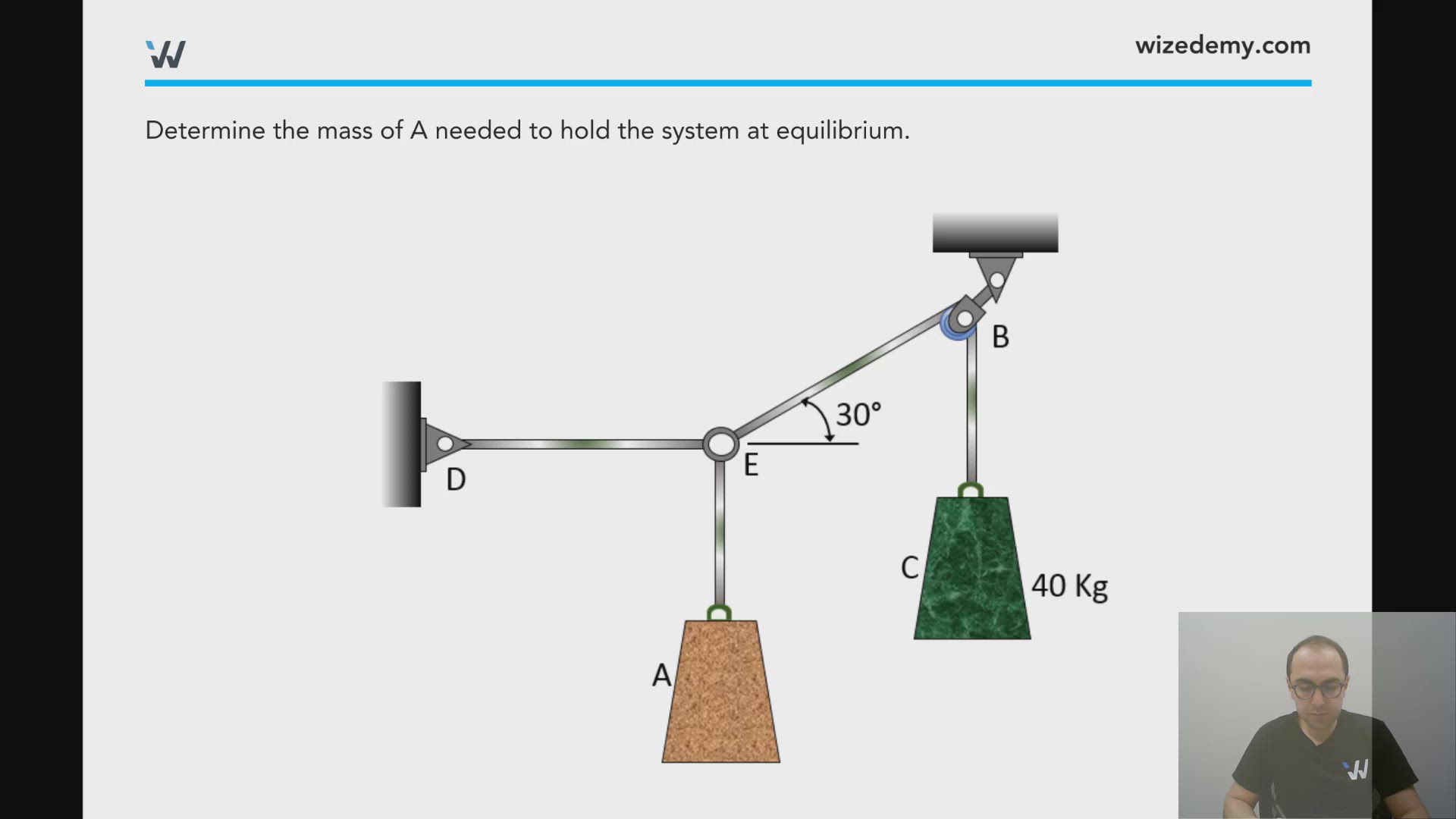
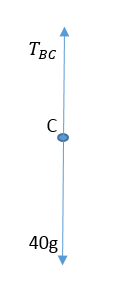
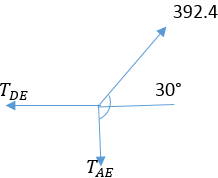
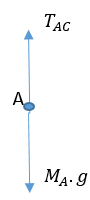
Determine the mass of A needed to hold the system at equilibrium.
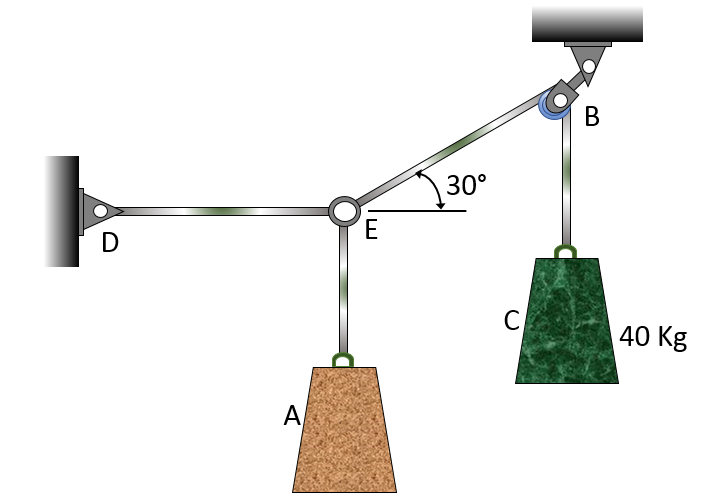
Solution:

Mark Yourself Question
- Grab a piece of paper and try this problem yourself.
- When you're done, check the "I have answered this question" box below.
- View the solution and report whether you got it right or wrong.
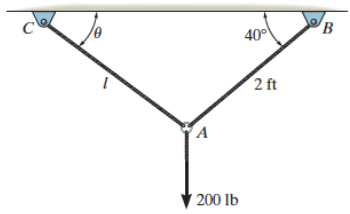
If l = 3ft, determine the tension each cable.