Wize University Statics Textbook (Master) > Force System Resultants (Moment, Couple, Dist. Load)
Moment (of a) Couple / Force Couple Moment
Couple Moments - The Basics
Couple Moments
Couple Moments (with Example)
Example 1: Couple Moments (2D)
Example 2: Couple Moments (2D)
Practice: Couple Moments (2D)
Couple Moments Practice - 2D (New)
Quiz: Couple Moments - Quiz Practice Questions (2D)
Example 3: Couple Moments (3D)
Practice: Couple Moments (3D)
Couple Moments Practice - 3D (New)
Quiz: Couple Moments - 3D Quiz
Popular Courses
ENGG 130
University of Alberta
CIV100H1
University of Toronto
PCS 211
Toronto Metropolitan University
ENGG 202
University of Calgary
ENGSCI 1022A/B/Y
Western University
ENGR 242
Concordia University
ENGR 141
University of Victoria
CE 221
Michigan State University
GENG-1110
University of Windsor
ESM 2104
Virginia Tech
APS160H1
University of Toronto
0:00 / 0:00
Couple moments are a special type of moments. Whereas moments thus far have been caused by forces, leading to both translation and rotation; couple moments only cause rotation. A couple is defined as 2 parallel forces that have the SAME magnitude and OPPOSITE directions, separated by a perpendicular distance. Called either couple moment or moment couple.
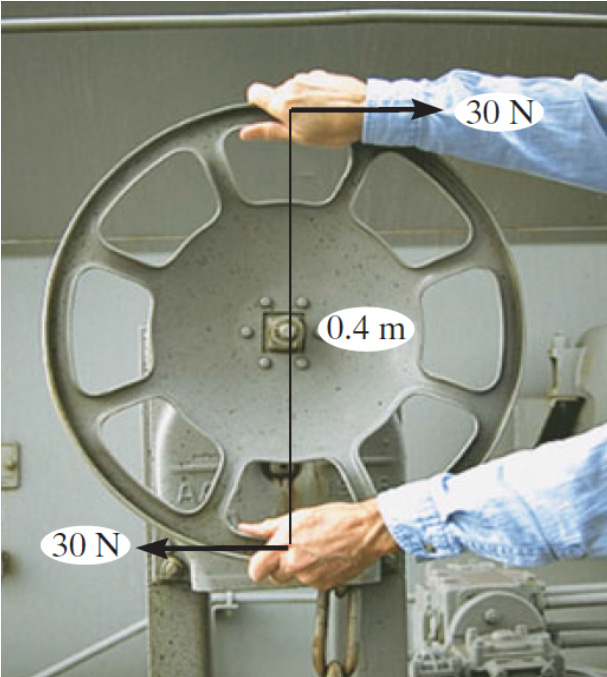
There are several conditions for forces to qualify as a couple moment:
- Two forces (the word couple implies TWO)
- Equal magnitude
- Opposite direction
- Parallel lines of action
When two forces qualify as a couple moment, the computed moment vector is a free vector. This basically means that the moment vector caused by a couple moment is the same at every point.
To compute a couple moment:
- If you can find the perpendicular distance between the two forces, simply multiply the distance by one of the forces
- If perpendicular distance is difficult to compute, then.....
- Compute a distance vector from one force line of action to the other force’s line of action
- Take the cross product between the distance and one of the force vectors
0:00 / 0:00
Couple moments are a special type of moments. Whereas moments thus far have been caused by forces, leading to both translation and rotation; couple moments only cause rotation.
There are several conditions for forces to qualify as a couple moment:
- Two forces
- Equal magnitude
- Opposite direction
- Parallel lines of action
When two forces qualify as a couple moment, the computed moment vector is a free vector. This basically means that the moment vector caused by a couple moment is the same at every point.
To compute a couple moment:
- If you can find the perpendicular distance between the two forces, simply multiply the distance by one of the forces
- If perpendicular distance is difficult to compute.
- Compute a distance vector from one force line of action to the other force’s line of action
- Take the cross product between the distance and one of the force vectors
0:00 / 0:00
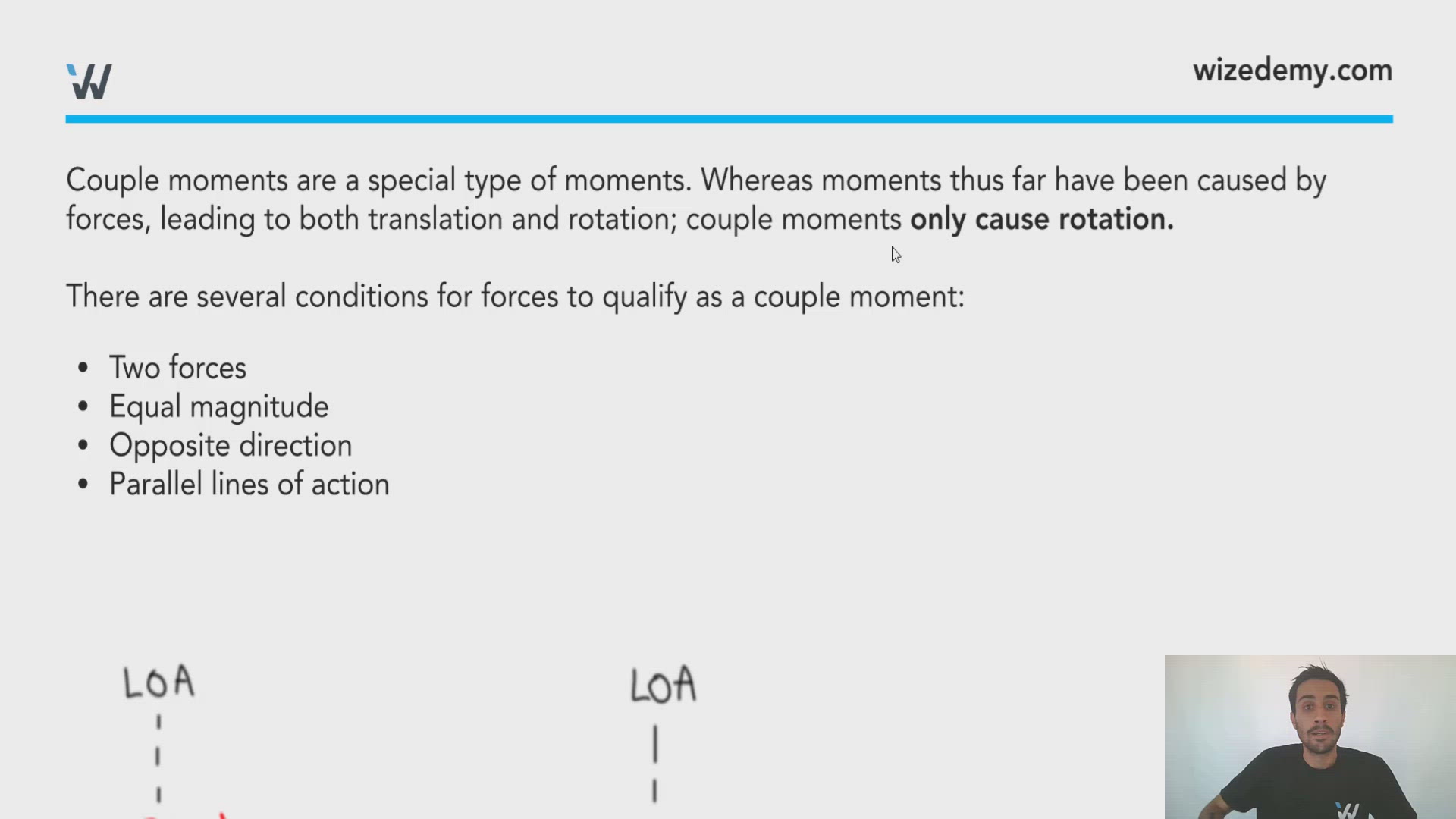
Couple moments are a special type of moments. Whereas moments thus far have been caused by forces, leading to both translation and rotation; couple moments only cause rotation.
There are several conditions for forces to qualify as a couple moment:
- Two forces
- Equal magnitude
- Opposite direction
- Parallel lines of action
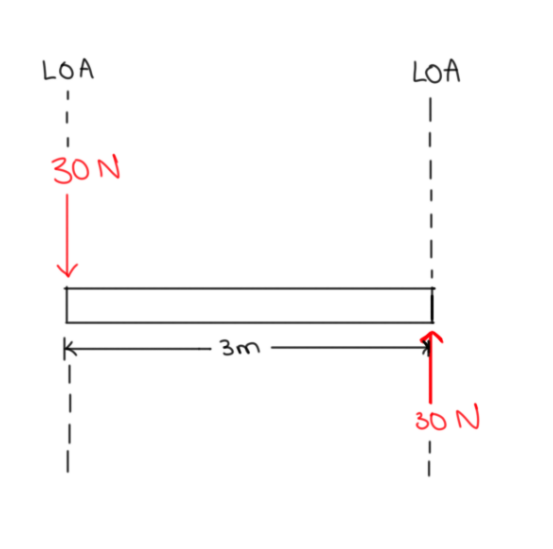
When two forces qualify as a couple moment, the computed moment vector is a free vector. This basically means that the moment vector caused by a couple moment is the same at every point.
To compute a couple moment:
- If you can find the perpendicular distance between the two forces, simply multiply the distance by one of the forces
- If the perpendicular distance is difficult to compute which is typically the case for 3D problems. We can,
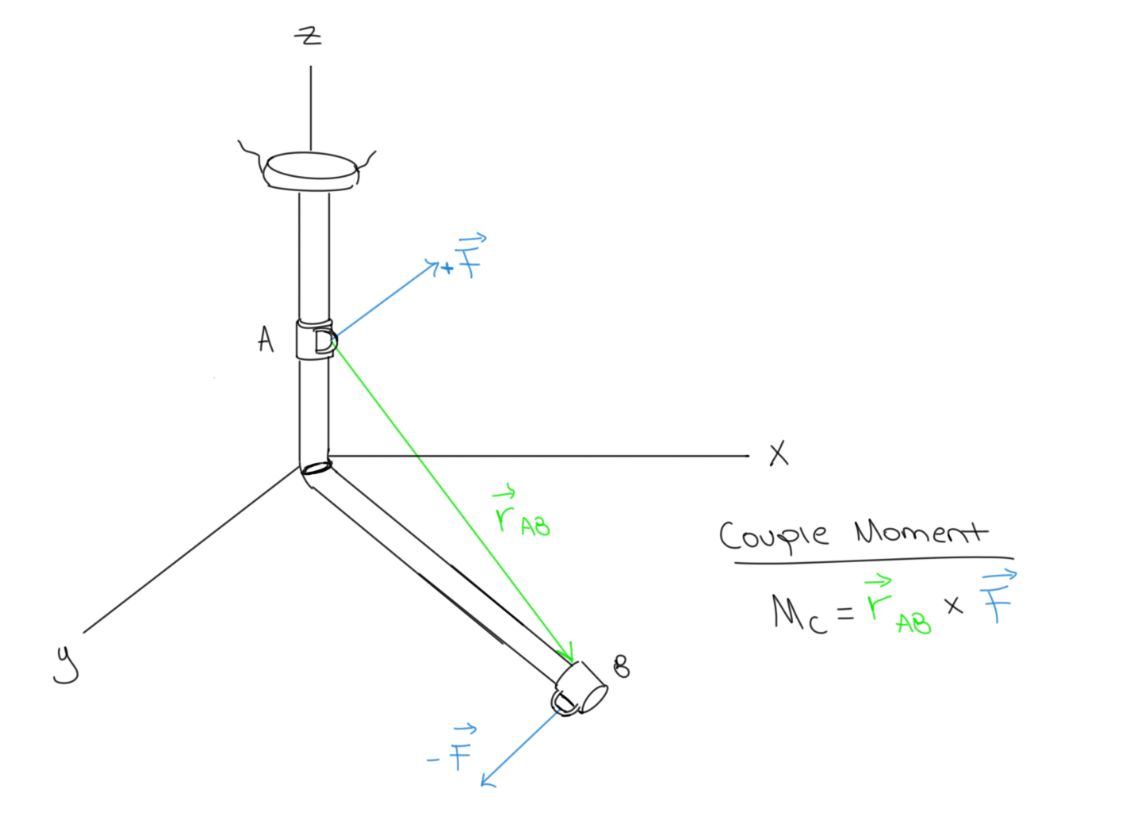
- Compute a distance-vector from one force line of action to the other force’s line of action
- Take the cross product between the distance and one of the force vectors
0:00 / 0:00
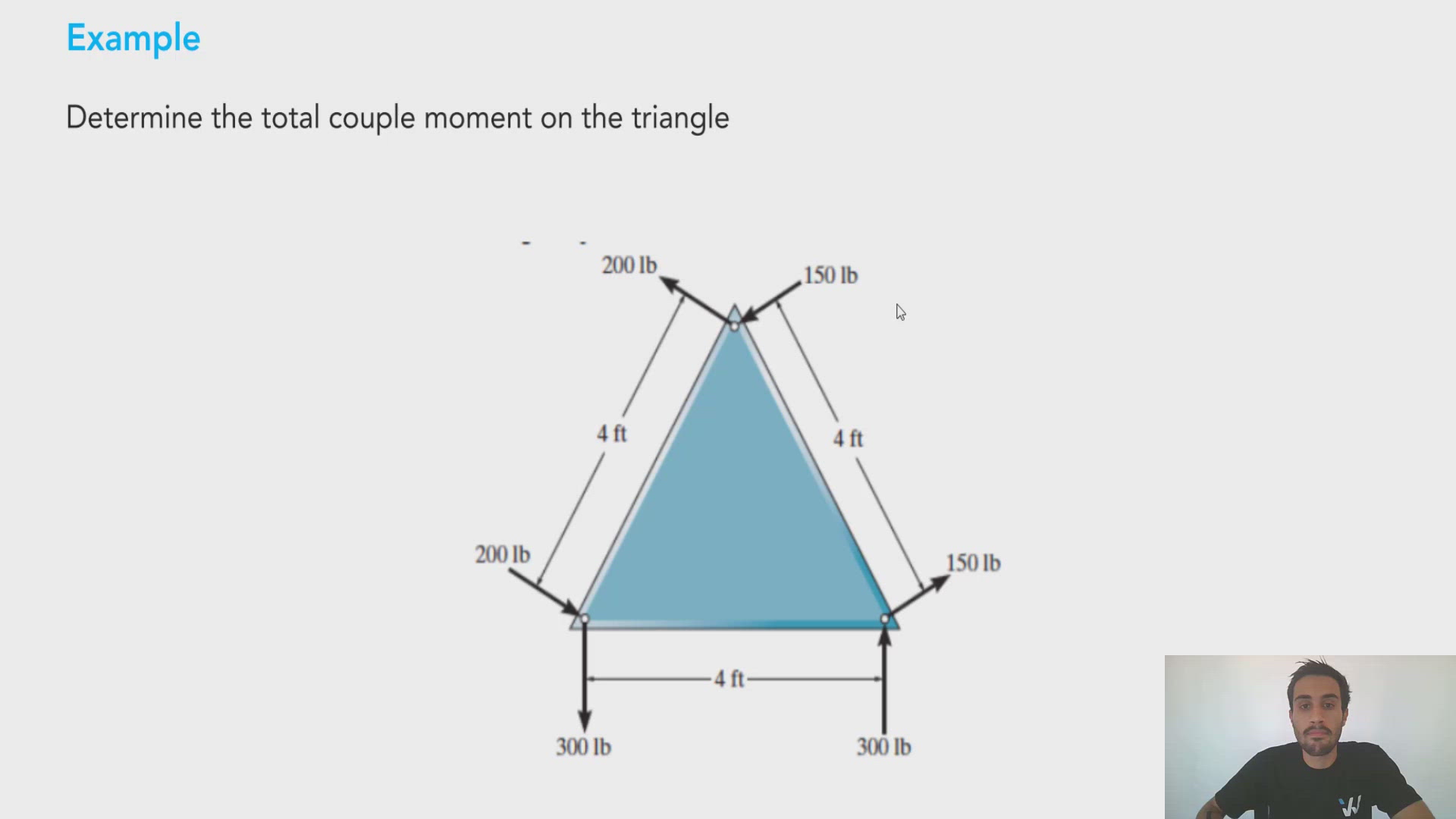
Example
Determine the total couple moment on the triangle
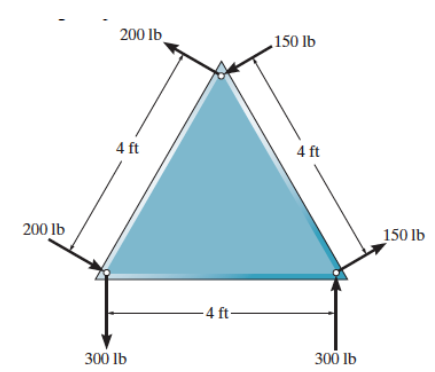
0:00 / 0:00
Example
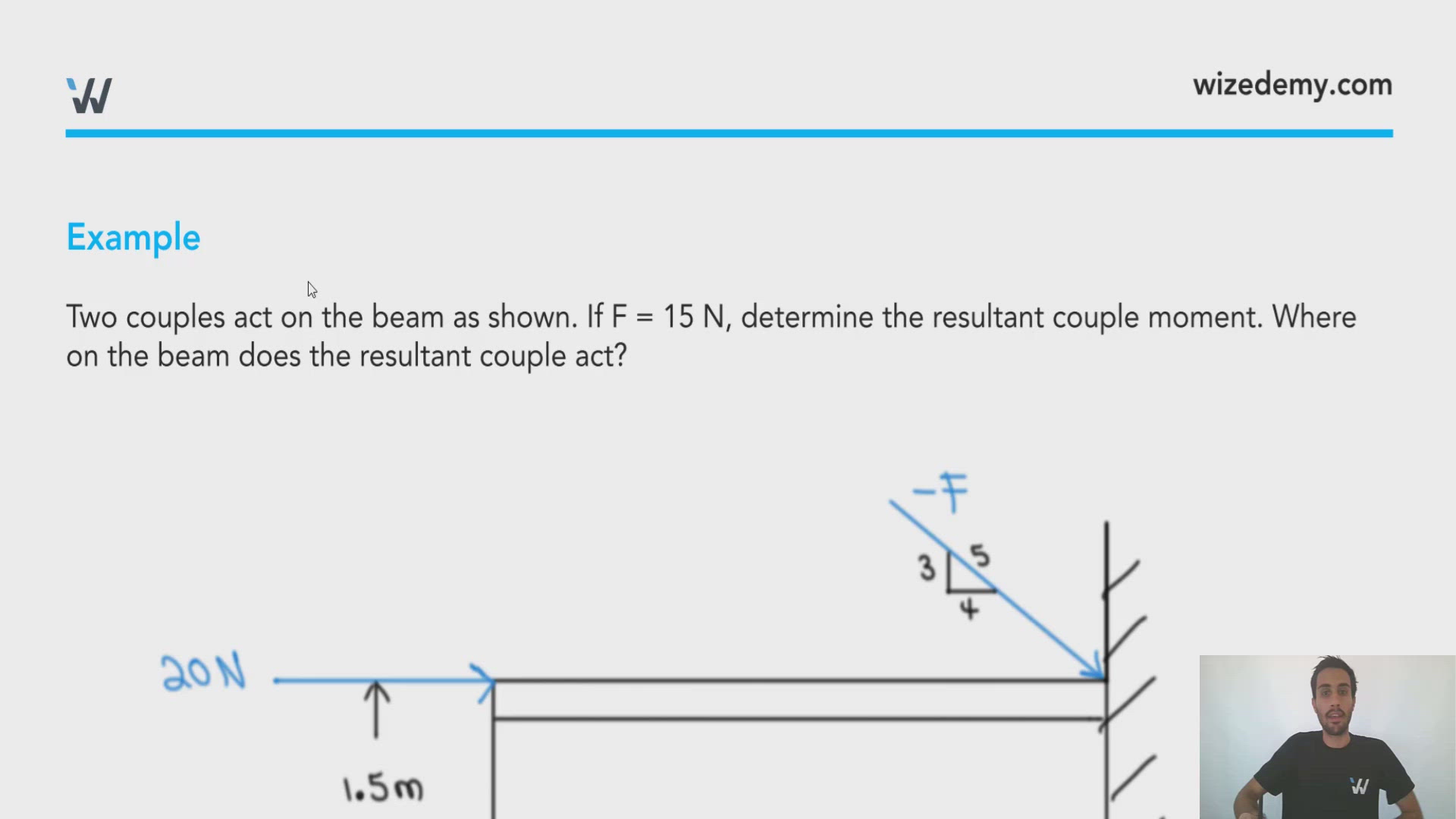
Two couples act on the beam as shown. If F = 15 N, determine the resultant couple moment. Where on the beam does the resultant couple act?
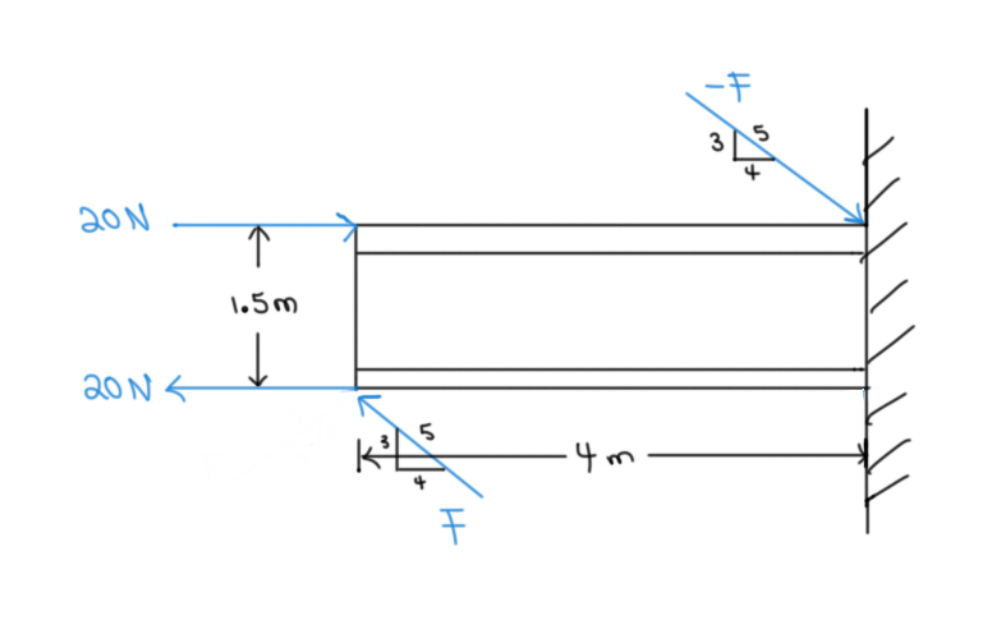
Solution:
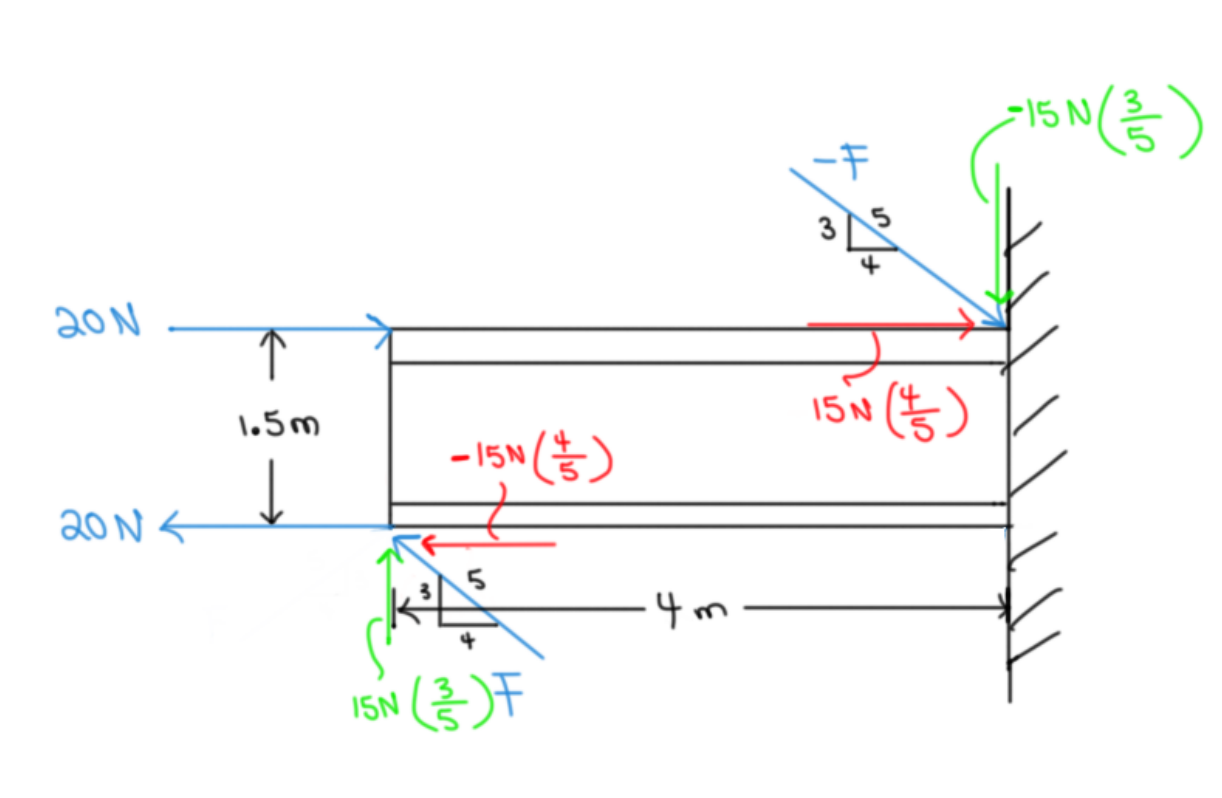
The resultant moment can act anywhere on the beam.
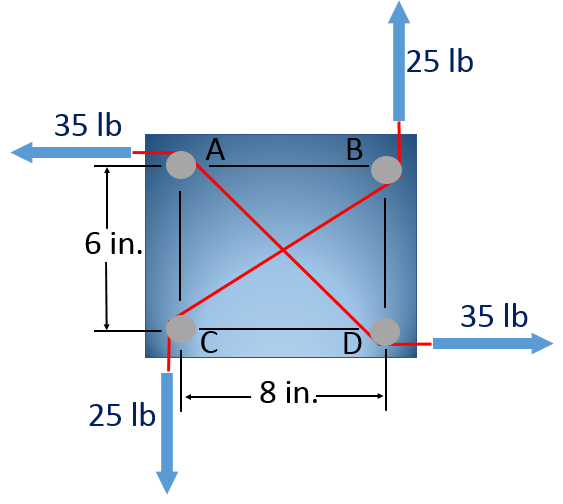
Compute the resultant couple moment of the following:
1) Compute the resultant couple moment:

Mark Yourself Question
- Grab a piece of paper and try this problem yourself.
- When you're done, check the "I have answered this question" box below.
- View the solution and report whether you got it right or wrong.
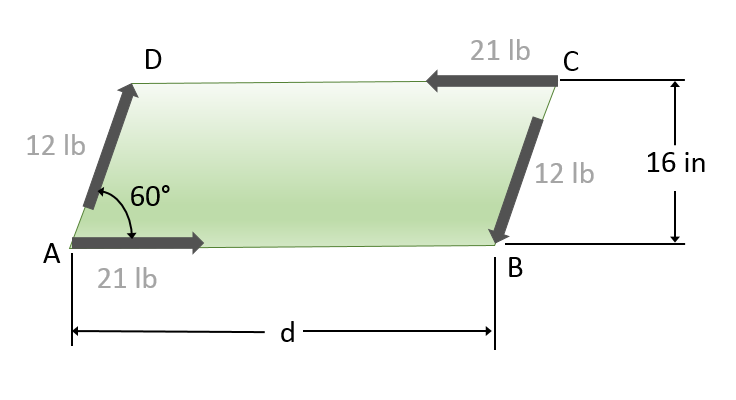
Calculate the distance 'd' required to cause no moment on the body.
Quiz: Couple Moments - Quiz Practice Questions (2D)
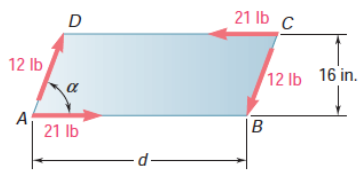
If α = 90o , what is the distance d that creates a zero resultant moment on the body.
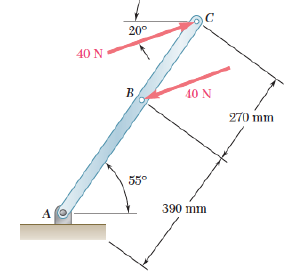
What is the resultant couple moment?
0:00 / 0:00
Example
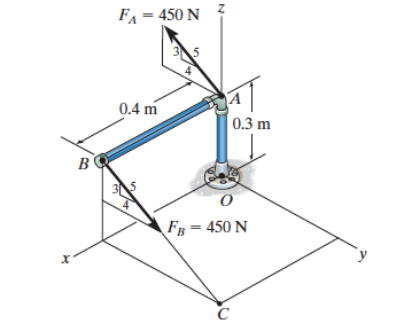
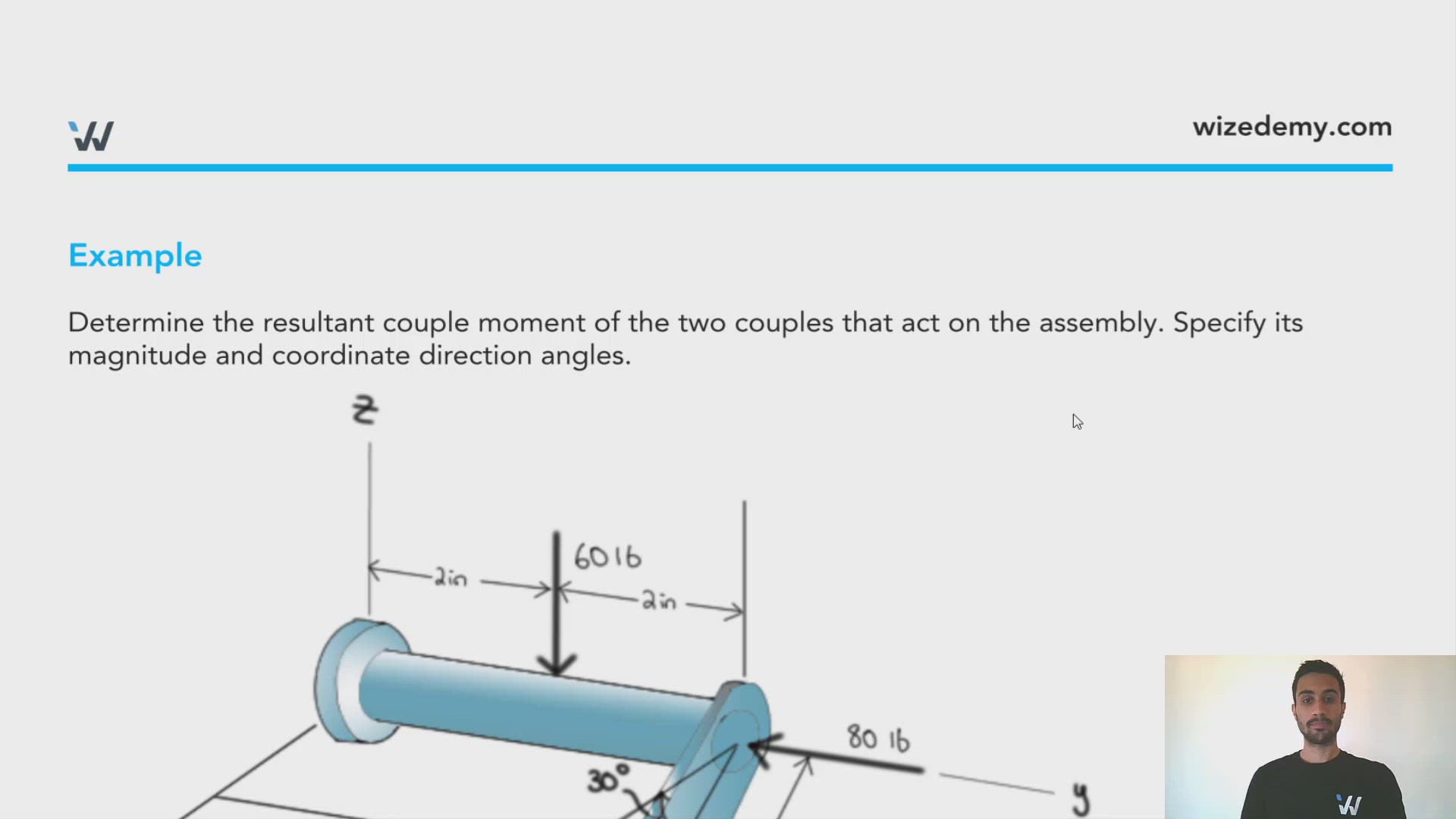
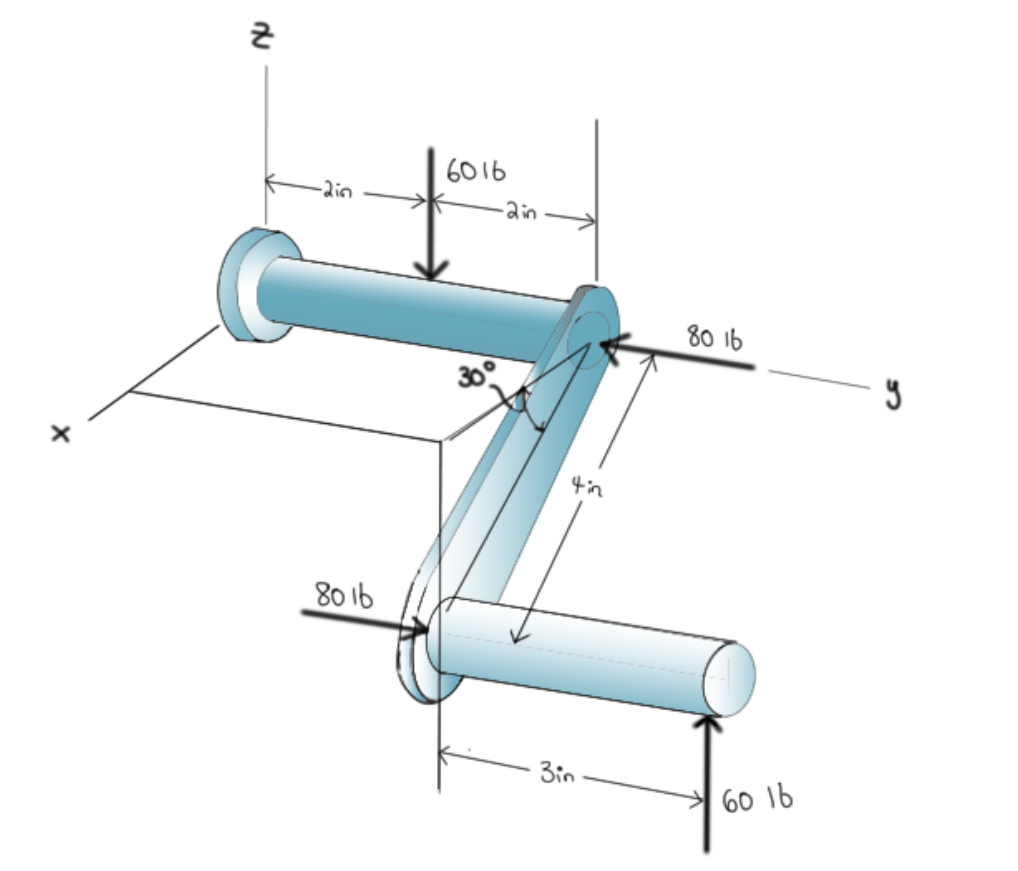
Determine the resultant couple moment of the two couples that act on the assembly. Specify its magnitude and coordinate direction angles.
The resultant couple moment depends on the position vectors or each applied couple , as shown in the figure below,
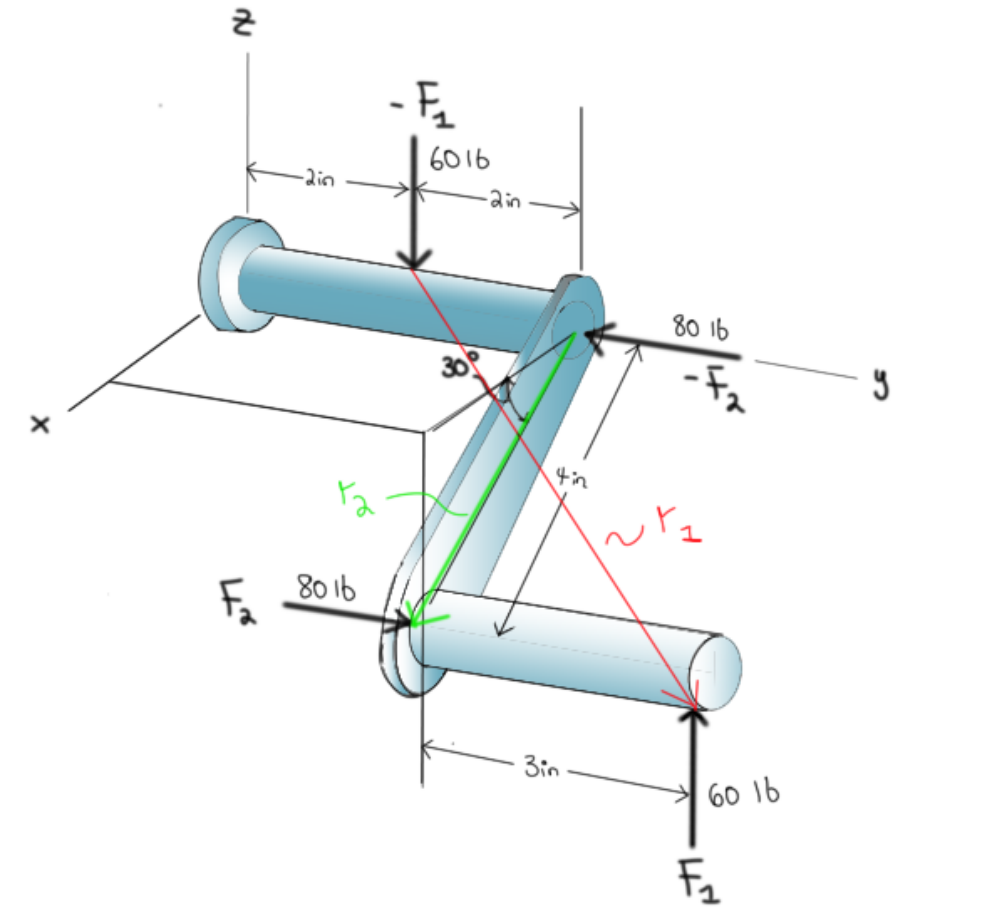
Magnitude,
Directional angles,
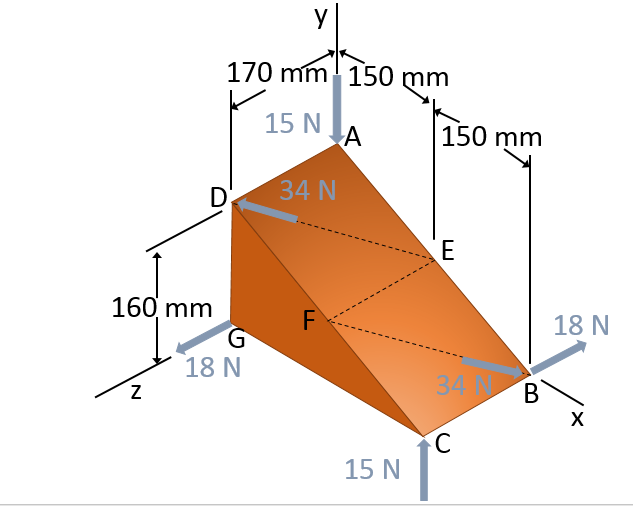
Compute the total moment on the wedge.
Mark Yourself Question
- Grab a piece of paper and try this problem yourself.
- When you're done, check the "I have answered this question" box below.
- View the solution and report whether you got it right or wrong.
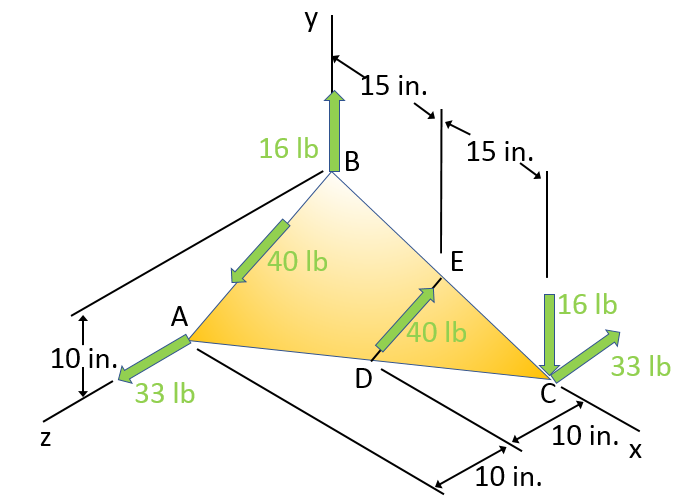
Determine the total couple moment on the body.
Quiz: Couple Moments - 3D Quiz
Determine the resultant couple moment. Include magnitude and direction.