Wize University Statics Textbook (Master) > Force System Resultants (Moment, Couple, Dist. Load)
Force-Moment Systems (Reduction / Simplification of to Single F & M)
Reduction of System of Forces & Moments (Equivalency)
Example: Force-Moment Systems
Example 1: Equivalency (2D) - Part 1
Example 1: Equivalency (2D) - Part 2
Force Moment Systems - Practice Questions
Force Moment Systems - Practice Questions (Shifting Wrench)
Force Moment Systems - Practice Questions (3D)
Practice 3: Equivalency - Force-Couple (3D)
Quiz: Force-Moment Systems
Popular Courses
ENGG 130
University of Alberta
CIV100H1
University of Toronto
PCS 211
Toronto Metropolitan University
ENGG 202
University of Calgary
ENGSCI 1022A/B/Y
Western University
ENGR 242
Concordia University
ENGR 141
University of Victoria
CE 221
Michigan State University
GENG-1110
University of Windsor
ESM 2104
Virginia Tech
APS160H1
University of Toronto

0:00 / 0:00
It’s sometimes convenient to simplify all the loading on an object by combining forces and moments. The key here is that both the original system and the simplified system are equivalent.
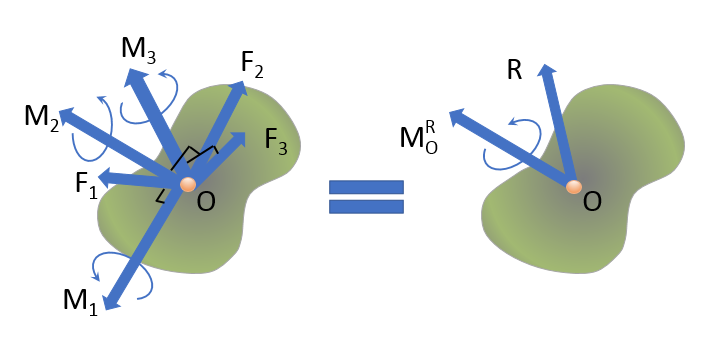
For Equivalency,
For example, Case 1
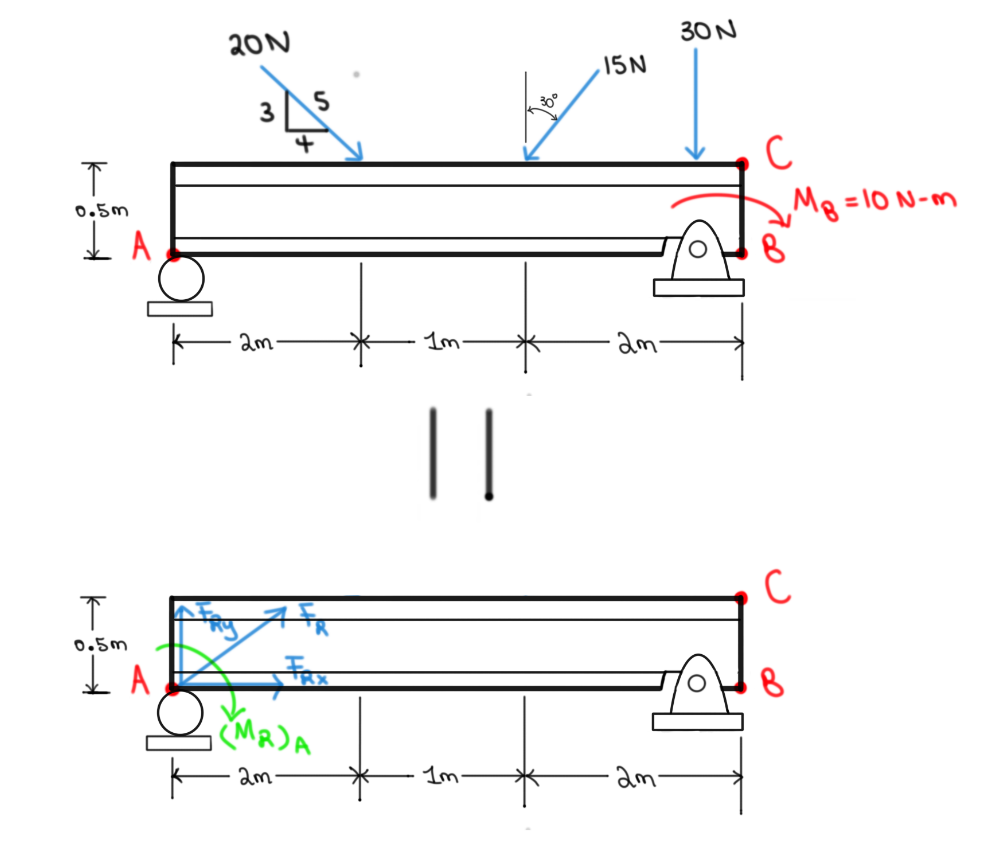
For example, Case 2
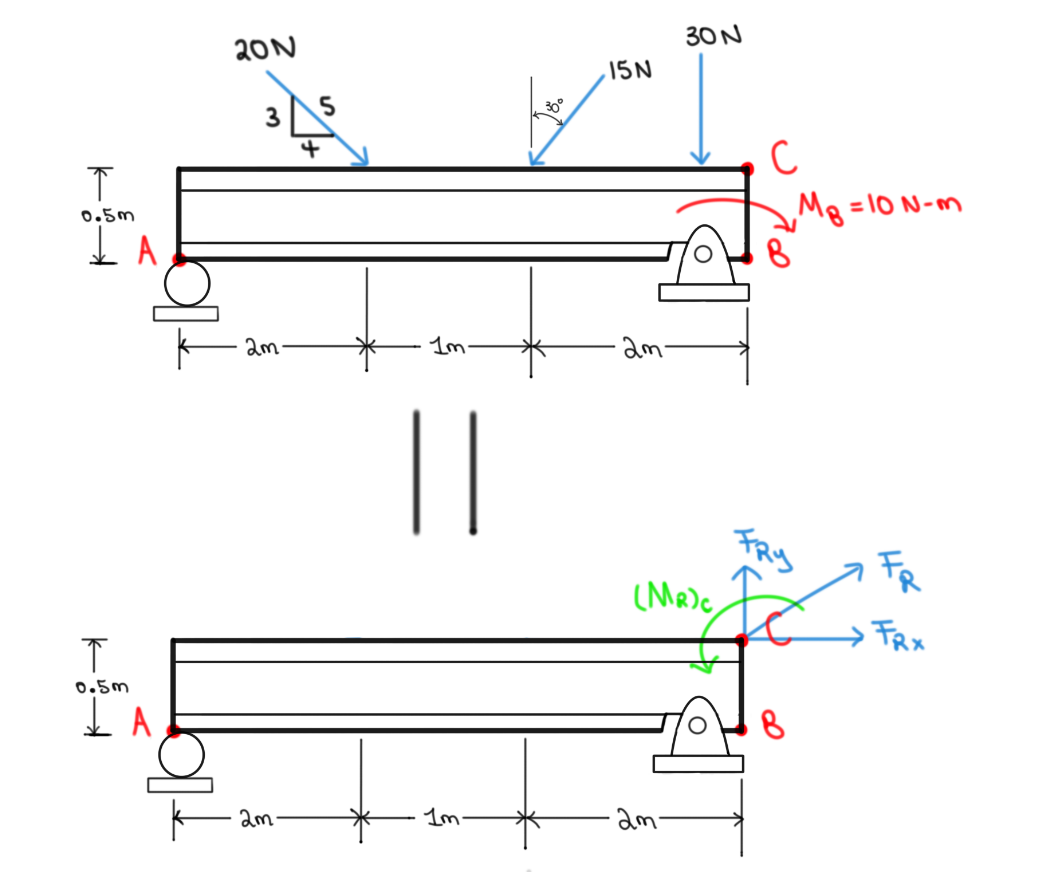
There are two things that you may be asked:
- Forces Couple System 1 Resultant force + 1 resultant moment at a point
- Forces only 1 Resultant force at a point
Steps:
- Sum all the forces in the X-Direction. This Gives Resultant Force X-Component ()
- Sum all the forces in the Y-Direction. This Gives Resultant Force Y-Component ()
Watch Out!
WHEN SUMMING FORCES ALONG THE X AND Y DIRECTIONS - DO NOT USE
3. Sum all moments caused by forces about a single point in the simplified system
- If you’re told to use a certain point, it may be best to sum forces about that point
4. Depending on what you’re asked:
- A moment about a point: is simply the sum of moments you determined in step 3.
- A single force: determine the distance from a specified point for which the force would produce an equivalent moment as calculated in step 3. We use M=Fd.
Watch Out!
DO NOT CONSIDER OR SOLVE FOR REACTION SUPPORTS! SUPPORT REACTIONS ARE NOT APPLICABLE WHEN SOLVING EQUIVALENCY QUESTIONS.
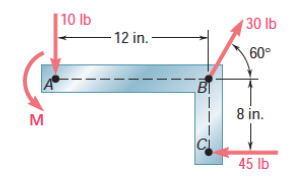
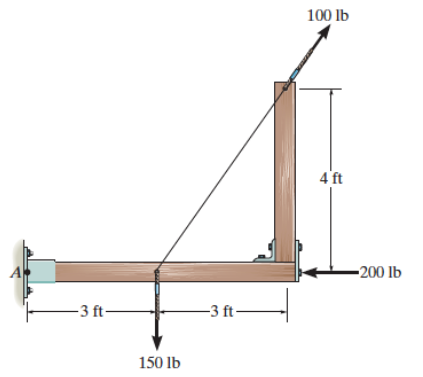
Determine an equivalent force-couple system at point A.
0:00 / 0:00
Example
Disclaimer: Please note that at timestamp 11:45 of the attached video, it should read "-227.22 and NOT -299.22".
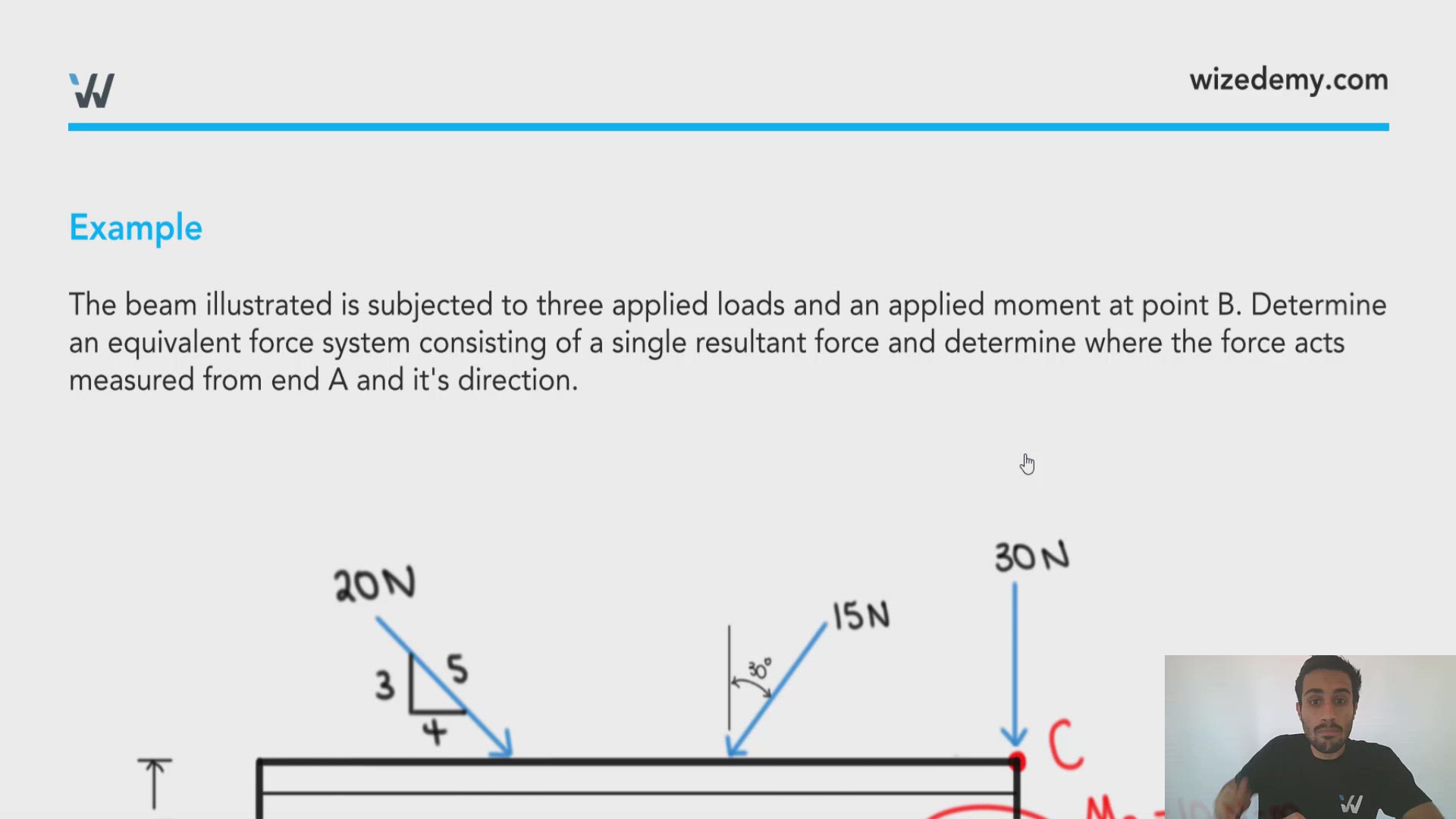
The beam illustrated is subjected to three applied loads and an applied moment at point B. Determine an equivalent force system consisting of a single resultant force and determine where the force acts measured from end A and it's direction.
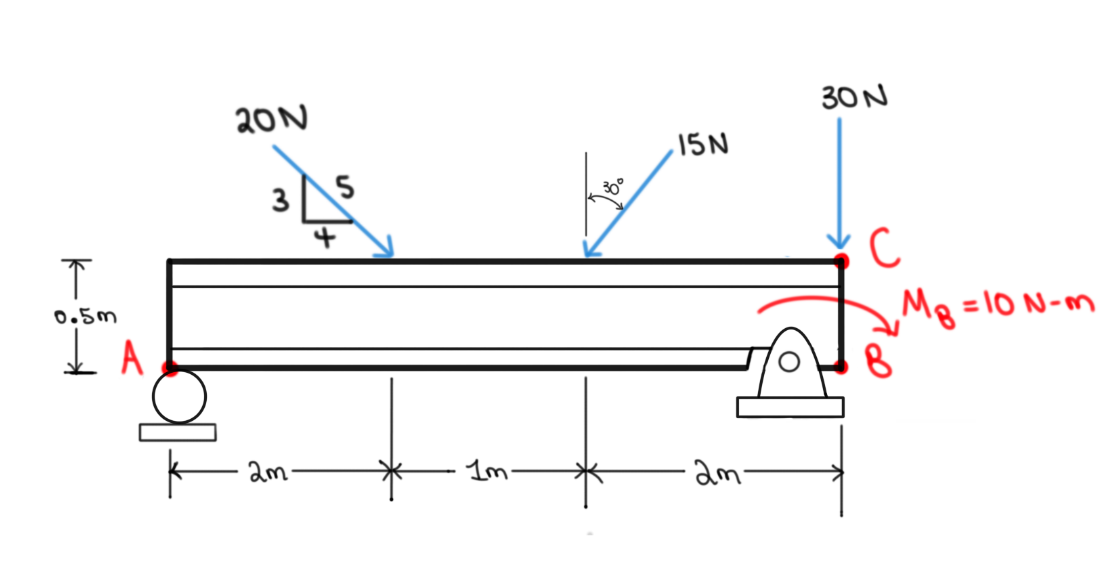
STEP 1 - SUMMATION OF FORCES ALONG THE X-DIRECTION. (DO NOT !!!)
STEP 2 - SUMMATION OF FORCES ALONG THE Y-DIRECTION. (DO NOT !!!)
Solving for Resultant Force and Direction Measured ClockWise from the Positive X-Axis.
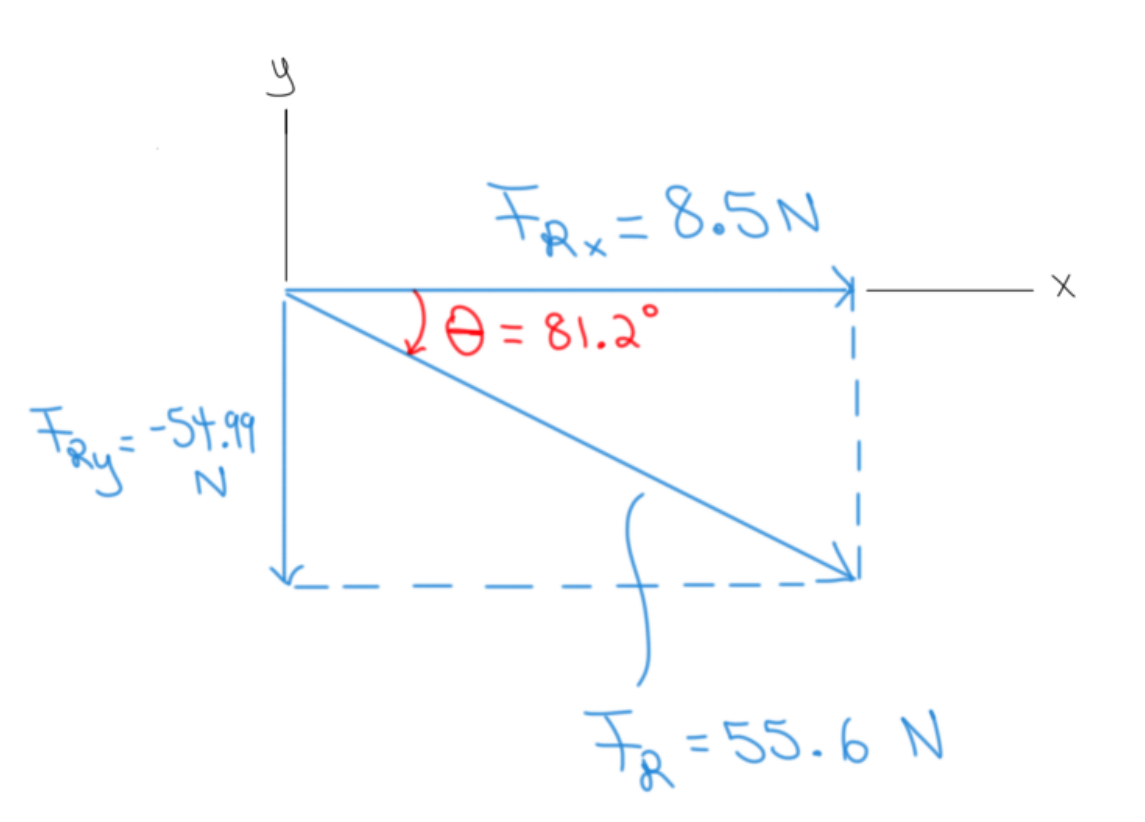
STEP 3 - SUMMATION OF MOMENTS (IN THIS CASE SINCE WE ARE TOLD TO MEASURE WHERE THE FORCE ACTS FROM END A, TAKE THE MOMENT ABOUT POINT A)
STEP 4 - RELOCATE RESULTANT FORCE AND RESULTANT MOMENT (FORCE-COUPLE) TO THE POINT OF INTEREST.
SYS (II)
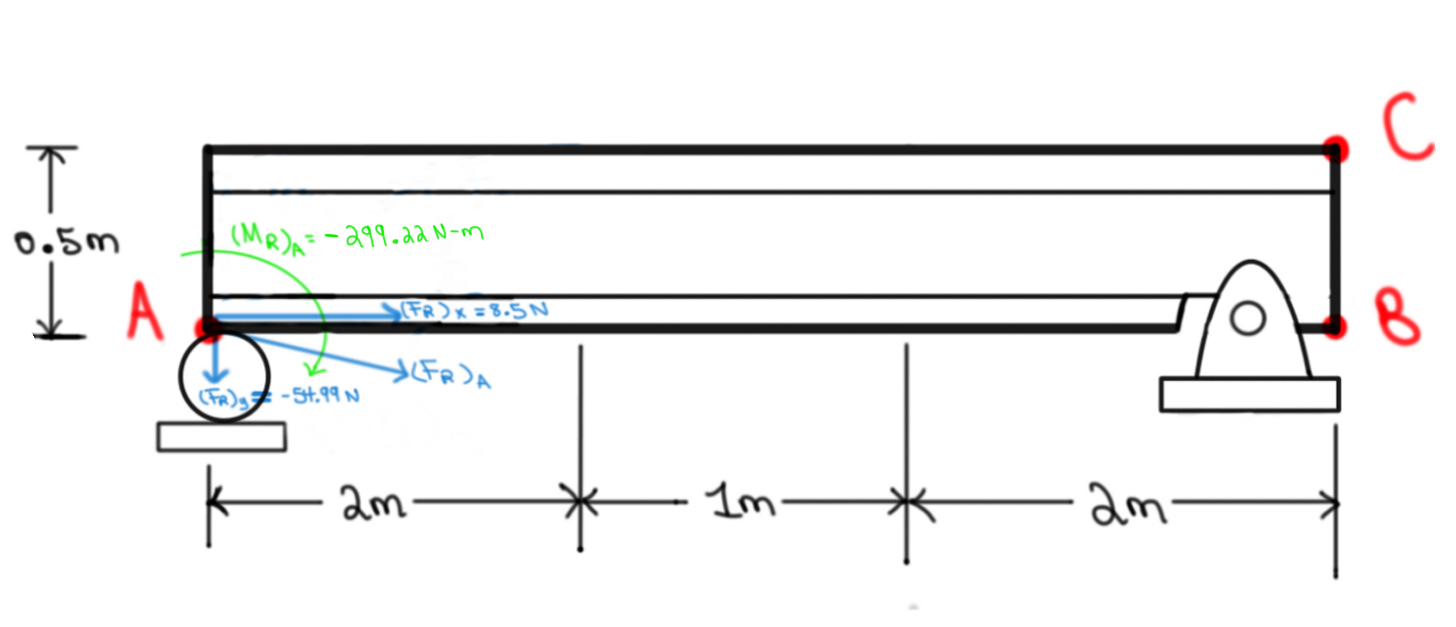
SYS (III)
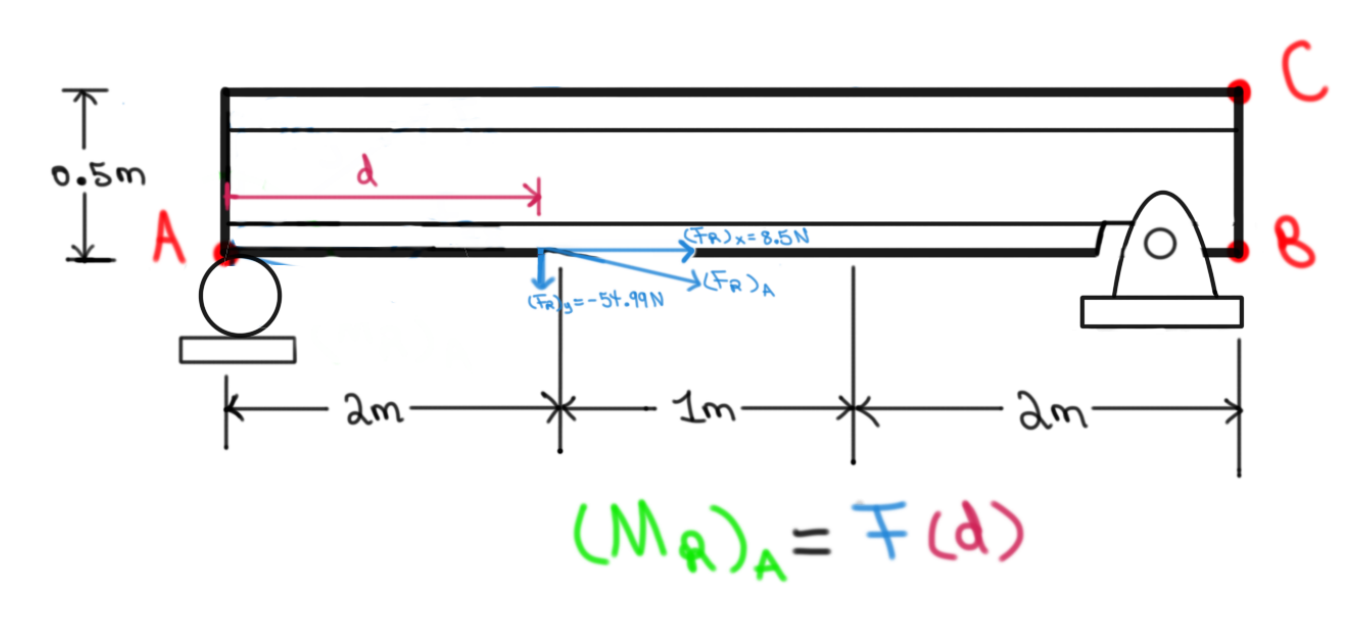
Solving for the location of the resultant force from point A,
Watch Out!
USE THE COMPONENTS OF THE RESULTANT FORCE ONLY WHEN DOING M=Fd!
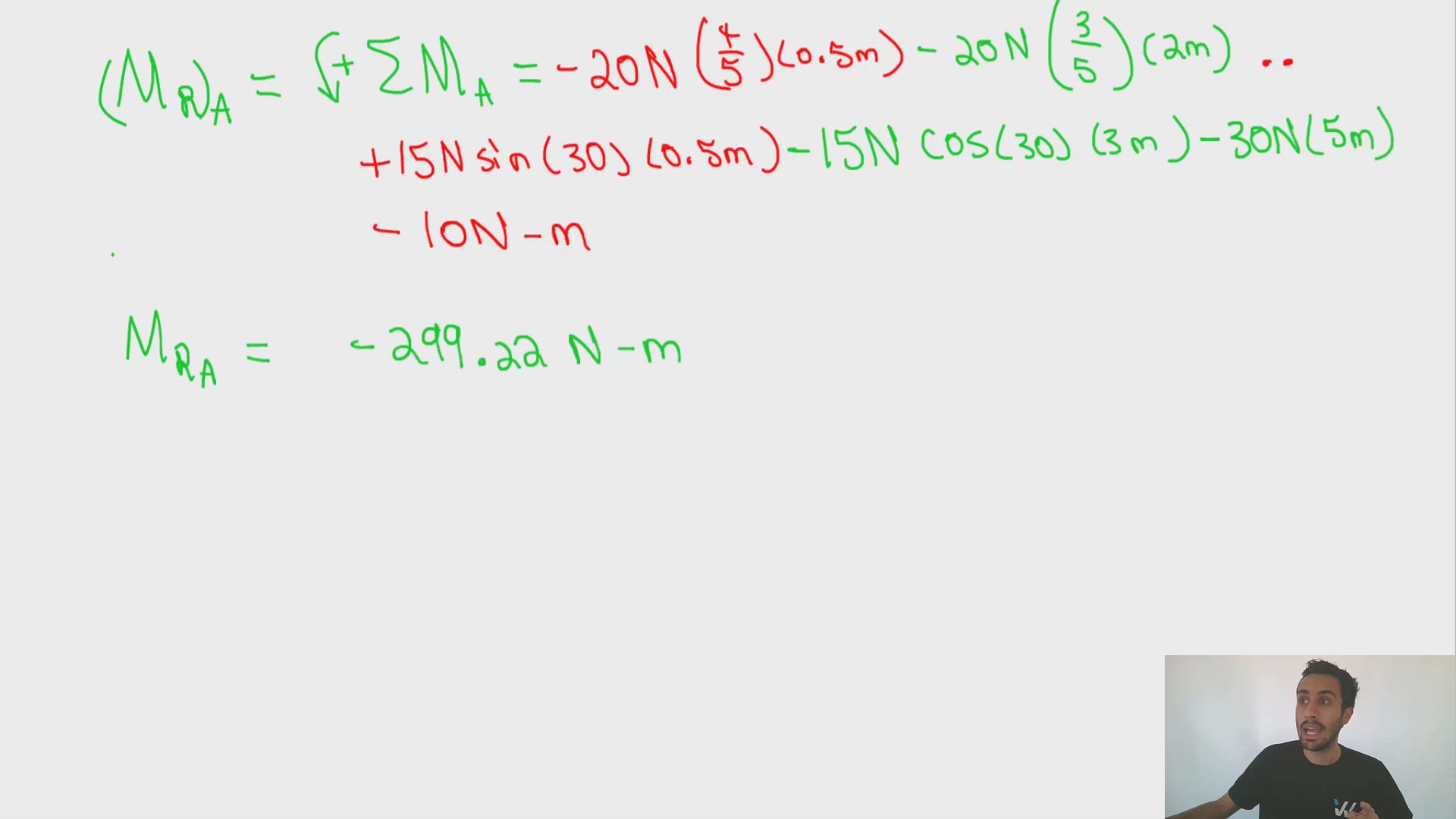
0:00 / 0:00
Example
The beam illustrated is subjected to three applied loads and an applied moment at point B. Determine an equivalent force system consisting of a single resultant force and determine where the force acts measured from end A and it's direction.
STEP 1 - SUMMATION OF FORCES ALONG THE X-DIRECTION. (DO NOT !!!)
STEP 2 - SUMMATION OF FORCES ALONG THE Y-DIRECTION. (DO NOT !!!)
Solving for Resultant Force and Direction Measured ClockWise from the Positive X-Axis.
STEP 3 - SUMMATION OF MOMENTS (IN THIS CASE SINCE WE ARE TOLD TO MEASURE WHERE THE FORCE ACTS FROM END A, TAKE THE MOMENT ABOUT POINT A)
STEP 4 - RELOCATE RESULTANT FORCE AND RESULTANT MOMENT (FORCE-COUPLE) TO THE POINT OF INTEREST.
SYS (II)
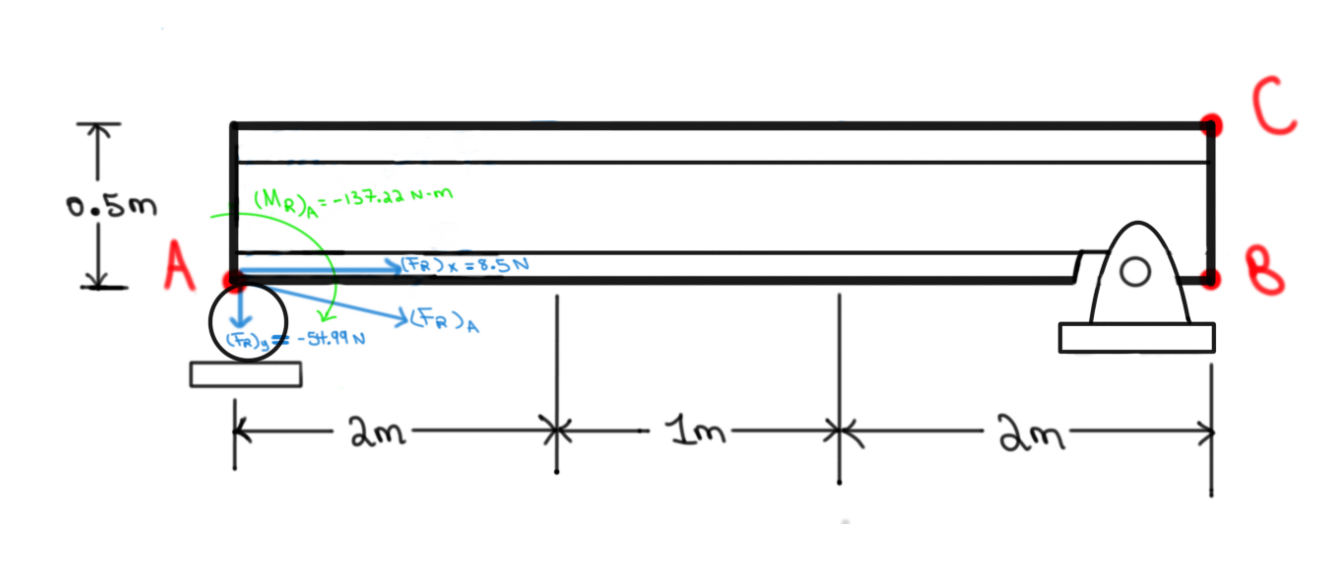
SYS (III)
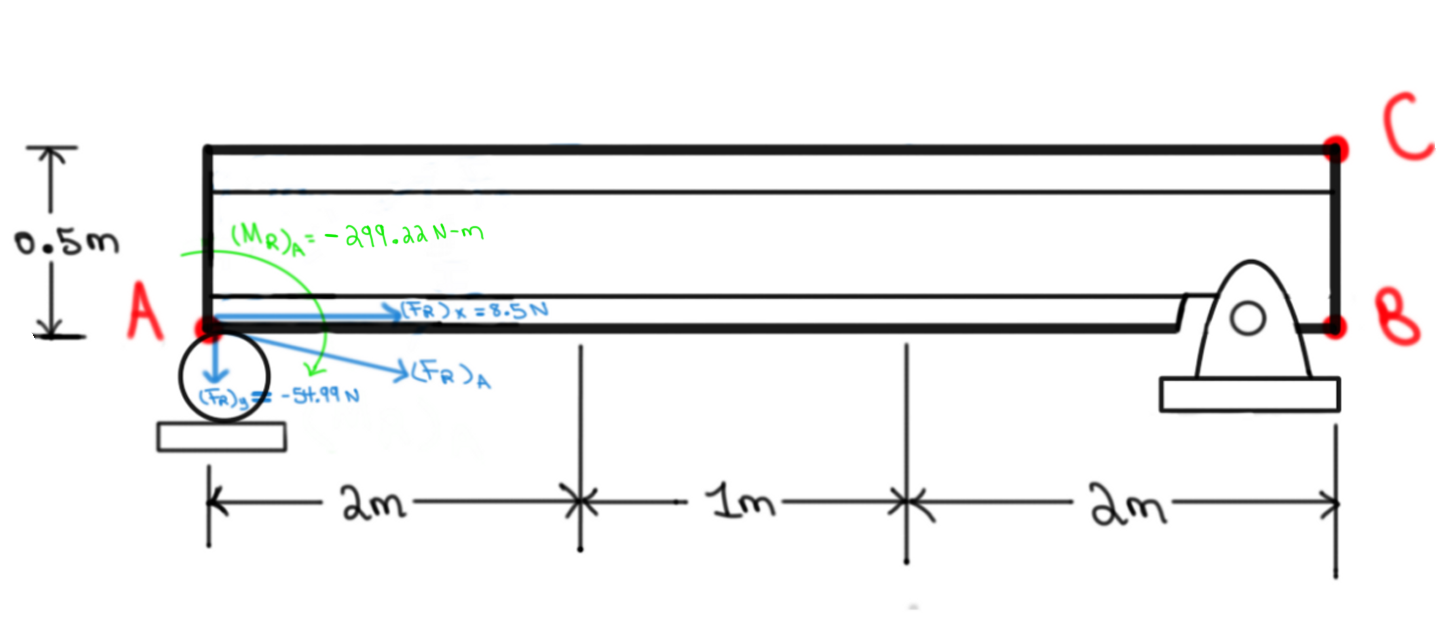
Solving for the location of the resultant force from point A,
Watch Out!
USE THE COMPONENTS OF THE RESULTANT FORCE ONLY WHEN DOING M=Fd!

Mark Yourself Question
- Grab a piece of paper and try this problem yourself.
- When you're done, check the "I have answered this question" box below.
- View the solution and report whether you got it right or wrong.
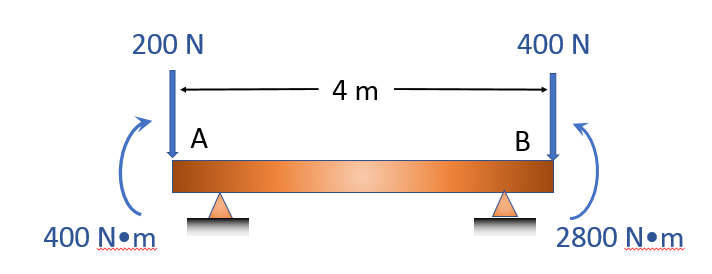
Replace the loading on the following beam with a wrench system at A.
Mark Yourself Question
- Grab a piece of paper and try this problem yourself.
- When you're done, check the "I have answered this question" box below.
- View the solution and report whether you got it right or wrong.
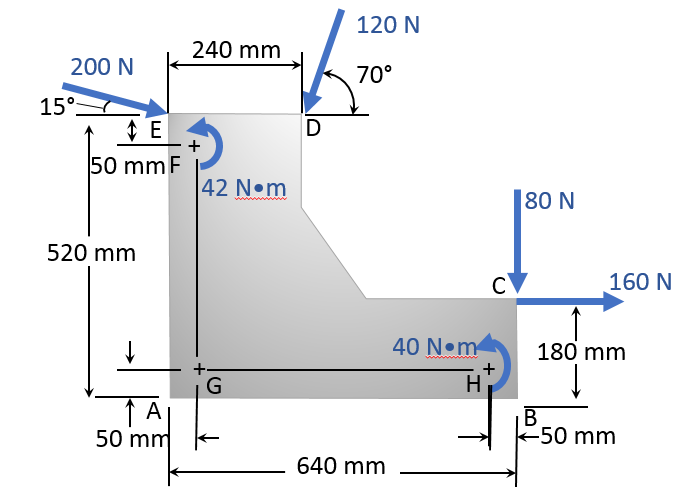
Replace the loading by a wrench system acting at point A. Resolve with a new wrench system acting at point G.
Mark Yourself Question
- Grab a piece of paper and try this problem yourself.
- When you're done, check the "I have answered this question" box below.
- View the solution and report whether you got it right or wrong.
Replace the following loading with a wrench system at A:

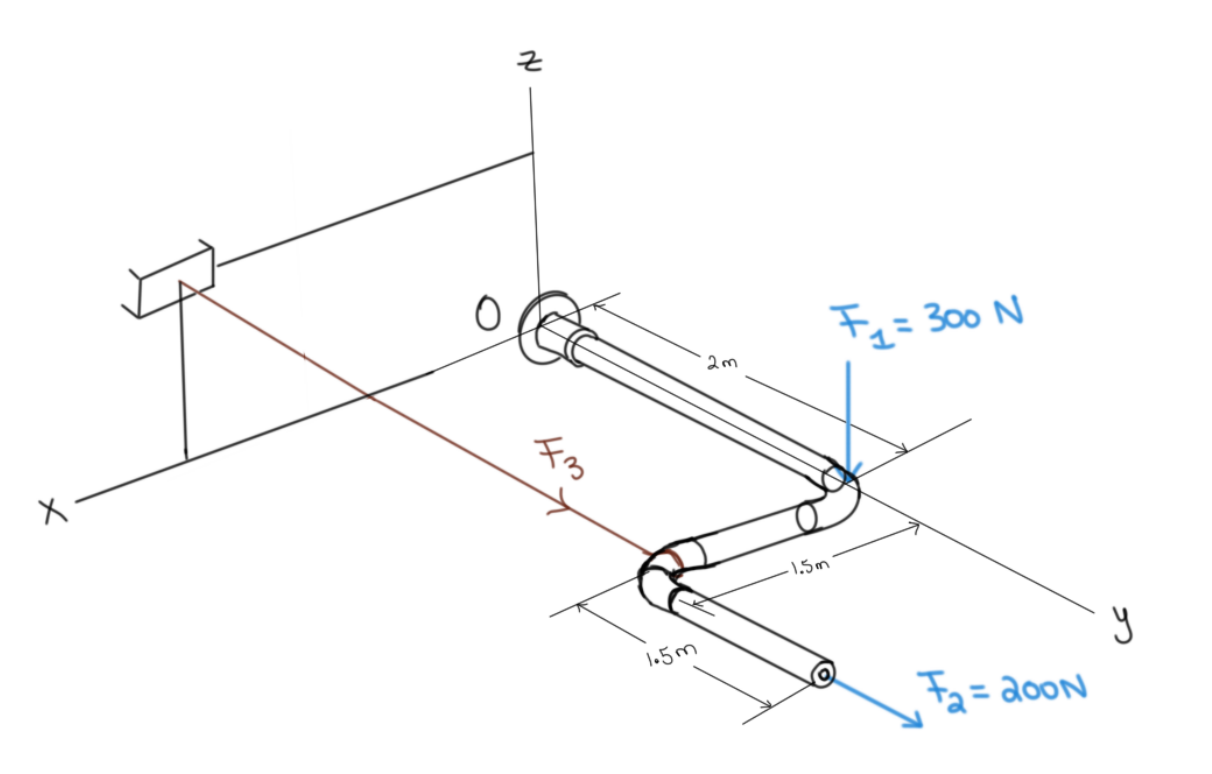
Determine an equivalent force system by an equivalent resultant force and couple moment at point O. Take F3 = {-200i + 500j - 300k} N.
Quiz: Force-Moment Systems
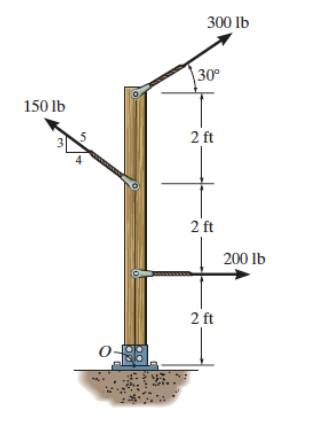
a) Determine an equivalent force and moment applied at point O
b) Determine a single equivalent force to be applied to the beam. Indicate the location, direction and magnitude of the force.
Determine the magnitude of M, such that the moment about point A is zero. What is the equivalent force at A?