Distributed Loads (Common Geometric Shapes & Integration)
Distributed Loads (Integration (more))
Example: Distributed Loads (Geometric Example)
Example: Distributed Loads - Geometric
Distributed Loads - Practice Questions (Geometric Shapes)
Quiz: Distributed Loads - Quiz Practice Questions (Geometric Shapes)
Quiz: Distributed Loads Practice - Geometric Shapes Quiz
Quiz: Distributed Loads - Quiz Practice Questions (Geometric Shapes)
Example 1: Distributed Loads
Example 2: Distributed Loads
Practice 1: Distributed Loads
Practice 2: Distributed Loads
Distributed Loads - Practice Questions (Geometric Shapes)
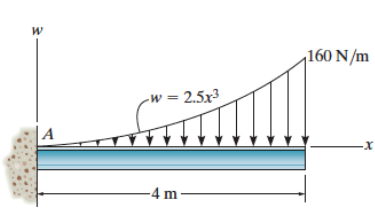
Example: Distributed Loads (Integration Example)
Example: Distributed Loads - Integration
Distributed Loads - Practice Questions (Integration)
Distributed Loads - Practice Questions (Integration)
Distributed Loads Practice - Integration
Distributed Loads Practice - Integration
Quiz: Distributed Loads Practice - Integration Quiz
Quiz: Distributed Loads Practice - Integration Quiz
Popular Courses
ENGG 130
University of Alberta
CIV100H1
University of Toronto
PCS 211
Toronto Metropolitan University
ENGG 202
University of Calgary
ENGSCI 1022A/B/Y
Western University
ENGR 242
Concordia University
ENGR 141
University of Victoria
CE 221
Michigan State University
GENG-1110
University of Windsor
ESM 2104
Virginia Tech
APS160H1
University of Toronto
0:00 / 0:00
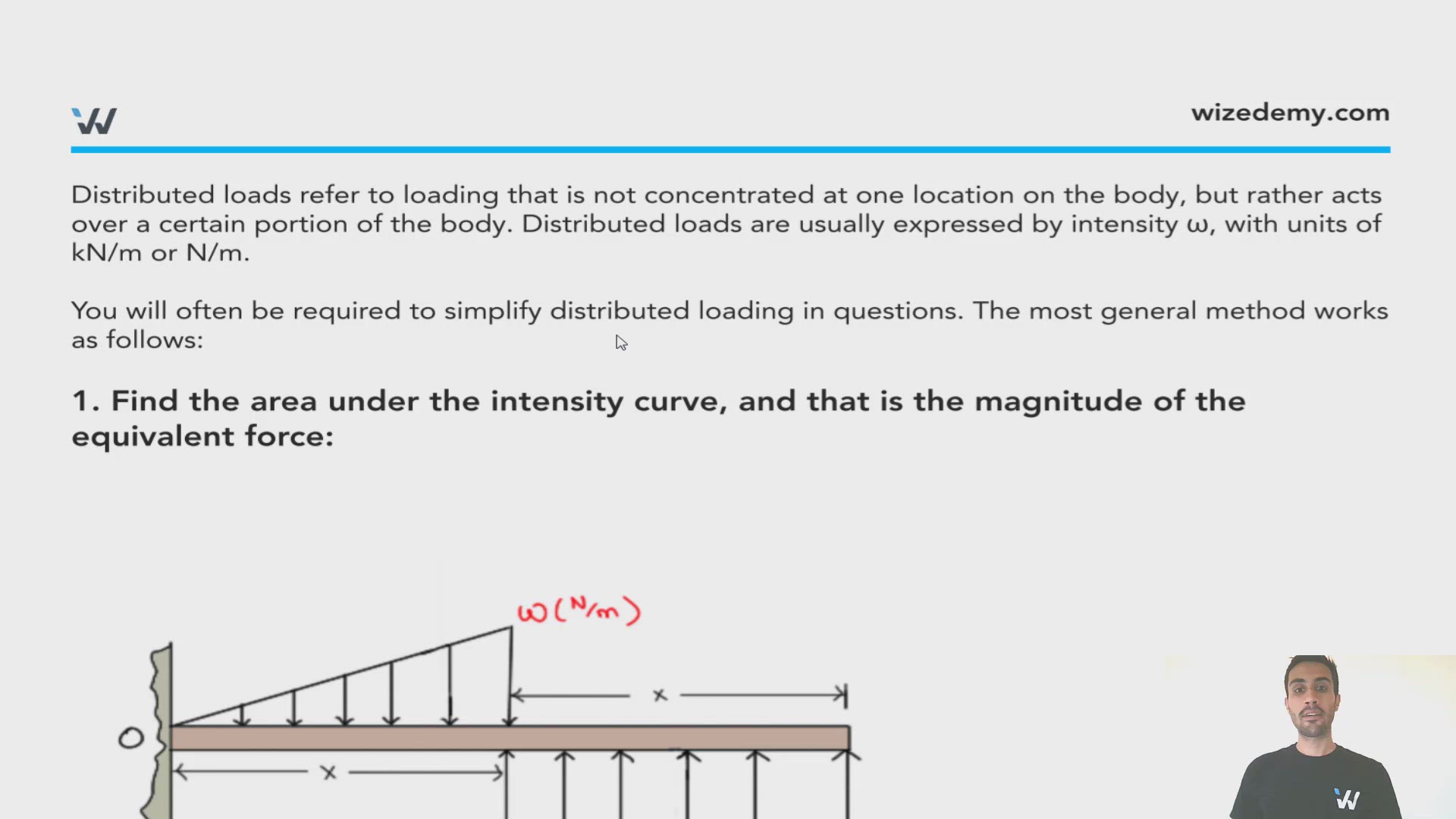
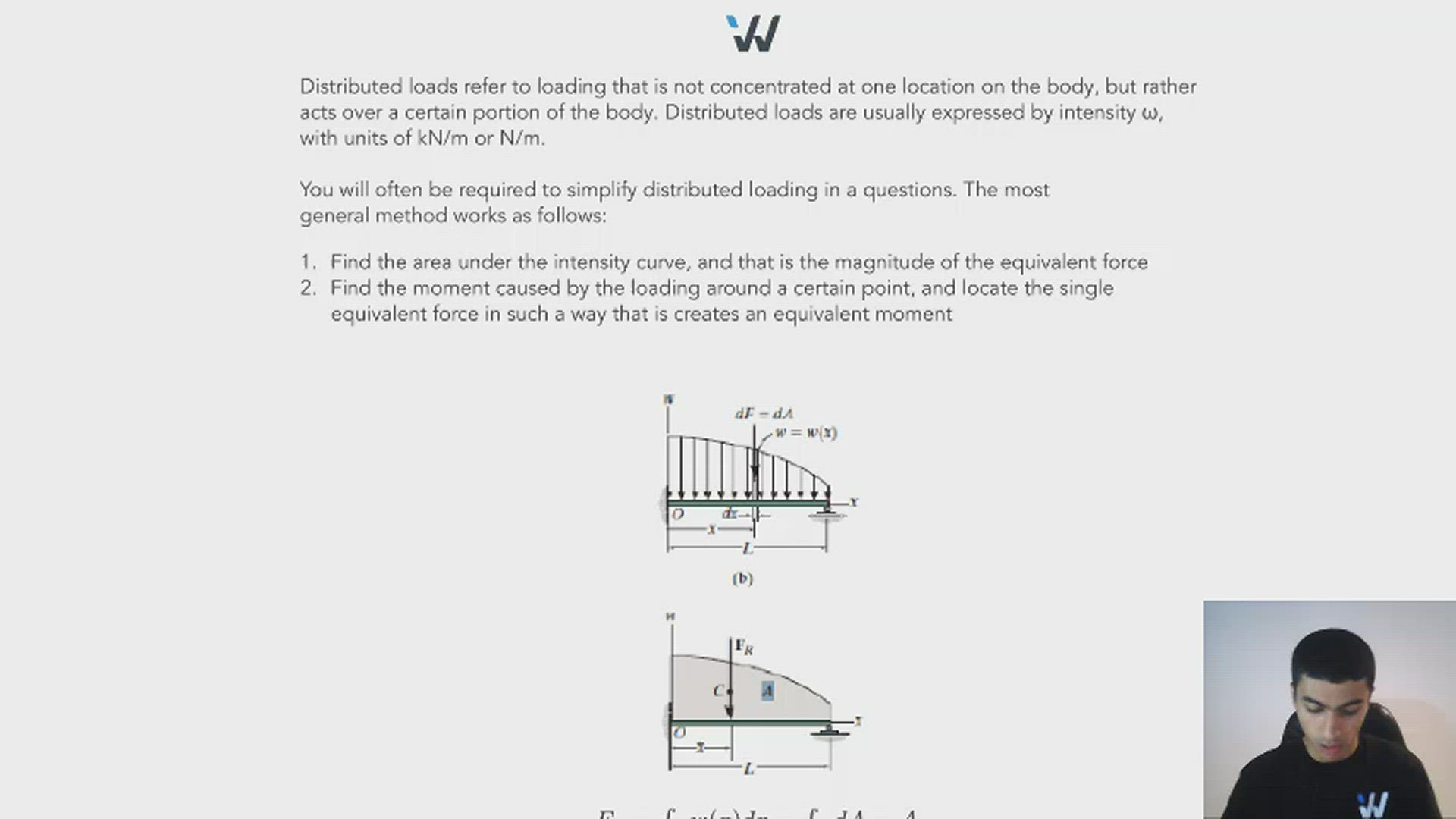
Distributed loads refer to loading that is not concentrated at one location on the body, but rather acts over a certain portion of the body. Distributed loads are usually expressed by intensity ω, with units of kN/m or N/m.
You will often be required to simplify distributed loading in questions. The most general method works as follows:
1. Find the area under the intensity curve, and that is the magnitude of the equivalent force:


Some common geometric loading you should be familiar with:
1. Rectangular, or uniform loads will have a resultant equal to the shaded area (length x width) and acting at the centroid the mid-point.
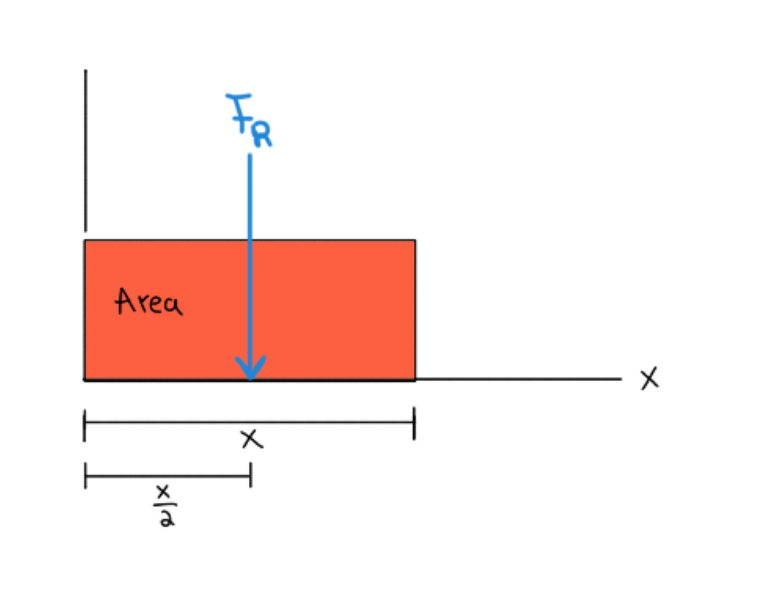
2. Triangular, or linearly increasing loads will have a resultant equal to the shaded area (1/2 x length x width) and acting at the centroid one-third of the width away from the big side.

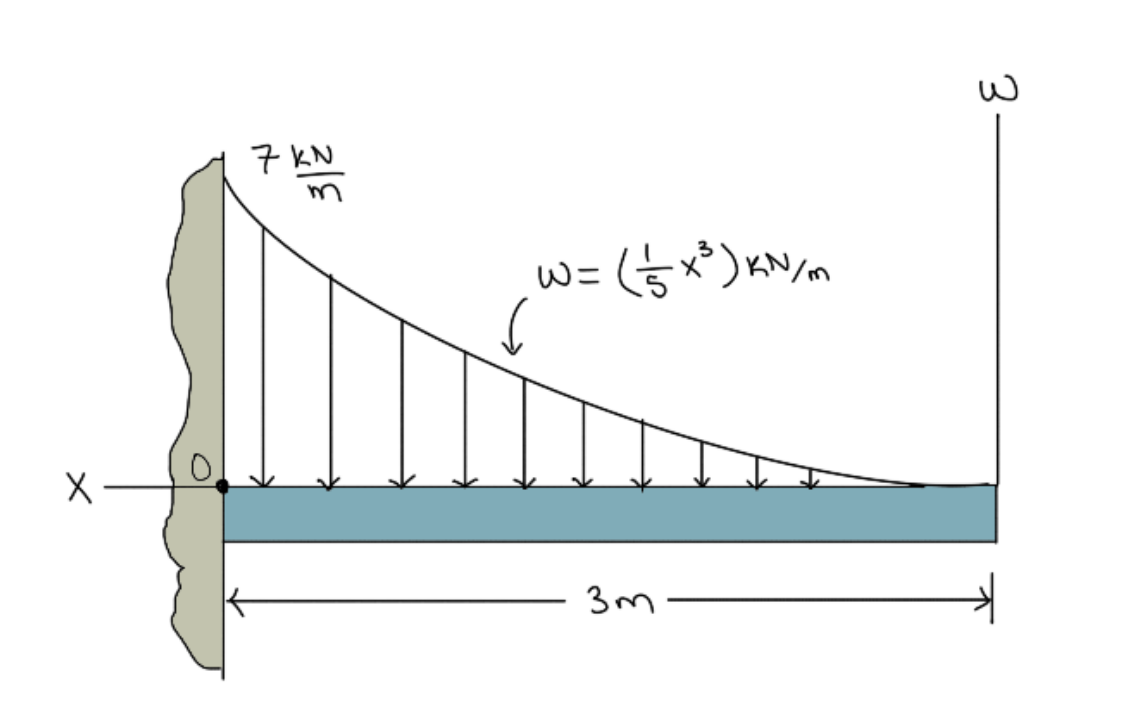
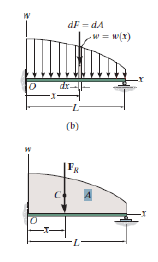
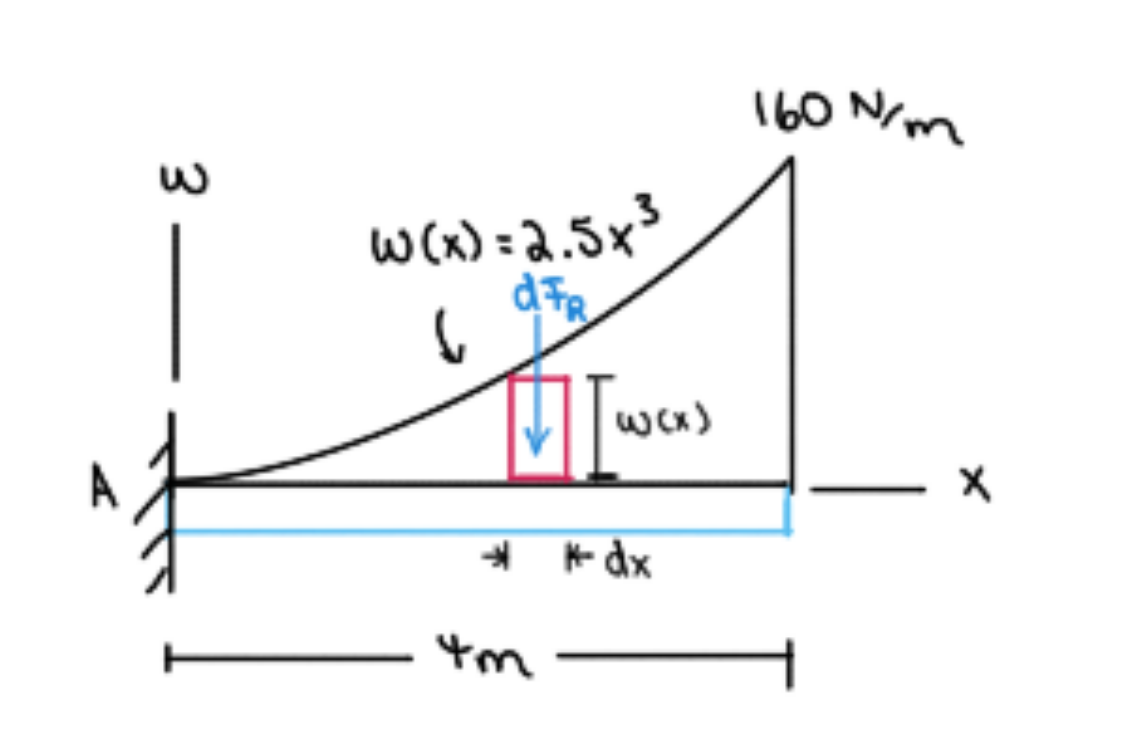
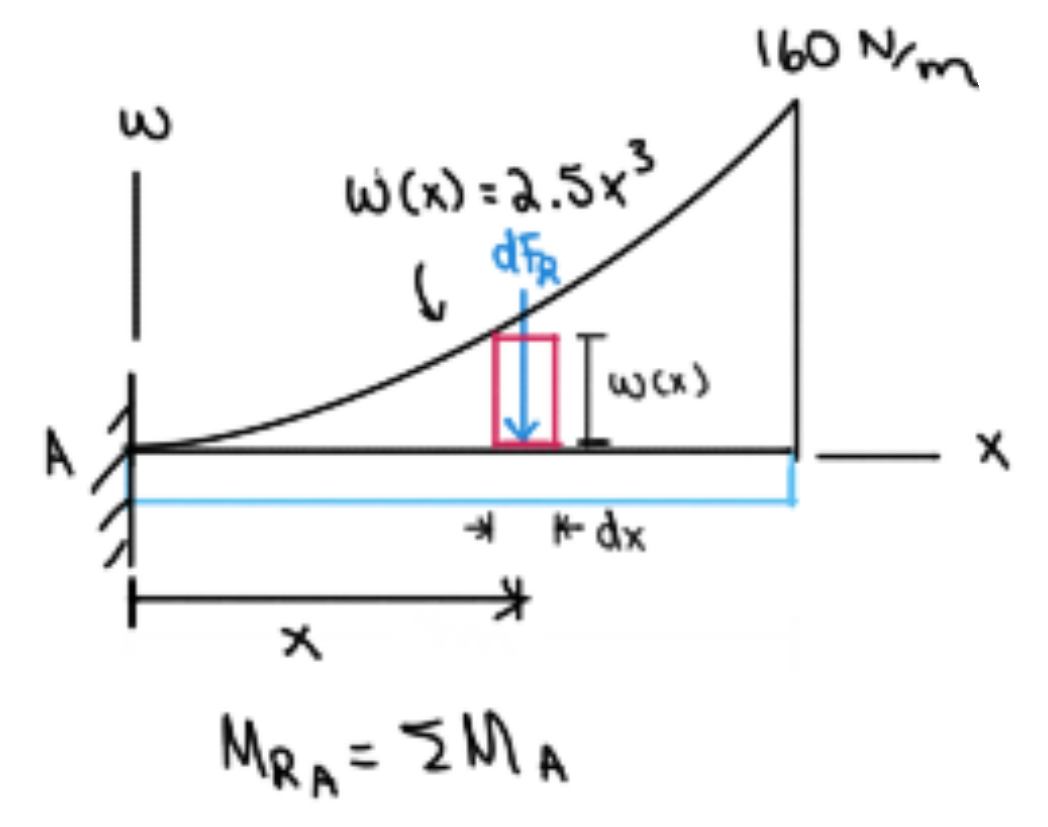
2. For curved and parabolic shapes, the magnitude of FR is equivalent to the sum of all the forces in the system. In this case, integration must be used since there is an infinite number of parallel forces dF acting on the beam as highlighted in the figure below. Since dF is acting on an element of length dx, and w(x) is a force per unit length, then dF = w(x) dx = dA. This means that the magnitude of dF is determined from the colored differential area dA under the loading curve. For the entire length L.
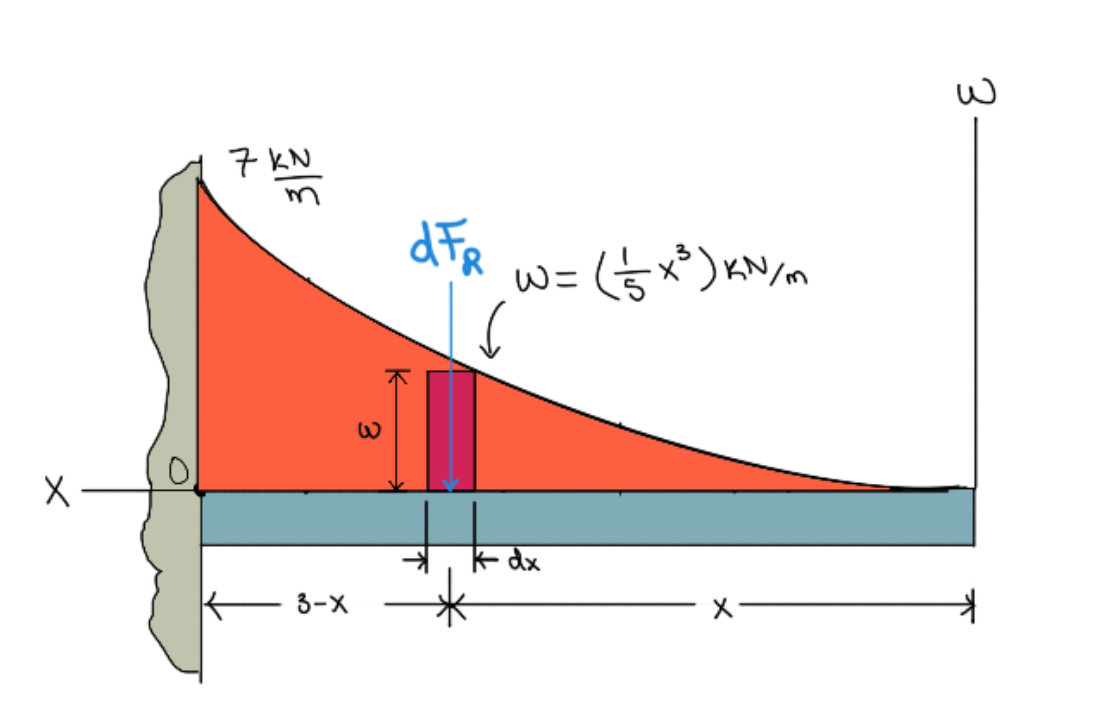
Resultant Force:
Resultant Moment:
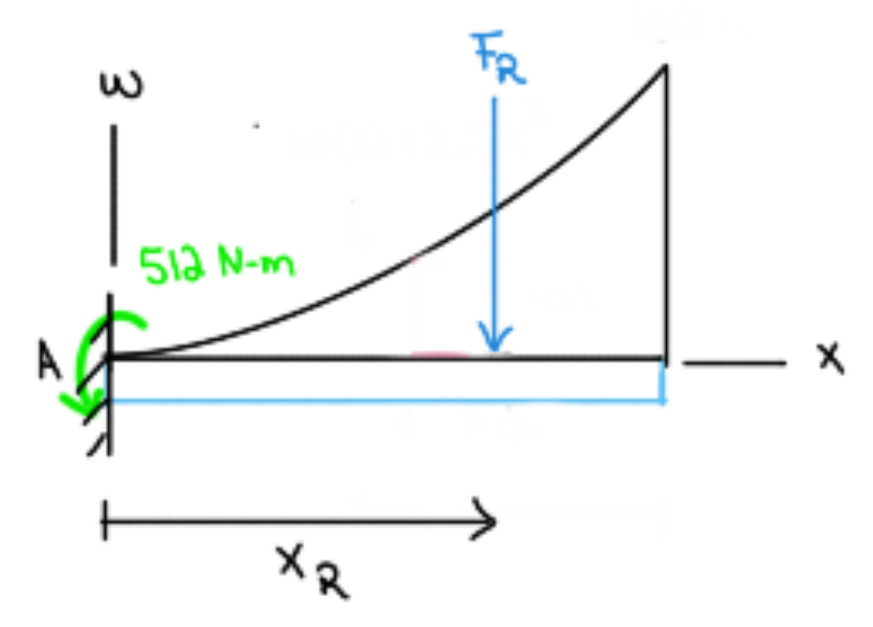
Centroid: This coordinate , locates the geometric center or centroid of the area under the distributed loading.

Wize Tip
Most distributed loading questions provide you with common geometric shapes. If you’re not provided with a geometric shape you may need to do one of two things:
- Break down the loading into common geometric shapes; or
- Integrate the loading to find the equivalent force and its location
0:00 / 0:00
Distributed loads refer to loading that is not concentrated at one location on the body, but rather acts over a certain portion of the body. Distributed loads are usually expressed by intensity ω, with units of kN/m or N/m.
You will often be required to simplify distributed loading in a questions. The most
general method works as follows:
- Find the area under the intensity curve, and that is the magnitude of the equivalent force
- Find the moment caused by the loading around a certain point, and locate the single equivalent force in such a way that is creates an equivalent moment
You may recognize that these are the two steps involved in equivalent systems, which in essence what distributed loading is.
Most distributed loading questions provide you with common geometric shapes. If you’re not provided with a geometric shape you may need to do one of two things:
- Break down the loading into common geometric shapes; or
- Integrate the loading to find the equivalent force and its location
Some common geometric loading you should be familiar with:
- Rectangular, or uniform loads will have a resultant equal to the shaded area (length x width) and acting at the mid-point.
- Triangular, or linearly increasing loads will have a resultant equal to the shaded area (0.5 x length x width) and acting one third of the width away from the big side
Simplify the following distributed loads into a single force.
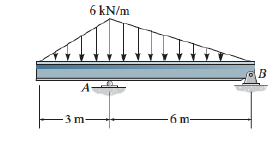
Set origin at A, positive x to the right.
On the left is a triangular force, acting at
On the right side is another triangular force, acting at
to the right of A
0:00 / 0:00
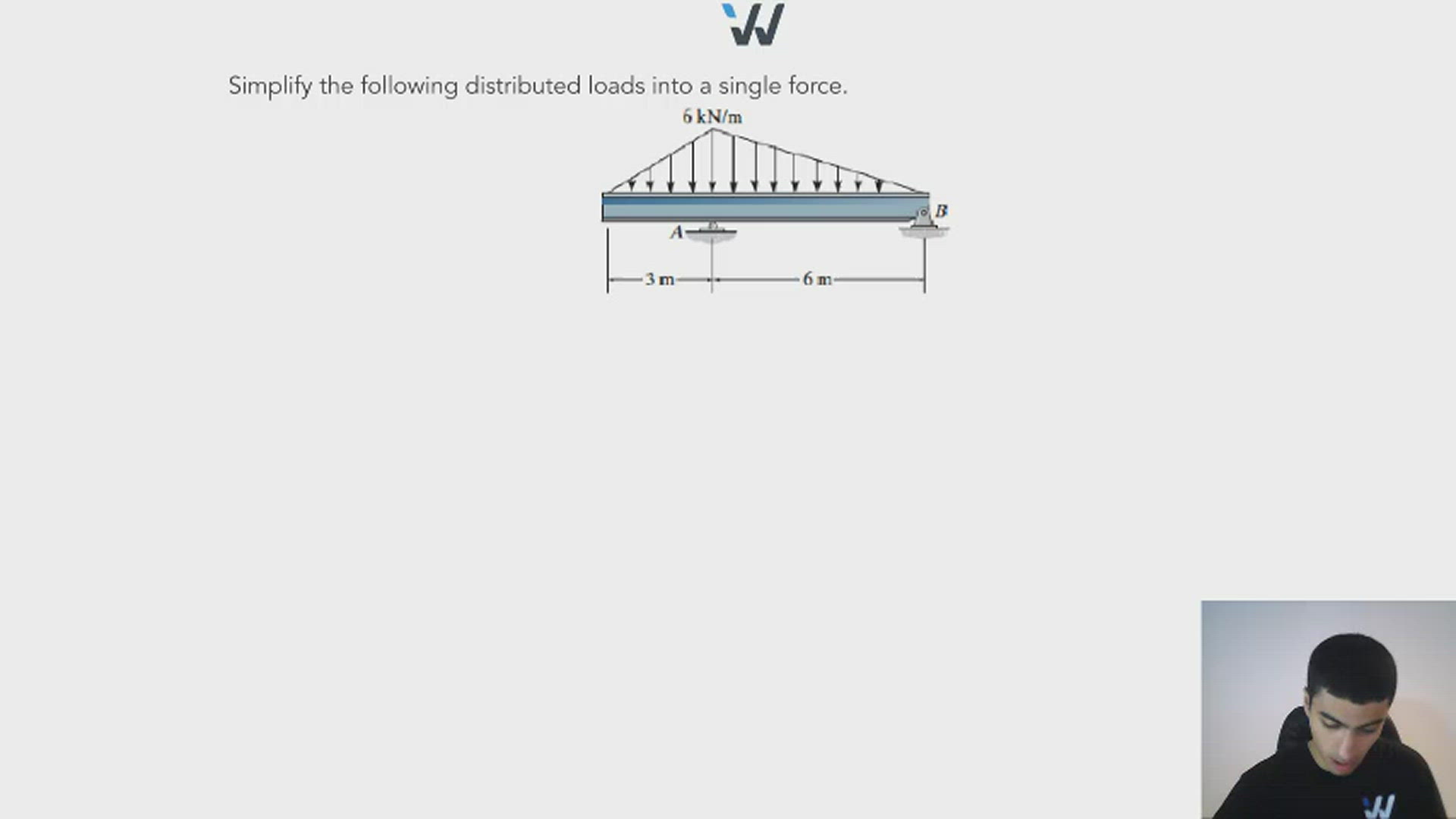
Simplify the following distributed loads into a single force.
Set origin at A, positive x to the right.
On the left is a triangular force, acting at
On the right side is another triangular force, acting at
to the right of A

Mark Yourself Question
- Grab a piece of paper and try this problem yourself.
- When you're done, check the "I have answered this question" box below.
- View the solution and report whether you got it right or wrong.
Simplify each of the loadings into a single equivalent force:


Quiz: Distributed Loads - Quiz Practice Questions (Geometric Shapes)
Simplify the following loading into a single force.

Simplify the following loading into a single force.
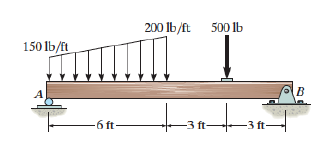
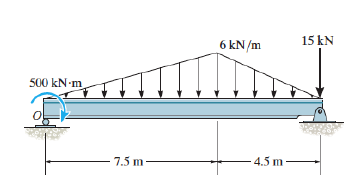
Simplify the following loading into a single force. Note: the couple moment at O is equal to 50 kNm.
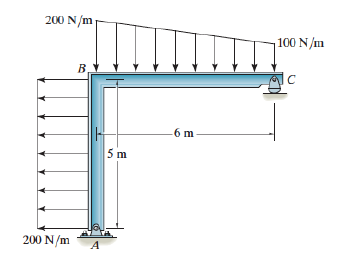
Simplify the following distributed loading into a single force acting on segment AB.
Quiz: Distributed Loads Practice - Geometric Shapes Quiz
Replace the loading with a single equivalent force.
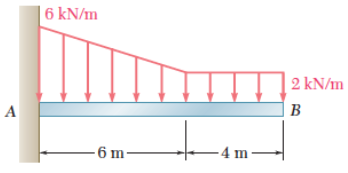
Replace the loading with a single equivalent force.

Quiz: Distributed Loads - Quiz Practice Questions (Geometric Shapes)
Simplify the following loading into a single force.
Simplify the following loading into a single force.
Simplify the following loading into a single force. Note: the couple moment at O is equal to 50 kNm.
Simplify the following distributed loading into a single force acting on segment AB.
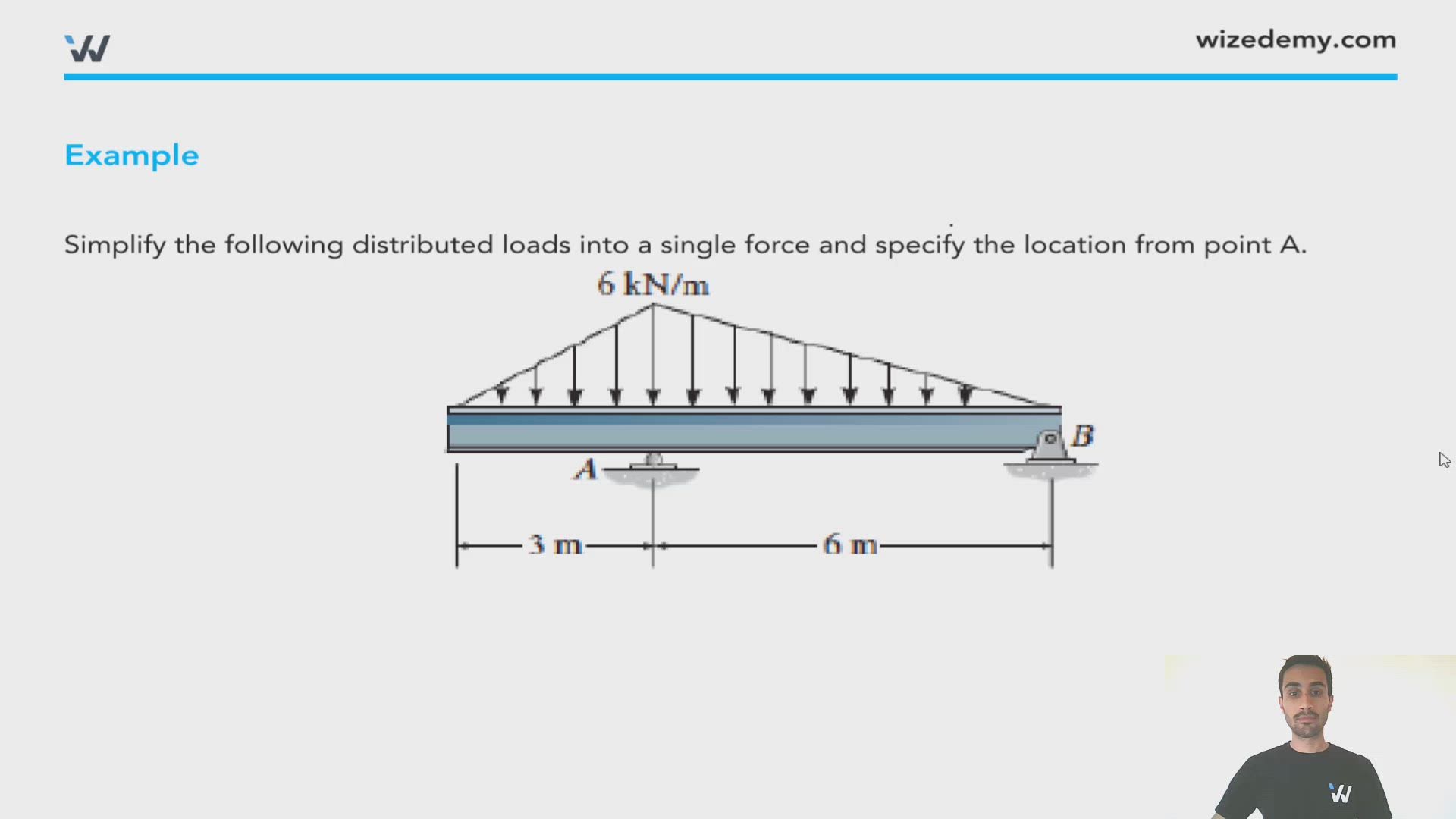
0:00 / 0:00
Example
Simplify the following distributed loads into a single force and specify the location from point A.
Set origin at A, positive x to the right.
On the left is a triangular force, acting at
On the right side is another triangular force, acting at
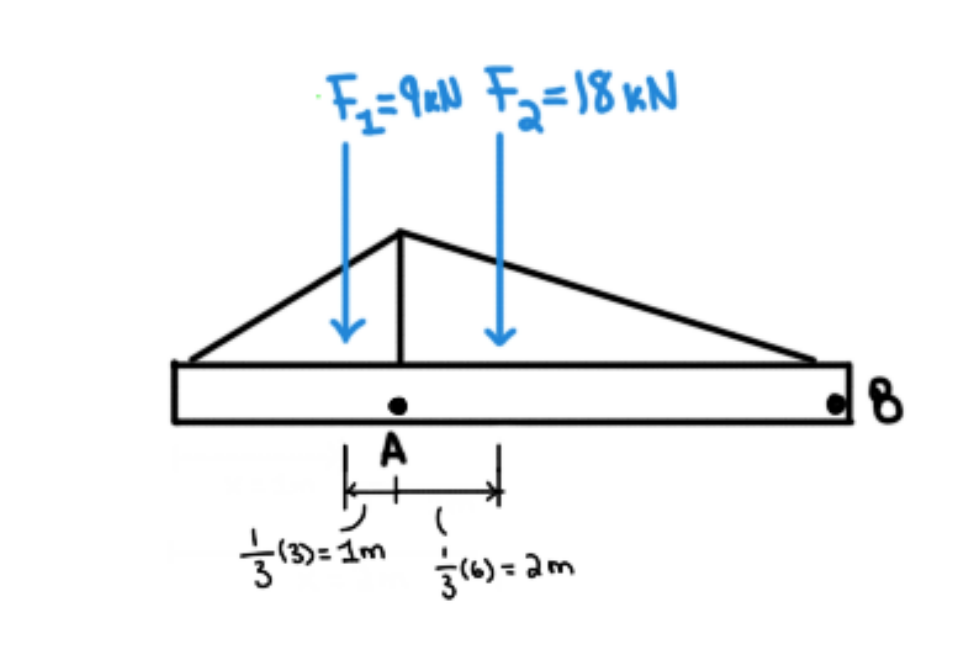
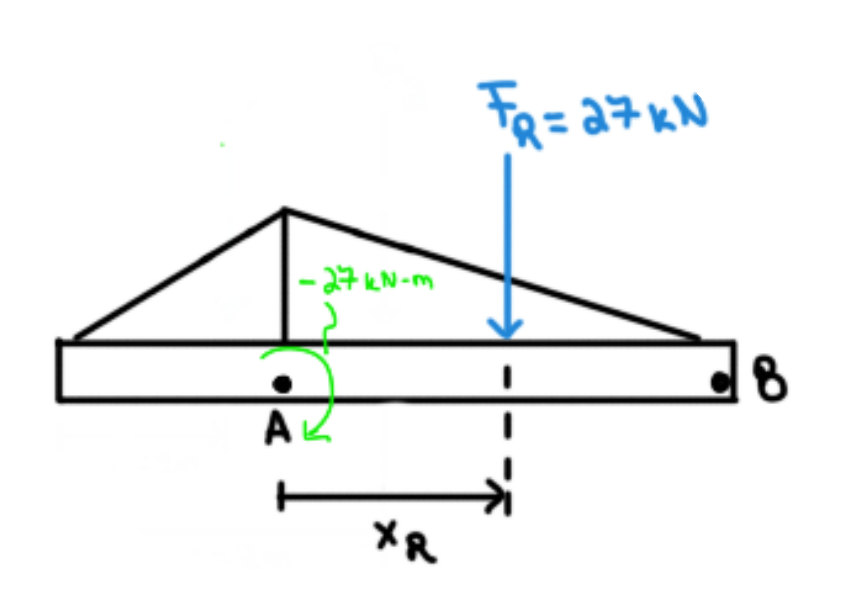
to the right of A
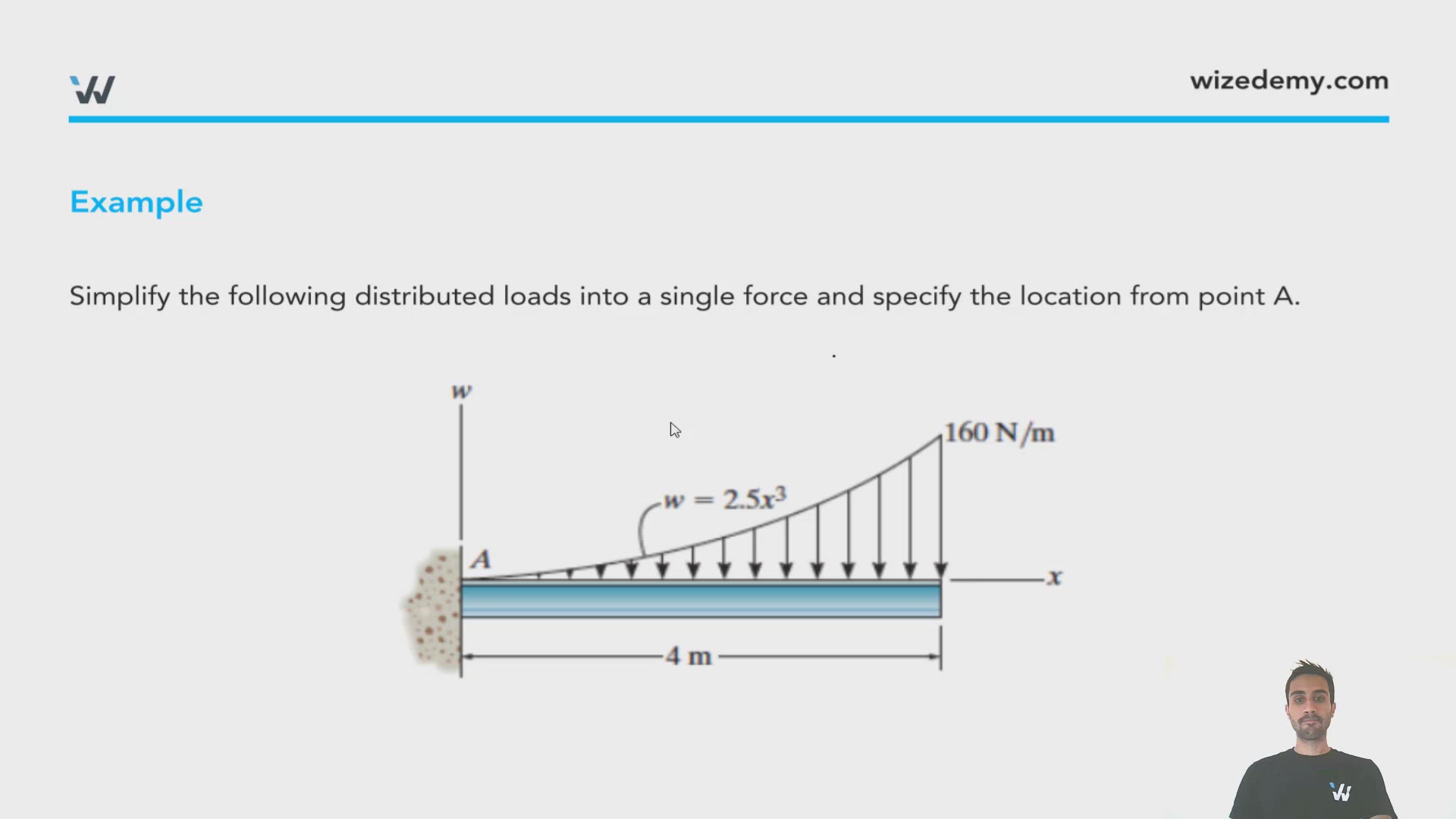
0:00 / 0:00
Example
Simplify the following distributed loads into a single force and specify the location from point A.
Resultant Force,
Set the origin at A, positive to the right.
Resultant Moment at A,
Location of Resultant Force,
Practice
Simplify each of the loadings into a single equivalent force and determine the location from point A:
Practice:
Simplify each of the loadings into a single equivalent force and determine the location from point A:
Mark Yourself Question
- Grab a piece of paper and try this problem yourself.
- When you're done, check the "I have answered this question" box below.
- View the solution and report whether you got it right or wrong.
Simplify each of the loadings into a single equivalent force:
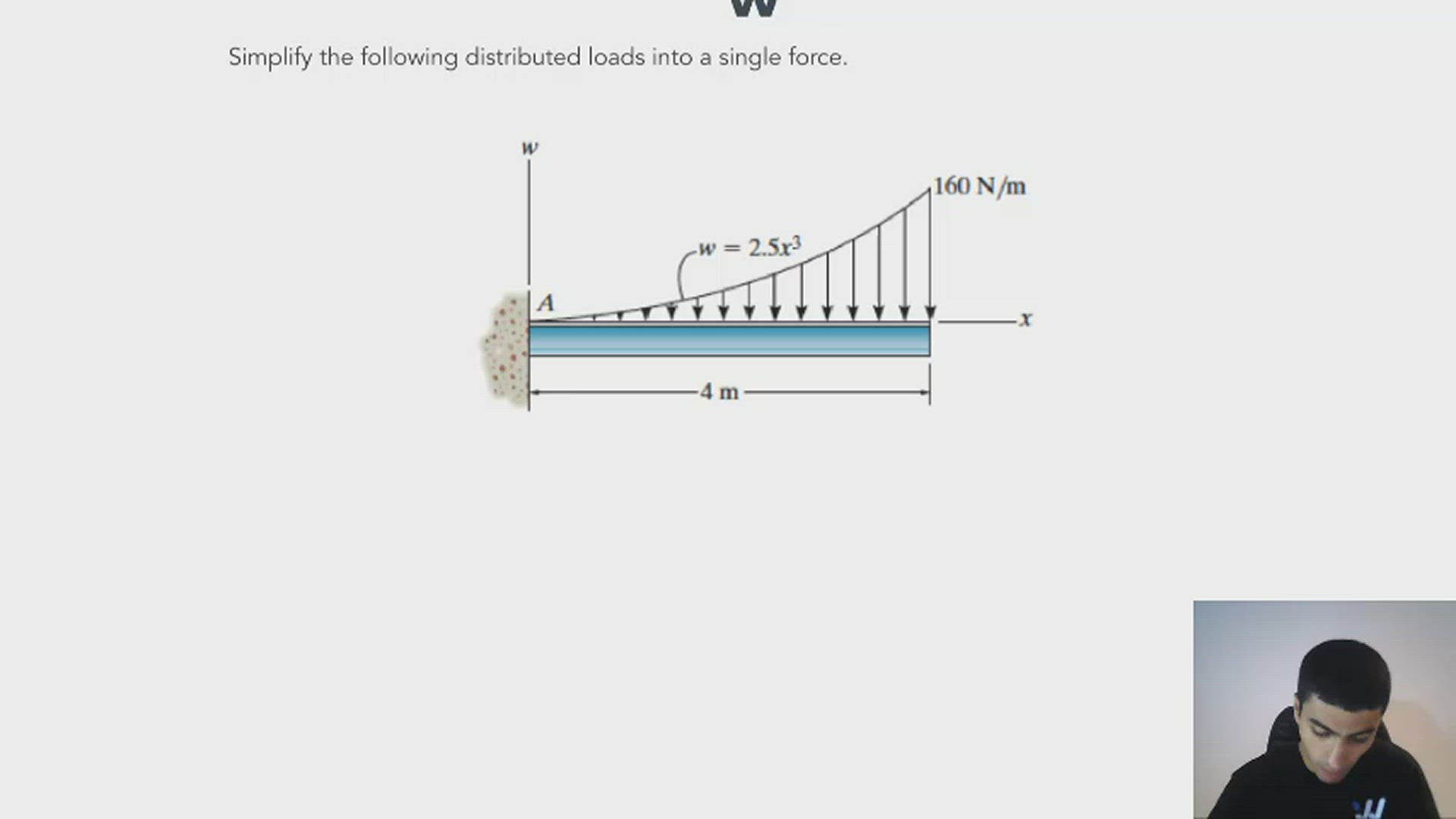
Simplify the following distributed loads into a single force.
Set the origin at A, positive to the right.
0:00 / 0:00
Simplify the following distributed loads into a single force.
Set the origin at A, positive to the right.
Mark Yourself Question
- Grab a piece of paper and try this problem yourself.
- When you're done, check the "I have answered this question" box below.
- View the solution and report whether you got it right or wrong.
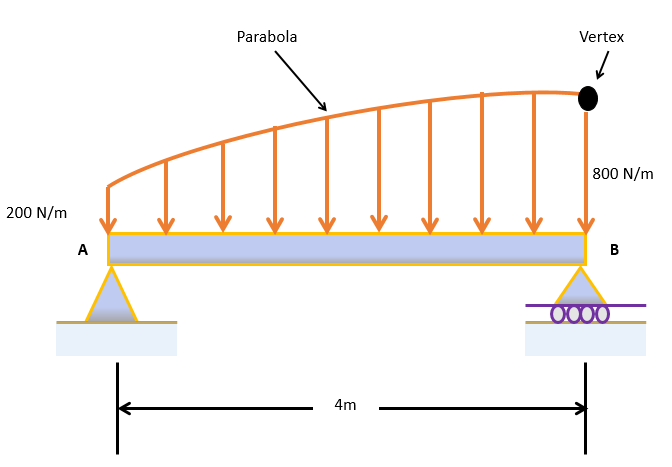
Simplify the loading into a single equivalent force:
Mark Yourself Question
- Grab a piece of paper and try this problem yourself.
- When you're done, check the "I have answered this question" box below.
- View the solution and report whether you got it right or wrong.
Simplify the loading into a single equivalent force:
Mark Yourself Question
- Grab a piece of paper and try this problem yourself.
- When you're done, check the "I have answered this question" box below.
- View the solution and report whether you got it right or wrong.
Simplify the loading into a single equivalent force:

Mark Yourself Question
- Grab a piece of paper and try this problem yourself.
- When you're done, check the "I have answered this question" box below.
- View the solution and report whether you got it right or wrong.
Simplify the loading into a single equivalent force:
Quiz: Distributed Loads Practice - Integration Quiz
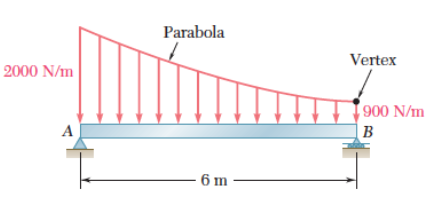
Replace the loading with a single equivalent force.
Quiz: Distributed Loads Practice - Integration Quiz
Replace the loading with a single equivalent force.