Wize University Statics Textbook (Master) > Moment of Inertia
Moments of Inertia & Parallel Axis Theorem

0:00 / 0:00
The moment of inertia is a geometric property of an area that is used to determine the strength of a structural member or the location of a resultant pressure force acting on a plate submerged in a fluid. It is sometimes referred to as the second moment of the area about an axis because the distance from the axis to each area element is squared.
If the moment of inertia of an area is known about its centroidal axis, then the moment of inertia about a corresponding parallel axis can be determined using the parallel axis theorem.
Parallel Axis Theorem:
About the x-axis,
About the y-axis,
The value for and for rectangular and circular areas can be found in the back cover of our book.

Let's Examine this together,
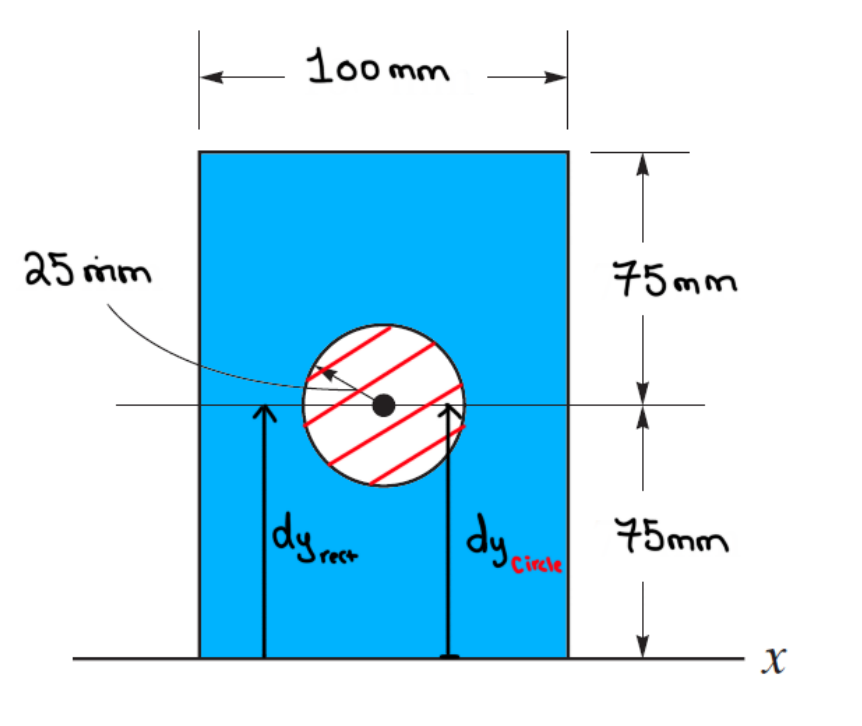
Circle,
Rectangle ,
Total Moment of Inertia,
If we look at this case,
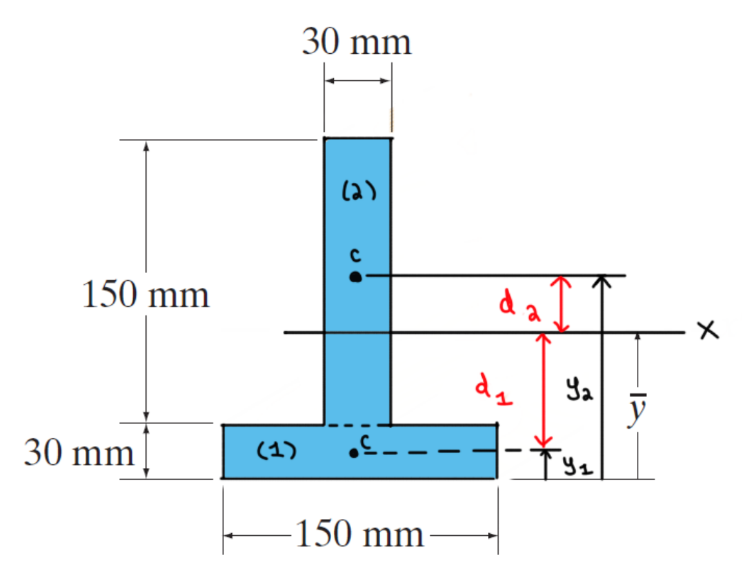

0:00 / 0:00
Example
Determine the moment of inertia of the cross-sectional area of the T-beam with respect to the x-axis passing through the centroid of the cross-section.
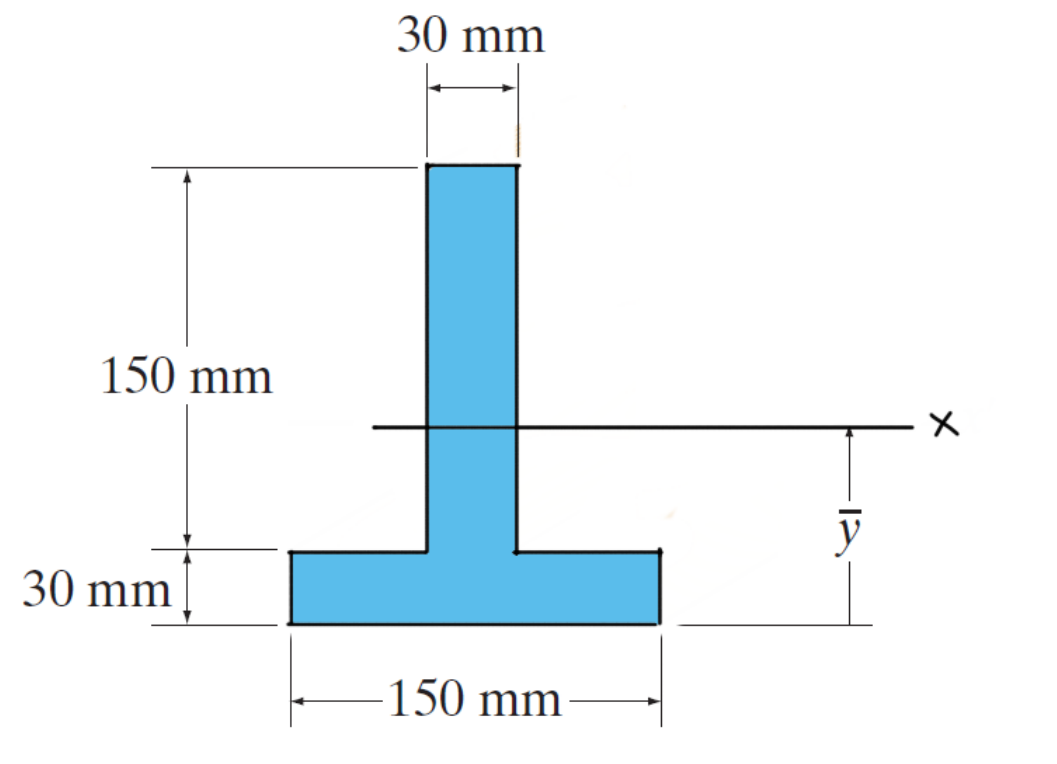
1) Break the T-beam into two basic shapes (1) and (2):

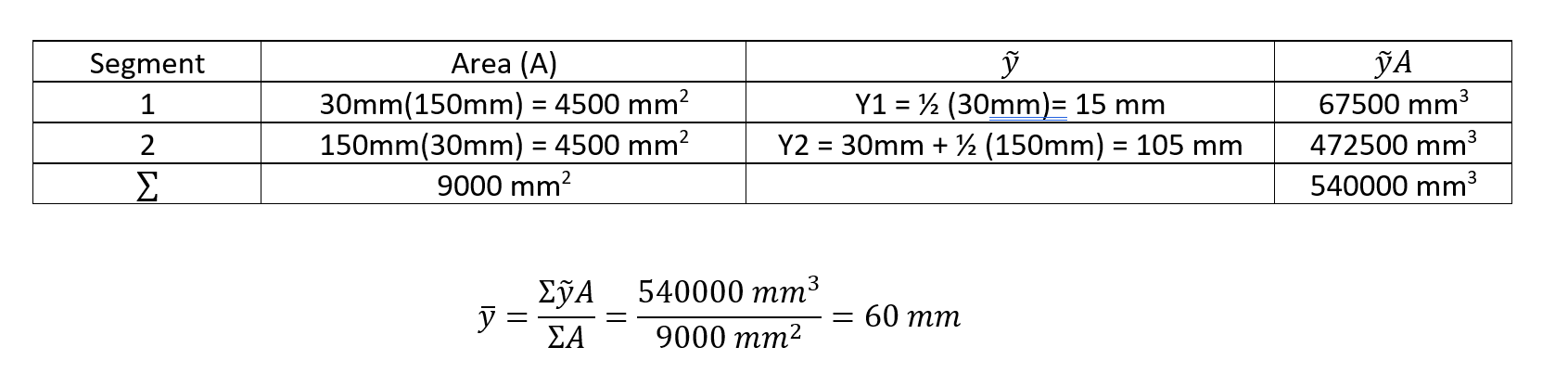
2) Find the centroid for the entire shape.
3) Apply the second moment of area "Parallel Axis Theorem"
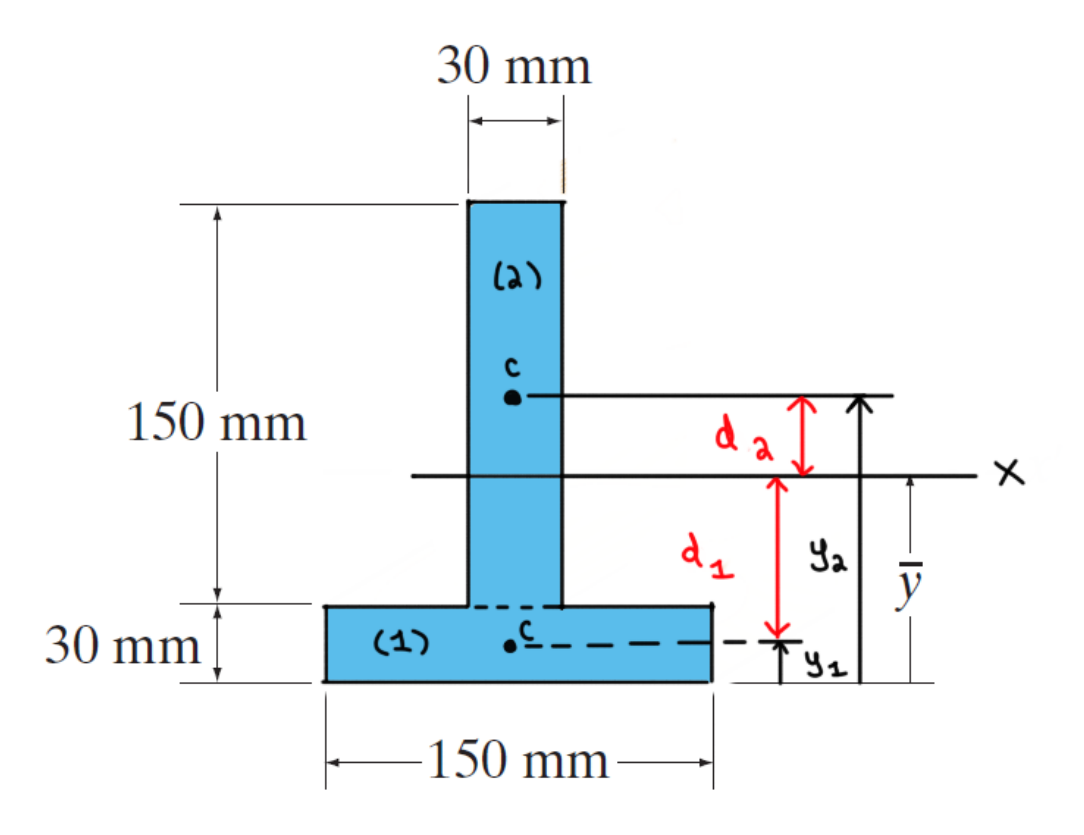
Solve,

Mark Yourself Question
- Grab a piece of paper and try this problem yourself.
- When you're done, check the "I have answered this question" box below.
- View the solution and report whether you got it right or wrong.
Practice
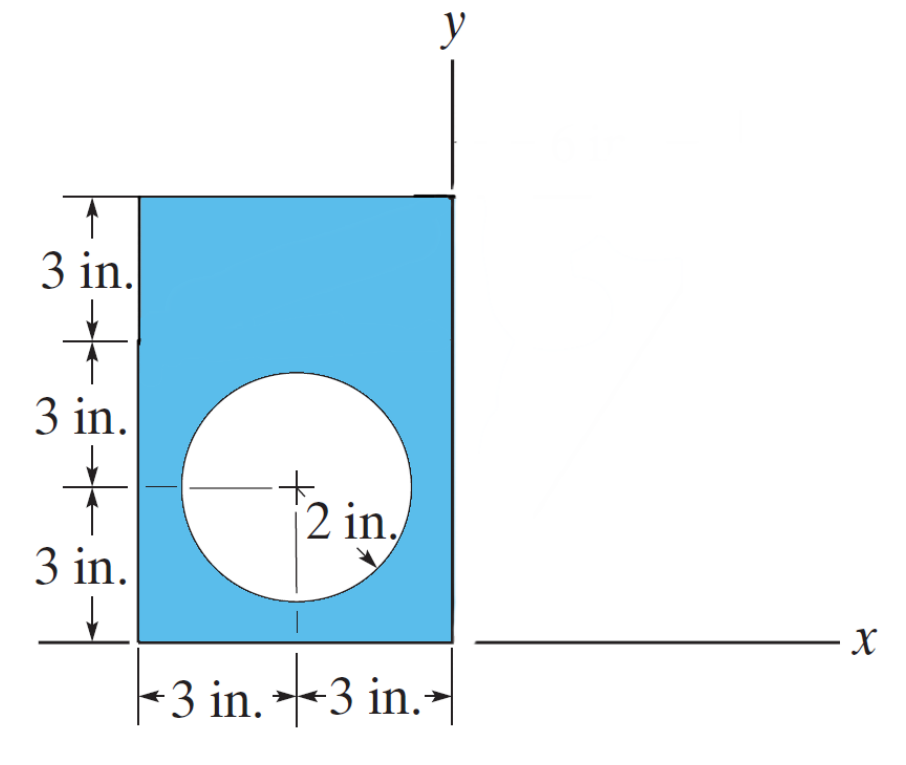
Determine the moment of inertia for the shaded area about the x-axis.
Mark Yourself Question
- Grab a piece of paper and try this problem yourself.
- When you're done, check the "I have answered this question" box below.
- View the solution and report whether you got it right or wrong.
Practice
Determine the moment of inertia about the x-axis.
