Annuities
- A series of payments or cash flows with the following characteristics
- Equal value
- Equal time between cash flow
- Equal interest rate
- Finite number of cash flows
- Payments can take place at the end of the period (ordinary annuity) or at the beginning of the period (annuity-due).
Present Value of an Ordinary Annuity
- Sum of the present value of the individual cash flows one period before the first payment.
- Can be solved using a formula or with a financial calculator.
- In both cases, you will need:
- Value of the cash flow
- Effective periodic rate
- Number of cash flows
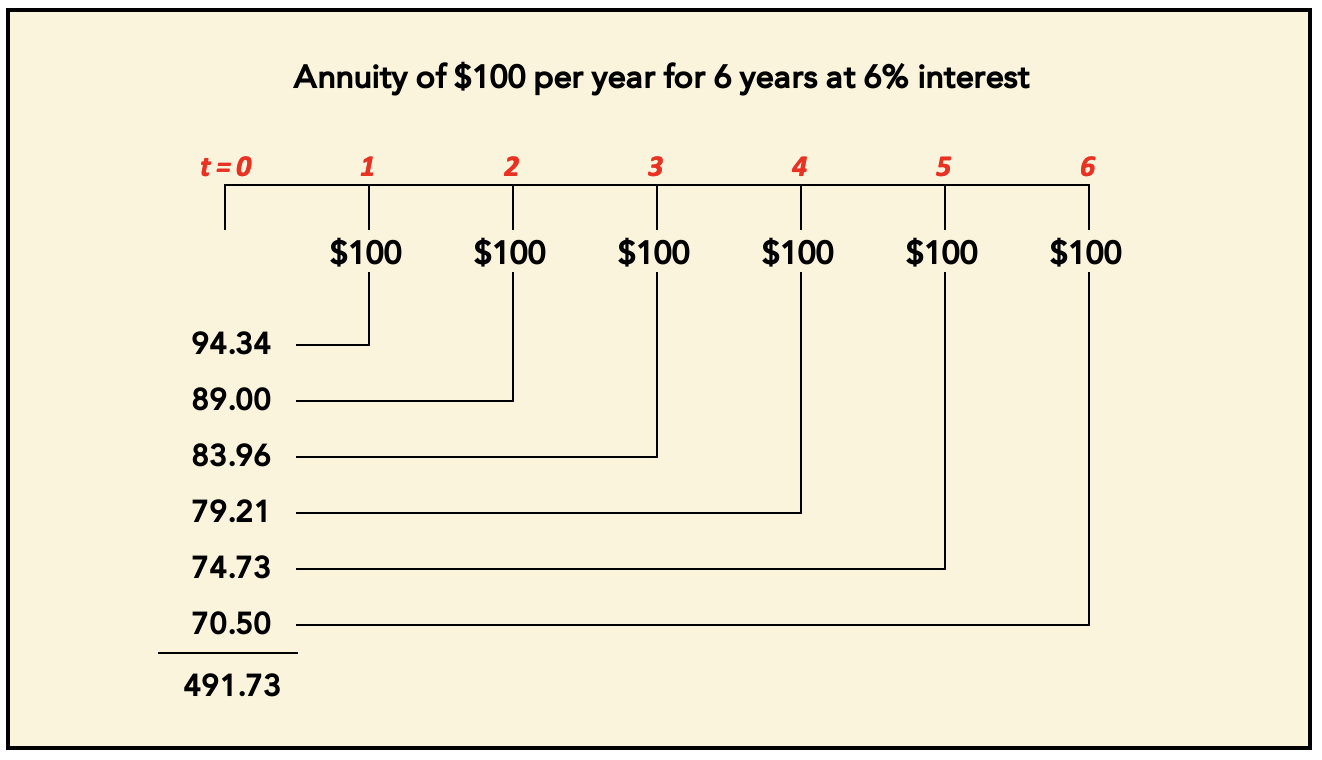
Present Value Formula

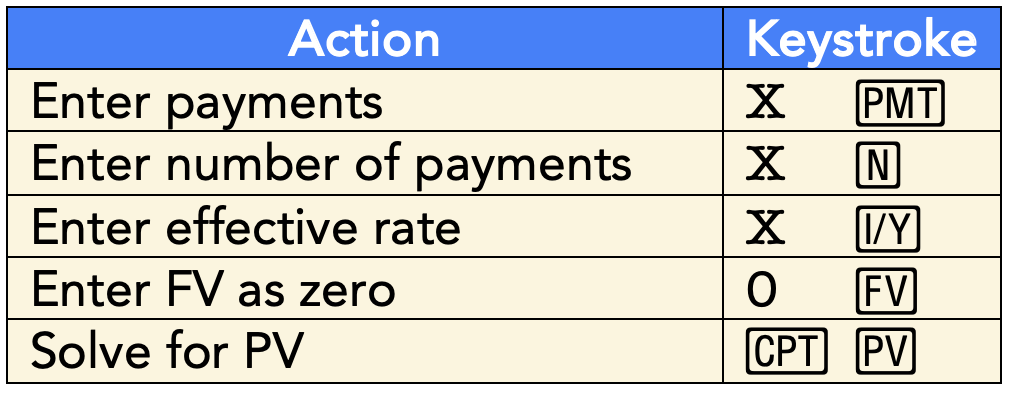
Financial Calculator Method
Future Value of an Ordinary Annuity
- Sum of the future value of the individual cash flows at the same period of time as the last cash flow.
- Can be solved using a formula or with a financial calculator.
- In both cases, you will need:
- Value of the cash flow
- Effective periodic rate
- Number of cash flows
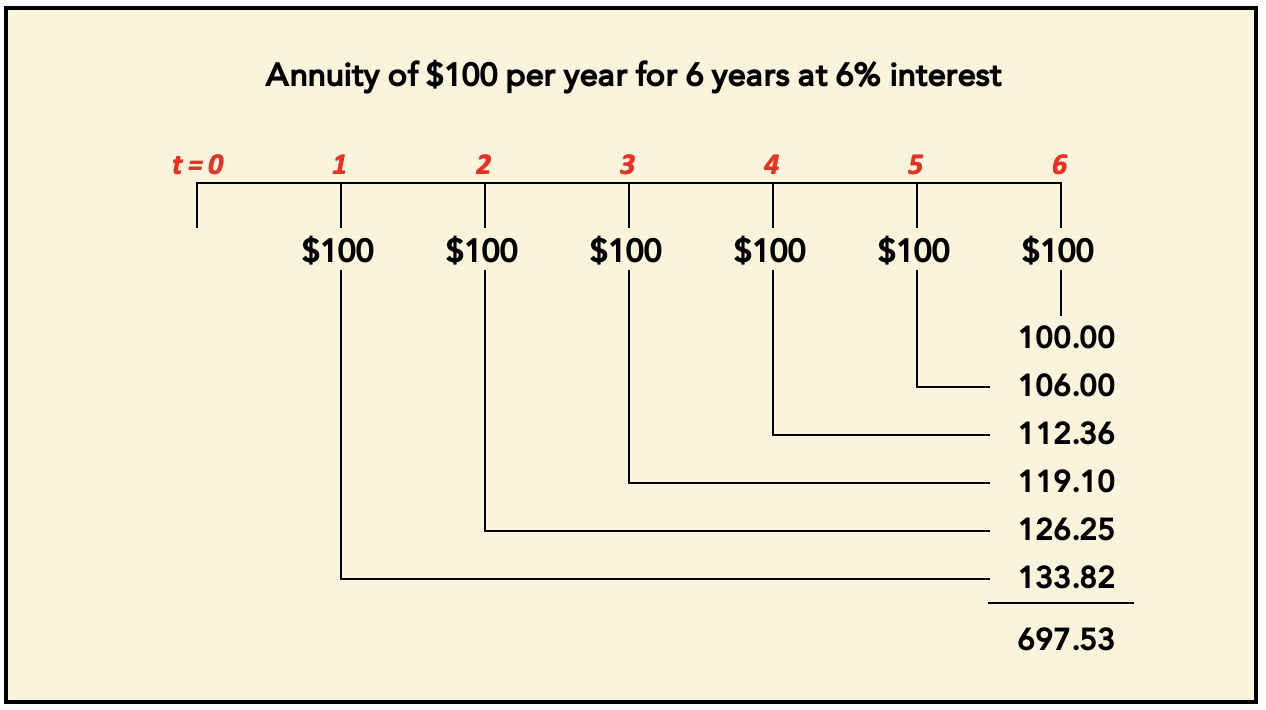
Future Value Formula

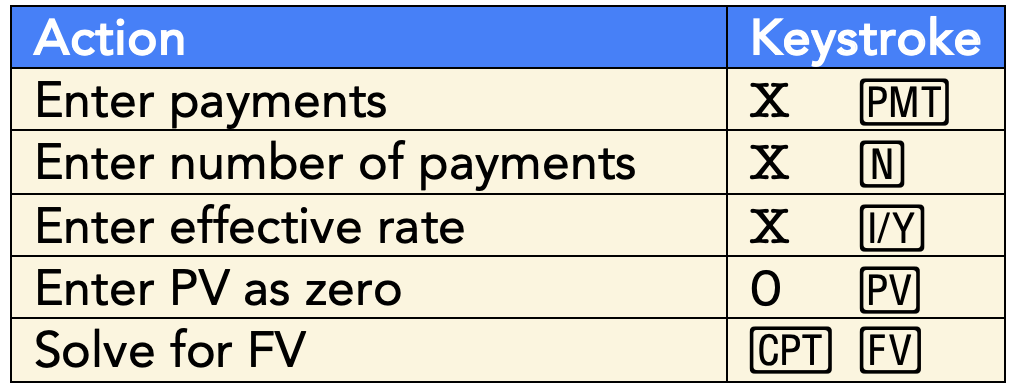
Financial Calculator Method
Example: Ordinary Annuities
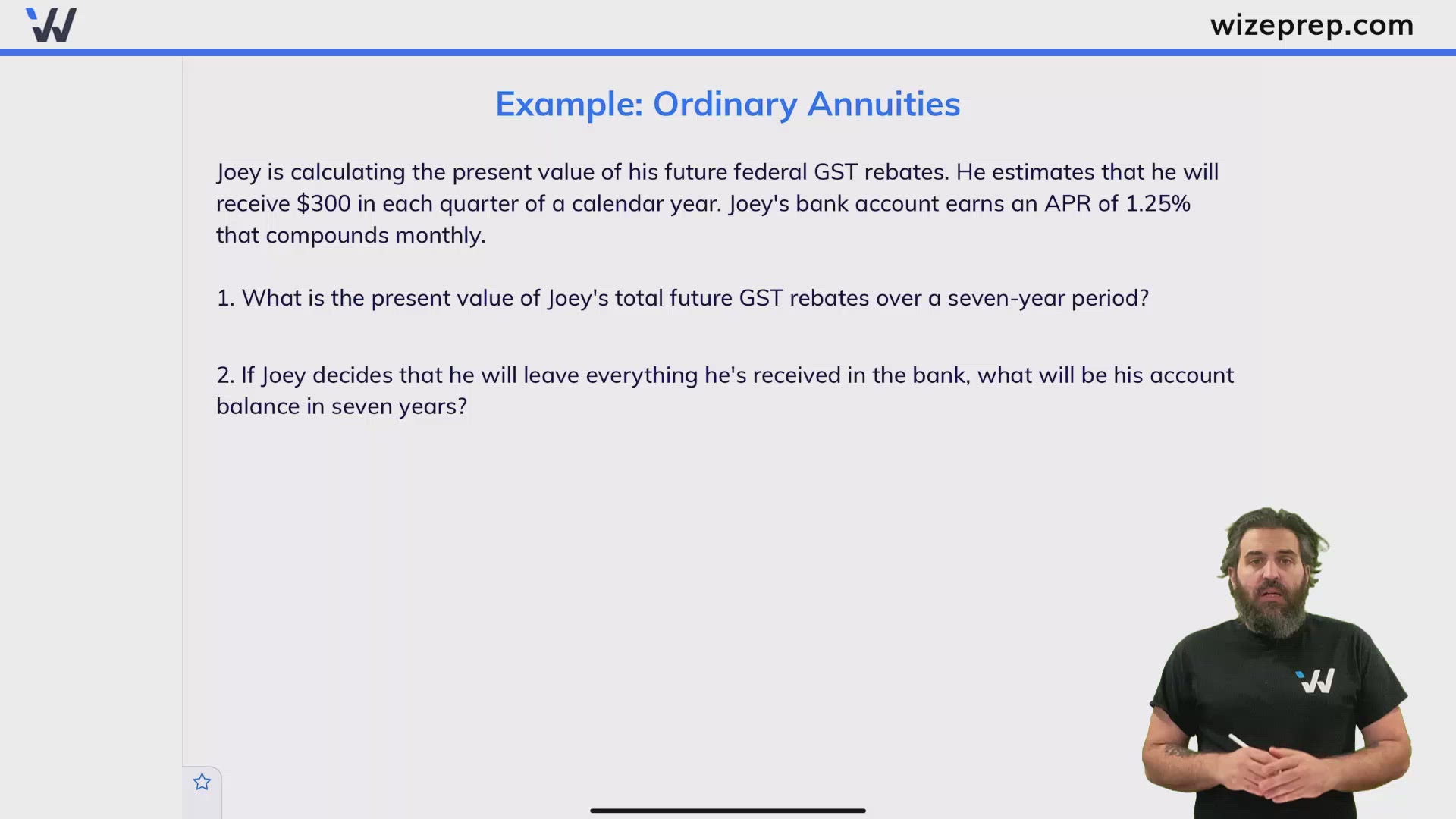
Joey is calculating the present value of his future federal GST rebates. He estimates that he will receive $300 in each quarter of a calendar year. Joey's bank account earns an APR of 1.25% that compounds monthly.
1. What is the present value of Joey's total future GST rebates over a seven-year period?
2. If Joey decides that he will leave everything he's received in the bank, what will be his account balance in seven years?
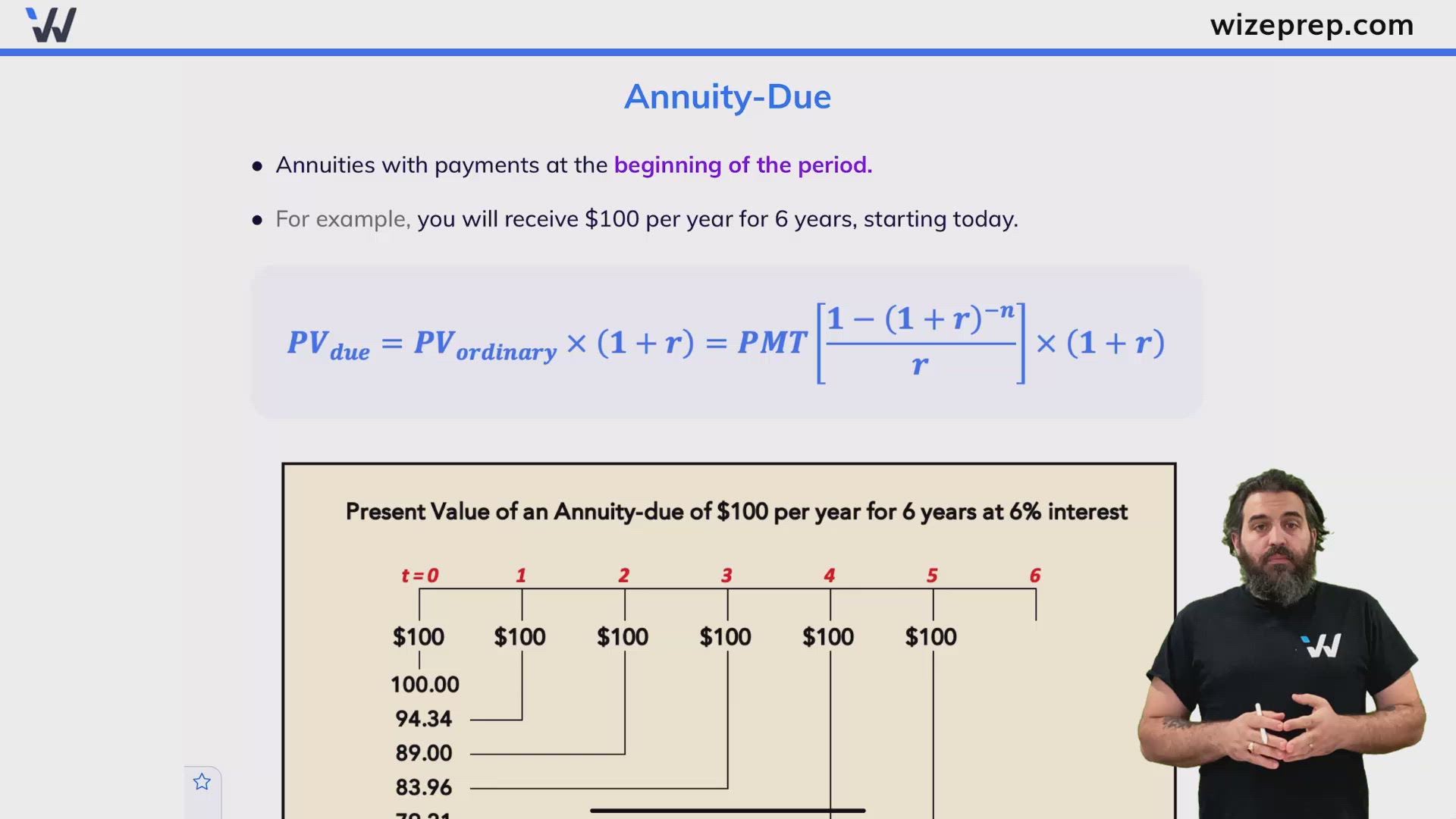
Annuity-Due
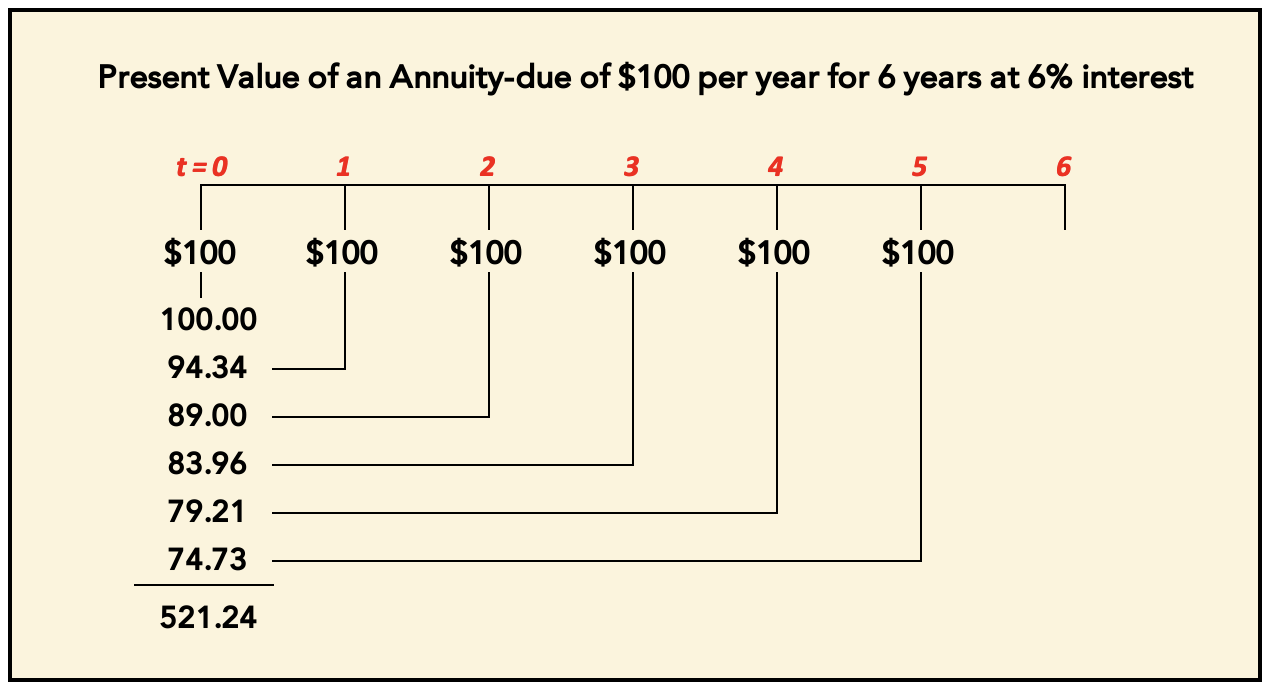
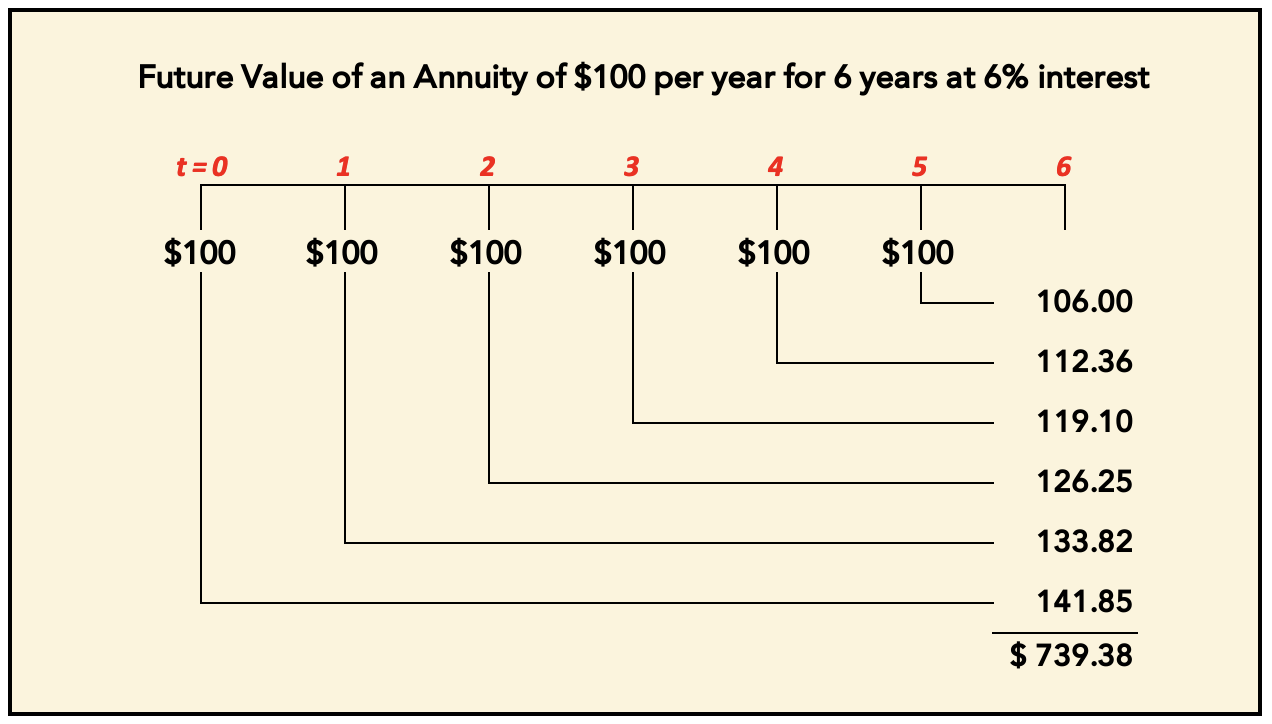
- Annuities with payments at the beginning of the period.
- For example, you will receive $100 per year for 6 years, starting today.


Example: Annuity-Due
Carmen and Carrie are sisters. Carmen donates $30 to World Vision Canada at the beginning of each month. Carrie donates $30 to World Vision Canada at the end of each month. Their bank accounts both offer an effective annual interest rate of 1.25%. Calculate, separately, the present value of each sister’s donations over the next ten years.