Popular Courses
COMM 308
Concordia University
Intro to Finance
University Study Guides
Intro to Finance
University Study Guides
FINA 230
Concordia University
MGCR 341
McGill University
FIN 301
University of Alberta
FIN 300
Toronto Metropolitan University
COMM 121
Queen's University
FIN*2000
University of Guelph
FINC 341
Texas A&M University
COMMERCE 2FA3
McMaster University
COMM 2202
Dalhousie University
BU283
Wilfrid Laurier University
FIN 300
Arizona State University - Tempe
BUSFIN 3220
Ohio State University
SB/FINE 2000 3.00
York University
FIN 301
Pennsylvania State University
BUS-F 255
Indiana University - Bloomington
FIN 3403
University of Central Florida
FIN 3403
University of Florida
0:00 / 0:00
Equity Basics
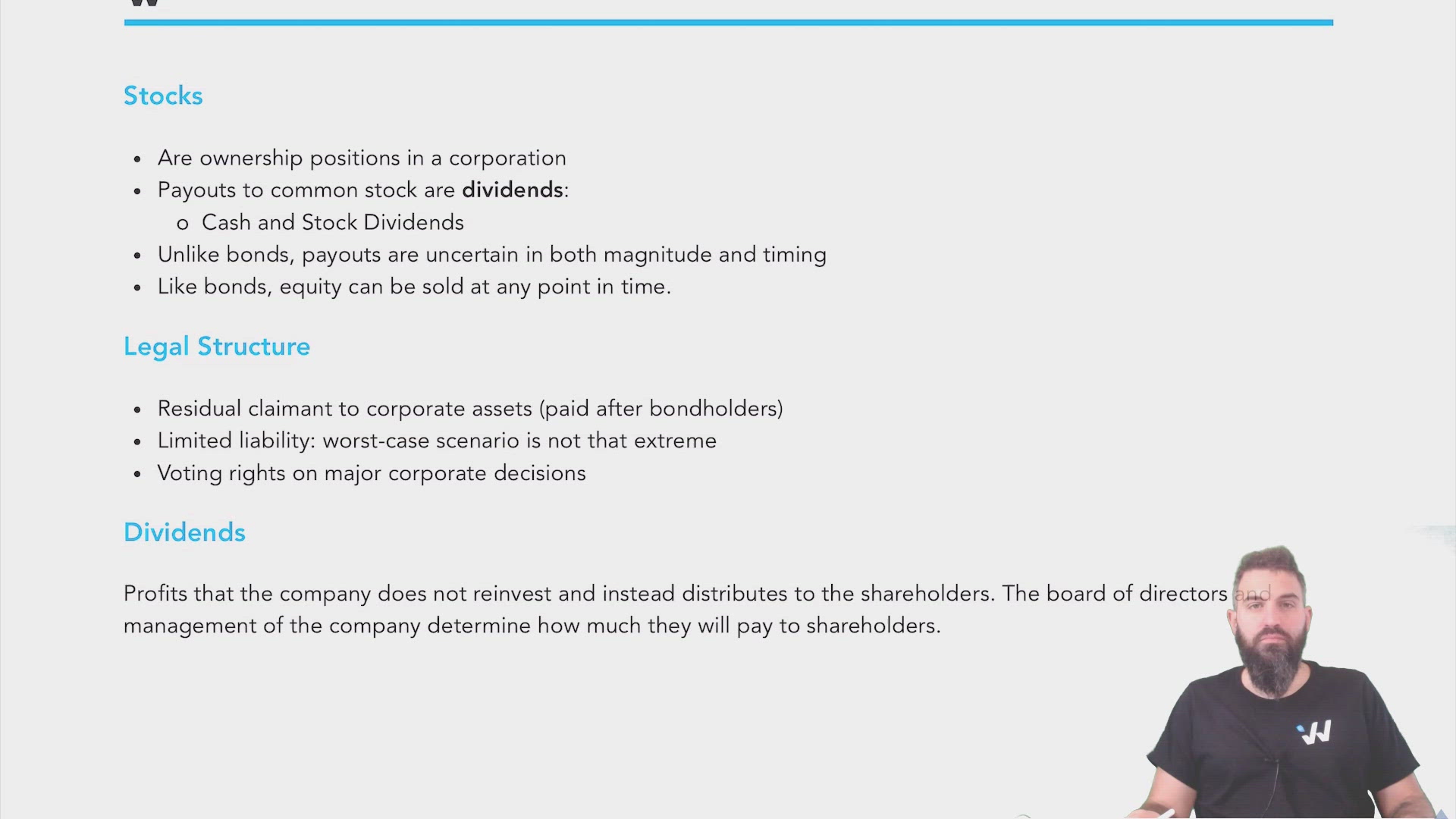
Stocks
- Are ownership positions in a corporation
- Payouts to common stock are dividends: o Cash or Stock Dividends
- Unlike bonds, payouts are uncertain in both magnitude and timing
- Like bonds, equity can be sold at any point in time.
Legal Structure
- Residual claimant to corporate assets (paid after bondholders)
- Limited liability: worst-case scenario is not that extreme
- Voting rights on major corporate decisions
Dividends
- Profits that the company does not reinvest and instead distributes to the shareholders.
- The board of directors and management of the company determine how much they will pay to shareholders.
0:00 / 0:00
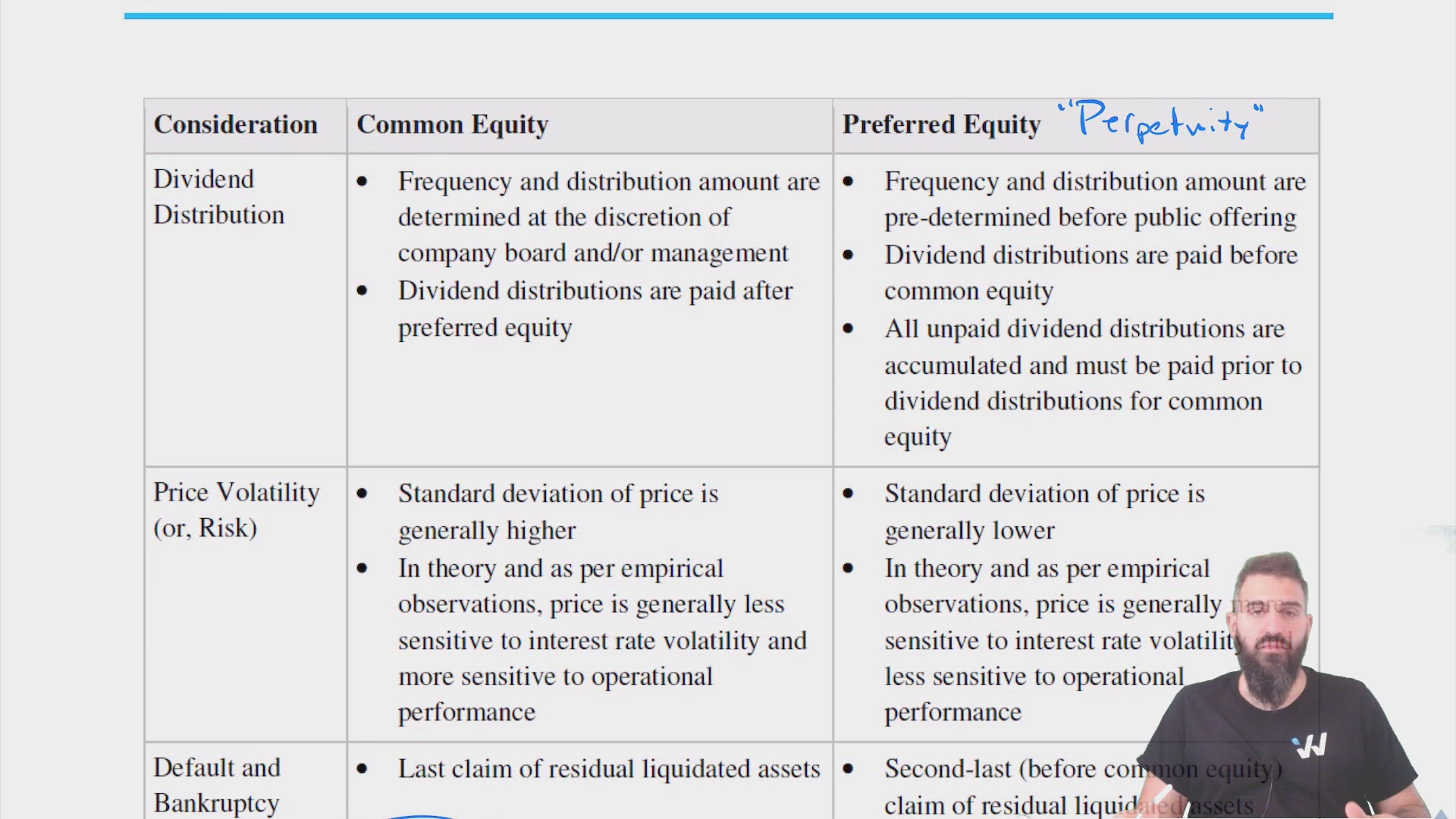
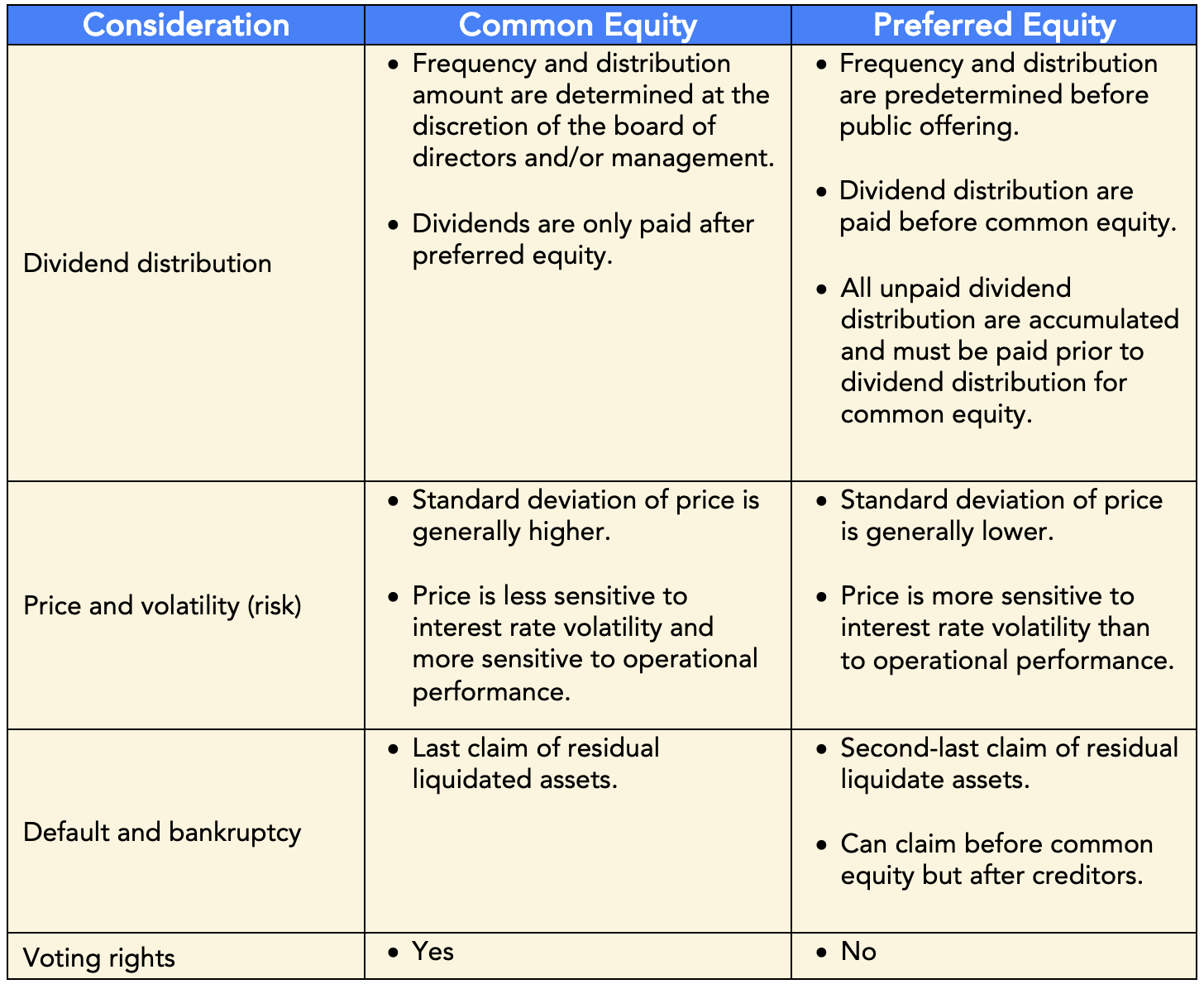
Common Vs Preferred Equity
0:00 / 0:00
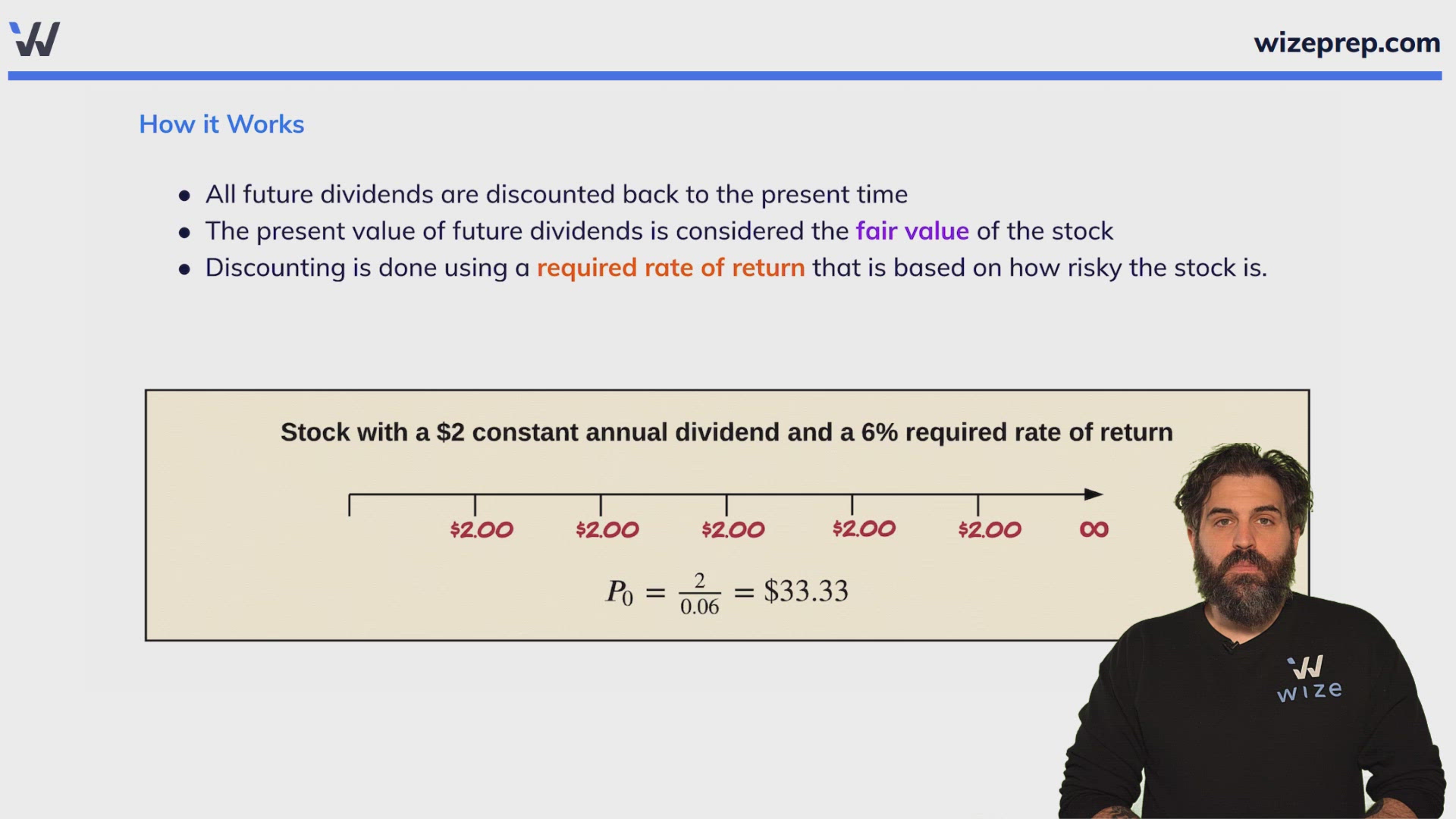
The Dividend Discount Model (DDM)
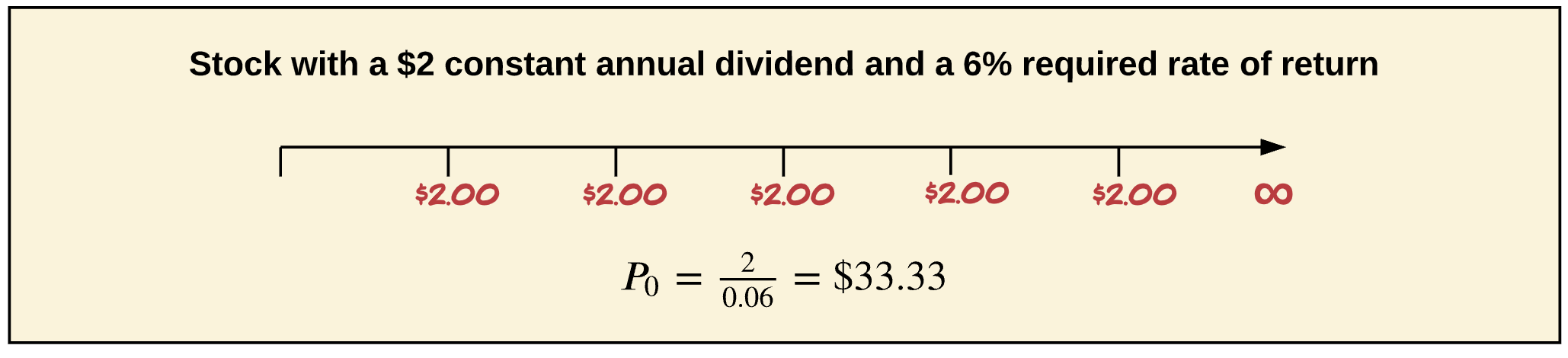
In finance and investing, the dividend discount model is a method of valuing the price of a company's stock based on the fact that its stock is worth the sum of all of its future dividend payments, discounted back to their present value.
How it Works
- All future dividends are discounted back to the present time
- The present value of future dividends is considered the fair value of the stock
- Discounting is done using a required rate of return that is based on how risky the stock is.
Required Rate of Return
- The minimum return on investment investors expect to earn on a stock.
- Is found by adding a risk premium to the risk-free rate
- Risk-free rate is the return an investor can earn by investing in risk-free government investments.
- Risk premium increases if a stock is more risky and decreases if a stock is less risky

