Popular Courses
COMM 308
Concordia University
Intro to Finance
University Study Guides
Intro to Finance
University Study Guides
FINA 230
Concordia University
MGCR 341
McGill University
FIN 301
University of Alberta
FIN 300
Toronto Metropolitan University
COMM 121
Queen's University
FIN*2000
University of Guelph
FINC 341
Texas A&M University
COMMERCE 2FA3
McMaster University
COMM 2202
Dalhousie University
BU283
Wilfrid Laurier University
FIN 300
Arizona State University - Tempe
BUSFIN 3220
Ohio State University
SB/FINE 2000 3.00
York University
FIN 301
Pennsylvania State University
BUS-F 255
Indiana University - Bloomington
FIN 3403
University of Central Florida
FIN 3403
University of Florida
0:00 / 0:00
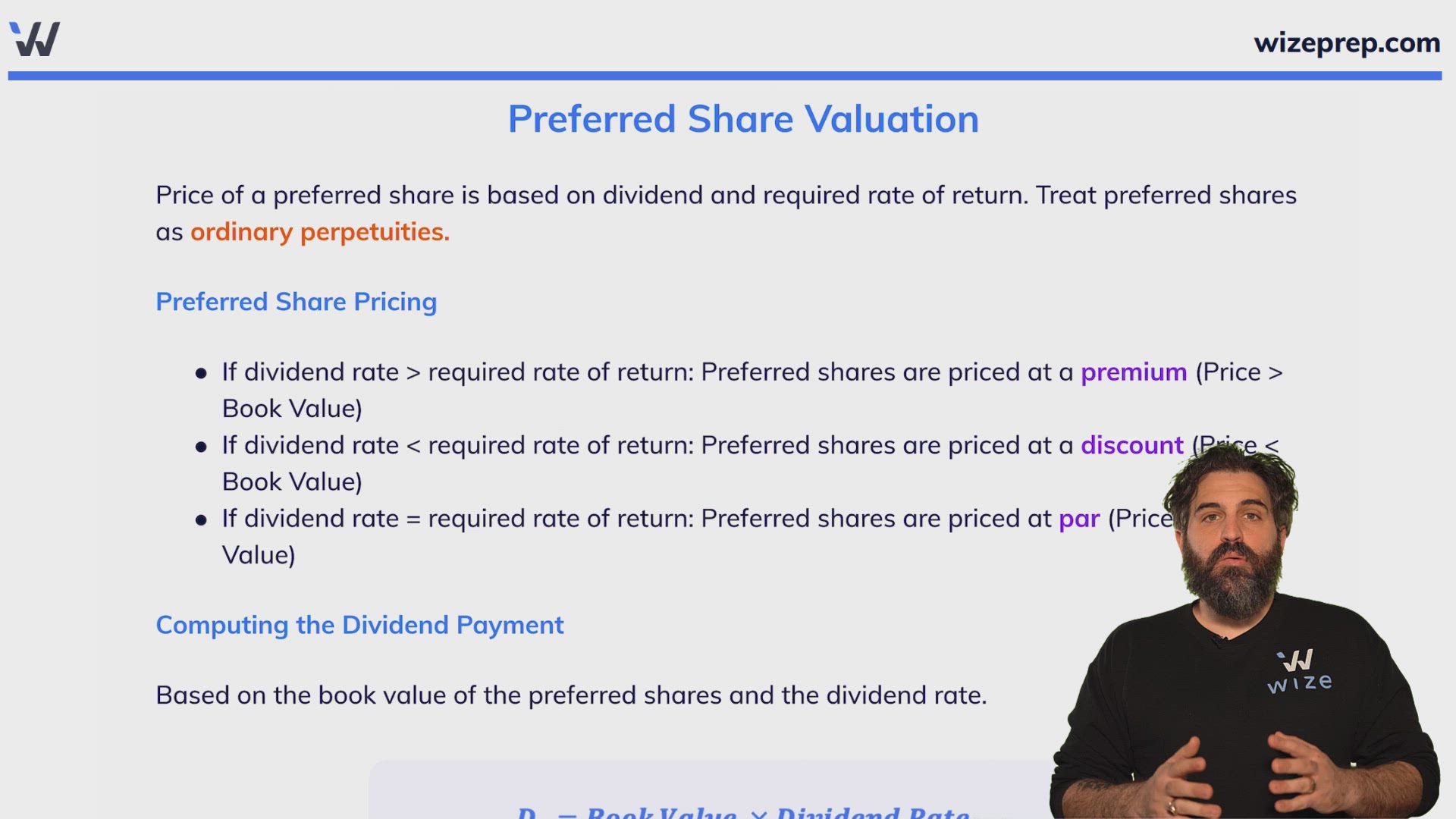
Preferred Share Valuation
Price of a preferred share is based on dividend and required rate of return. Treat preferred shares as ordinary perpetuities.
Preferred Share Pricing
- If dividend rate > required rate of return: Preferred shares are priced at a premium (Price > Book Value)
- If dividend rate < required rate of return: Preferred shares are priced at a discount (Price < Book Value)
- If dividend rate = required rate of return: Preferred shares are priced at par (Price = Book Value)
Computing the Dividend Payment
Based on the book value of the preferred shares and the dividend rate.

Computing the Price of a Preferred Share
- The present value of future dividends
- The required rate of return is used as the discount rate

Where:
P = Price of the preferred share
D = Dividend
r = Required rate of return
0:00 / 0:00
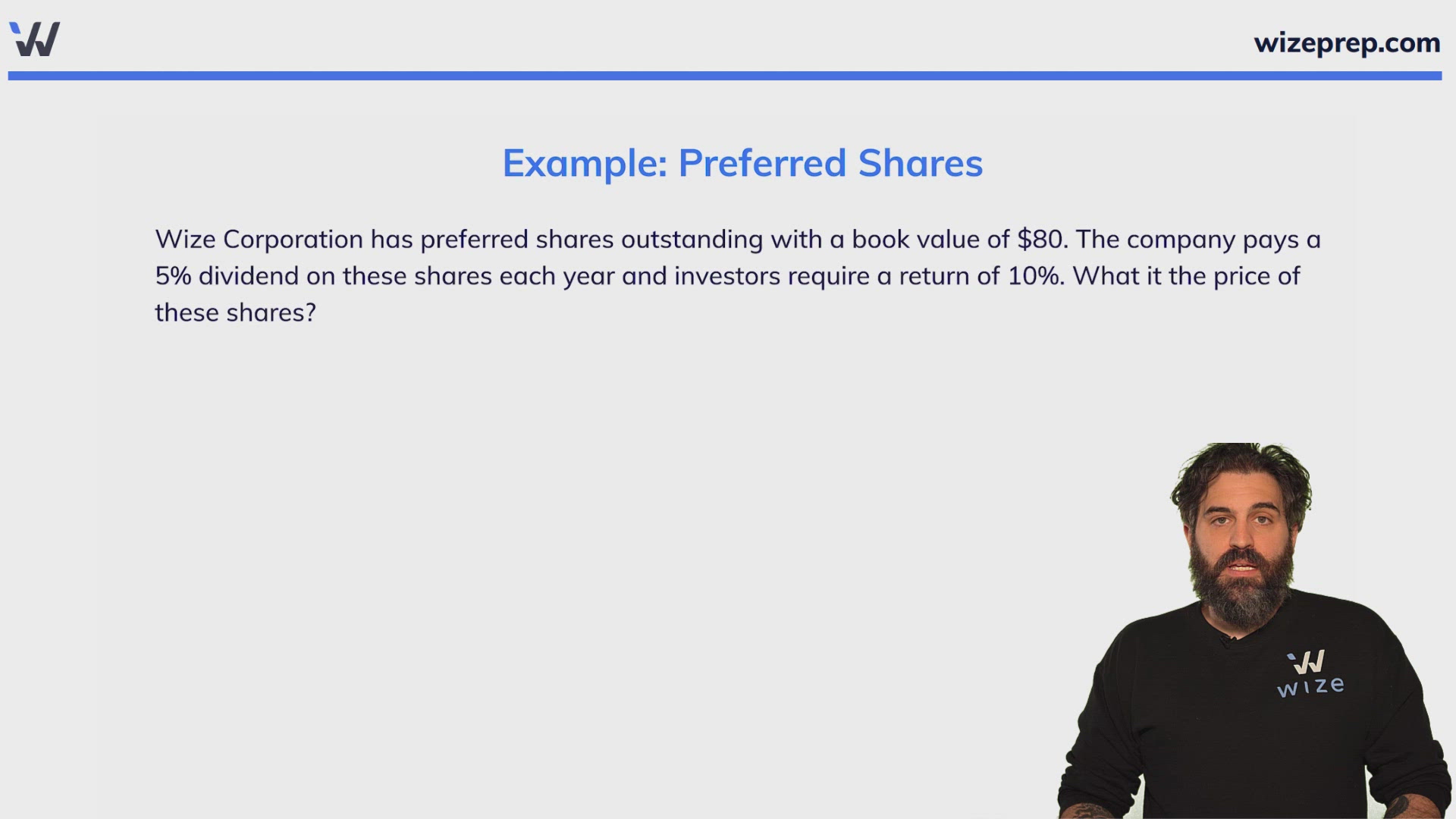
Example: Preferred Shares
Wize Corporation has preferred shares outstanding with a book value of $80. The company pays a 5% dividend on these shares each year and investors require a return of 10%. What it the price of these shares?
Practice: Preferred Shares
ABC Inc. wishes to issue new preferred shares at par. It currently has existing preferred shares outstanding that are trading at $157.60 and pay an 8% annual dividend. If both the old and new preferred shares have a book value of $100, what should the dividend rate be on the new shares?
%
Round your final answer to 2 decimal places.