Popular Courses
COMM 308
Concordia University
Intro to Finance
University Study Guides
Intro to Finance
University Study Guides
FINA 230
Concordia University
MGCR 341
McGill University
FIN 301
University of Alberta
FIN 300
Toronto Metropolitan University
COMM 121
Queen's University
FIN*2000
University of Guelph
FINC 341
Texas A&M University
COMM 2202
Dalhousie University
BU283
Wilfrid Laurier University
FIN 300
Arizona State University - Tempe
BUSFIN 3220
Ohio State University
SB/FINE 2000 3.00
York University
FIN 301
Pennsylvania State University
BUS-F 255
Indiana University - Bloomington
FIN 3403
University of Central Florida
FIN 3403
University of Florida
FIN 320
California State University - Fullerton
0:00 / 0:00
Types of Risk
Risk Premium
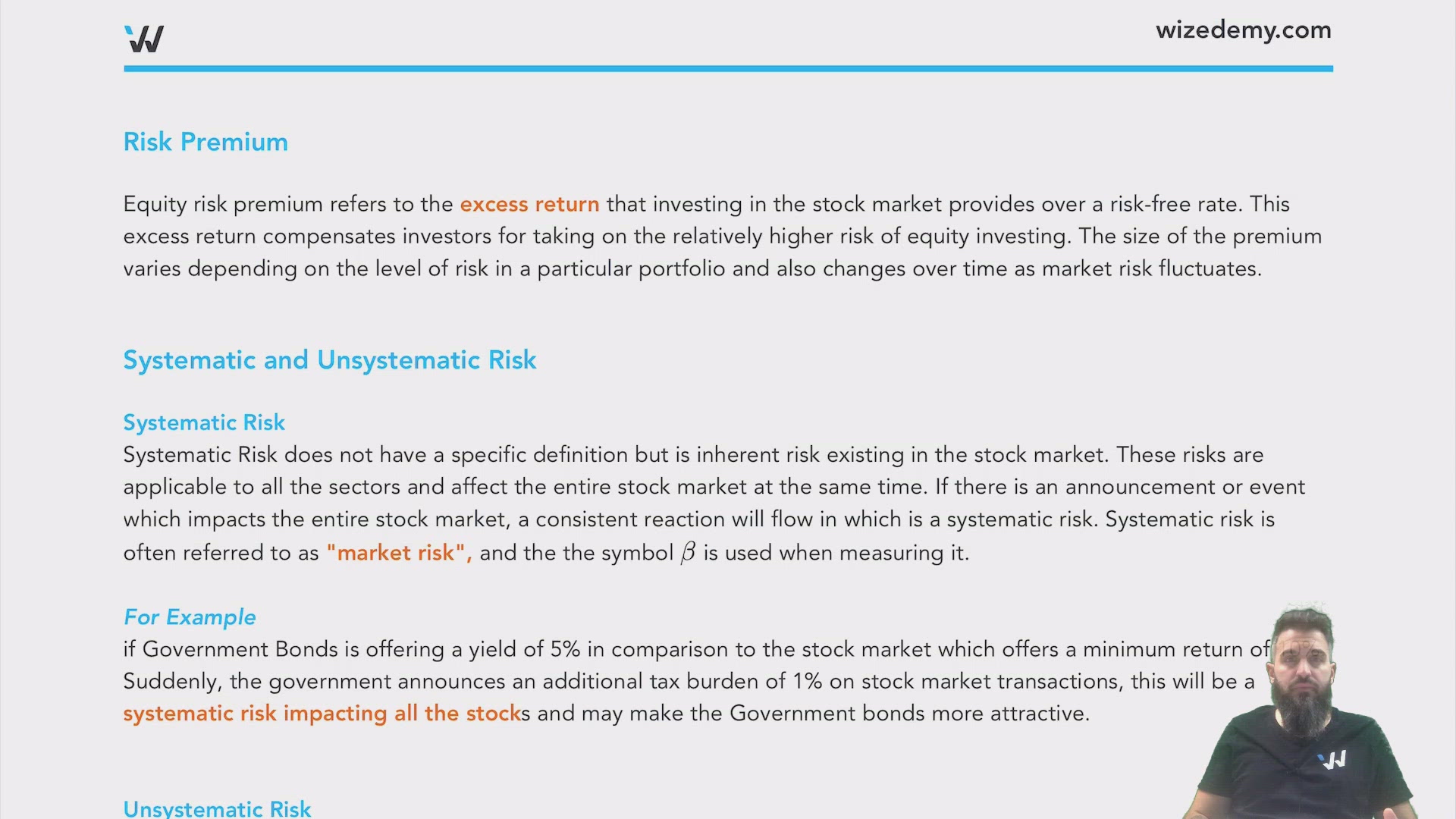
Equity risk premium refers to the excess return that investing in the stock market provides over a risk-free rate. This excess return compensates investors for taking on the relatively higher risk of equity investing. The size of the premium varies depending on the level of risk in a particular portfolio and also changes over time as market risk fluctuates.
Systematic and Unsystematic Risk
Systematic Risk
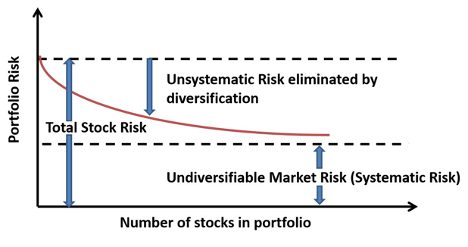
Systematic Risk does not have a specific definition but is an inherent risk existing in the stock market. These risks are applicable to all sectors and affect the entire stock market at the same time. If there is an announcement or event which impacts the entire stock market, a consistent reaction will flow in which is a systematic risk. Systematic risk is often referred to as "market risk", and the symbol is used when measuring it.
For Example:
If Government Bonds is offering a yield of 5% in comparison to the stock market which offers a minimum return of 10%. Suddenly, the government announces an additional tax burden of 1% on stock market transactions, this will be a systematic risk impacting all the stocks and may make the Government bonds more attractive.
Unsystematic Risk
Unsystematic Risk is an industry or firm-specific threat in each kind of investment. It is also known as "Asset-specific Risk" or "Diversifiable risk" or "Idiosyncratic risk". These are risks which are existing but are unplanned and can occur at any point in causing widespread disruption.
For Example:
If the staff of the airline industry goes on an indefinite strike, then this will cause risk to the shares of the airline industry and a fall in the prices of the stock impacting this industry.
Total Risk = Unsystematic Risk + Systematic Risk