Wize University Calculus 3 Textbook > Vectors & Geometry of Space
Properties of Vectors, Length of Vectors, and Unit Vectors
Popular Courses
MATH 200
University of British Columbia
MATH 253
University of British Columbia
MATH 222
McGill University
MATH 209
University of Alberta
MATH 121B
Queen's University
MAST 218
Concordia University
SC/MATH 2015 3.00
York University
MAT 2322
University of Ottawa
MATH 237
University of Waterloo
MAT235Y1
University of Toronto
MAT 2384
University of Ottawa
MATH 200
University of Victoria
MATH 251
Simon Fraser University
MATH 20C
University of California - San Diego
MAT237Y1
University of Toronto
MAT 2122
University of Ottawa
MATH 2214
Virginia Tech
MATH 10C
University of California - San Diego
SC/MATH 2310 3.00
York University
MATH 20E
University of California - San Diego
0:00 / 0:00
Properties of Vectors, Length of Vectors, and Unit Vectors
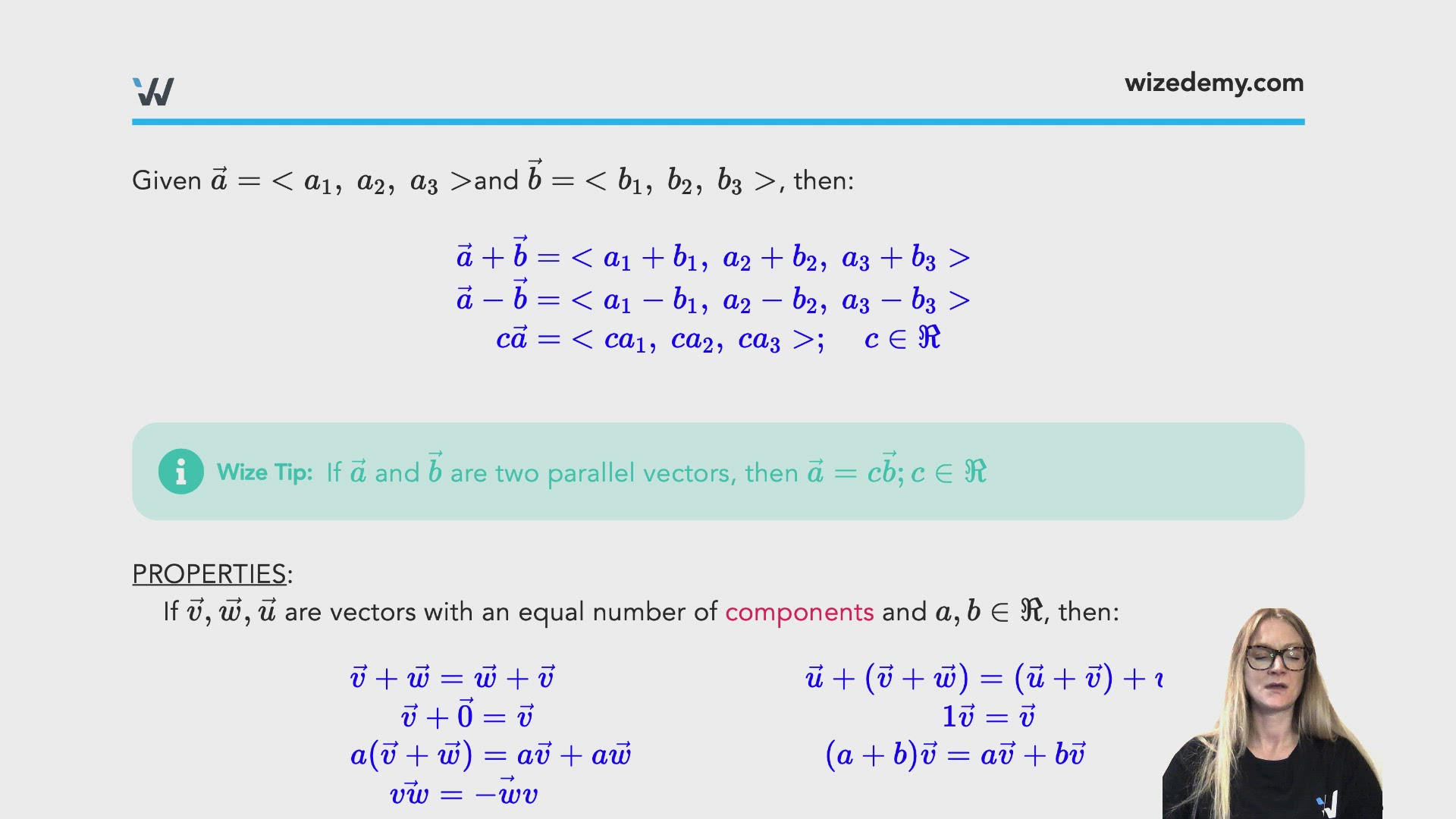
Given and , then:
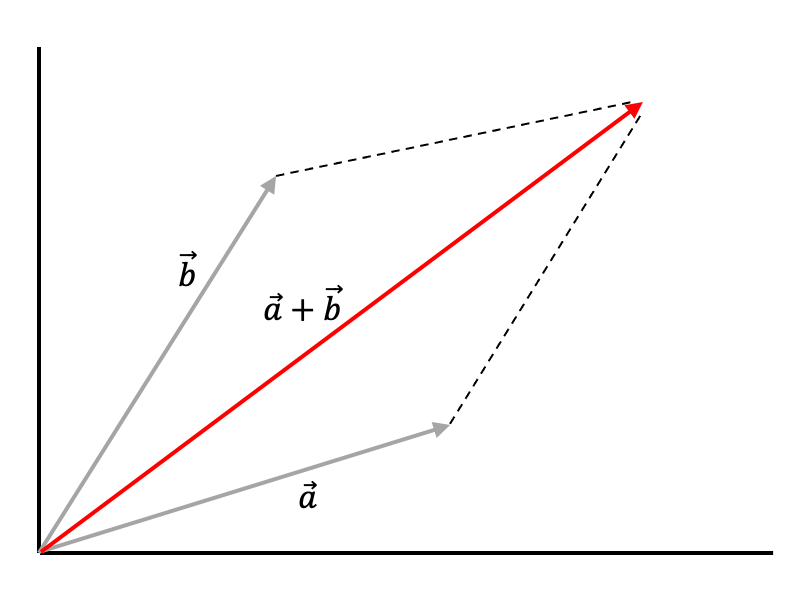
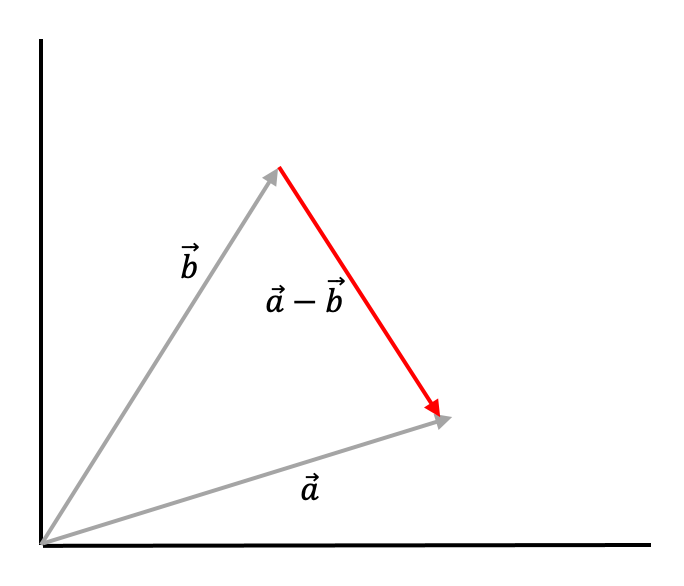
Or we can also look at vector subtraction as the addition of a positive vector and a negative vector .

- So, we multiply all the components by a scalar
Wize Tip
If and are two parallel vectors, then
Properties
- If are vectors with an equal number of components and , then:
- Given , the magnitude (or length/distance) of in 2-D space is equal to:
- Given the magnitude (or length/distance) of in 3-D space is equal to:
- Given a vector , then:
will be a unit vector that points in the same direction as .
Remember a unit vector has a magnitude (length) of 1.
0:00 / 0:00
Example
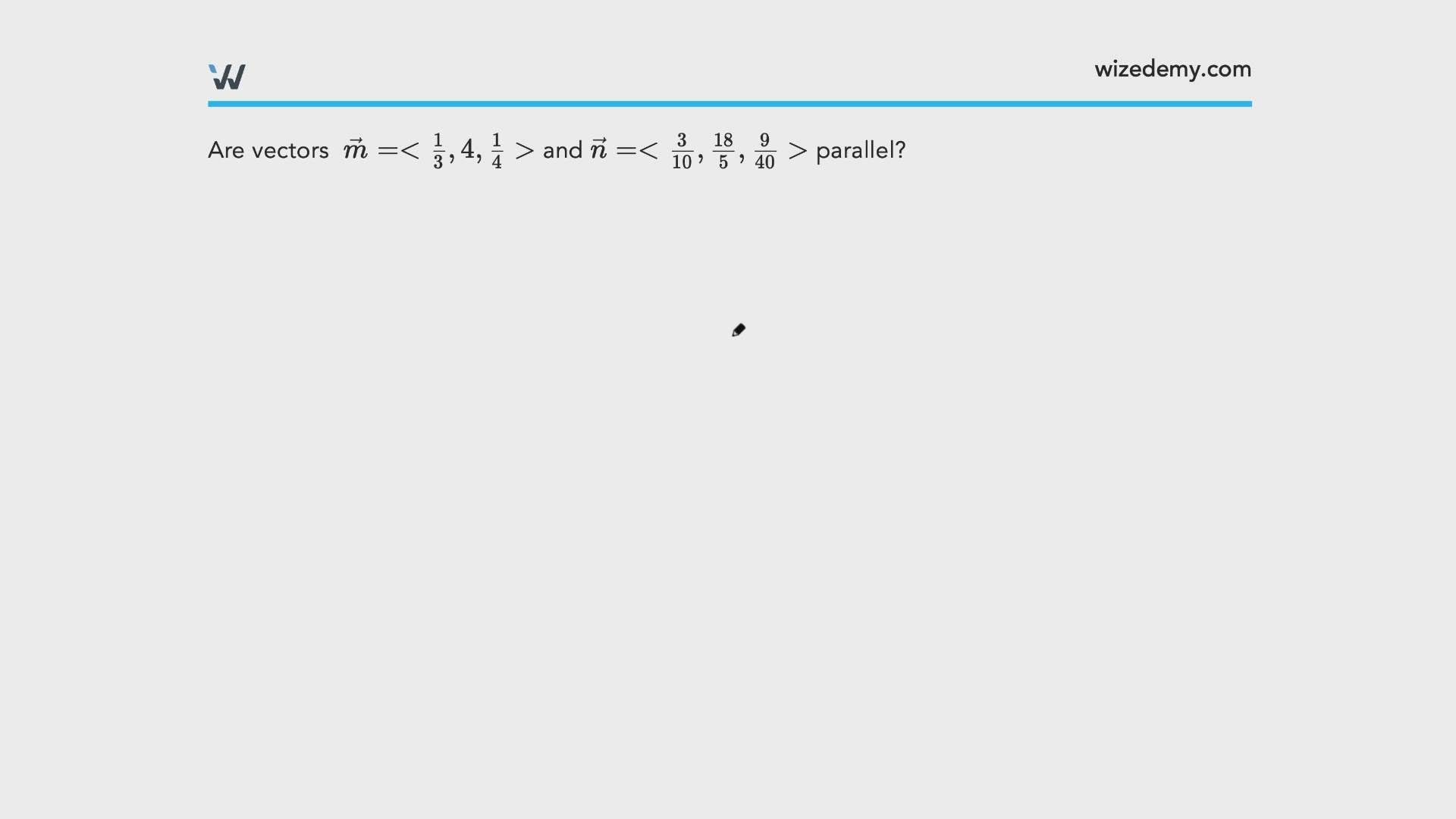
Are vectors and parallel?
In order for two vectors to be parallel, then one vector must be a multiple of the other vector (i.e. ).
Verify this fact for the other two components:
Therefore, vectors and are parallel.
0:00 / 0:00
Example
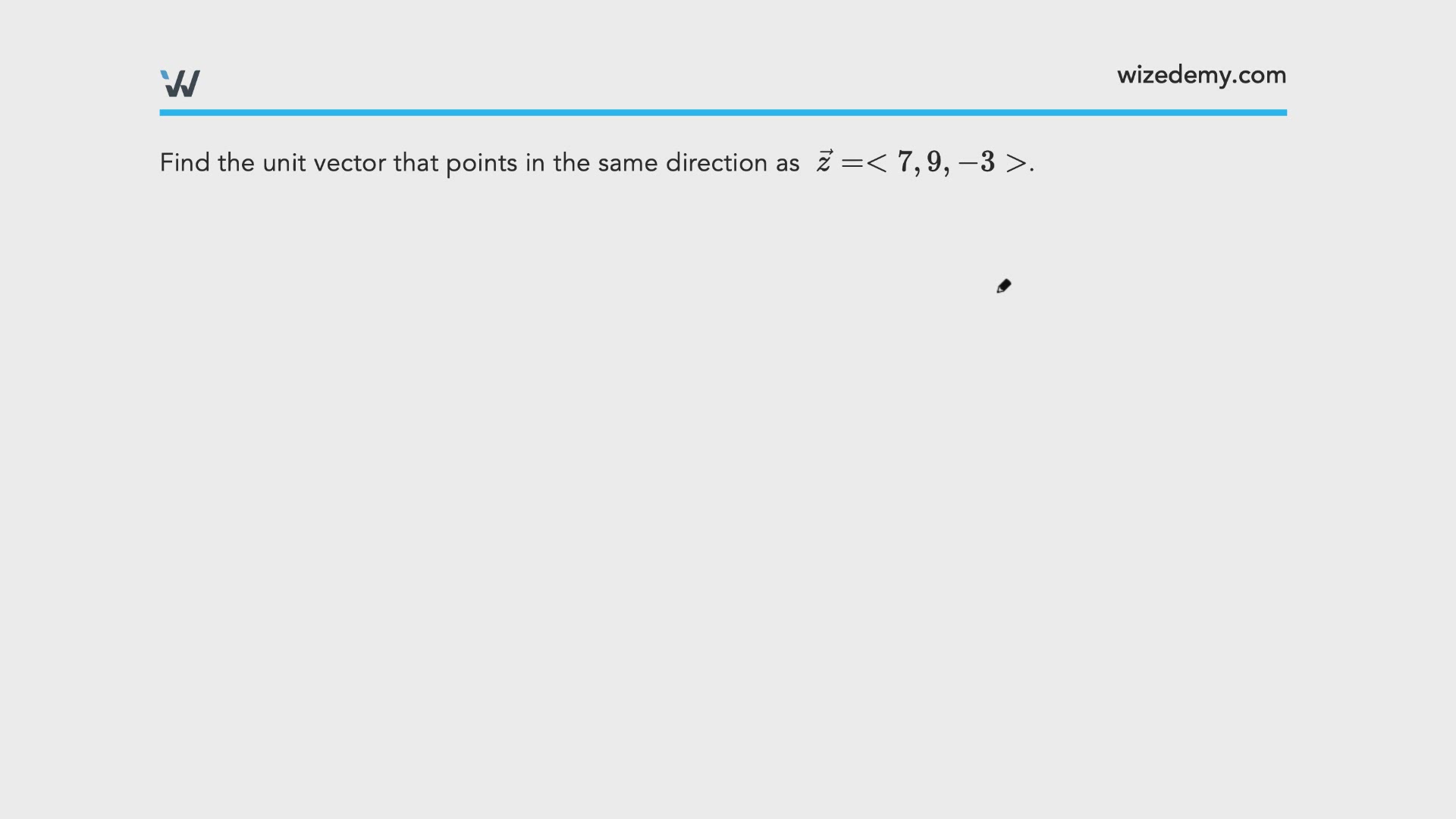
Find the unit vector that points in the same direction as .
Let be the unit vector that points in the same direction as .
Then,
Therefore,
Practice
Suppose where are the components of , and
If , what are the components of
Practice
Find the unit vector that points in the same direction as .