Wize University Calculus 1 Textbook > Applications of Integration
Surface Area of Revolution
Popular Courses
Calculus 1
University Study Guides
Calculus 2
University Study Guides
MATH 1LS3
McMaster University
Calculus 1
General Course
MATH 134
University of Alberta
Calculus 1
University Study Guides
MATH 101
University of British Columbia
Calculus 2
General Course
Calculus 2
University Study Guides
MTH 140
Toronto Metropolitan University
MATH 267
University of Calgary
MATH 267
University of Calgary
MATH 101
University of Alberta
APSC 171
Queen's University
SC/MATH 1014 3.00
York University
MATH 105
University of British Columbia
MTH 131
Toronto Metropolitan University
MATH 117
University of Waterloo
NMM 1414A/B
Western University
MATH 1225A/B
Western University
0:00 / 0:00
Surface Area of Revolution
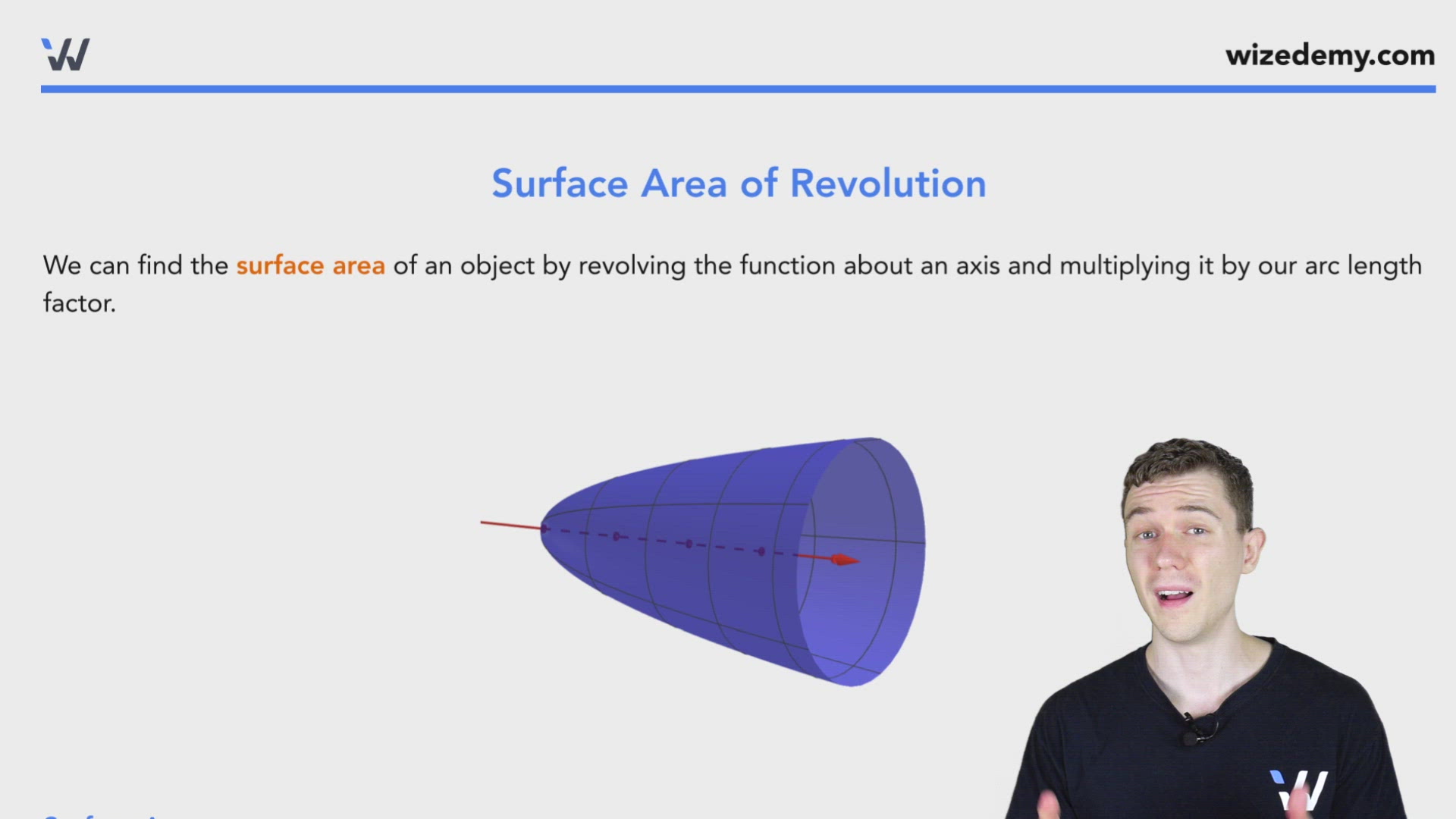
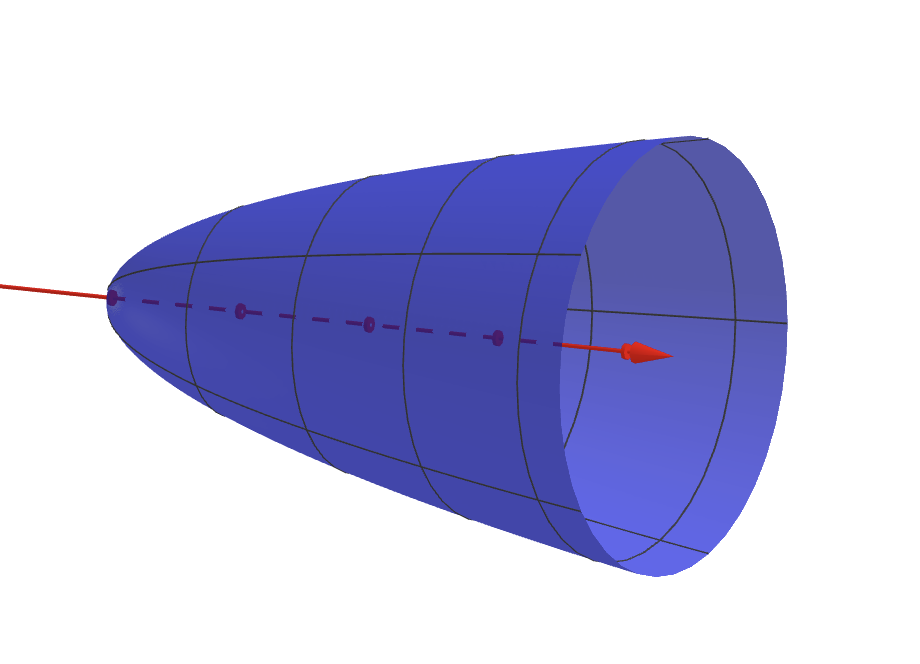
We can find the surface area of an object by revolving the function about an axis and multiplying it by our arc length factor.
Surface Area
If the curve is revolved about the x-axis on the interval , then the surface area of the resulting solid is found as
If the curve is revolved about the y-axis we have
0:00 / 0:00
Example: Surface Area of Revolution
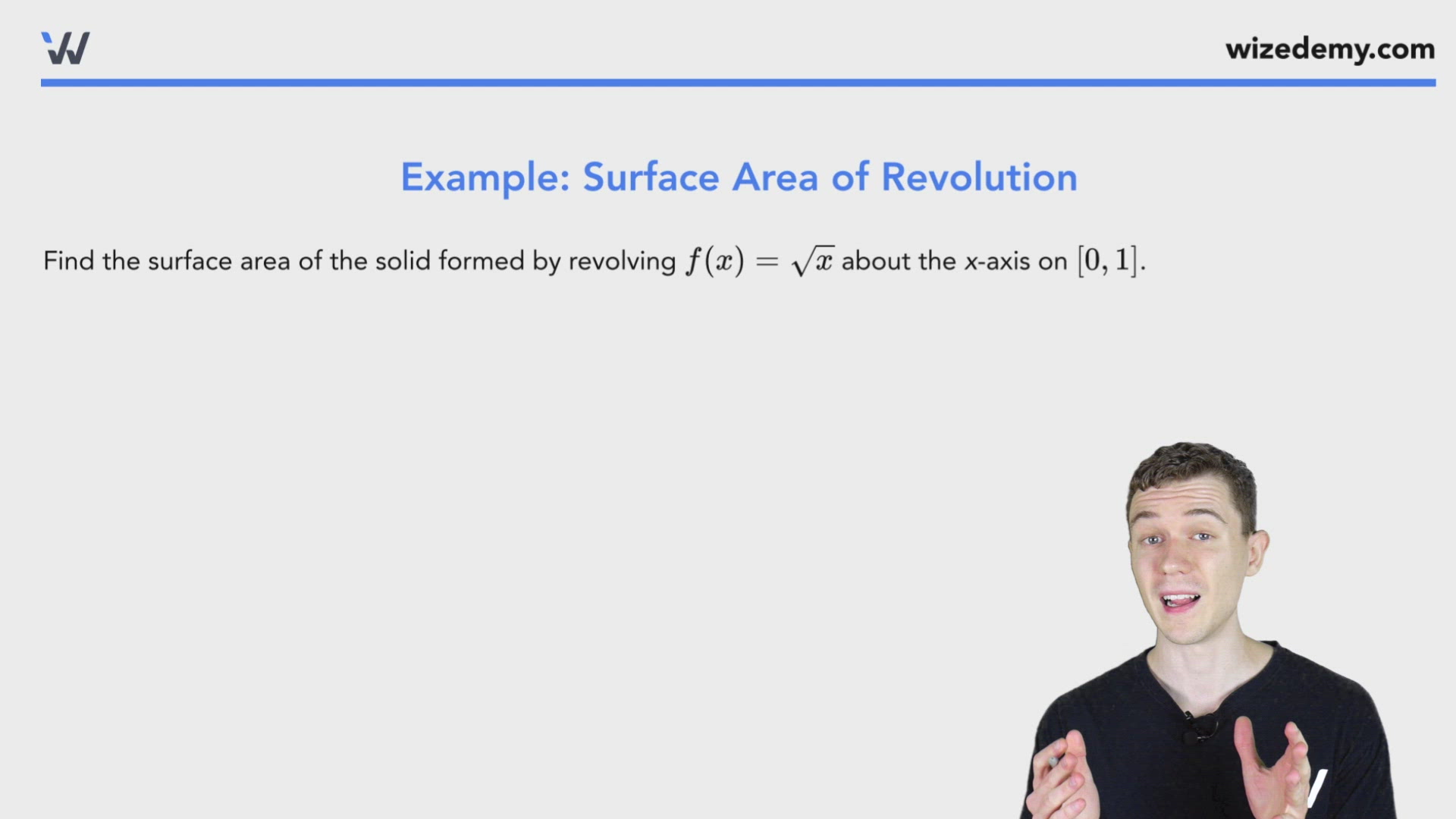
Find the surface area of the solid formed by revolving about the x-axis on .
Noting that , we have
Letting , we have :
Practice: Surface Area of Revolution
Find the surface area of a right circular cone of height 4, radius 2.