Wize University Calculus 1 Textbook > Applications of Differentiation
Taylor and MacLaurin and Polynomials
Popular Courses
Calculus 1
University Study Guides
MATH 100A
University of British Columbia
MATH 100C
University of British Columbia
MATH 1LS3
McMaster University
MATH 249
University of Calgary
MATH 265
University of Calgary
MATH 275
University of Calgary
Calculus 1
General Course
MATH 121
Queen's University
MATH 134
University of Alberta
Calculus 1
University Study Guides
MATH 100
University of Alberta
MATH 100B
University of British Columbia
MATH 100B
University of British Columbia
MAT 1330
University of Ottawa
MTH 140
Toronto Metropolitan University
SC/MATH 1506 3.00
York University
MATH-1720
University of Windsor
NMM 1412A/B
Western University
MATH 180
University of British Columbia
0:00 / 0:00
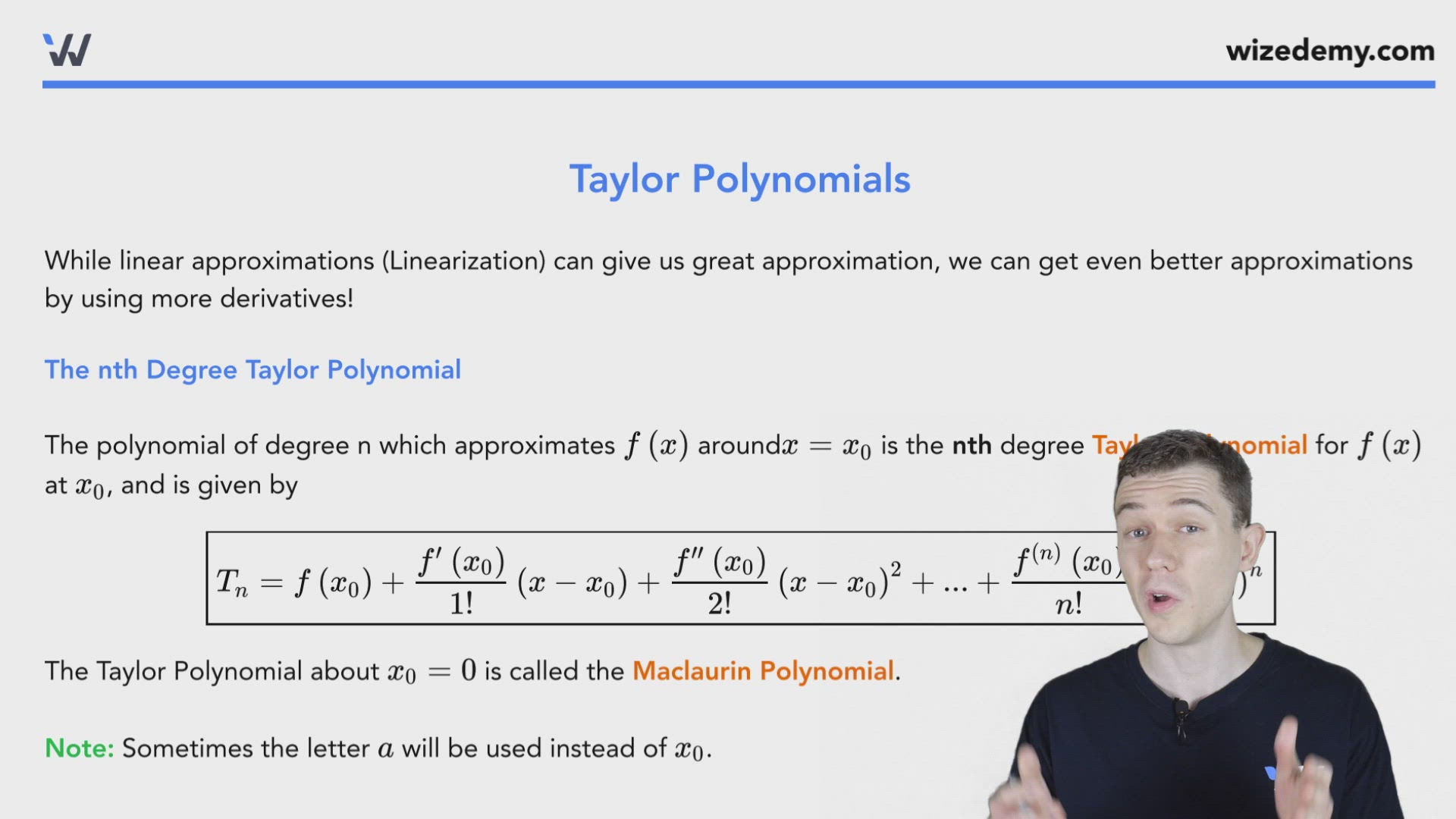
Taylor Polynomials
While linear approximations (Linearization) can give us great approximation, we can get even better approximations by using more derivatives!
The nth Degree Taylor Polynomial
The polynomial of degree n which approximates around is the nth degree Taylor Polynomial for at , and is given by
The Taylor Polynomial about is called the Maclaurin Polynomial.
Note: Sometimes the letter will be used instead of .
0:00 / 0:00
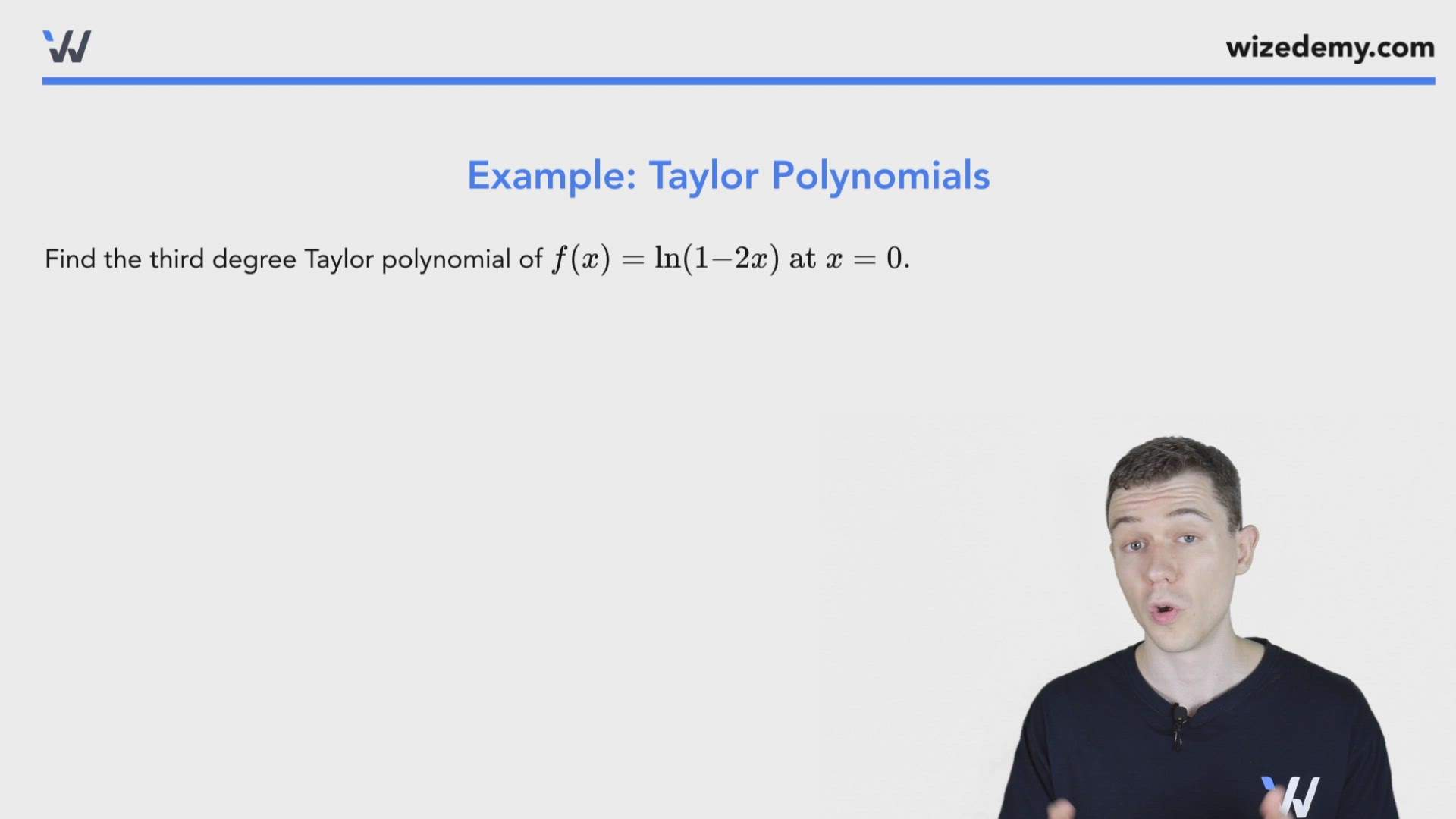
Example: Taylor Polynomials
Find the third degree Taylor polynomial of
0:00 / 0:00
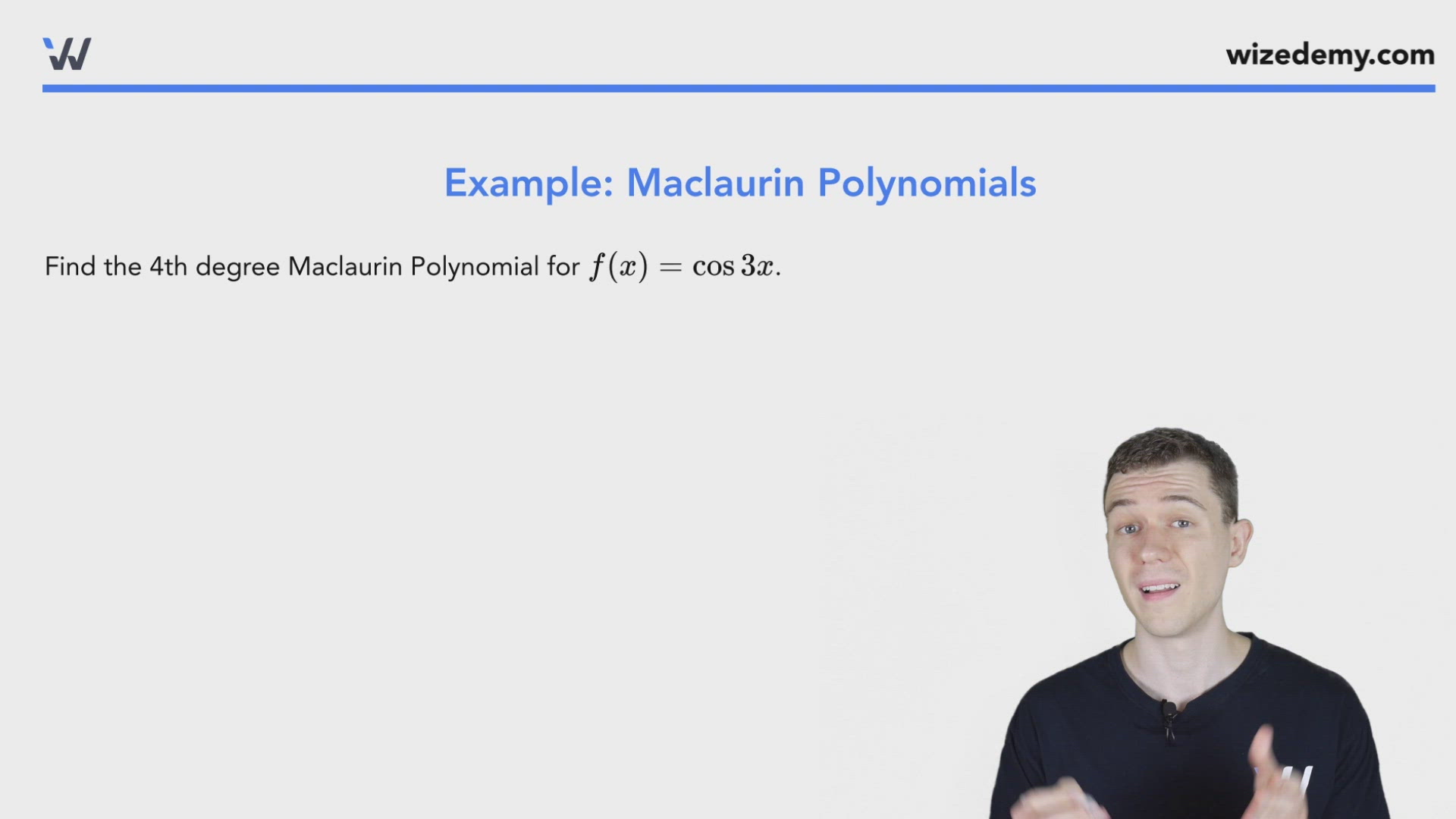
Example: Maclaurin Polynomials
Find the 4th degree Maclaurin Polynomial for .
Remember a Maclaurin Polynomial is a Taylor Polynomial with .
Find the 2nd degree Taylor polynomial of centered at .