Popular Courses
MATH 211
University of Calgary
MATH 1229A/B
Western University
Linear Algebra
University Study Guides
MATH 133
McGill University
MATH 1ZC3
McMaster University
MATH 152
University of British Columbia
MATH 1600A/B
Western University
Linear Algebra
General Course
MATH 204
Concordia University
MAT188H1
University of Toronto
Linear Algebra
University Study Guides
SC/MATH 1025 3.00
York University
MTH 141
Toronto Metropolitan University
MATH 102
University of Alberta
MATH 115
University of Waterloo
MATH 1B03
McMaster University
MATH-1270
University of Windsor
MATH 1210
University of Manitoba
MATH 121B
Queen's University
MA122
Wilfrid Laurier University

0:00 / 0:00
Cross Product
We saw that the dot product between two vectors produces a scalar.
Now we introduce the cross product (vector product) of two vectors in which produces a vector in .
Definition
The cross product of vectors and in is
Watch Out!
The cross product only works for vectors in (with the exception of a few higher dimensional spaces)
Important Note
The cross product of vectors and is orthogonal to both and .
Wize Tip
Use the right hand rule to determine the direction of the vector :

- Point the fingers of your right hand in the direction of
- Curl your fingers towards
- is in the direction your thumb is pointing
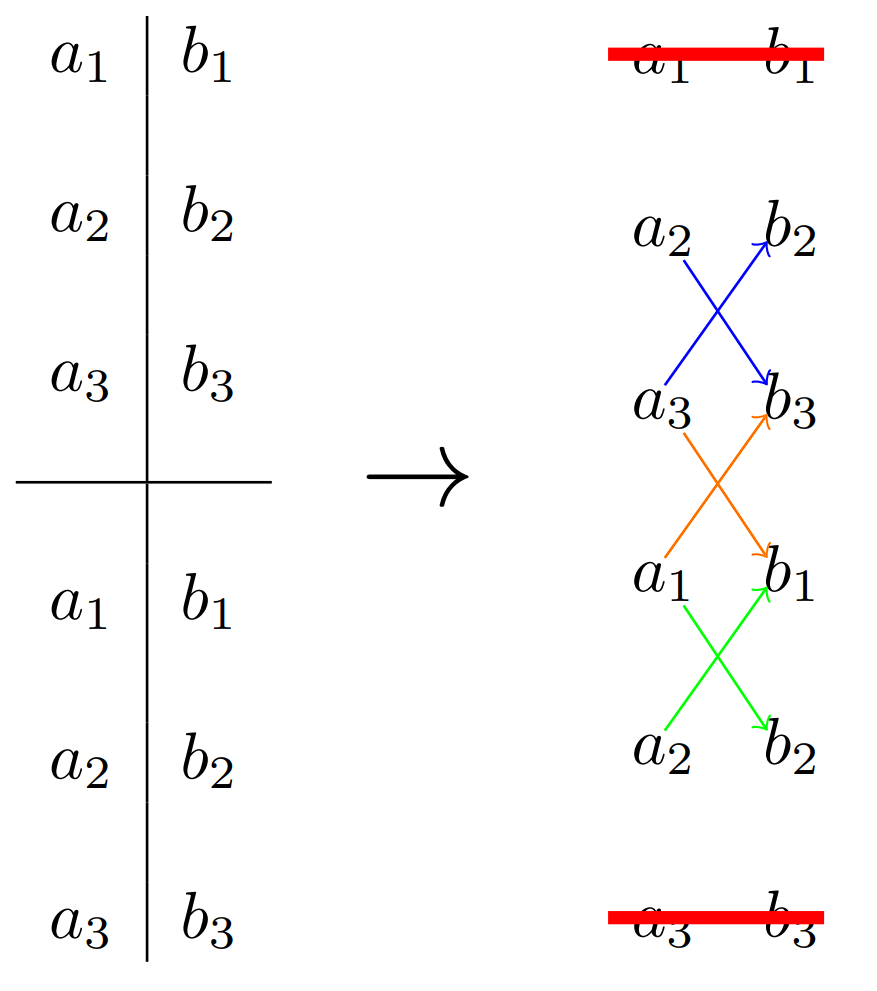
Shoelace Method
- Copy the column vector twice on the left, and twice on the right.
- Cross out the top and bottom rows, then "lace" the remaining diagonals by multiplying diagonally.
- Each diagonal pair makes a single component. Write a minus sign between every pair of products.
Pointing Method
(See video)
0:00 / 0:00
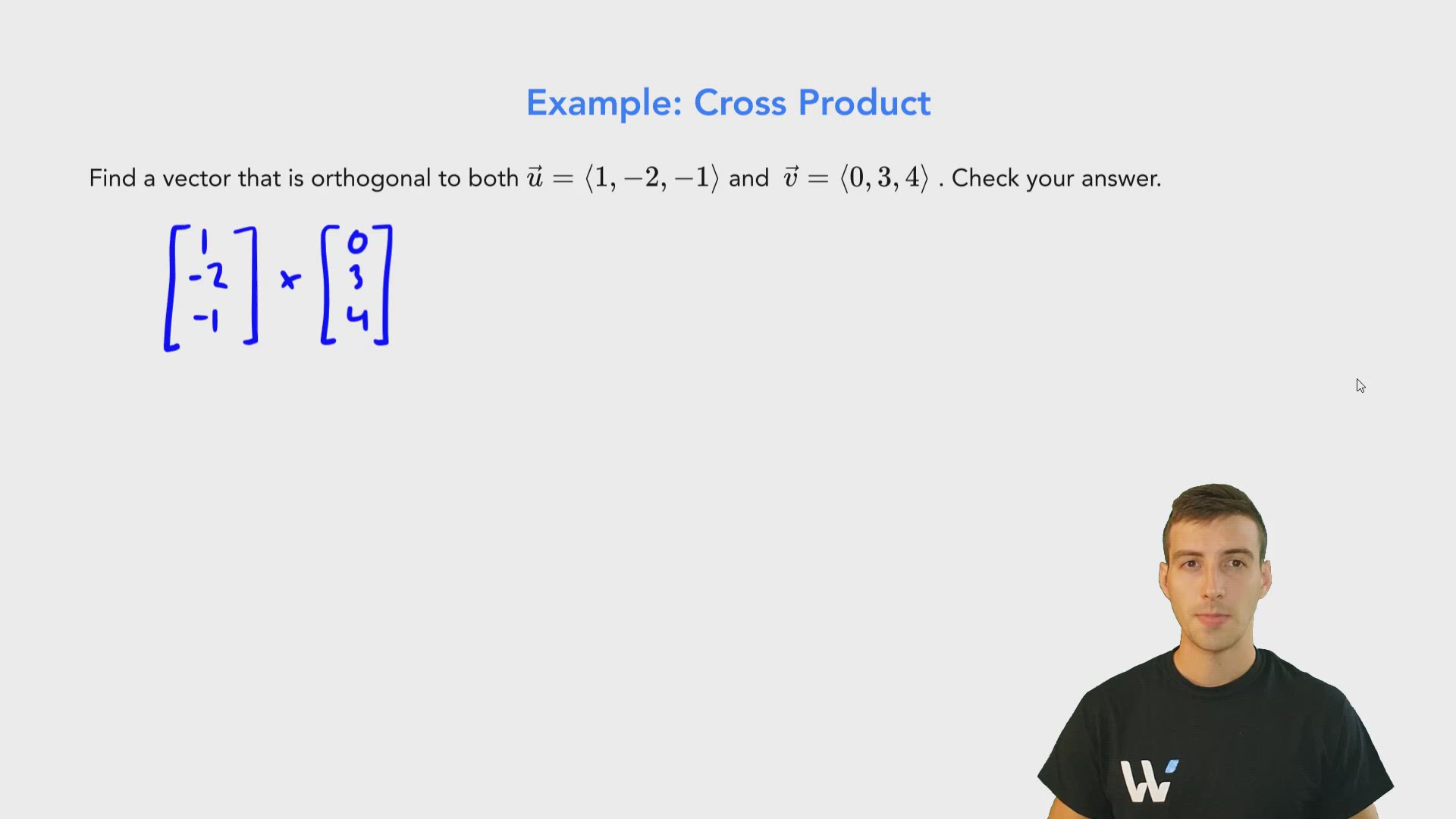
Example: Cross Product
Find a vector that is orthogonal to both and . Check your answer.
Using the Shoelace Method:
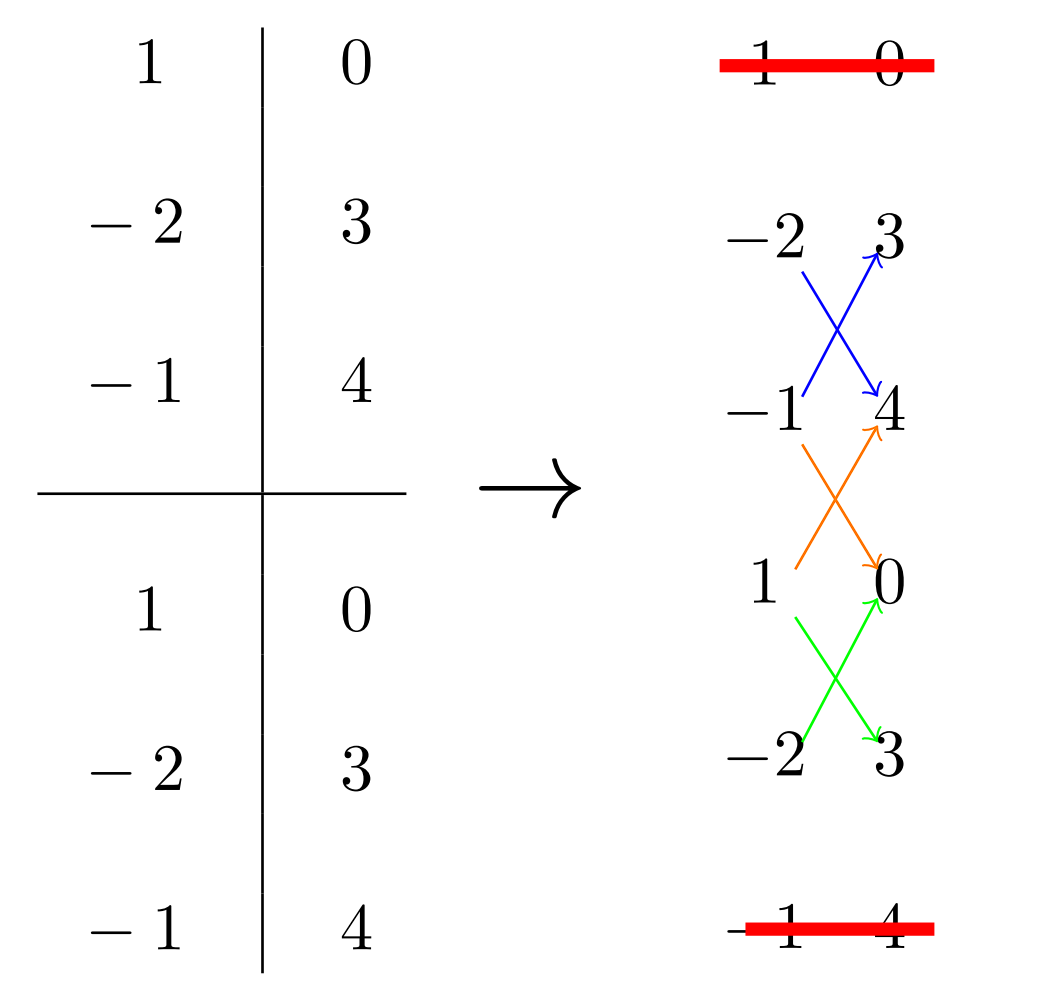
Check that this is orthogonal to and by making sure each dot product is 0:
Practice: Orthogonal Vectors
Find a vector orthogonal to both and .
For extra practice, check your answer!