Wize University Organic Chemistry Textbook > Intro to Orgo (Functional Groups, Drawing, Naming)
Drawing Organic Compounds in 2D
Popular Courses
MCAT
General Course
DAT
General Course
CHEM 2213A/B
Western University
Organic Chemistry
University Study Guides
Organic Chemistry
General Course
CHEM 233
University of British Columbia
CHEM 261
University of Alberta
Organic Chemistry
University Study Guides
CHEM 351
University of Calgary
CHEM 123
University of British Columbia
CHEM 281
Queen's University
CHM 1321
University of Ottawa
CHM136H1
University of Toronto
CHEM 212
McGill University
CHEM 231
University of Victoria
CHEM 2OA3
McMaster University
CHEM 2223B
Western University
CHM 2120
University of Ottawa
CHEM 263
University of Alberta
CHEM 282
Queen's University

0:00 / 0:00
Drawing Organic Compounds in 2D
Organic compounds can be draw in two-dimensions (2D) or three-dimensions (3D). Two-dimensional drawings are useful for balanced equations and if you don't care about the three-dimensional architecture.
There are multiple ways to represent molecules in 2D:
- chemical formula
- condensed structure
- line drawing/structure
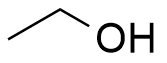
Examples are below, for ethanol:
Chemical formula: C2H6O
Condensed structure: CH3CH2OH
Line drawing:

0:00 / 0:00
Example: 2-D Notation
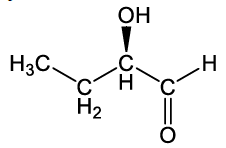
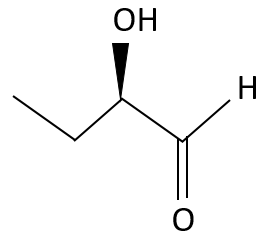
Draw the following molecule as a line drawing.

0:00 / 0:00
Example: 2-D Notation
Write the following molecule in condensed structure.
CH3CH2CH(OH)CHO
Summary Sheet: Representing Molecules in Different 2D Notation
Chemical Formula
States the number of each element in a given compounds. Example: Ethanol has a chemical formula C2H6O.
Condensed Structure
A more descriptive version of the chemical formula. This notation gives some structural information by showing which atoms are beside each other. Example: Ethanol has a condensed structure CH3CH2OH. This usually indicates the functional groups present.
Line Drawing
In organic chemistry, there's often a number of carbon and hydrogen atoms. Line drawings simplify this by replacing any nonessential carbons and hydrogens with lines:

Condensed Formula Cheatsheet
