Wize University Organic Chemistry Textbook > Aromaticity (Arenes)
Aromaticity Overview
Popular Courses
MCAT
General Course
DAT
General Course
CHEM 2213A/B
Western University
Organic Chemistry
University Study Guides
Organic Chemistry
General Course
CHEM 233
University of British Columbia
Organic Chemistry
University Study Guides
CHM 1321
University of Ottawa
CHM136H1
University of Toronto
CHEM 231
University of Victoria
CHEM 2223B
Western University
CHEM 263
University of Alberta
CHEM 282
Queen's University
CHY 142
Toronto Metropolitan University
CHEM 222
McGill University
CHEM 353
University of Calgary
CHEM 281
Simon Fraser University
CHEM 2OB3
McMaster University
CHEM 250
University of Saskatchewan
CHEM 260
University of British Columbia

0:00 / 0:00
Aromaticity
Aromatic molecules (compounds) are special molecules that meet a particular set of criteria and are especially stable.
In order to be aromatic, a molecule must be:
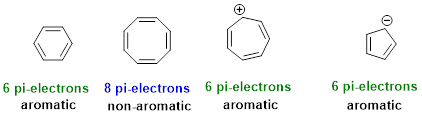
- The compound must obey Hückel's Rule (# of π-electrons = 4n + 2)
- The compound must contain a 'concentric ring of aligned p orbitals.' Resonance!
- The compound must be planar (big rings are not planar)
- The molecule must be cyclic
Example: some carbon-carbon containing organic and not-aromatic molecules
Watch Out!
The "n" in Huckel's Rule (4n + 2) is an integer! This means that you should solve for how many pi electrons make something aromatic (2, 6, 10, 14, etc.) and then see if the structure has that many electrons!
Aromaticity and Lone Pairs
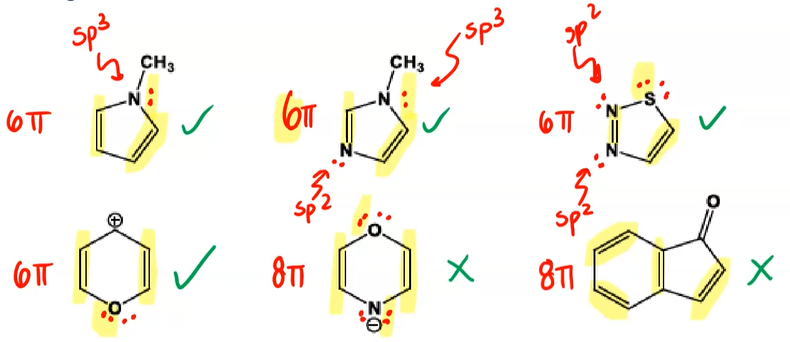
Sometimes, cyclic molecules with heteroatoms (non-carbon and hydrogen atoms) can also be aromatic. There are three common heteroatoms that you should be on the look-out for:
- nitrogen: when sp3 hybridized, donates 2 pi electrons; when sp2 hybridized, donates zero pi electrons
- oxygen: sp3 hybridized, donates 2 pi electrons
- sulphur: sp3 hybridized, donates 2 pi electrons
Naming Aromatic Rings
As a reminder, remember the General Naming Rules:
- Identify and name the longest carbon chain
- If present, assign stereochemistry (R/S or E/Z)
- Identify and name any substituents on the carbon chain
- Give these substituents the appropriate 'address'
- Add substituent names as a prefix to the carbon chain
- Change suffix of the carbon chain if necessary (for functional groups)
Most of the time you'll be naming benzene derivatives, using benzene as the centre and naming the substituents coming off. Benzene has 6 carbon atoms, and therefore has 6 positions. Take for example the following compounds:

But, we like to complicate things in chemistry by introducing different names. Enter the ortho (1,2-substitution), meta (1,3-substitution) and para (1,4-substitution) notation. We can use these terms in place of the numbering. Especially since benzene is planar so the numbering doesn't matter. For example, the middle compound above (1-chloro-2-methylbenzene) can be rewritten as ortho-chloromethylbenzene.
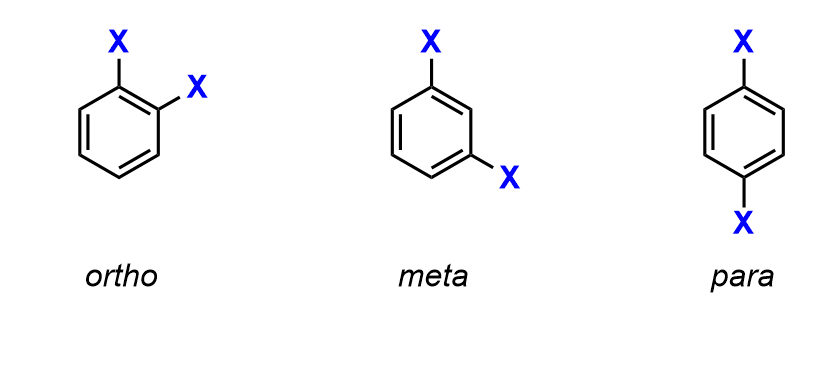
Aromatic rings can be substituents on a carbon chain, for example in the following compounds shown below. This is only the case when the aromatic group is a lower priority than the main carbon chain.

0:00 / 0:00
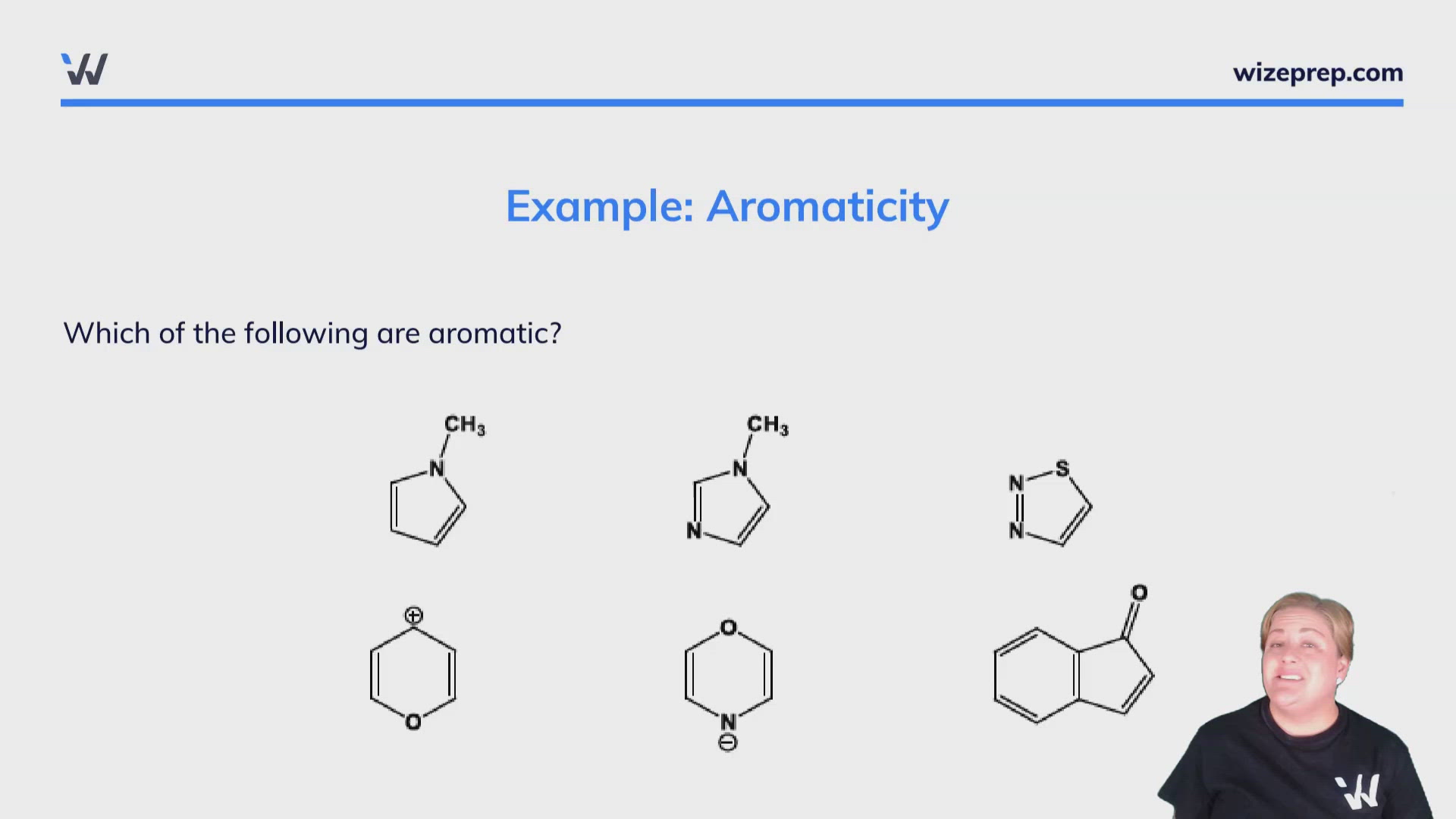
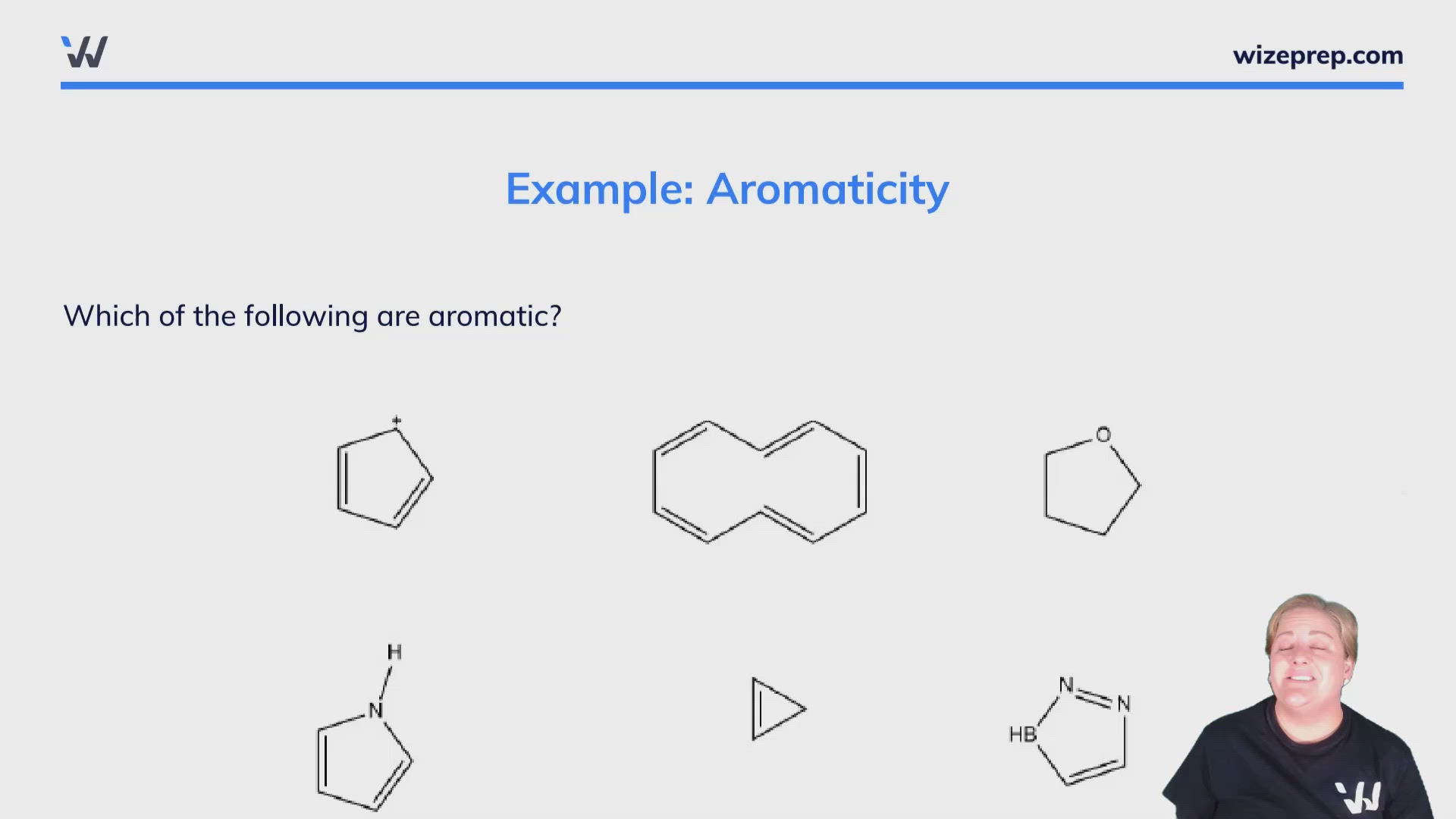
Example: Aromaticity
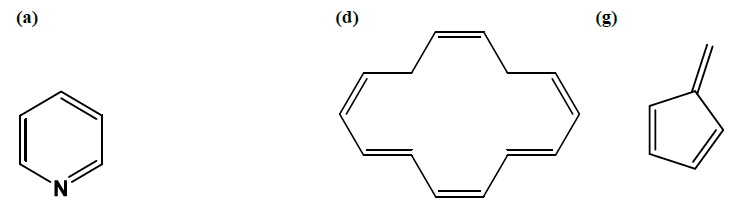
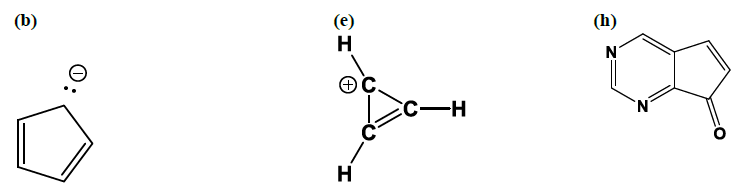
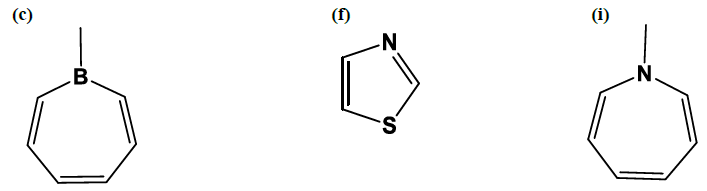
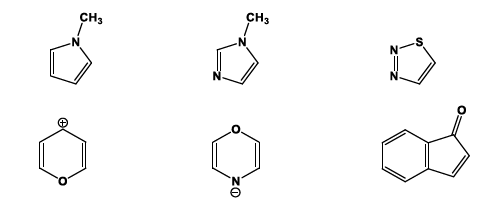
Which of the following are aromatic?
0:00 / 0:00
Example: Aromaticity
Which of the following are aromatic?
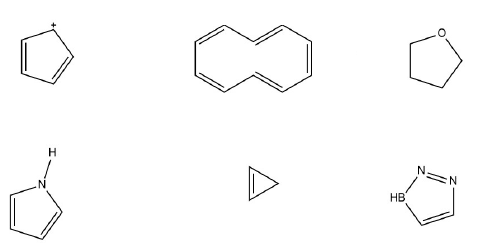
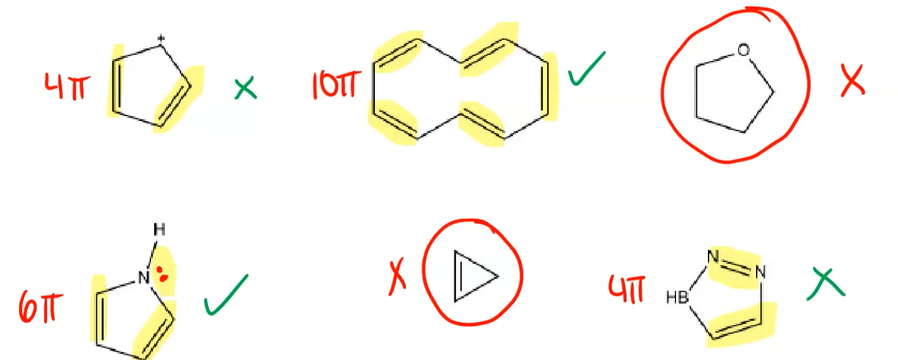
Which of the following molecules are aromatic? (Select all that apply)