IUPAC Naming Overview
General Naming Rules
- Identify and name the longest carbon chain
- If present, assign stereochemistry (R/S or E/Z)
- Identify and name any substituents on the carbon chain
- Give these substituents the appropriate 'address'
- Add substituent names as a prefix to the carbon chain
- Change suffix of the carbon chain if necessary (for functional groups)

Summary Sheet: Naming Molecules with Stereochemistry
As a reminder, remember the Wize General Naming Rules:
- Identify and name the longest carbon chain
- If present, assign stereochemistry (R/S or E/Z)
- Identify and name any substituents on the carbon chain
- Give these substituents the appropriate 'address'
- Add substituent names as a prefix to the carbon chain
- Change suffix of the carbon chain if necessary (for functional groups)
For this lecture, we are going to focus on naming compounds with stereochemistry (R/S stereogenic centres or cis/trans double bonds). Take for example the following two compounds:
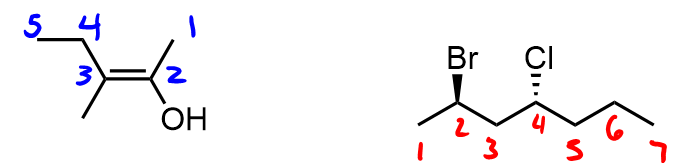
I included the carbon atom numbering because you know how to do that now! The alkene (with blue numbering) is an E-alkene (AKA trans). The IUPAC name is (E)-3-methylpent-2-en-2-ol. The E notation comes first and is in brackets. Since there is only one double bond, you don't have to designate which alkene has an E double bond is.
But what about when there's two stereocentres? Let's take the second compound, with numbering shown in red. The IUPAC name is (2R,4R)-2-bromo-4-chloroheptane. Again, I'm taking for granted your ability to label stereocentres as R and S... That's covered in another section. Now, due to the presence of two stereogenic centres, we need to designate the location of each stereocentre with numbers.
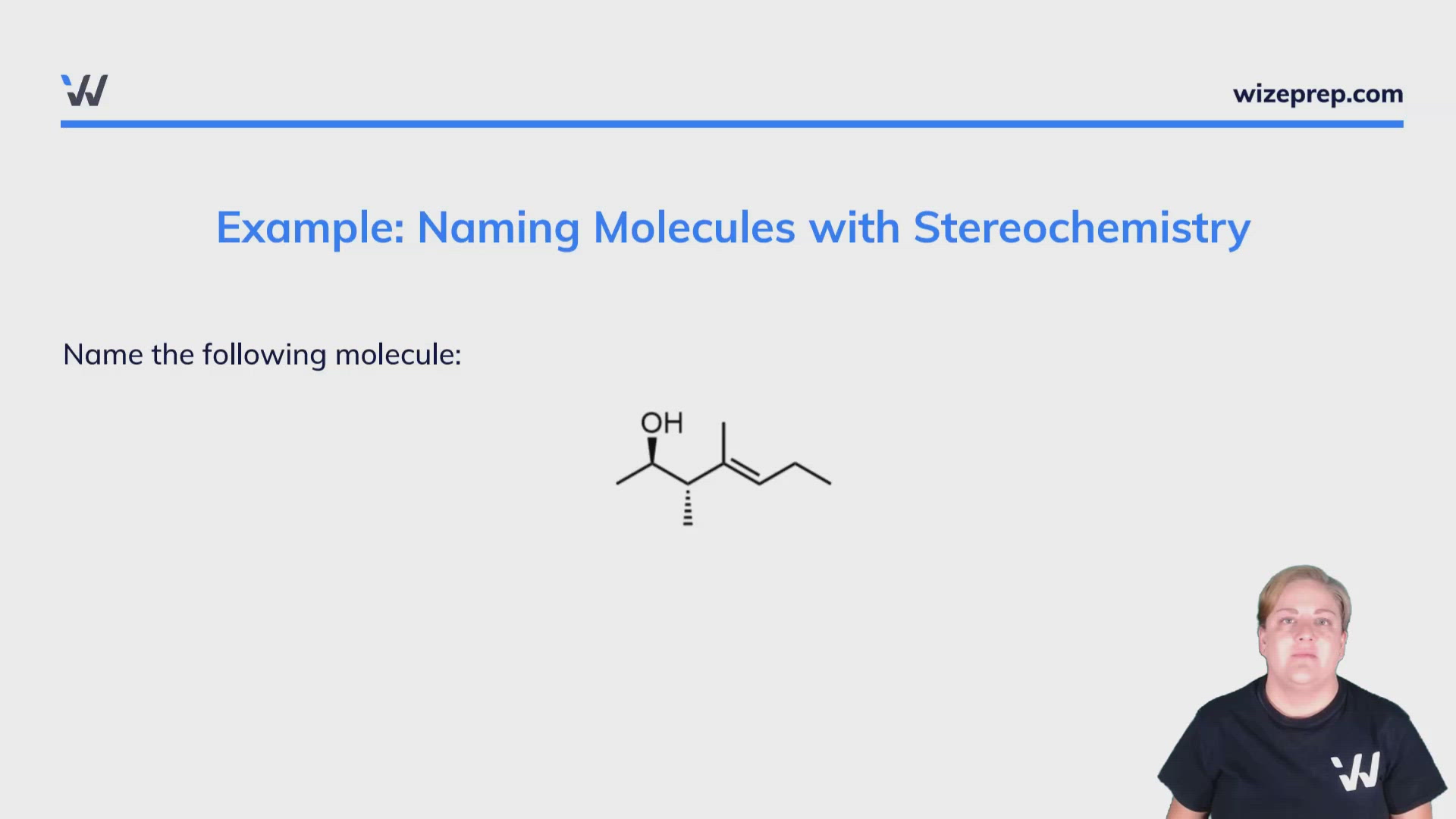
Example: Naming Molecules with Stereochemistry
Name the following molecule:
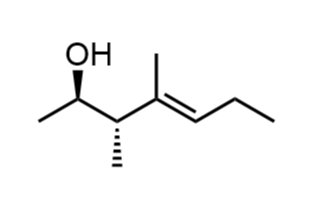
(2R,3S,E)-3,4-dimethylhept-4-en-2-ol. No need to give the location of the double bond we're referring to as 'E', there's only one!
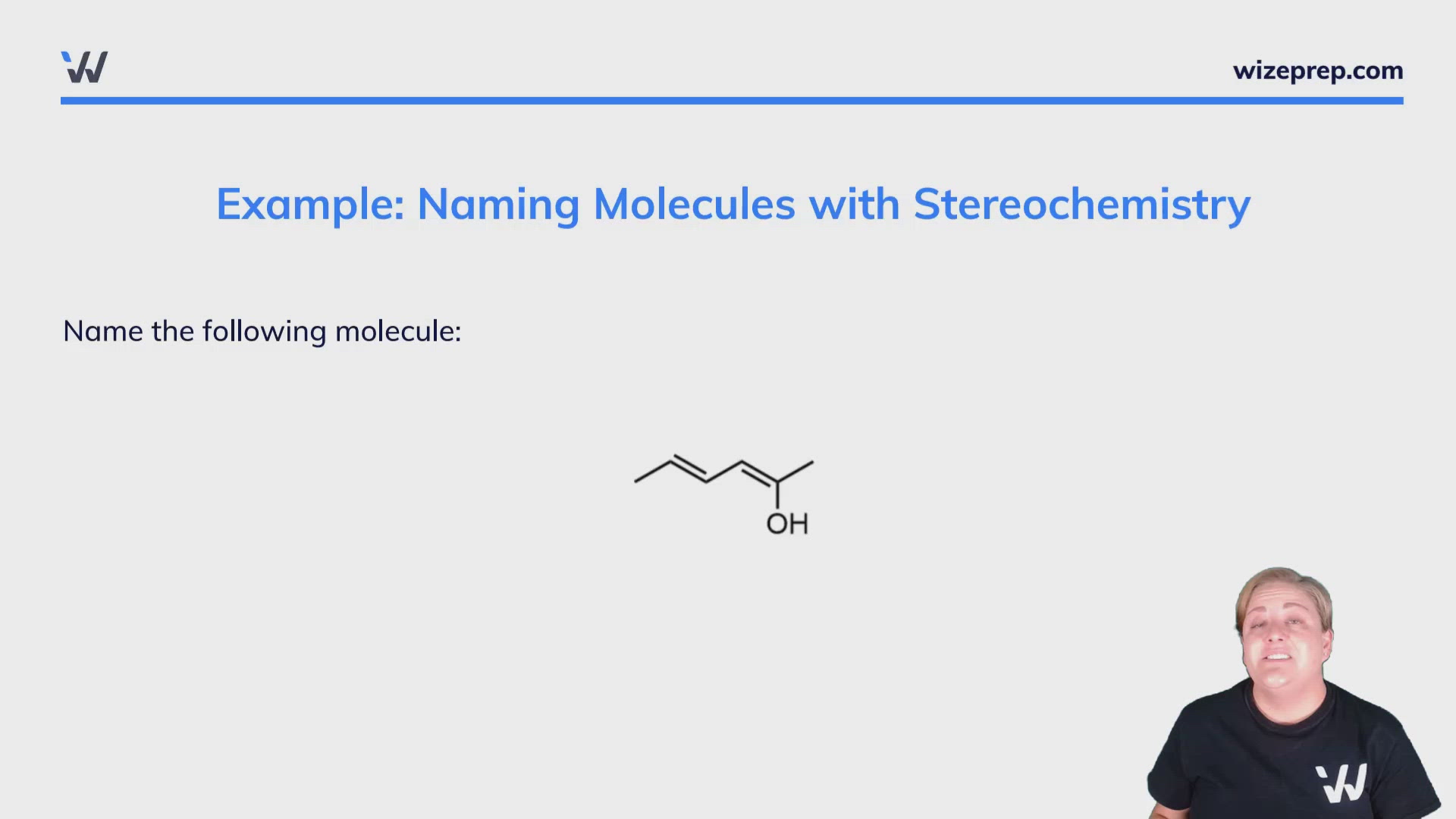
Example: Naming Molecules with Stereochemistry
Name the following molecule:
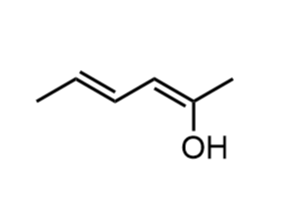
(2Z,4E)-hexa-2,4-dien-2-ol.