Wize University Organic Chemistry Textbook > Stereochemistry & Isomers
Stereoisomers IIIb - Optical Isomers
Popular Courses
MCAT
General Course
CHEM 1301A/B
Western University
DAT
General Course
CHEM 2213A/B
Western University
Organic Chemistry
University Study Guides
Organic Chemistry
General Course
CHEM 233
University of British Columbia
CHEM 261
University of Alberta
Organic Chemistry
University Study Guides
CHEM 351
University of Calgary
CHEM 123
University of British Columbia
CHEM 281
Queen's University
CHM 1321
University of Ottawa
CHM136H1
University of Toronto
CHEM 212
McGill University
CHEM 231
University of Victoria
CHEM 2OA3
McMaster University
CHEM 2223B
Western University
CHM 2120
University of Ottawa
CHEM 282
Queen's University
0:00 / 0:00
Optical Isomers
When considering optical isomers, you are comparing two different molecules with one or more stereocenters or a molecule with two or more stereocenters within itself. They are called optical isomers because we use something called optical activity to "quantify" chirality. If a molecule is chiral, it will rotate plane polarized light!
Enantiomers
Enantiomers are non-superimpossible mirror images. In order to have enantiomers, a molecule must have one or more chiral centres. Enantiomers differ at all chiral centres. Enantiomers of each other rotate plane polarized light with equal magnitude by opposite sign.


Diastereomers
Diastereomers are not mirror images at all. In order to have diastereomers, a molecule must have two or more chiral centres. Diastereomers differ at some by not all chiral centres. There is no relationship for optical activity and diastereomers.

Meso Compounds
A meso compound is a molecule with two or more chiral centres and an internal plane of symmetry. A meso compound does not rotate plane polarized light.

Wize Tip
A good check for if a molecular is a meso compound is to assign the R and S nomenclature for the chrial centres. A meso compound will have opposite configurations (i.e. one R and one S).
0:00 / 0:00
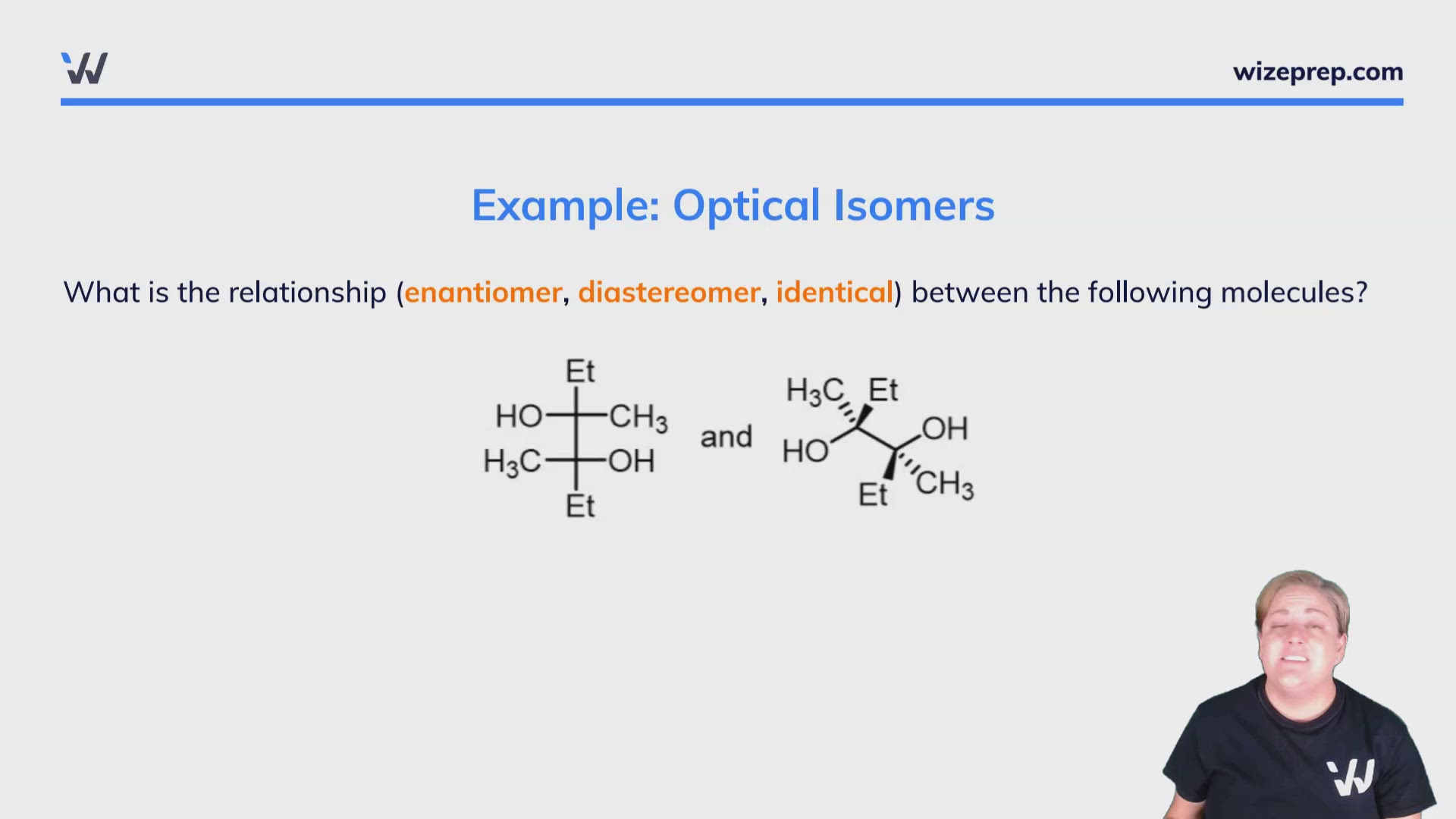
Example: Optical Isomers
What is the relationship (enantiomer, diastereomer, identical) between the following molecules?
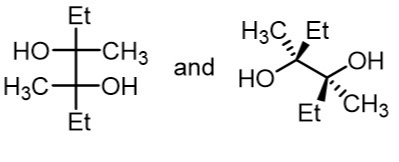
- first molecule is (R, R)
- second molecule is (S, S)
- these are enantiomers

0:00 / 0:00
Example: Optical Isomers
What is the relationship (enantiomer, diastereomer, identical) between the following molecules?
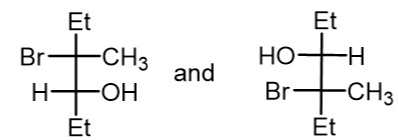
- first molecule is (R, R)
- second molecule is (R, S)
- watch out because the chiral centres are shown in a different order!
- these molecules are diastereomers
Practice: Optical Isomers
How does plane-polarized light interact with (zero/non-zero):
- a chiral molecule
- a racemic mixture
- a meso compound