Popular Courses
MCAT
General Course
CHEM 2213A/B
Western University
Organic Chemistry
University Study Guides
DAT
General Course
Organic Chemistry
General Course
CHEM 233
University of British Columbia
CHEM 261
University of Alberta
Organic Chemistry
University Study Guides
CHEM 351
University of Calgary
CHEM 281
Queen's University
CHM 1321
University of Ottawa
CHM136H1
University of Toronto
CHEM 212
McGill University
CHEM 2OA3
McMaster University
CHEM 2223B
Western University
CHEM 263
University of Alberta
CHEM 282
Queen's University
SC/CHEM 2020 3.00
York University
CHY 142
Toronto Metropolitan University
CHEM 222
McGill University
0:00 / 0:00
Dihydroxylation
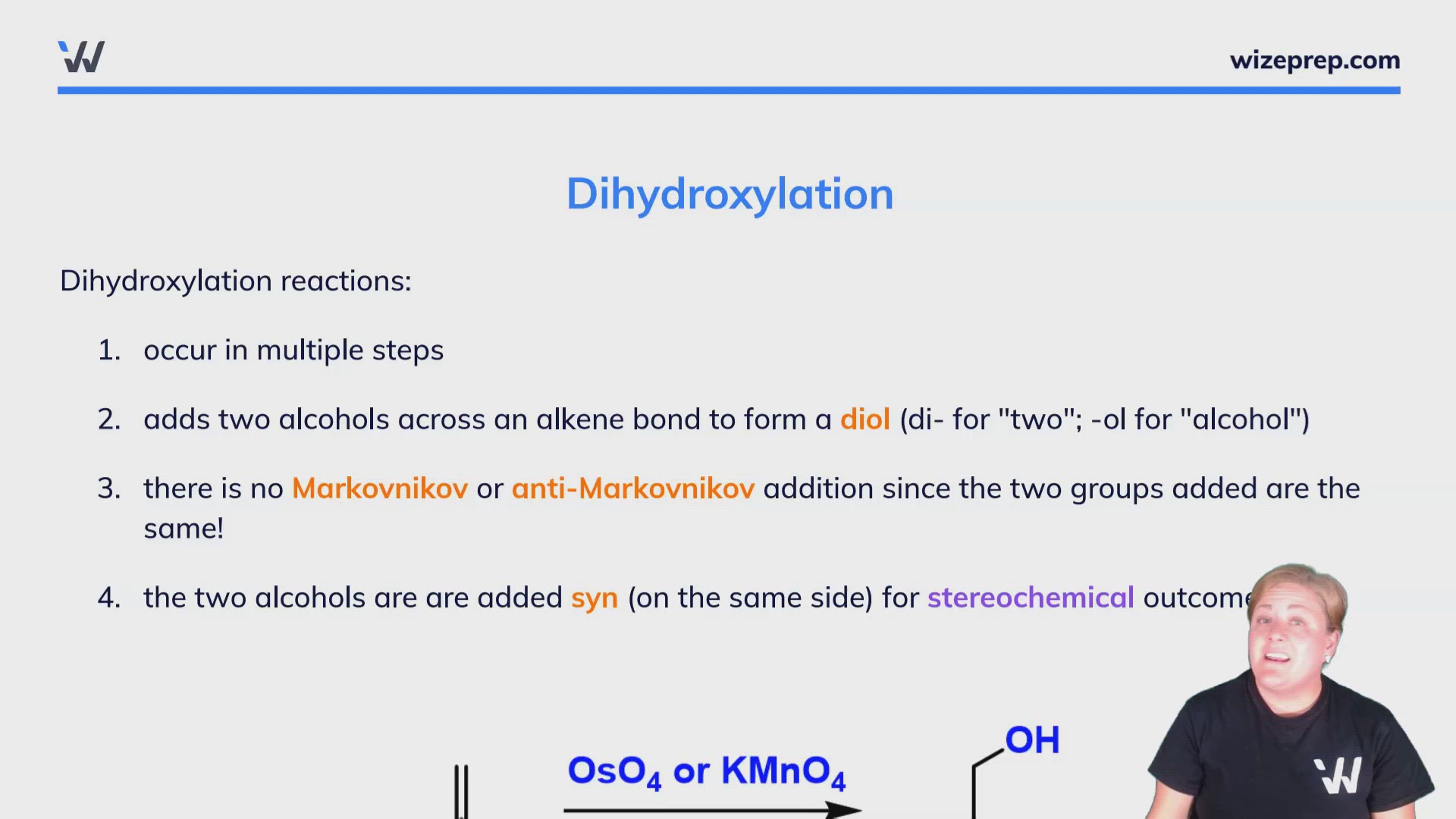
Dihydroxylation reactions:
- occur in multiple steps
- adds two alcohols across an alkene bond to form a diol (di- for "two"; -ol for "alcohol")
- there is no Markovnikov or anti-Markovnikov addition since the two groups added are the same!
- the two alcohols are are added syn (on the same side) for stereochemical outcome
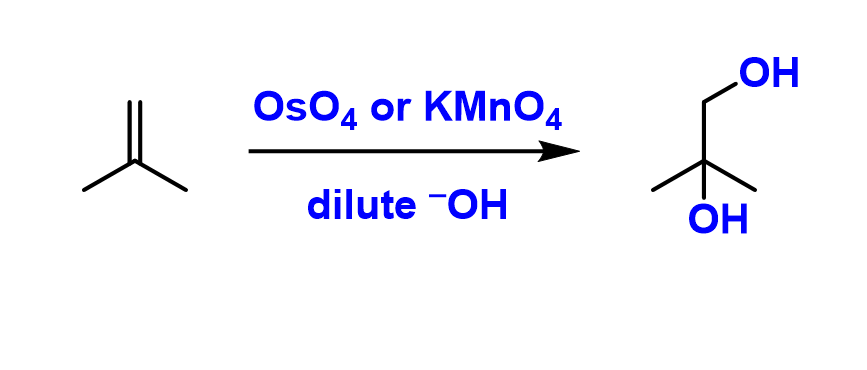
Steps of a dihydroxylation:
- a concerted reaction (occurs in a single step) where a 5-membered metallocycle is formed using the OsO4 or KMnO4.
- hydrolysis with a dilute base gives the diol
Wize Tip
The mechanism of dihydroxylation is complicated and you do not need to know it!
Watch Out!
These reactions are stereospecific which means they maintain the geometry of the reagent. This means that cis double bonds stay cis and trans double bonds stay trans.
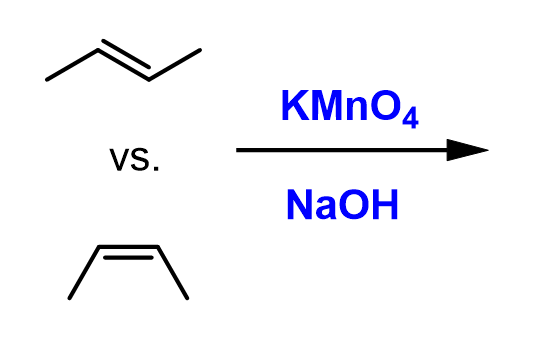
Example: predict the product of the following ozonolysis reactions.
0:00 / 0:00
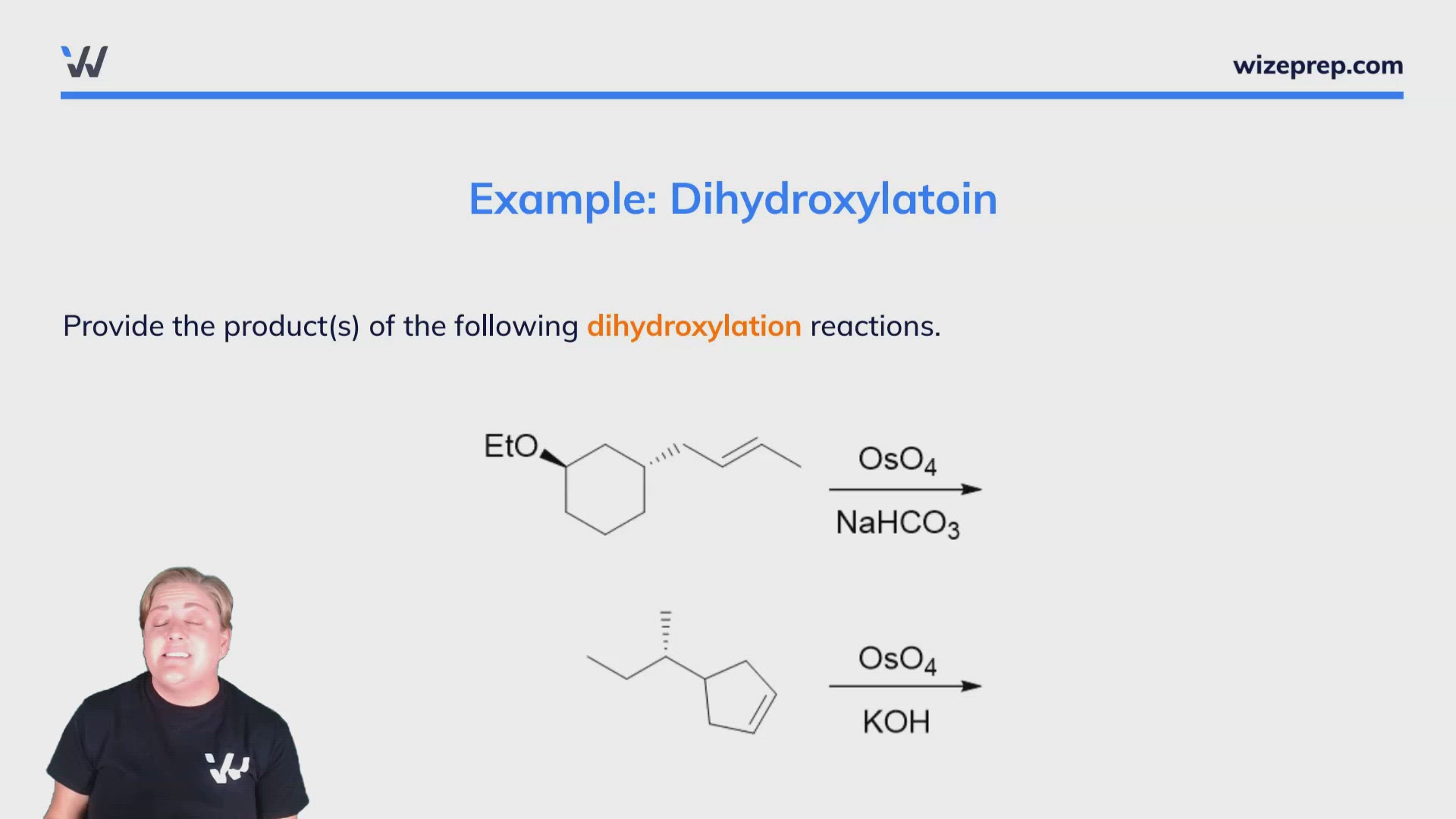
Example: Dihydroxylatoin
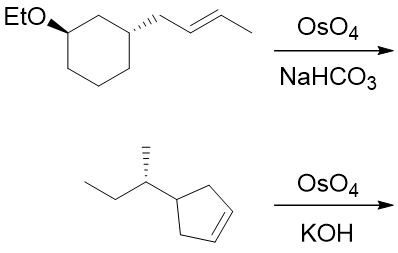
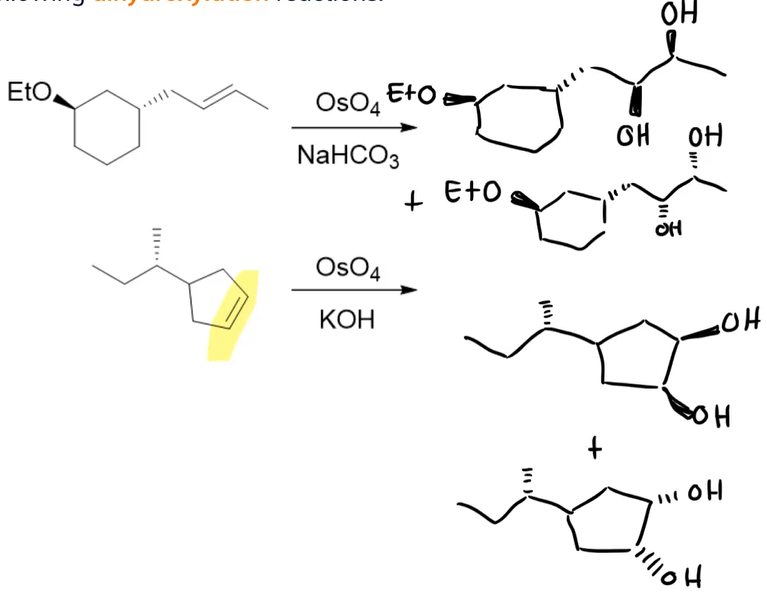
Provide the product(s) of the following dihydroxylation reactions.