Popular Courses
MCAT
General Course
CHEM 2213A/B
Western University
Organic Chemistry
University Study Guides
Organic Chemistry
General Course
DAT
General Course
CHEM 233
University of British Columbia
CHEM 261
University of Alberta
Organic Chemistry
University Study Guides
CHEM 351
University of Calgary
CHEM 281
Queen's University
CHM 1321
University of Ottawa
CHM136H1
University of Toronto
CHEM 212
McGill University
CHEM 231
University of Victoria
CHEM 2OA3
McMaster University
CHEM 2223B
Western University
CHEM 282
Queen's University
CHEM 263
University of Alberta
SC/CHEM 2020 3.00
York University
CHY 142
Toronto Metropolitan University
0:00 / 0:00
Ozonolysis
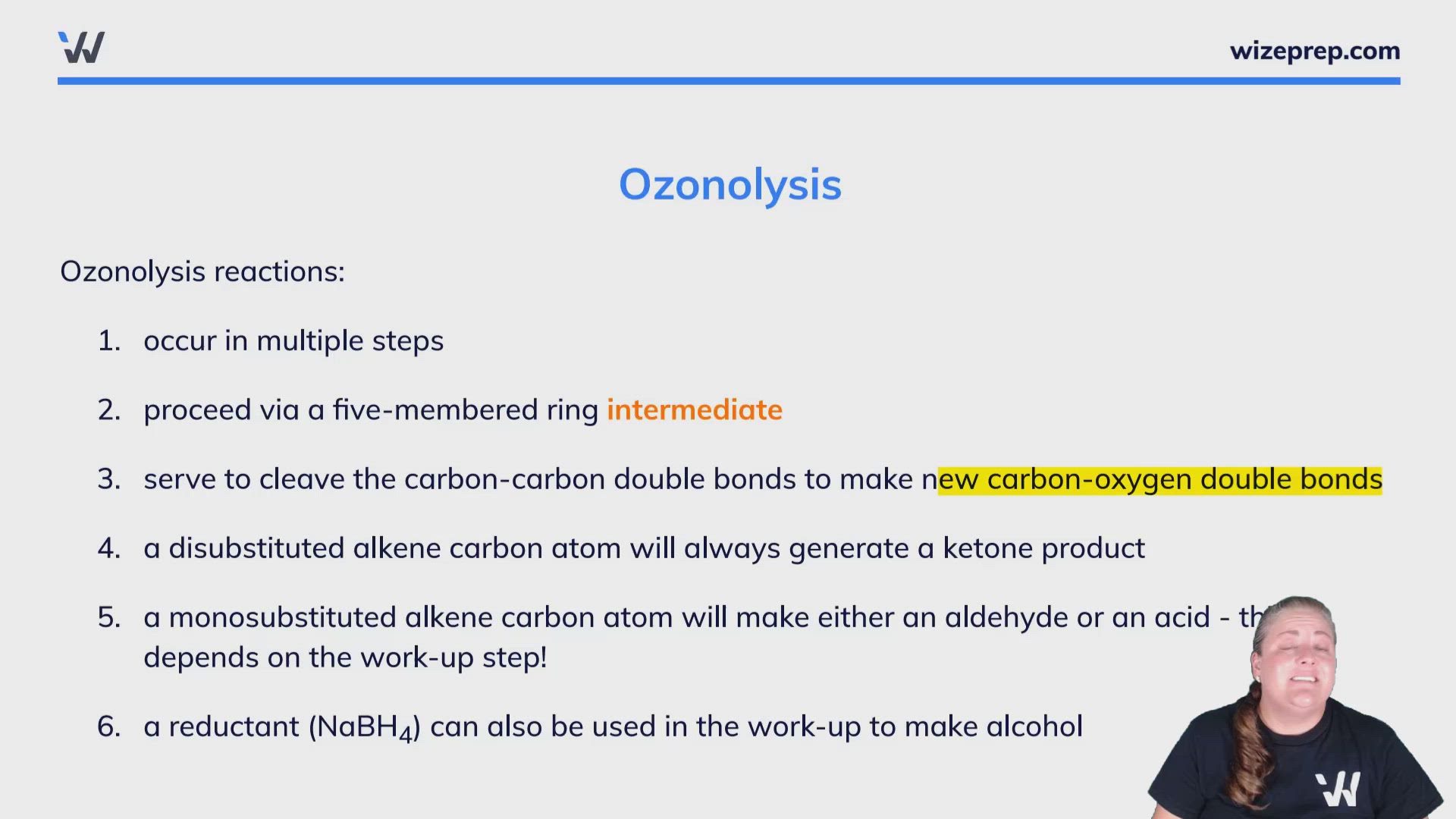
Ozonolysis reactions:
- occur in multiple steps
- proceed via a five-membered ring intermediate
- serve to cleave the carbon-carbon double bonds to make new carbon-oxygen double bonds
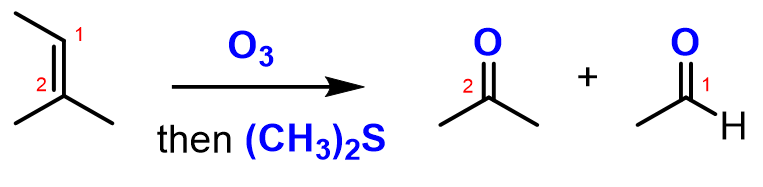
- a disubstituted alkene carbon atom will always generate a ketone product
- a monosubstituted alkene carbon atom will make either an aldehyde or an acid - this depends on the work-up step!
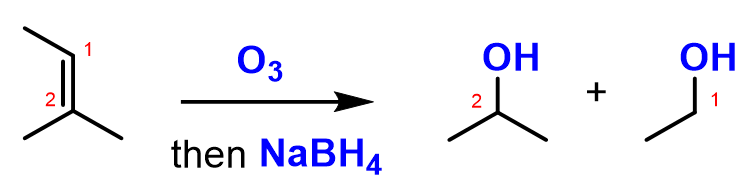
- a reductant (NaBH4) can also be used in the work-up to make alcohol

Wize Concept
There are three different work-ups:
- Me2S: a mild work-up to give the aldehyde from the monosubstituted carbon atom
- H2O2: a strong work-up to give the acid from the monosubstituted carbon atom
- NaBH4: a reductive work-up to give the alcohol instead of the carbonyl
Wize Tip
The mechanism of ozonolysis is pretty complicated and you do not need to know it!
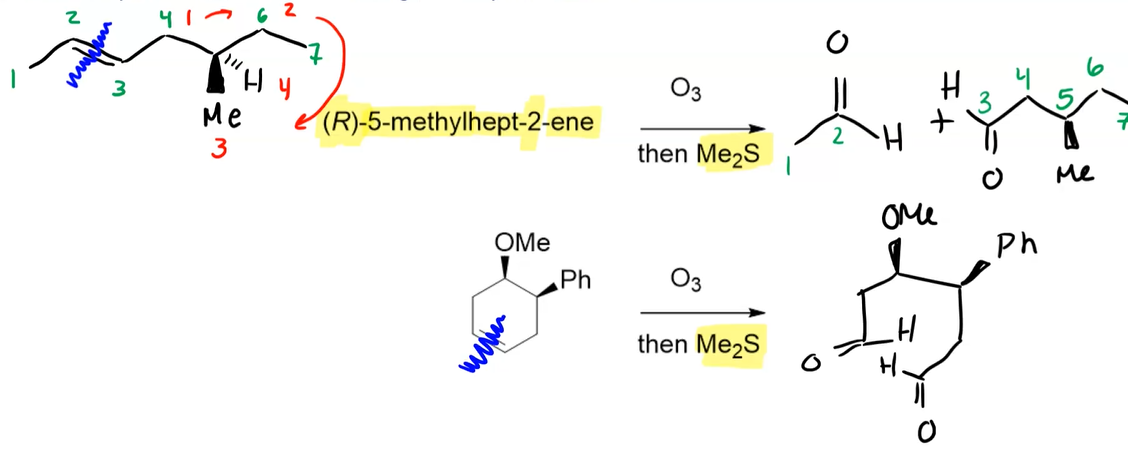
Example: predict the product of the following ozonolysis reactions.


0:00 / 0:00
Example: Ozonolysis
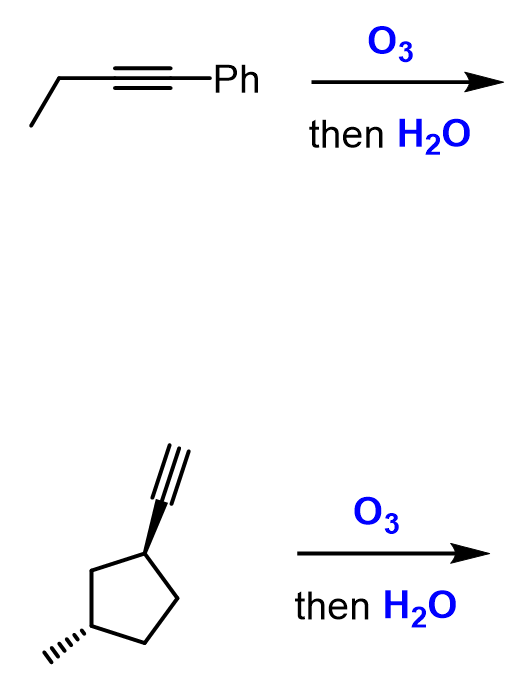
Alkynes can also undergo ozonolysis which yields two new carboxylic acids (very useful functional groups, as you will see!). Draw the products of the following ozonlysis reactions.

0:00 / 0:00
Example: Ozonolysis
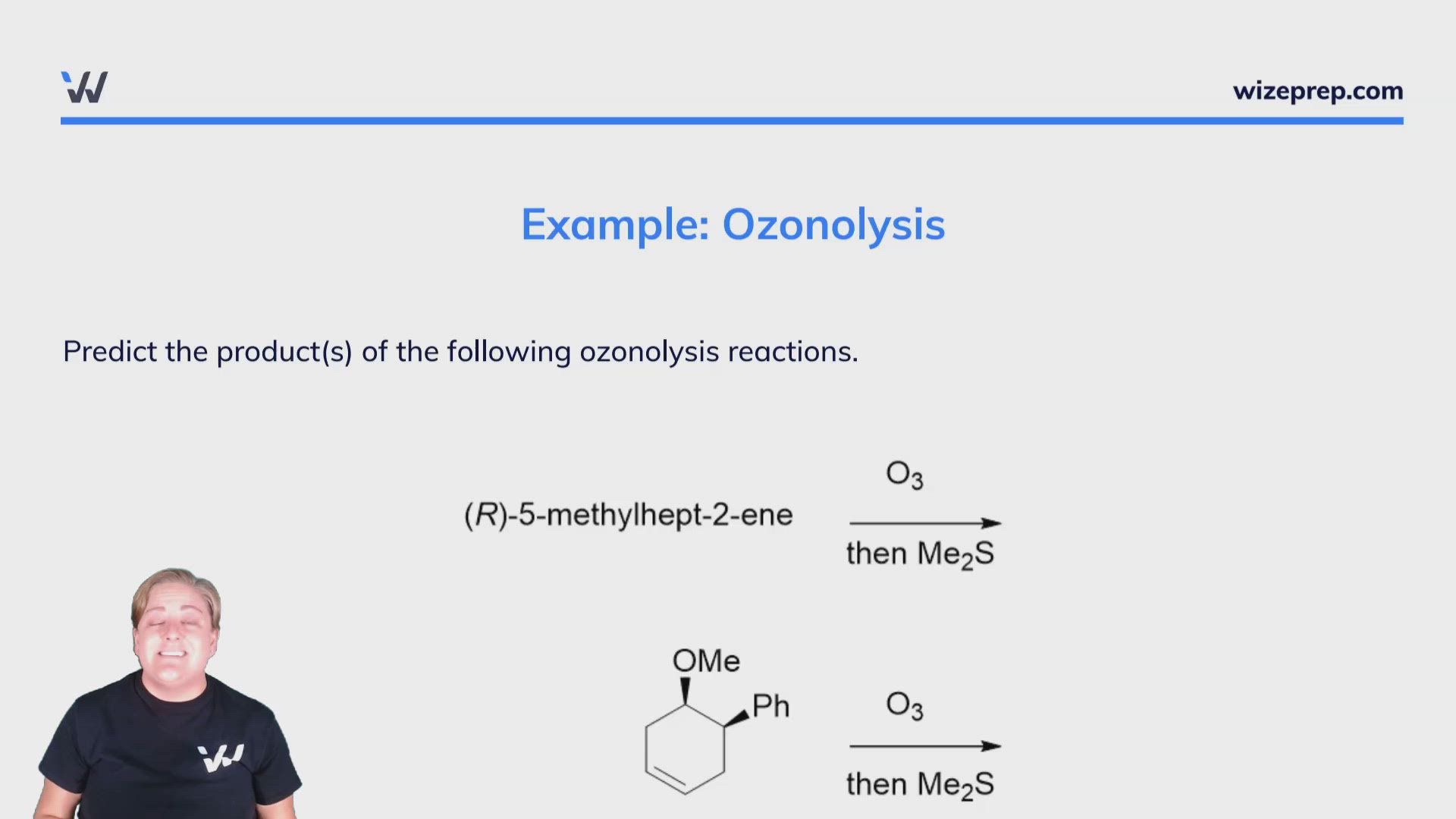
Predict the product(s) of the following ozonolysis reactions.