Popular Courses
MCAT
General Course
DAT
General Course
CHEM 2213A/B
Western University
Organic Chemistry
University Study Guides
Organic Chemistry
General Course
CHEM 233
University of British Columbia
Organic Chemistry
University Study Guides
CHM 1321
University of Ottawa
CHM136H1
University of Toronto
CHEM 2223B
Western University
CHM 2120
University of Ottawa
CHEM 263
University of Alberta
CHEM 282
Queen's University
CHY 142
Toronto Metropolitan University
CHEM 222
McGill University
CHEM 353
University of Calgary
CHEM 2E03
McMaster University
CHEM 266
University of Waterloo
CHEM 2OB3
McMaster University
CHEM 250
University of Saskatchewan
Synthesis of Anhydrides
Acid anhydrides are the second-most reactive carboxylic acid derivative. They can be formed from a dehydration reaction with carboxylic acids.

Wize Concept
A dehydration reaction is sometimes called a condensation reaction and proceeds with the loss of water.
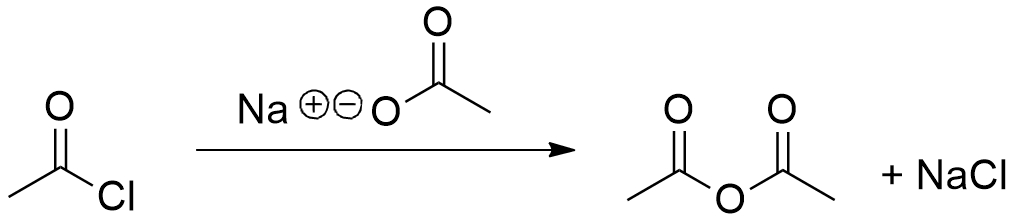
They can also be formed by treating acid halides with an a deprotonated acid nucleophiles.
0:00 / 0:00
Formation of Esters from Carboxylic Acids (Fisher Esterification)
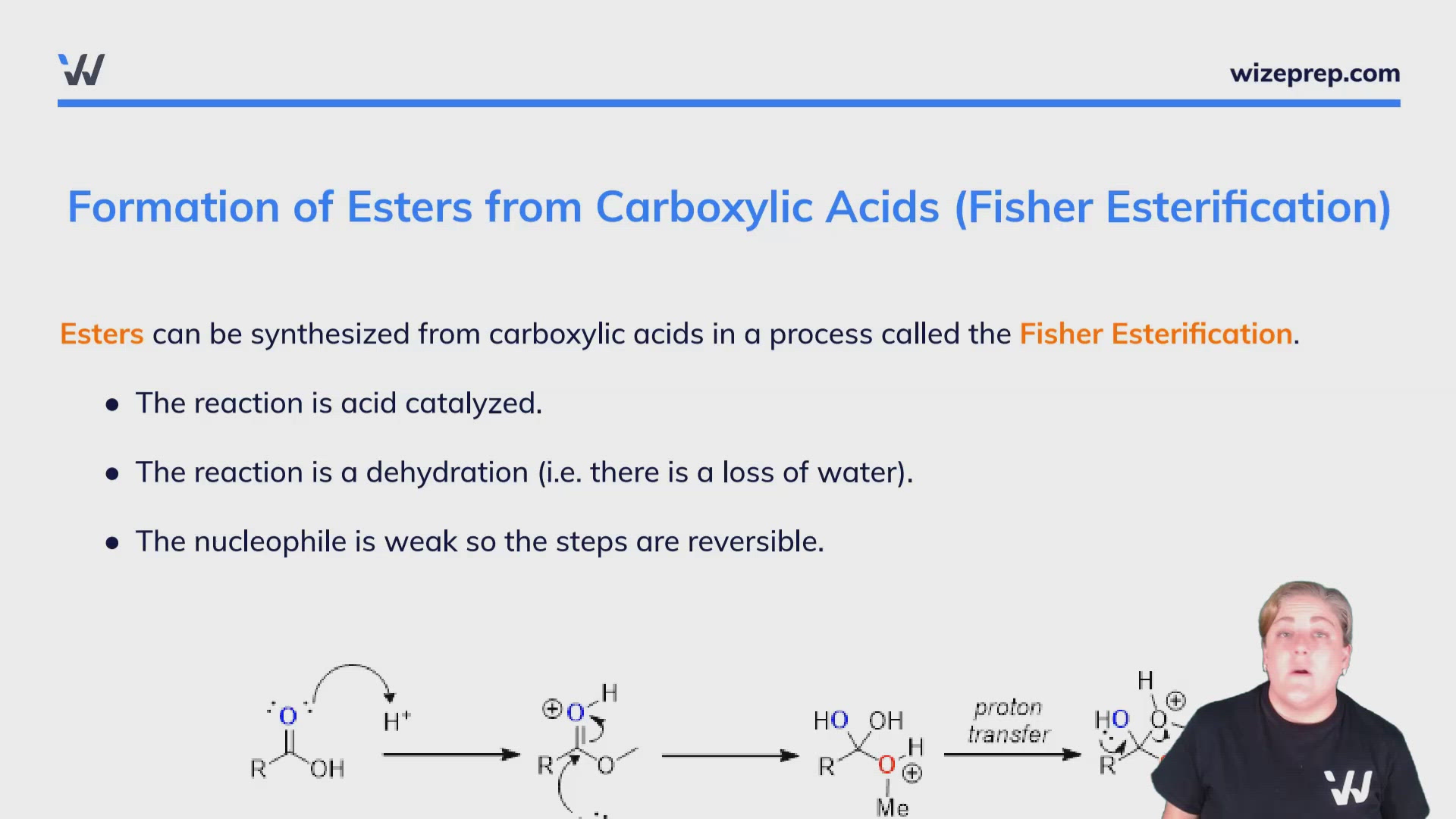
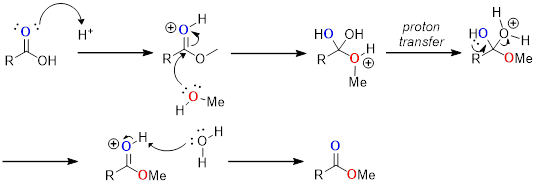
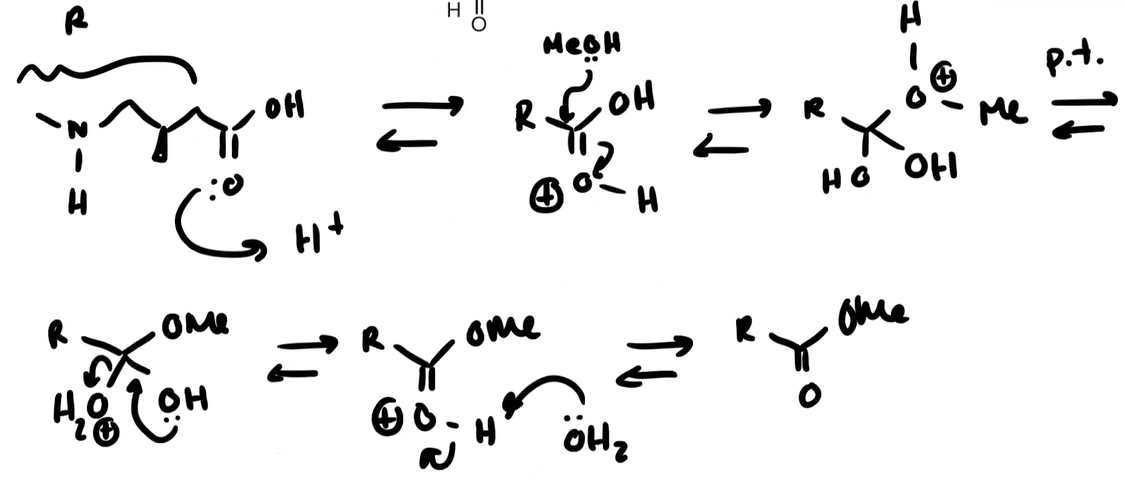
Esters can be synthesized from carboxylic acids in a process called the Fisher Esterification.
- The reaction is acid catalyzed.
- The reaction is a dehydration (i.e. there is a loss of water).
- The nucleophile is weak so the steps are reversible.

0:00 / 0:00
Formation of Esters from Acid Halides
Esters are the third-most reactive carboxylic acid derivative. They can be formed through reaction of an alcohol nucleophile with an acid halide.

They can also be formed through reaction of an alcohol nucleophile with an acid anhydride.

Wize Tip
Watch out for by-products from these reactions! Remember, they are just the protonated version of the leaving group!
0:00 / 0:00
Transesterification
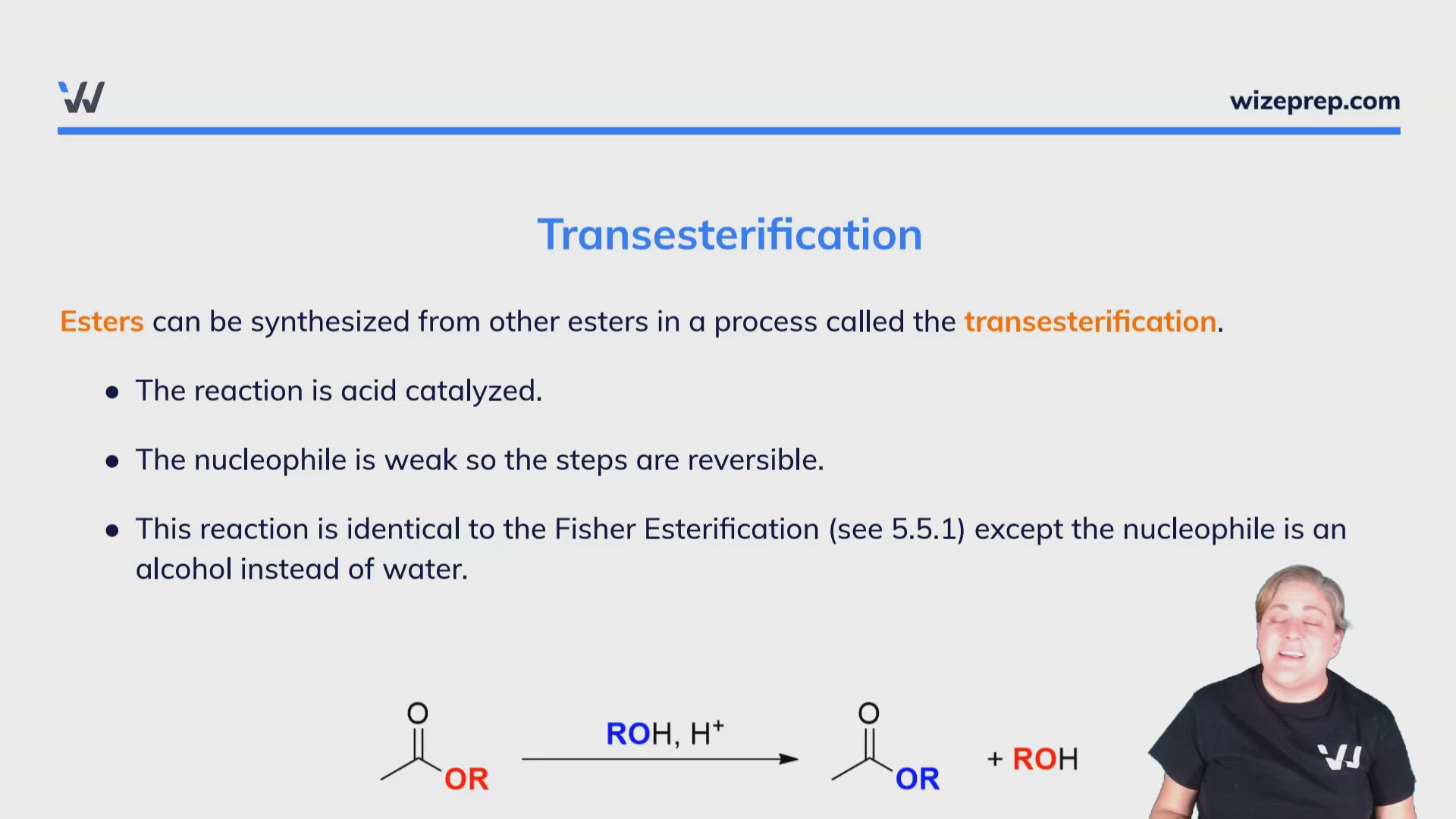
Esters can be synthesized from other esters in a process called the transesterification.
- The reaction is acid catalyzed.
- The nucleophile is weak so the steps are reversible.
- This reaction is identical to the Fisher Esterification (see 5.5.1) except the nucleophile is an alcohol instead of water.

Wize Concept
In order to push the reaction towards the product side, the reactant alcohol is added in excess to take advantage of Le Chatelier's Principle

0:00 / 0:00
Example: Esters and Anhydrides
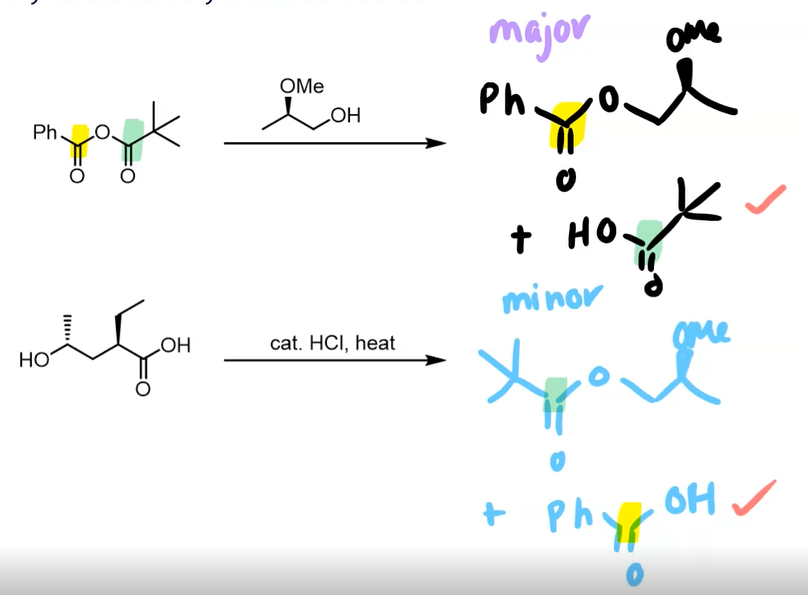
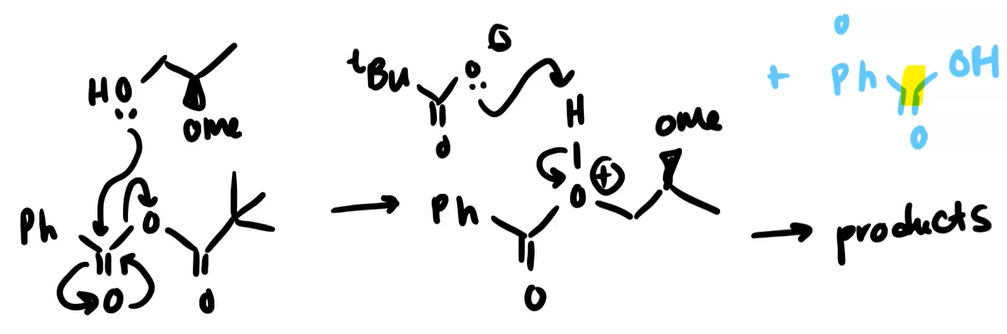
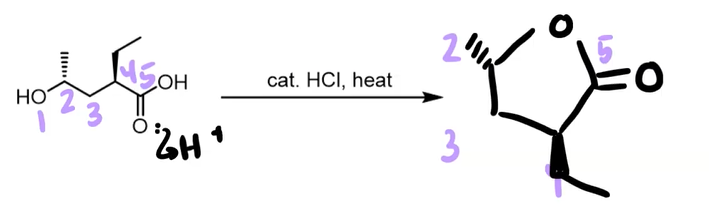
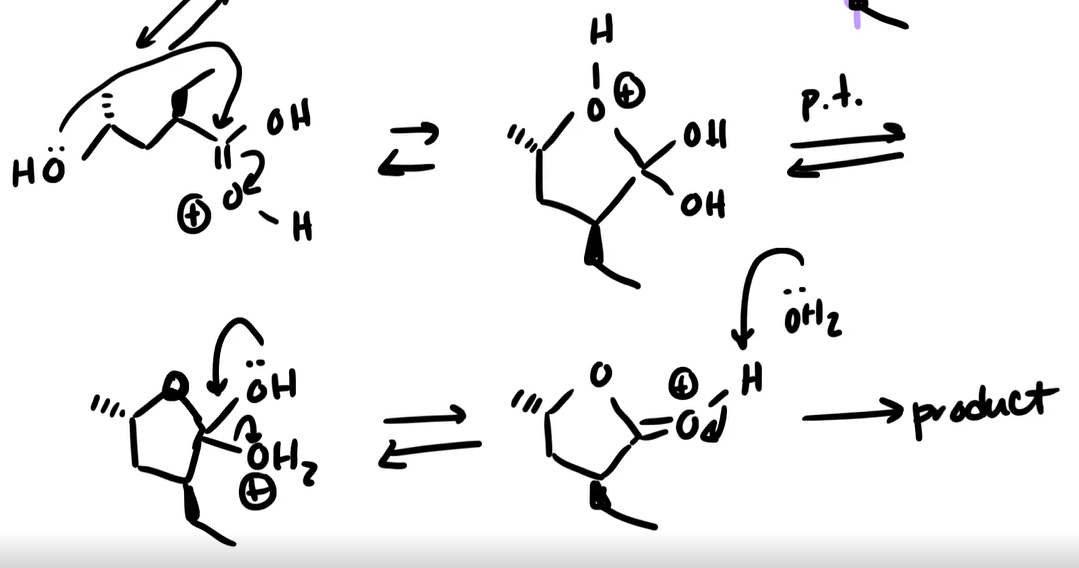
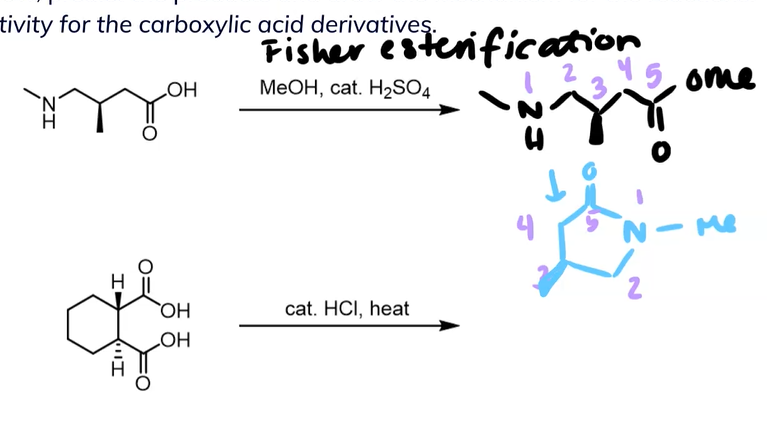
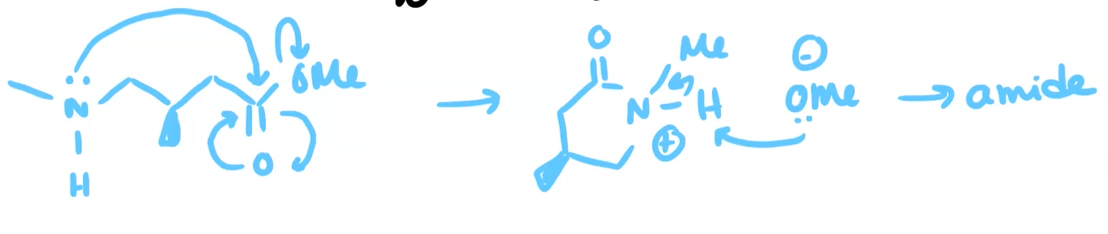
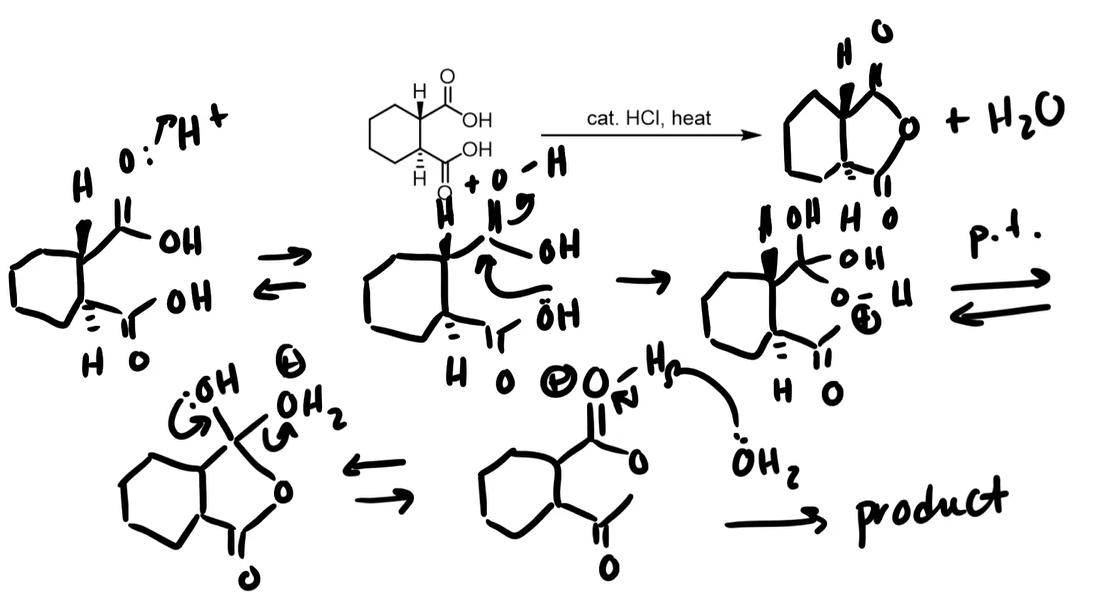
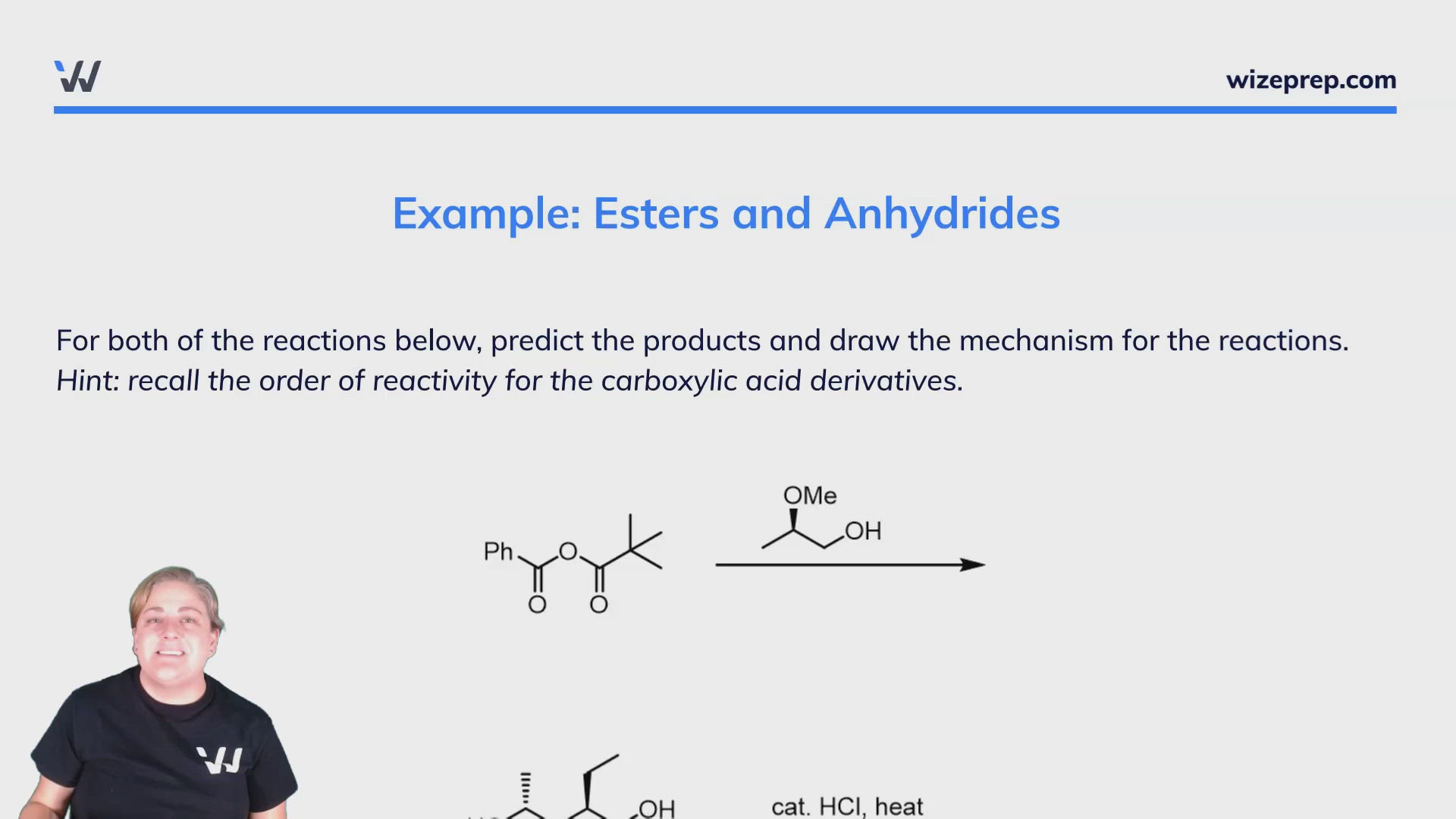
For both of the reactions below, predict the products and draw the mechanism for the reactions. Hint: recall the order of reactivity for the carboxylic acid derivatives.

0:00 / 0:00
Example: Esters and Anhydrides
For both of the reactions below, predict the products and draw the mechanism for the reactions. Hint: recall the order of reactivity for the carboxylic acid derivatives.