Popular Courses
DAT
General Course
Organic Chemistry
University Study Guides
Organic Chemistry
General Course
Organic Chemistry
University Study Guides
CHEM 351
University of Calgary
CHM 1321
University of Ottawa
CHM136H1
University of Toronto
CHEM 212
McGill University
CHEM 231
University of Victoria
CHEM 2223B
Western University
CHEM 282
Queen's University
CHY 142
Toronto Metropolitan University
CHEM 353
University of Calgary
CHEM 203
University of British Columbia
CHEM 281
Simon Fraser University
CHEM 266
University of Waterloo
CHEM 2OB3
McMaster University
CHEM 250
University of Saskatchewan
CHEM 260
University of British Columbia
CHEM 221
Concordia University
0:00 / 0:00
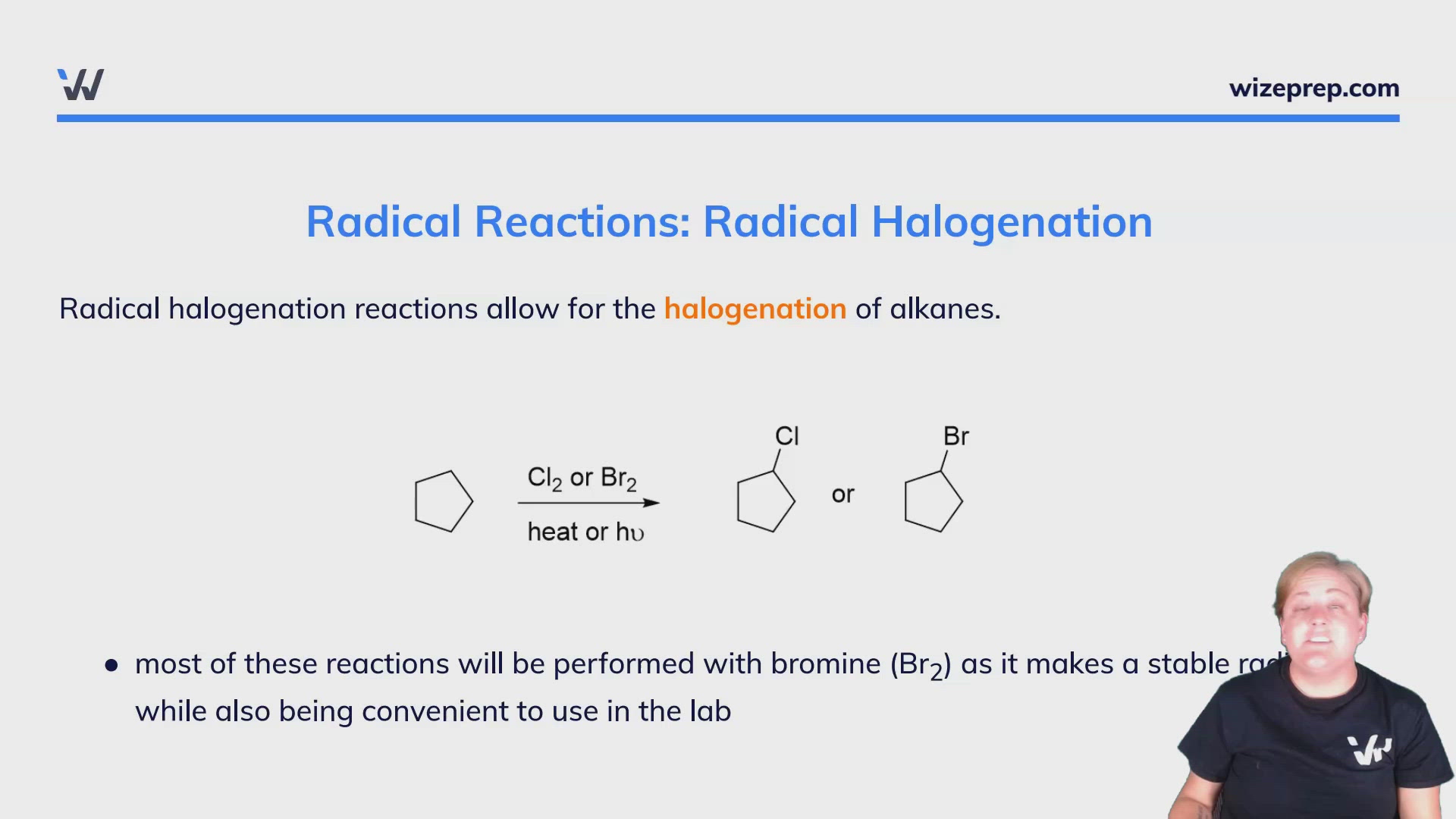
Radical Reactions: Radical Halogenation
Radical halogenation reactions allow for the halogenation of alkanes.
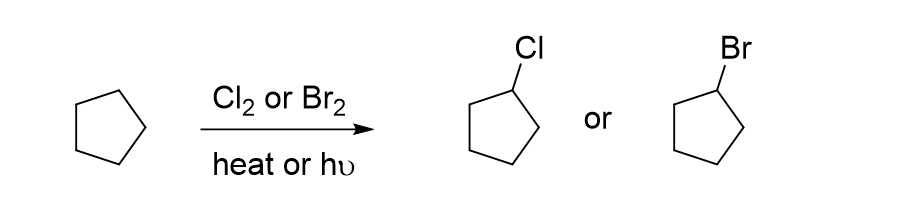
- most of these reactions will be performed with bromine (Br2) as it makes a stable radical while also being convenient to use in the lab
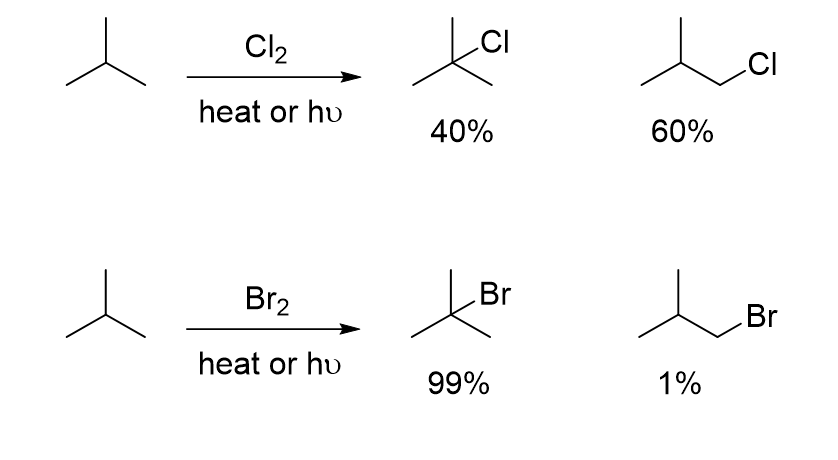
- these reactions are performed at high temperature or in the presence of light to initiate the radical formation
- the reactions all occur in the same three steps:
- initiation: making the radical
- propagation: the radical reaction proceeds
- termination: getting rid of the radicals
Wize Concept
The scientific shorthand for light is h(nu).
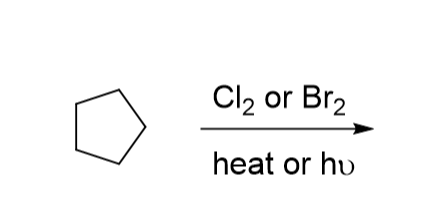
Steps of a radical halogenation:
- formation of the halogen radical with heat or light
- hydrogen atom abstraction from the alkane with the halogen radical
- formation of the C-X bond between the carbon radical and X2 to generate another halogen radical
- repetition of the steps above
Mechanism:
0:00 / 0:00
Hydrohalogenation with a Peroxide
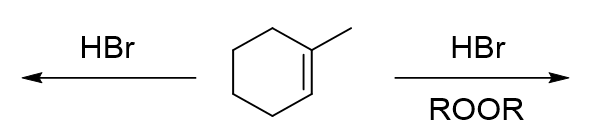
Hydrohalogenation radical reactions:
- occur in multiple steps and are classified as an radical reactions
- proceed via a radical intermediate
- have anti-Markovnikov addition for a regiochemical outcome (anti-Markovnikov addition has the higher priority group added to the less substituted carbon atom)
Wize Concept
You will remember the ionic version of the hydrohalogenation that was covered in Section 6.1. That gave the Markovnikov product!
Wize Concept
A peroxide is something with an oxygen-oxygen bond. They are highly reactive and therefore good radical iniators.
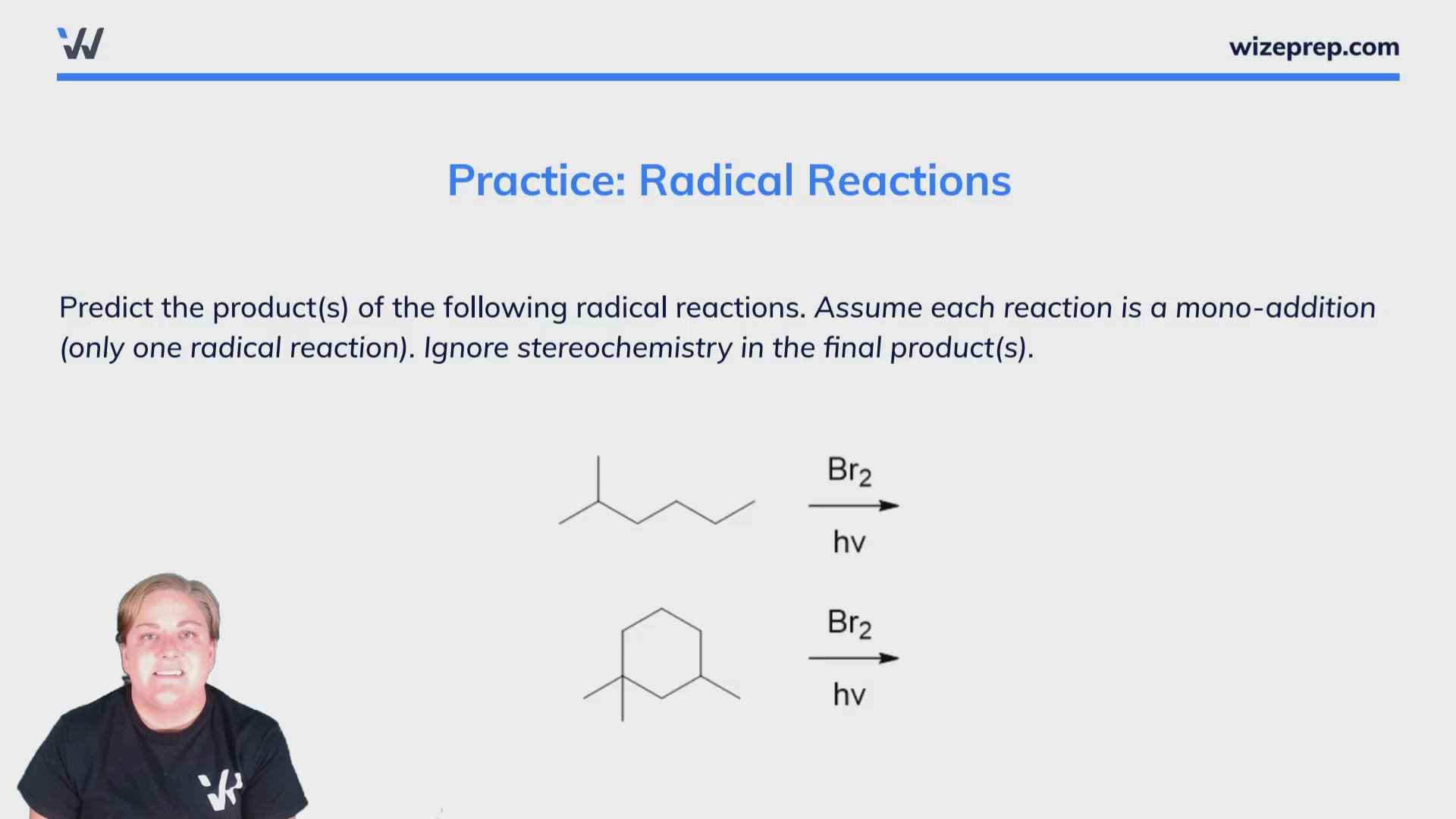
Steps of a hydrohalogenation with peroxides:
- the peroxide will initiate making an oxygen radical
- this abstracts the hydrogen atom from H-X forming a halogen radical
- this halogen radical reacts with the alkene to make the new C-X bond and makes a carbon radical
- this carbon radical abstracts a hydrogen atom from H-X making the product and a new halogen radical
- steps 3-4 repeats until termination
Mechanism:
0:00 / 0:00
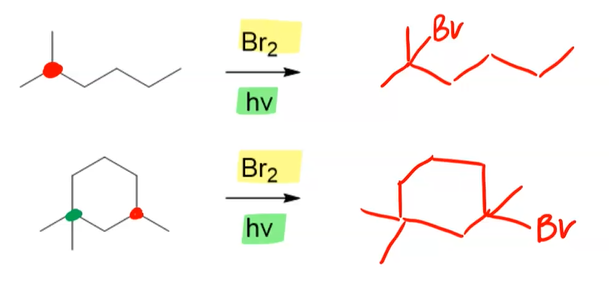
Practice: Radical Reactions
Predict the product(s) of the following radical reactions. Assume each reaction is a mono-addition (only one radical reaction). Ignore stereochemistry in the final product(s).

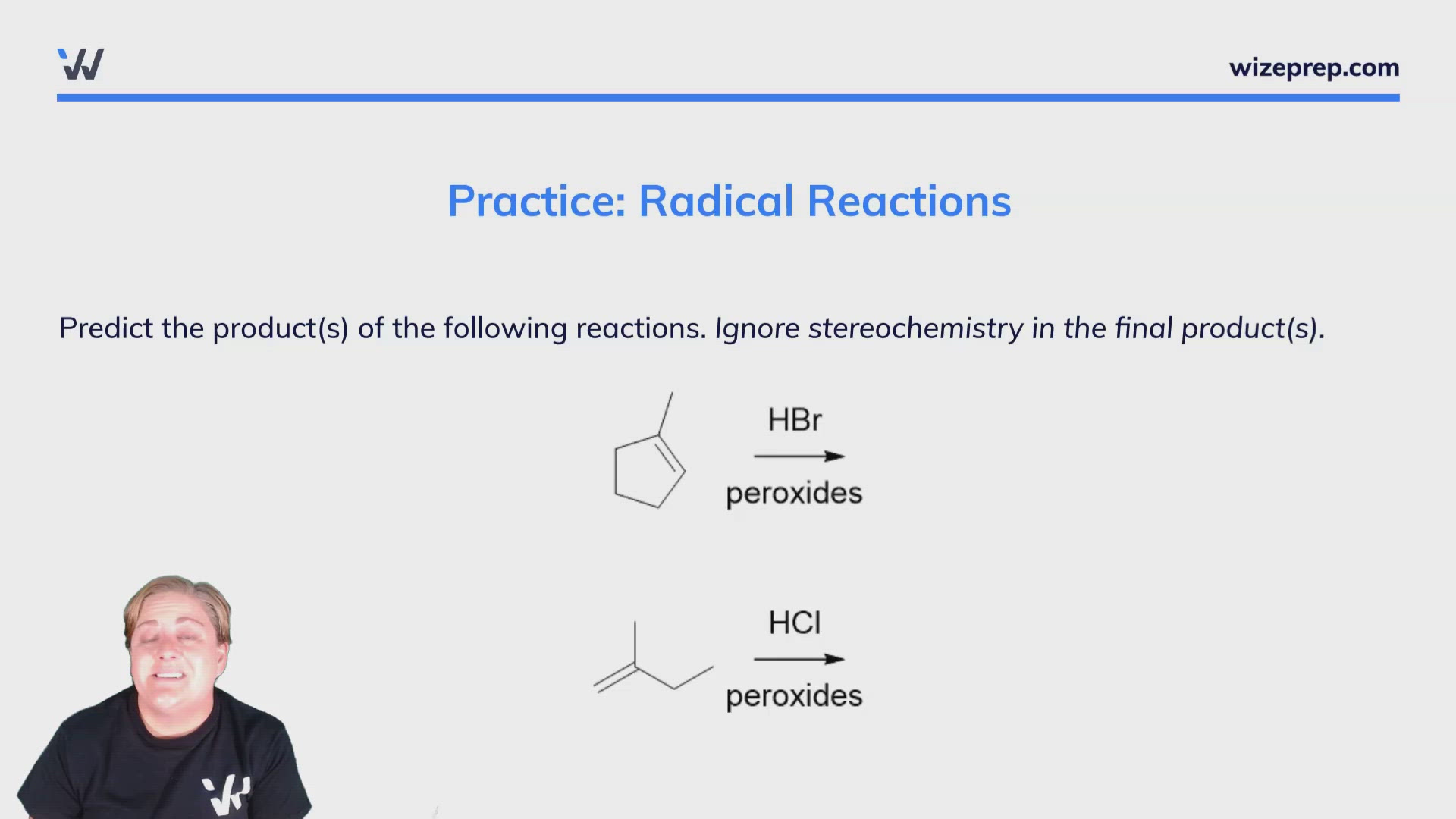
0:00 / 0:00
Practice: Radical Reactions
Predict the product(s) of the following reactions. Ignore stereochemistry in the final product(s).

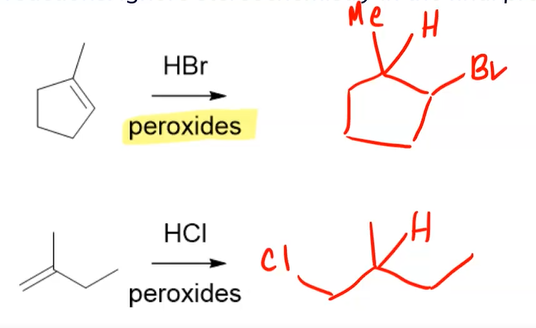

Mark Yourself Question
- Grab a piece of paper and try this problem yourself.
- When you're done, check the "I have answered this question" box below.
- View the solution and report whether you got it right or wrong.
A student performed a reaction with 2-methylbut-1-ene and bromine in the presence of light. Two products were formed; however, one product formed preferentially. What were the products? Which was the major product and why did it form in excess?