Popular Courses
MCAT
General Course
Organic Chemistry
University Study Guides
Organic Chemistry
General Course
CHEM 233
University of British Columbia
Organic Chemistry
University Study Guides
CHEM 2223B
Western University
CHEM 282
Queen's University
CHY 142
Toronto Metropolitan University
CHEM 2OB3
McMaster University
CHEM 250
University of Saskatchewan
CHM247H1
University of Toronto
CHEM 213
University of British Columbia
CHEM 2100
University of Manitoba
CHEM*2700
University of Guelph
CHEM 280
Simon Fraser University
CHEM 164
University of Alberta
CHM249H1
University of Toronto
CHMB41H3
University of Toronto
CHM 26100
Purdue University
CHM138H1
University of Toronto
0:00 / 0:00
Straight Chain Nomenclature
A carbohydrate is a biomolecule consisting of carbon and water with a general formula of CnOnH2n. The most common molecule that you'll see in organic chemistry is glucose: C6H12O6.
Wize Concept
Remember, in a Fisher projection the left/right hand arms are coming forward and the vertical lines are going backward.
Classification of Carbohydrates
- Chain Length: Carbohydrates are named according to the number of carbon atoms in the main chain (carbon atoms in a row). They have similar prefixes to those used in IUPAC naming: 3 (tri), 4 (tetr), 5 (pent), 6 (hex), 7 (hept), and will all end in 'ose.'
- Aldose or Ketose: Carbohydrates are classified as aldose (aldehyde) or ketose (ketone) depending on the carbonyl functional group present within the molecule
- D versus L: Carbohydrates are classified as D or L. To do so:
- (1) the Fischer projection is drawn so the carbonyl carbon is at the top
- (2) the -CH2OH group is on the bottom
- (3) if the -OH group on the highest number chiral carbons is:
- on the left = L
- on the right = D
Example: name the following carbohydrates


0:00 / 0:00
Cyclization of Monosaccharides
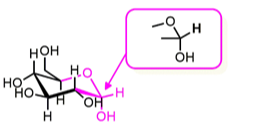
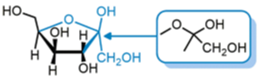
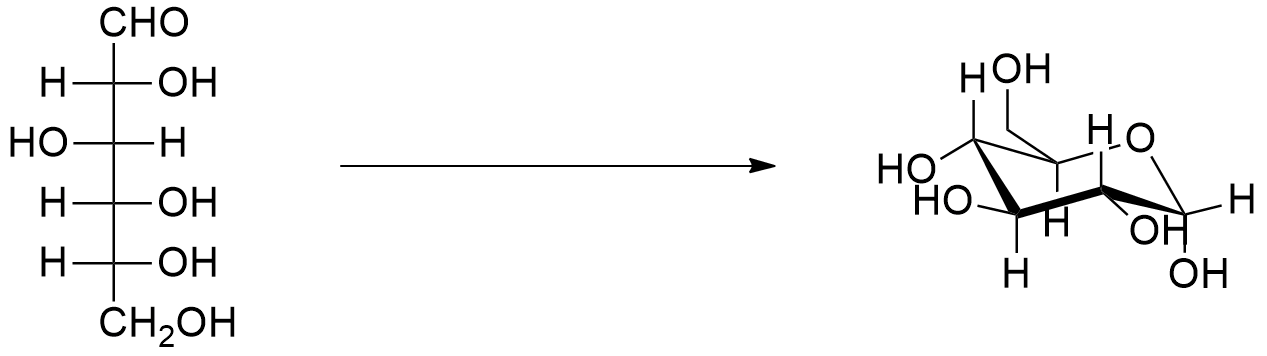
Monosaccharides can cyclize when a hydroxyl group attacks the carbon or the carbonyl. This reaction is reversible and forms hemiacetals from aldoses and hemiketals from ketoses.
Wize Tip
The carbon that was formally the carbonyl is called the anomeric carbon.
The anomeric carbon can be found easily because it's the only carbon atom with two oxygen atoms bonded to it!
Wize Tip
Since the cyclization reaction is reversible, the cyclic form can open to the linear form then close again (and proceed from here).
Mechanism of Cyclization
0:00 / 0:00
Cyclic Nomenclature
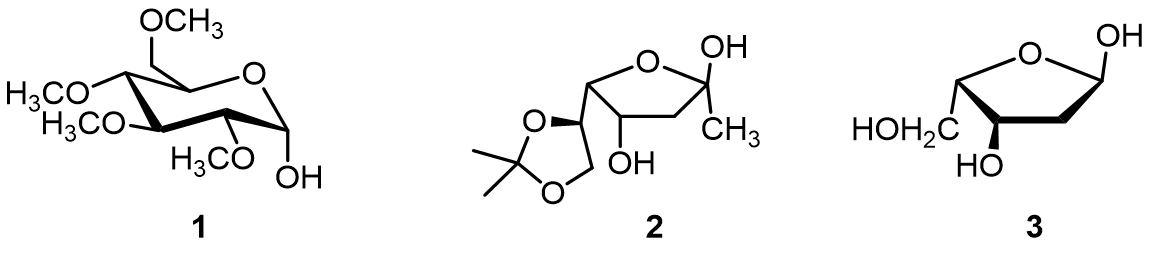
Since the linear and the cyclic forms of monosaccharides are in a dynamic equilibrium, you also need to be comfortable with the nomenclature of the cyclic forms as well. There are two size rings you will see:
- a six-membered ring is called a pyranose
- a five-membered ring is called a furanose
Example: name each of the following cyclic monosaccharides as a furanose or pyranose
Alpha Versus Beta
There is an important carbon atom in the cylic form called the anomeric carbon. This carbon atom was the electrophilic carbon of the carbonyl. Since it can be attacked from the top or bottom face by the oxygen atom during cyclization there are variable stereoisomers.

Wize Concept
The alpha anomer has the -CH2OH on the pentultimate carbon and the -OH on the anomeric carbon trans to each other.
The beta anomer has the -CH2OH on the pentultimate carbon and the -OH on the anomeric carbon cis to each other.
Wize Tip
Because this reaction is reversible, an equilibrium concentration can be established between the alpha and beta forms of the cyclic monosaccharide. This ratio is 67% beta and 33% alpha.
0:00 / 0:00
Glycosidic Bonds
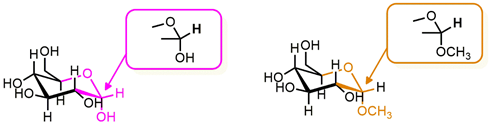
A glycosidic bond is an -OR bond at the anomeric carbon (instead of the -OH group). Glycosidic bonds lead to the formation of ketals from hemiketals and acetals from hemiacetals.

Wize Concept
These glycosidic bonds can be hydrolyzed in the presence of acid and heat (or dietary enzymes!).
0:00 / 0:00
Example: Carbohydrate Nomenclature
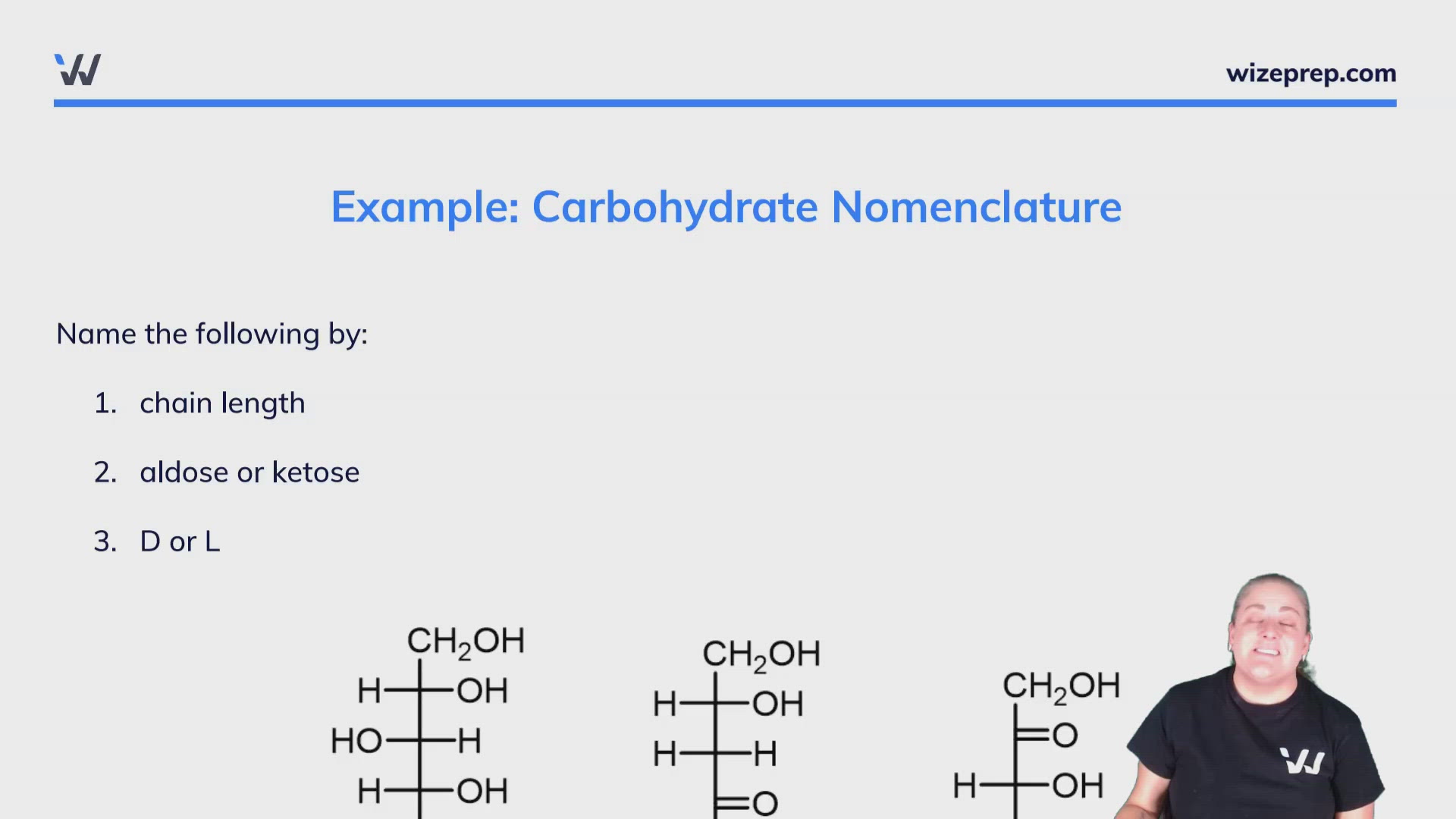
Name the following by:
- chain length
- aldose or ketose
- D or L
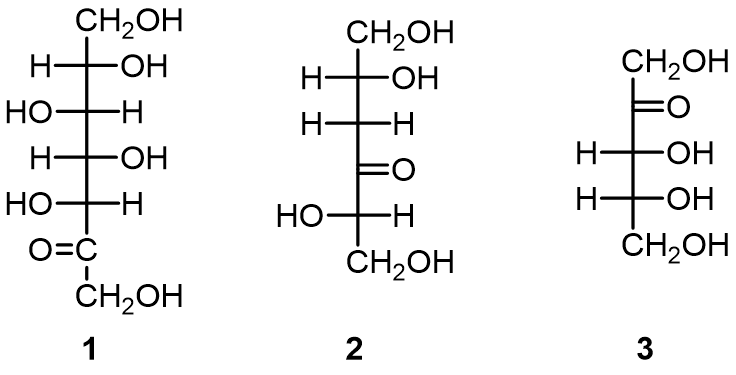
1. Heptose, Ketose, L. Remember, the highest oxidation group needs to be at the top (rotate 180 degrees)
2. Hexose, Ketose, L. Remember, the highest oxidation group needs to be at the top (rotate 180 degrees)
3. Pentose, Ketose, D.
0:00 / 0:00
Example: Carbohydrate Nomenclature (Glycosides)
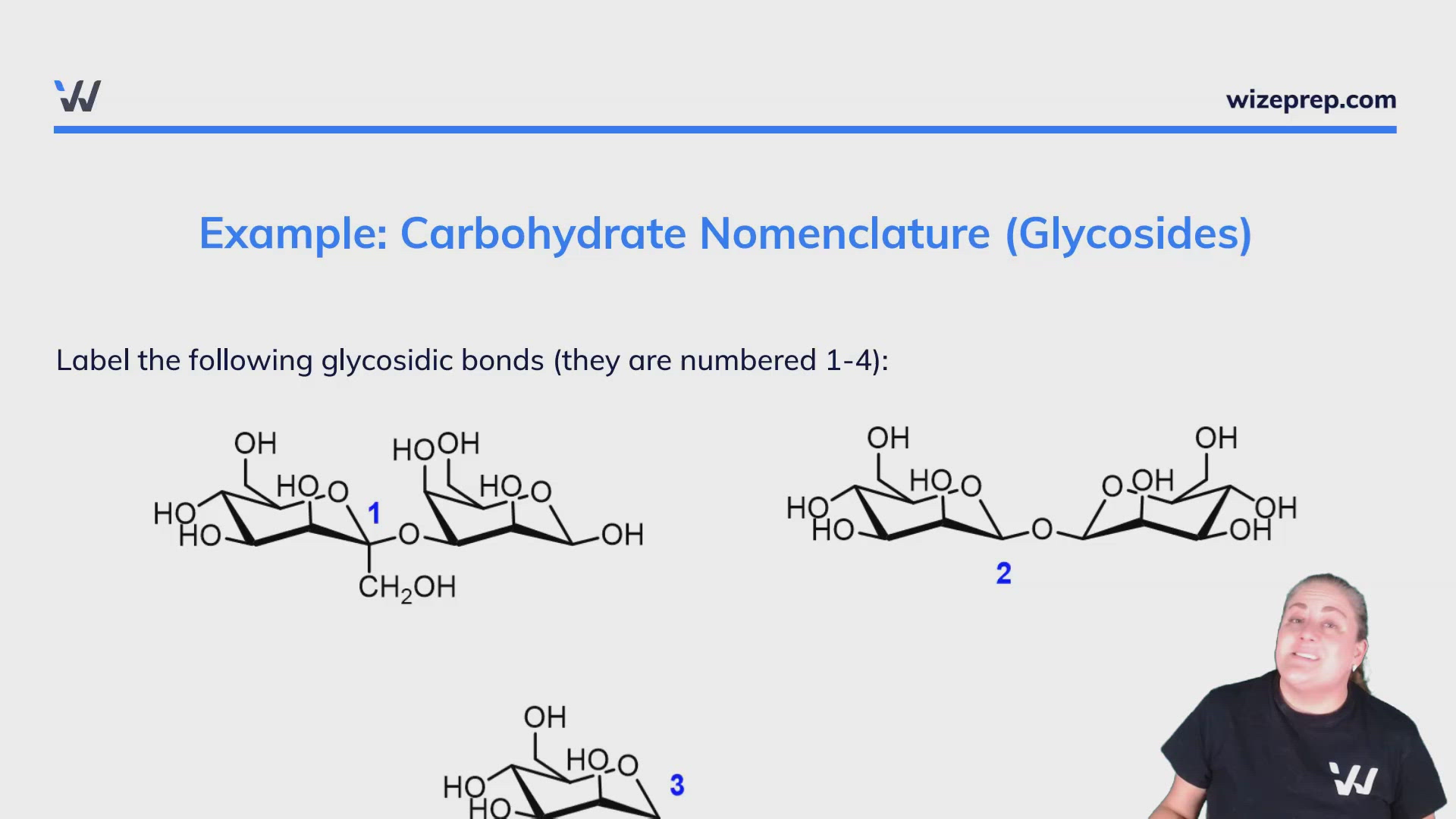
Label the following glycosidic bonds (they are numbered 1-4):
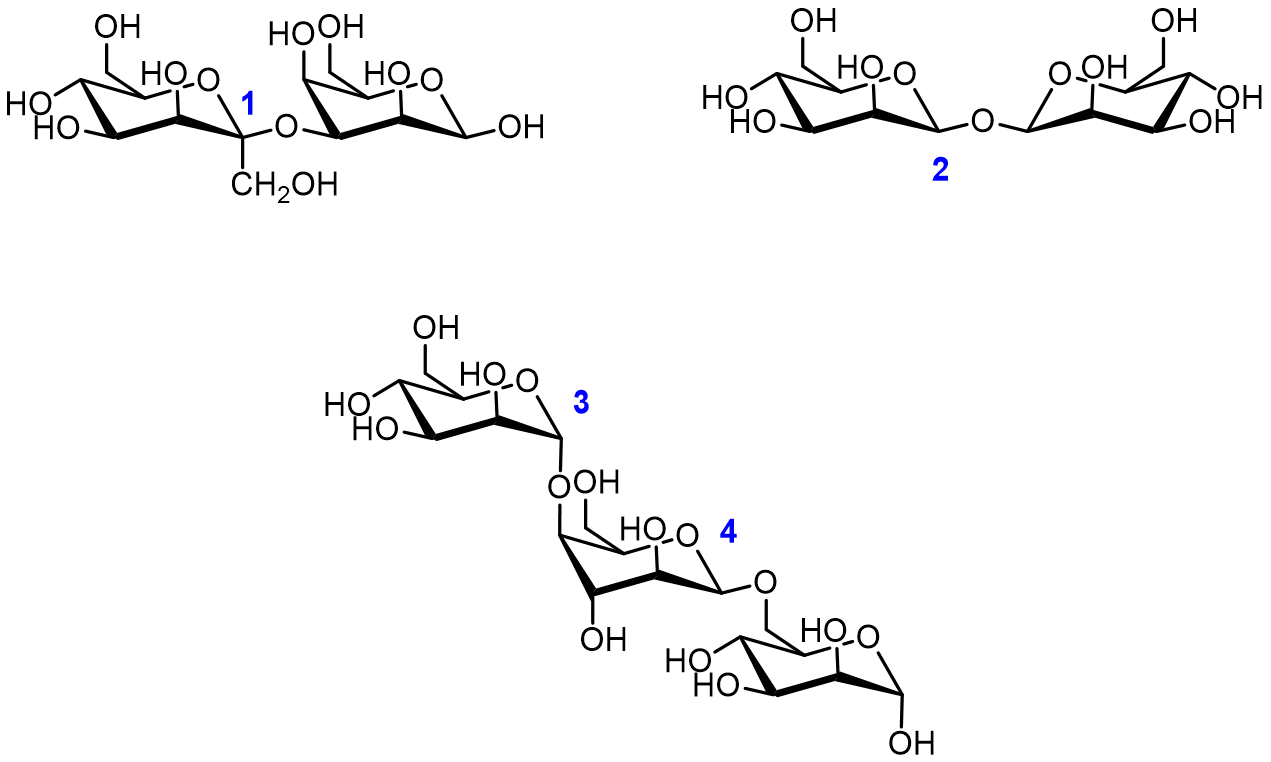
1. Beta-2,3 glycosidic bond
2. Beta-1,1' glycosidic bond (it would be fine to call this a 1,1 glycosidic bond, but we use the 1' to denote the second sugar)
3. Alpha-1,4 glycosidic bond
4. Beta-1,6 glycosidic bond