Popular Courses
MCAT
General Course
CHEM 2213A/B
Western University
Organic Chemistry
University Study Guides
DAT
General Course
Organic Chemistry
General Course
CHEM 261
University of Alberta
CHEM 233
University of British Columbia
CHEM 233
University of British Columbia
Organic Chemistry
University Study Guides
CHEM 351
University of Calgary
CHEM 123
University of British Columbia
CHEM 281
Queen's University
CHM 1321
University of Ottawa
CHM136H1
University of Toronto
CHEM 212
McGill University
CHEM 231
University of Victoria
CHEM 2223B
Western University
CHM 2120
University of Ottawa
CHY 142
Toronto Metropolitan University
CHEM 353
University of Calgary
0:00 / 0:00
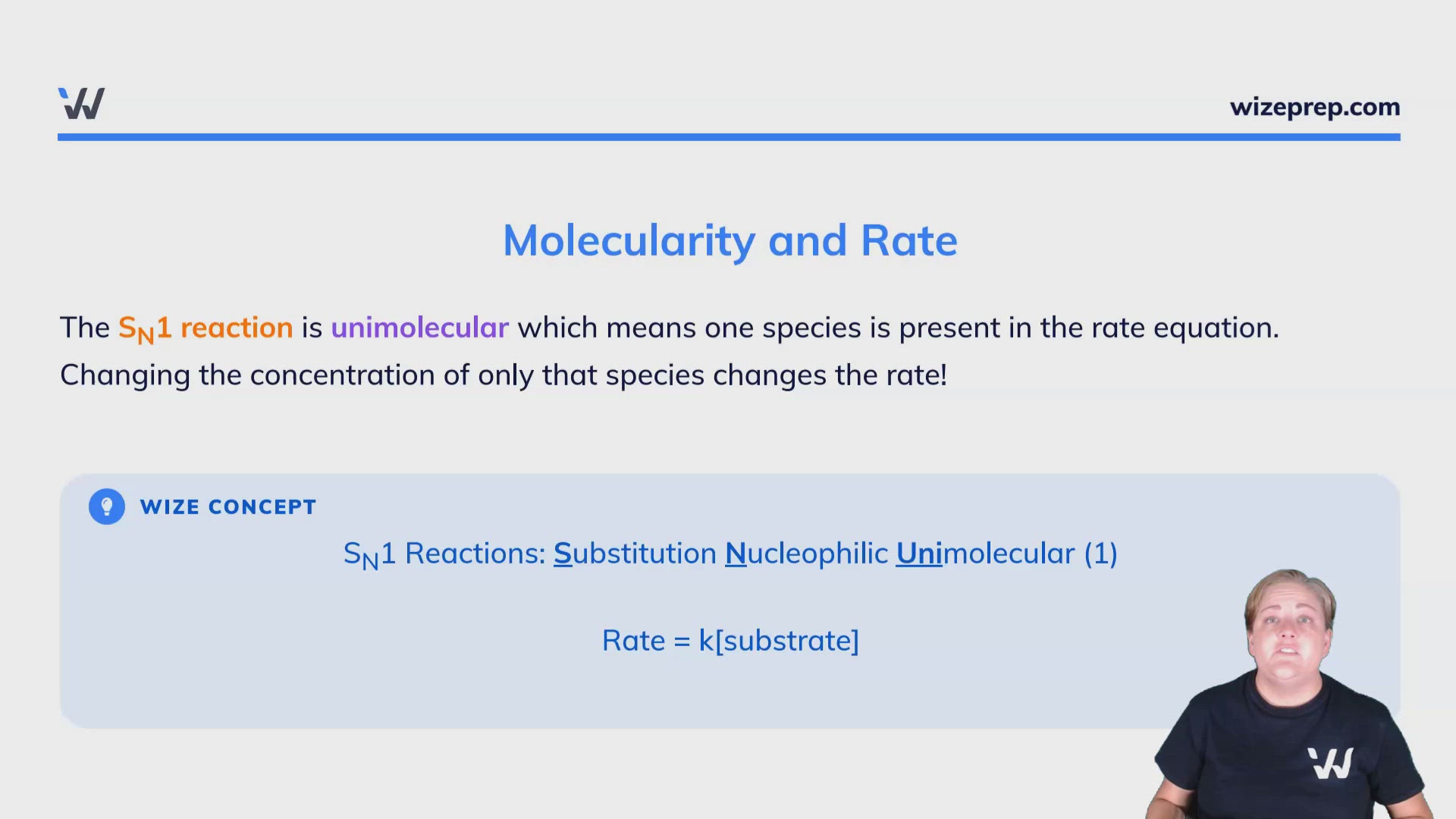
Molecularity and Rate
The SN1 reaction is unimolecular which means one species is present in the rate equation. Changing the concentration of only that species changes the rate!
Wize Concept
SN1 Reactions: Substitution Nucleophilic Unimolecular (1)
Rate = k[substrate]
0:00 / 0:00
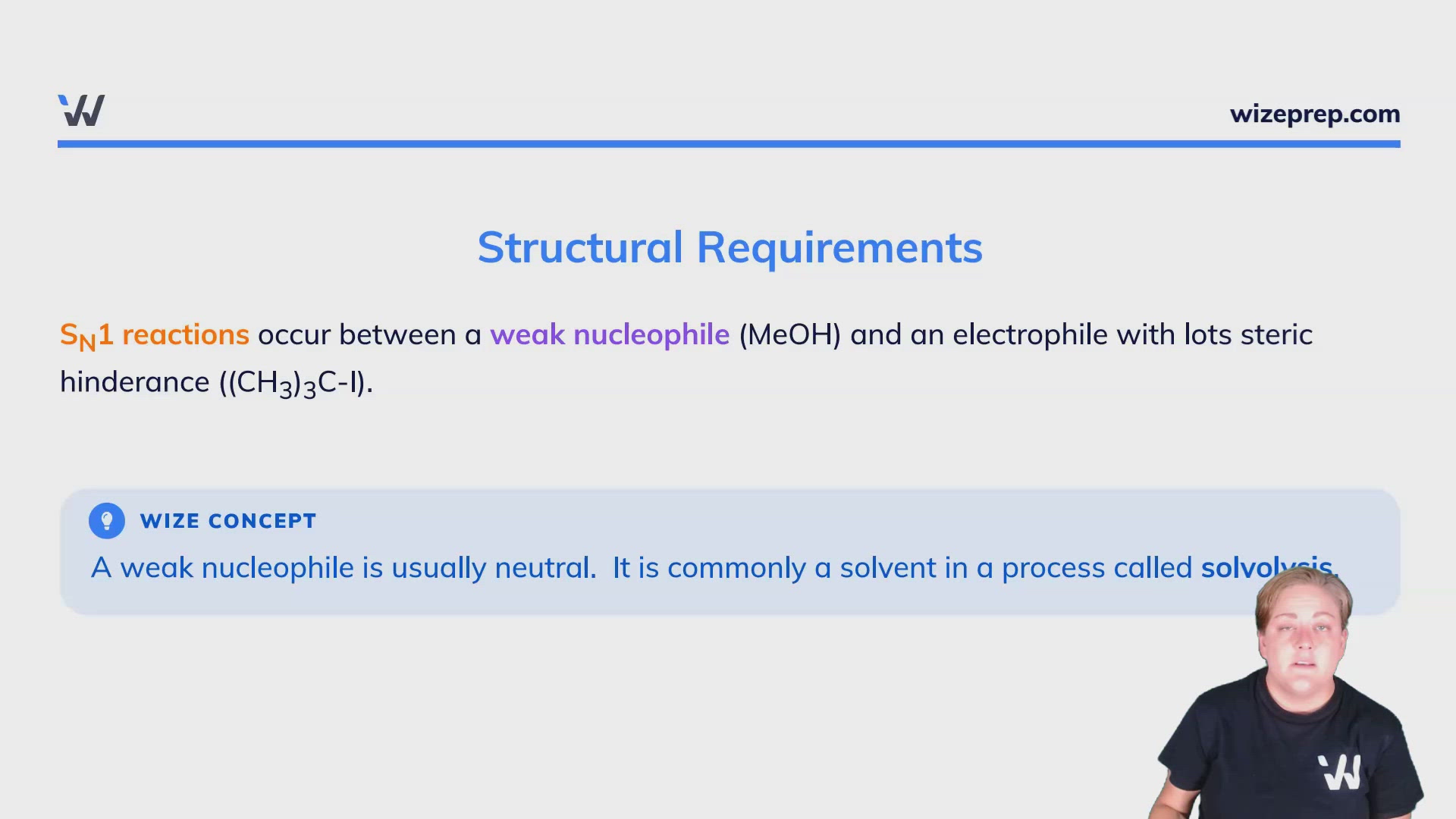
Structural Requirements
SN1 reactions occur between a weak nucleophile (MeOH) and an electrophile with lots steric hinderance ((CH3)3C-I).
Wize Concept
A weak nucleophile is usually neutral. It is commonly a solvent in a process called solvolysis.
0:00 / 0:00
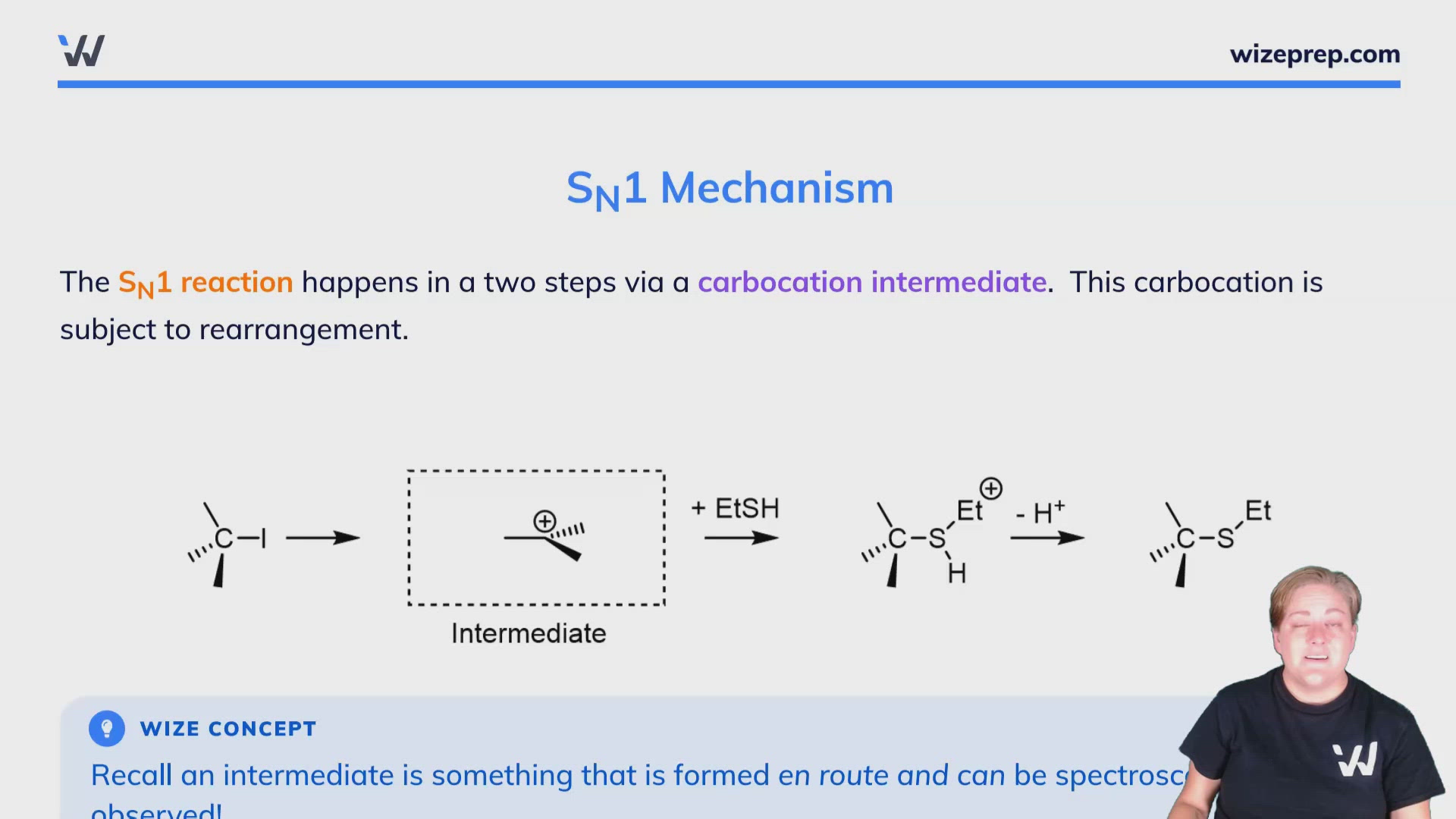
SN1 Mechanism
The SN1 reaction happens in a two steps via a carbocation intermediate. This carbocation is subject to rearrangement.

Wize Concept
Recall an intermediate is something that is formed en route and can be spectroscopically observed!
Wize Tip
Remember, carbocation rearrangements lead to the formation of a mixture of products!
Wize Concept
If you make a chiral product in the SN1 reaction, you will get a racemic mixture (recall this is a 50/50 mixture of enantiomers!).
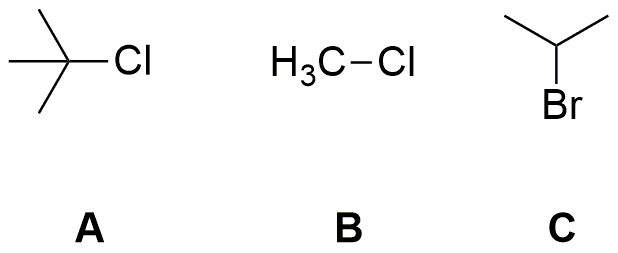
Rank the reactivity of the following substrates in the SN1 reaction.