Popular Courses
PHYSICS 1201A/B
Western University
Intro to Physics
University Study Guides
Grade 12 Physics
Ontario High School
PHYSICS 1D03
McMaster University
AP Physics C: Mechanics Exam Prep Course
AP Exam Prep
Physics
General Course
High School Physics
US High School
Grade 12 Physics
Canada High School
PCS 211
Toronto Metropolitan University
PHYS 204
Concordia University
PHYS*1300
University of Guelph
Intro to Physics
University Study Guides
Physics 30
Alberta High School
PHYS 131
McGill University
APSC 111
Queen's University
Physics 12
British Columbia High School
PCS 120
Toronto Metropolitan University
PHYS 110
University of Victoria
LE/PHYS 1800 3.00
York University
PHYS-1400
University of Windsor
0:00 / 0:00
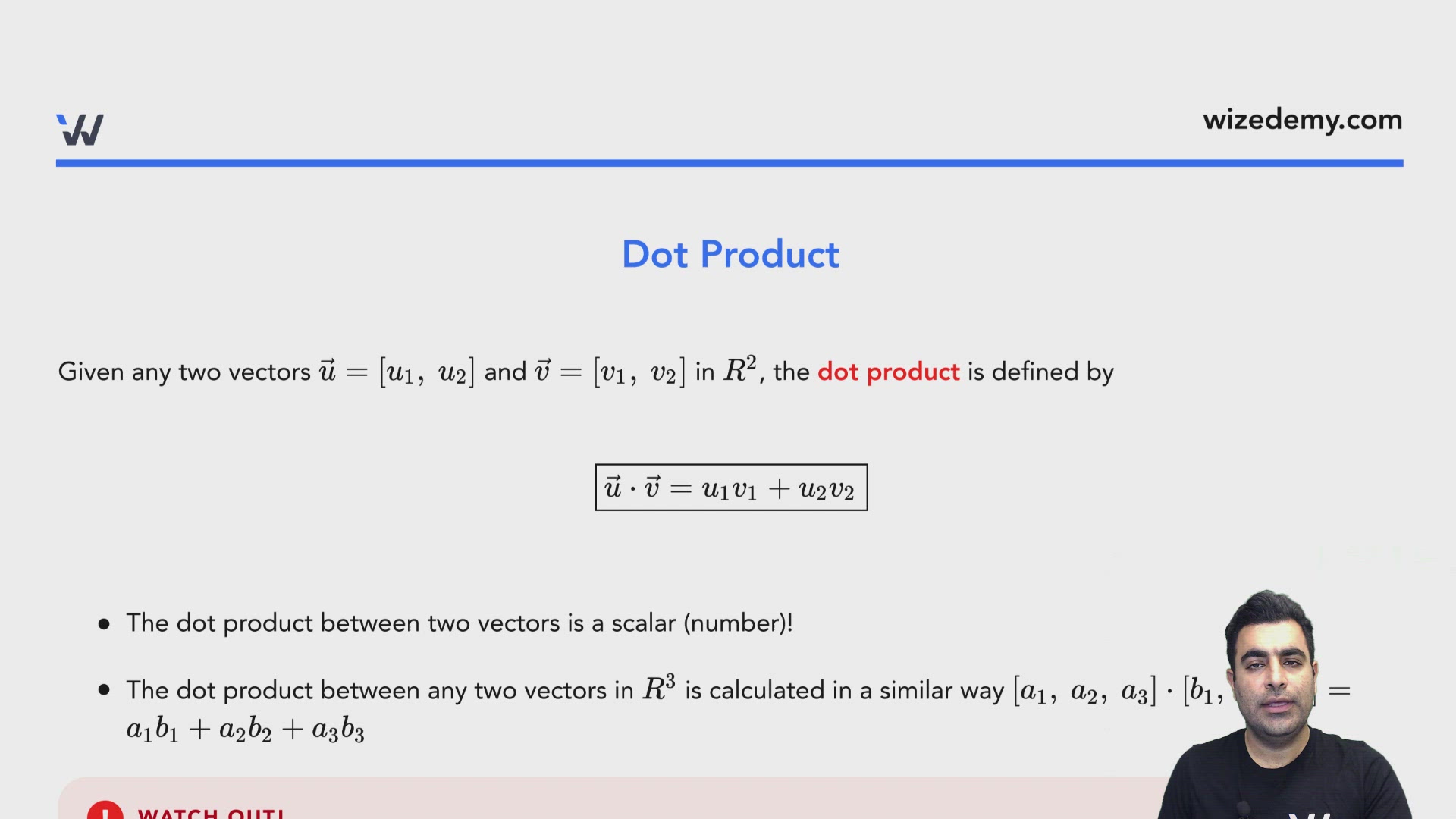
Dot Product
Given any two vectors and in , the dot product is defined by
- The dot product between two vectors is a scalar (number)!
- The dot product between any two vectors in is calculated in a similar way
Watch Out!
We can only calculate the dot product between two vectors that are in the same space!
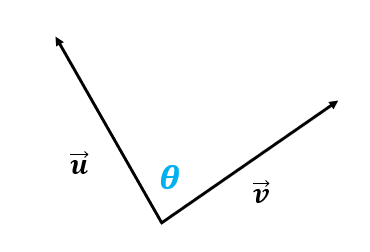
Alternatively, we can find the dot product between two vectors using their lengths as:
where is the angle between the two vectors
Wize Tip
Two non-zero vectors are perpendicular to each other if their dot product is equal to zero.
0:00 / 0:00
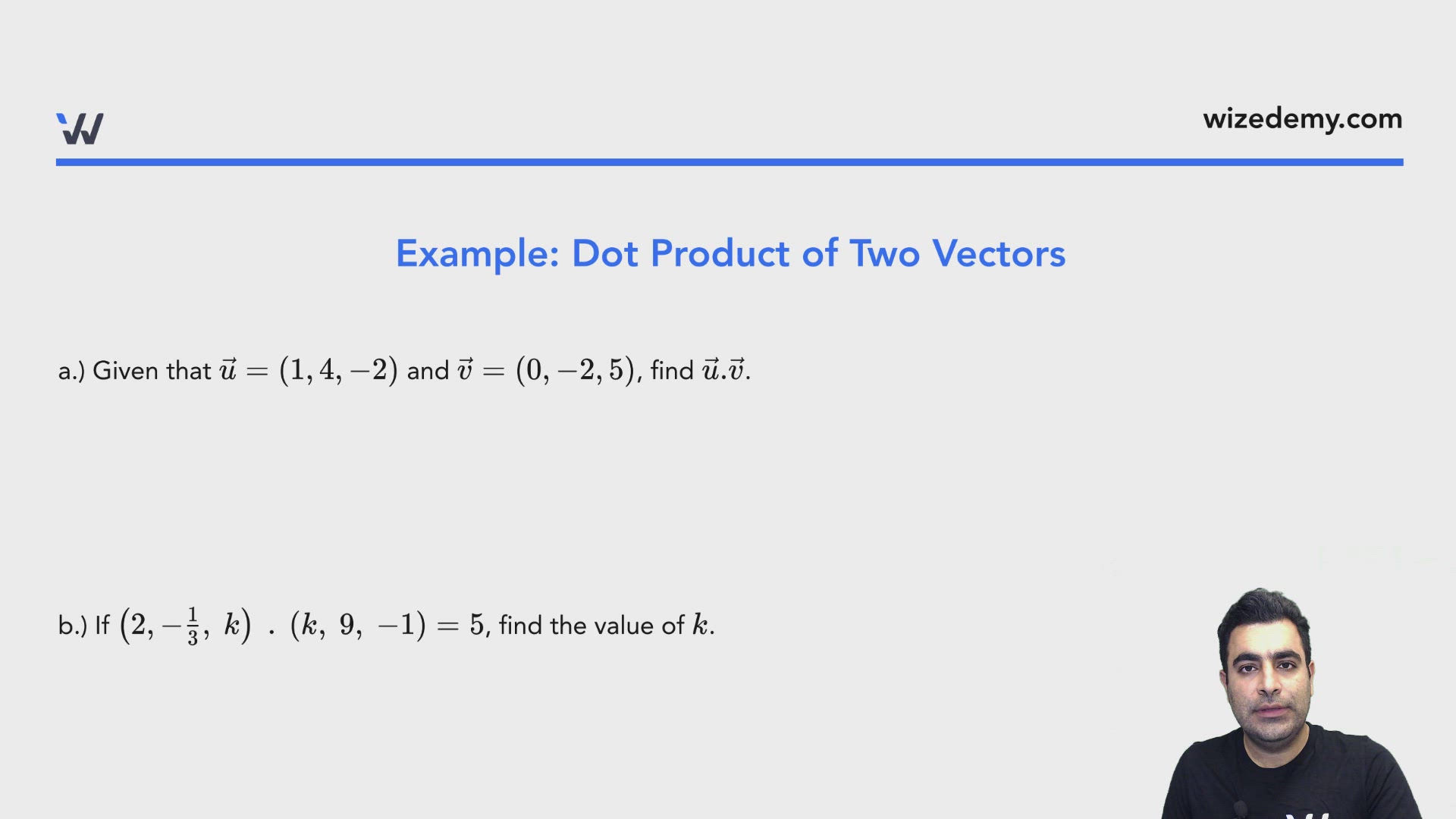
Example: Dot Product of Two Vectors
a.) Given that and , find .
b.) If , find the value of .
If vector A is and vector B is . Find the dot product of A and B.
Find the angle between the vectors and .