Wize University Physics Textbook (Master) > Heat and Temperature
Thermal Expansion
Popular Courses
MCAT
General Course
Intro to Physics
University Study Guides
Physics
General Course
PHYS 157
University of British Columbia
PHYS 115
Queen's University
Intro to Physics
University Study Guides
PHYS*1080
University of Guelph
PHYS 102A
University of Victoria
PHY 1122
University of Ottawa
PHYS 142
McGill University
ENGG 212
University of Calgary
ENGG 212
University of Calgary
PHYS 111
University of Victoria
PHYS 1050
University of Manitoba
PHYS 101
Simon Fraser University
PHYS-1300
University of Windsor
PHYS 121
University of Waterloo
PHYS 227
University of Calgary
SC/PHYS 1411 3.00
York University
PCS 110
Toronto Metropolitan University
0:00 / 0:00
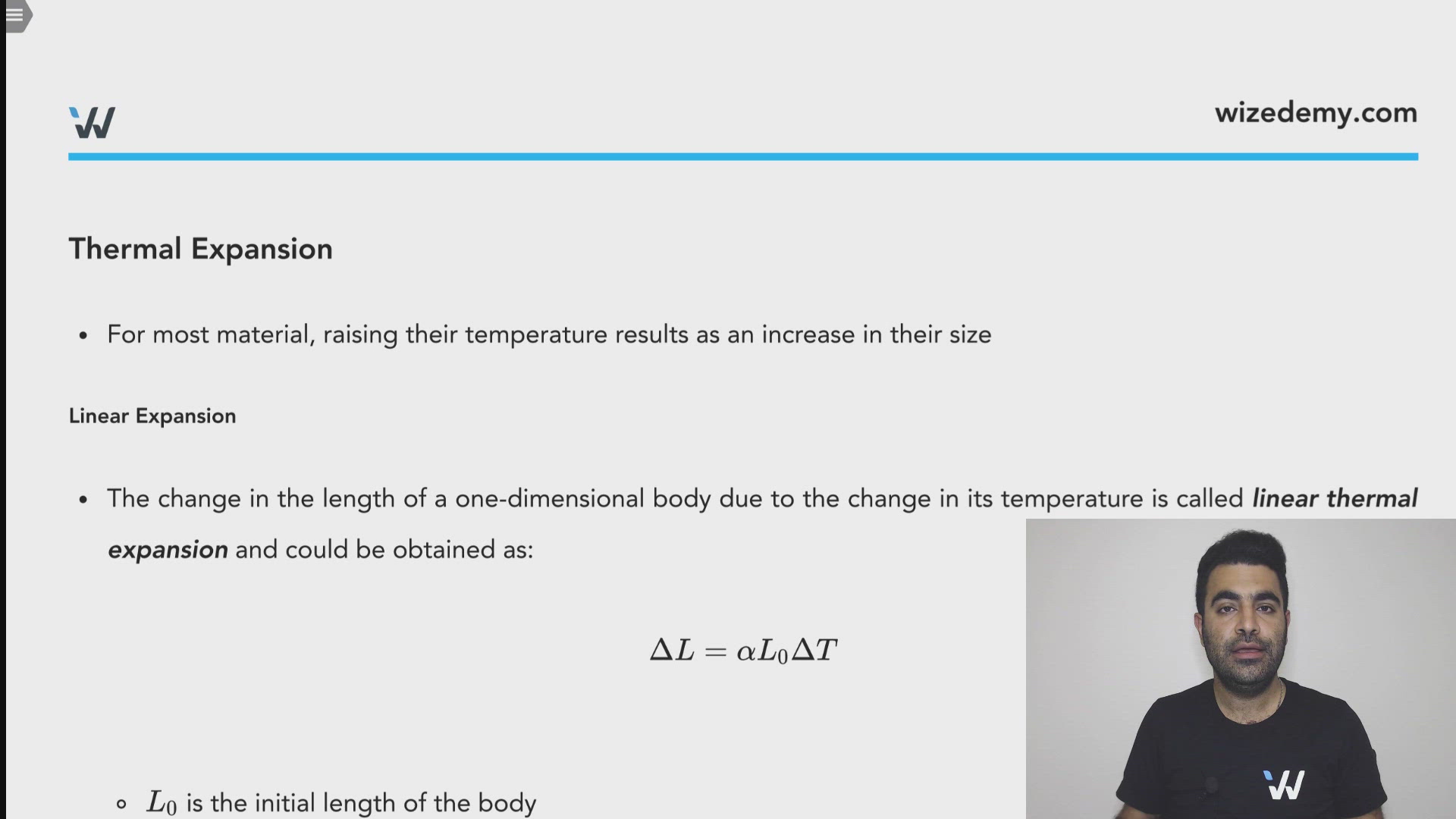
Thermal Expansion
For most material, raising their temperature results as an increase in their size.
Linear Expansion
- The change in the length of a one-dimensional body due to the change in its temperature is called linear thermal expansion and could be obtained as:
- is the initial length of the body
- could be positive or negative
- is the coefficient of linear expansion which is different for different material
- The final length is:
- The coefficient of linear expansion of some materials is shown in Table 1 below
The Coefficient of Linear Expansion For Different Material
0:00 / 0:00
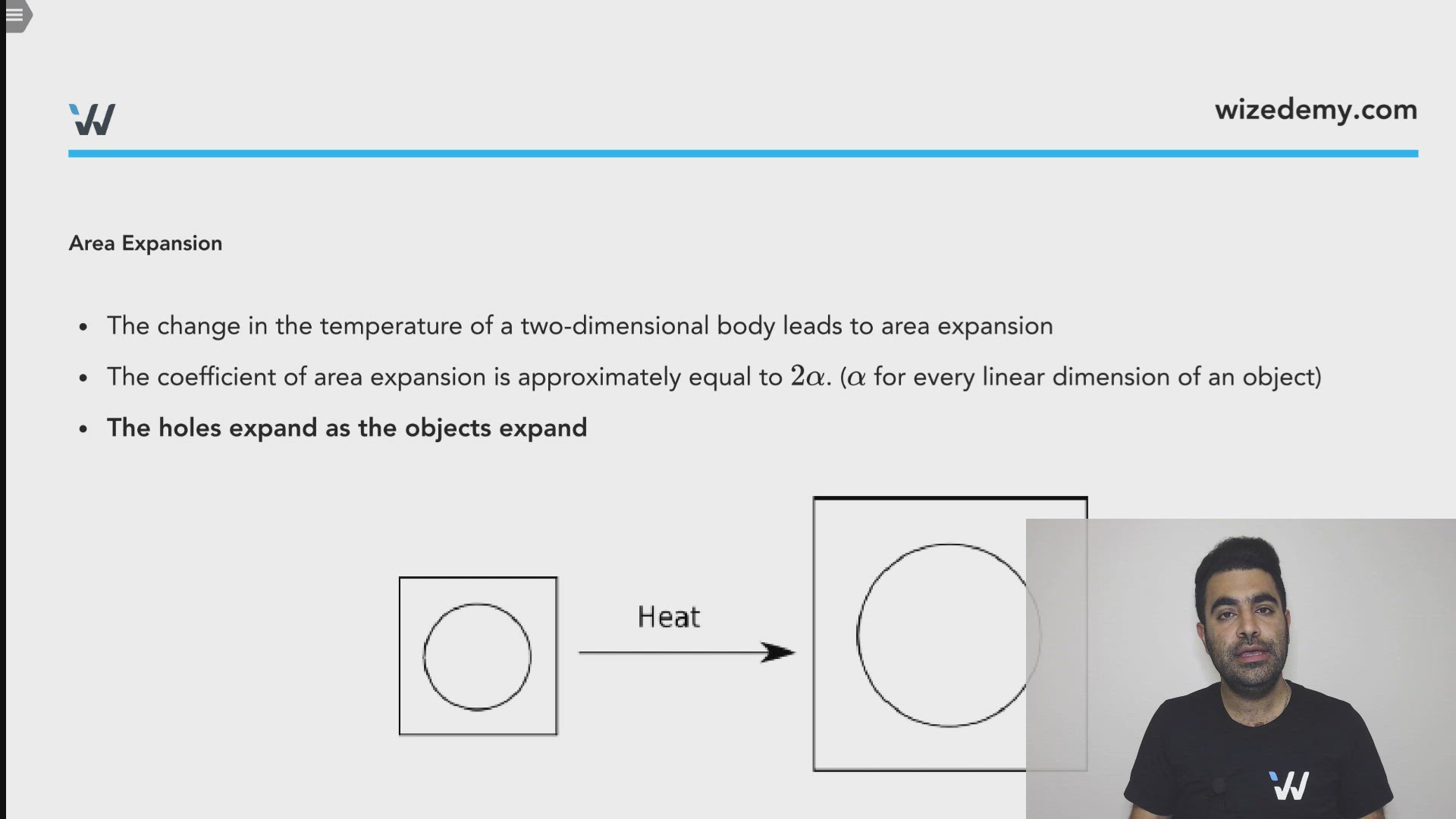
Area Expansion
- The change in the temperature of a two-dimensional body leads to area expansion
- The coefficient of area expansion is approximately equal to . ( for every linear dimension of an object)
- Example The holes expand as the objects expand

- Alternatively, one can find the linear expansion of the diameter or radius of a circular surface and find the expanded area using the new diameter or radius
0:00 / 0:00
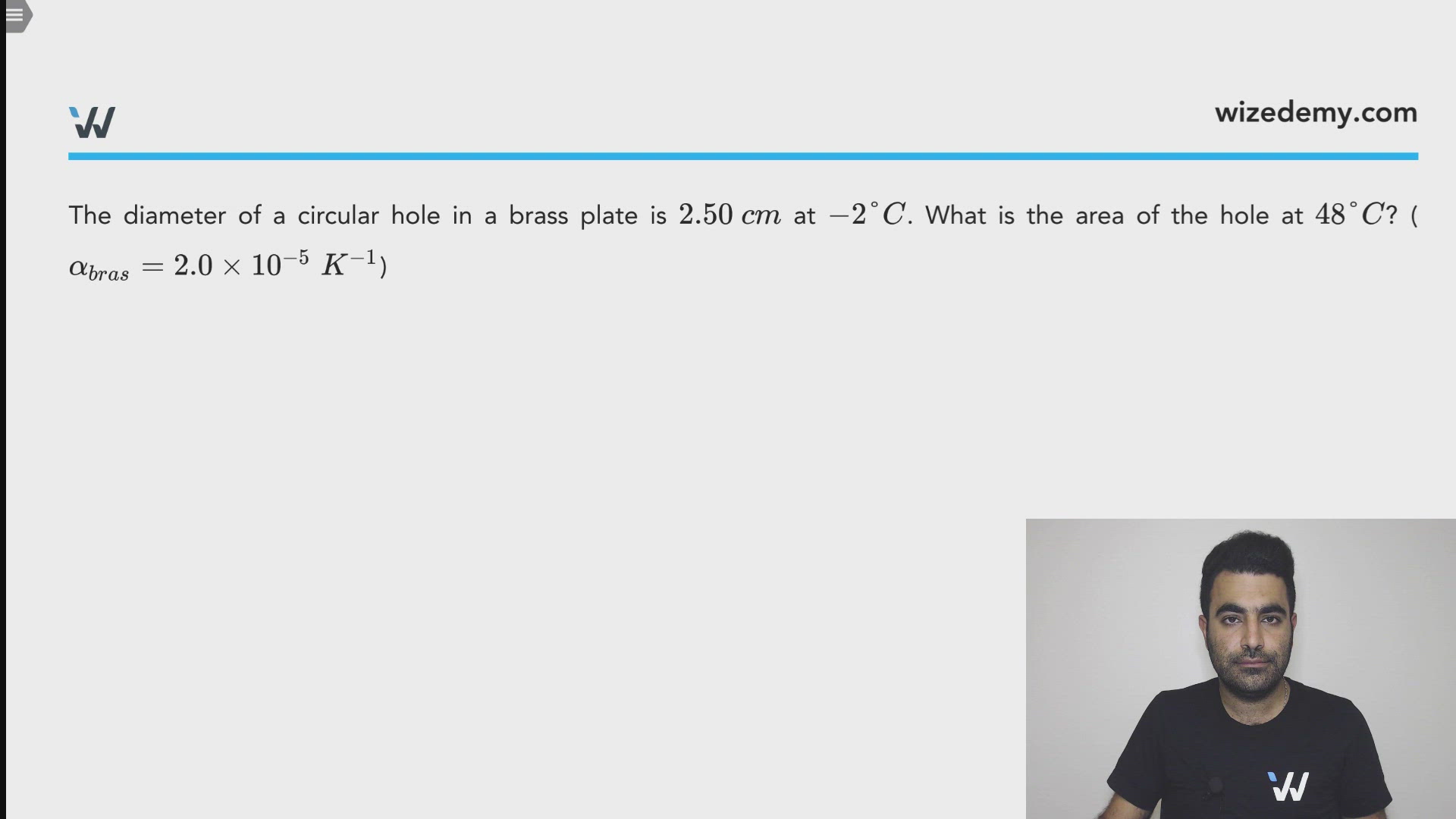
Example: Thermal Expansion
The diameter of a circular hole in a brass plate is at . What is the area of the hole at ? ()
0:00 / 0:00
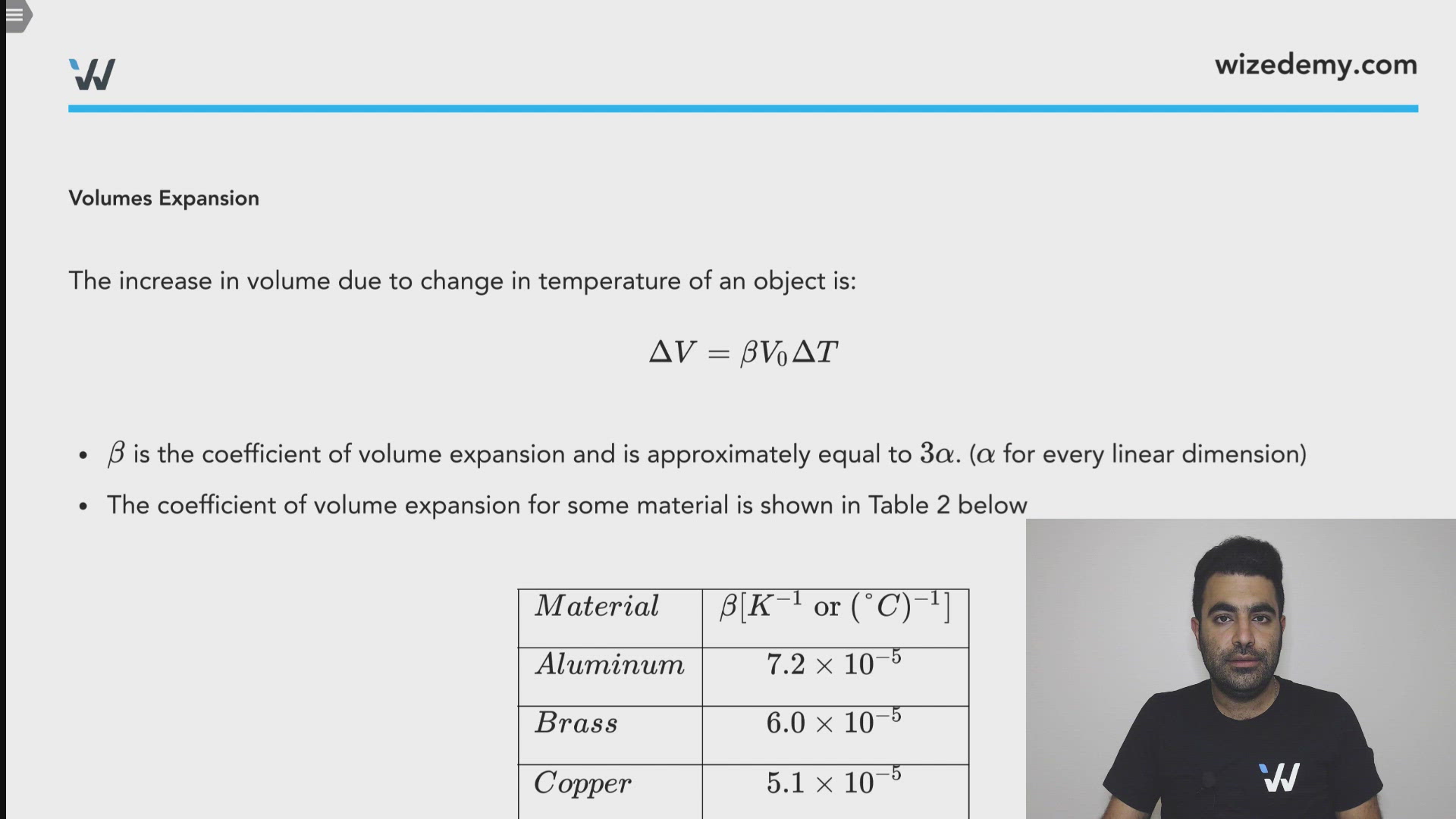
Volumes Expansion
The increase in volume due to change in temperature of an object is:
- is the coefficient of volume expansion and is approximately equal to . ( for every linear dimension)
- The coefficient of volume expansion for some material is shown in Table 2 below
The Coefficient of Volume Expansion for Different Materials
A volumetric flask at is completely full of mercury. When heating the flask and mercury to , of mercury overflows. If the coefficient of volume expansion of mercury is , what is the coefficient of volume expansion of the flask?
Hint: Both volumetric flask and mercury expand when temperature rises.