Wize University Physics Textbook (Master) > Thermodynamics
Ideal Gases and First Law of Thermodynamics
Popular Courses
MCAT
General Course
Intro to Physics
University Study Guides
Physics
General Course
PHYS 157
University of British Columbia
Intro to Physics
University Study Guides
PHYS 223
University of Calgary
PHY 1321
University of Ottawa
PHY 1331
University of Ottawa
PHY 1122
University of Ottawa
PHYS 142
McGill University
ENGG 212
University of Calgary
ENGG 212
University of Calgary
PHYS 111
University of Victoria
PHYS 1050
University of Manitoba
PHYS 101
Simon Fraser University
PHYS-1300
University of Windsor
PHYS 121
University of Waterloo
PHYS 227
University of Calgary
SC/PHYS 1411 3.00
York University
PCS 110
Toronto Metropolitan University
0:00 / 0:00
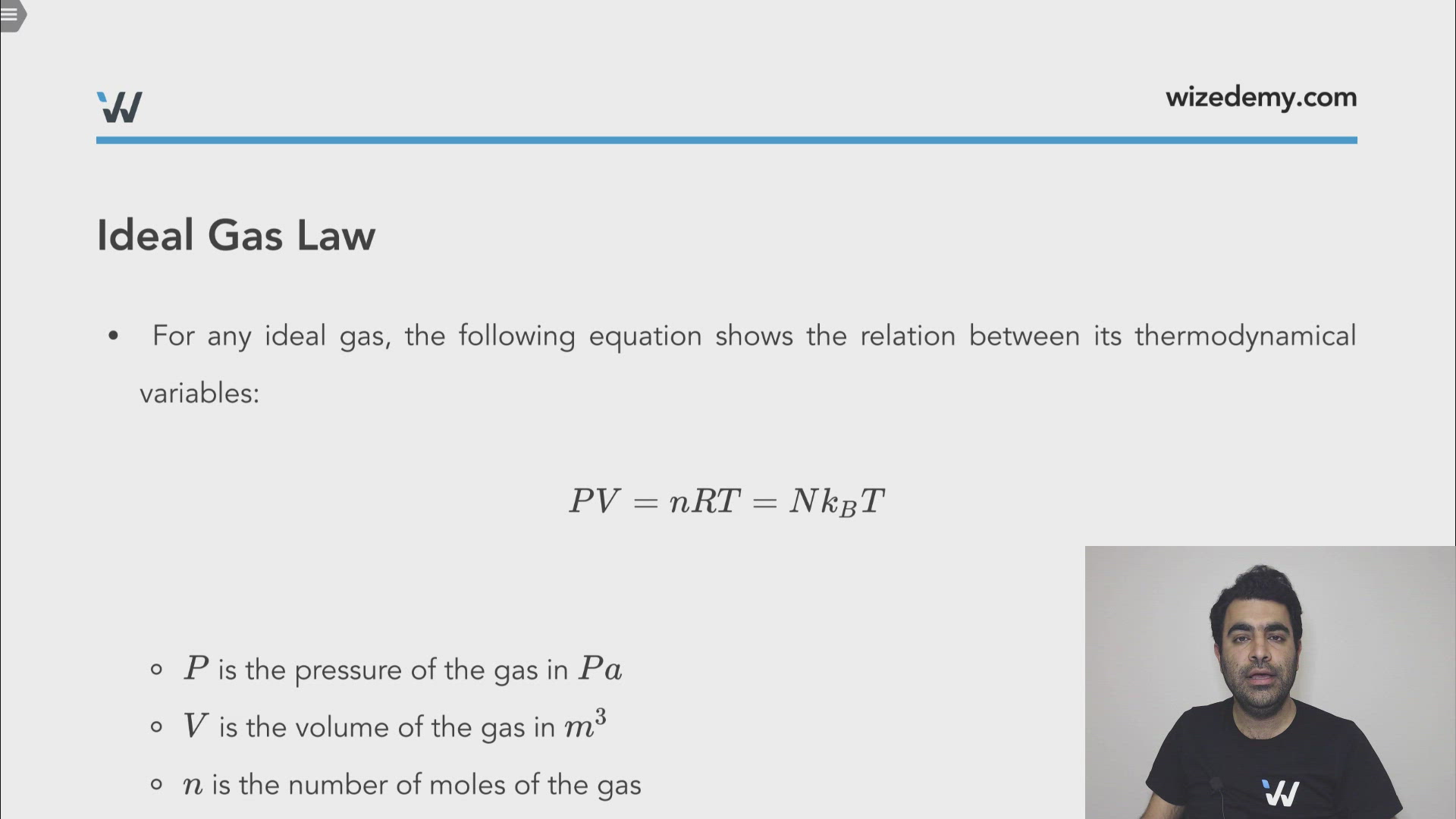
Ideal Gas Law
For any ideal gas, the following equation shows the relation between its thermodynamic variables:
- is the pressure of the gas in
- is the volume of the gas in
- is the number of moles of the gas
- is the gas constant and is equal to
- is the number of atoms in the gas
- is the Boltzmann constant which is equal to:
- where is the Avogadro constant
- is the number of atoms in one mole of a given substance and is equal to
0:00 / 0:00
Example: Ideal Gases
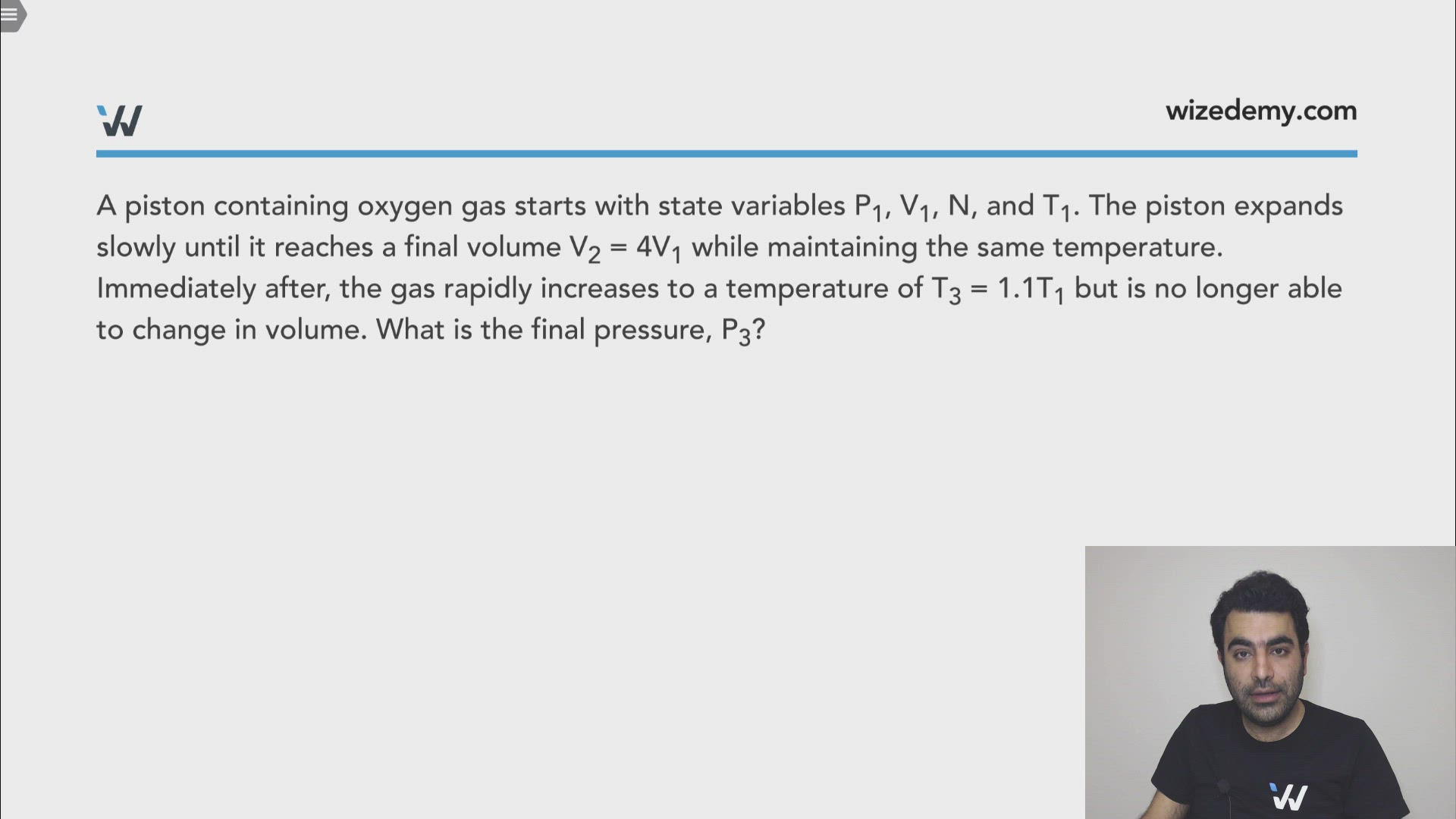
A piston containing oxygen gas starts with state variables P1, V1, N, and T1. The piston expands slowly until it reaches a final volume V2 = 4V1 while maintaining the same temperature. Immediately after, the gas rapidly increases to a temperature of T3 = 1.1T1 but is no longer able to change in volume. What is the final pressure, P3?
Process 1 to 2: Isothermal :
Process 2 to 3: Isochoric :
To find p2 :
To find p3 :
An ideal gas at 30.0 C and pressure of 2 × 10⁵ Pa is in a container having a volume of 1.40 L.
- Determine the number of moles of gas in the container.
- The gas pushes against a piston, expanding to twice its original volume, while the pressure falls to atmospheric pressure. Find the final temperature.
0:00 / 0:00
First Law of Thermodynamics
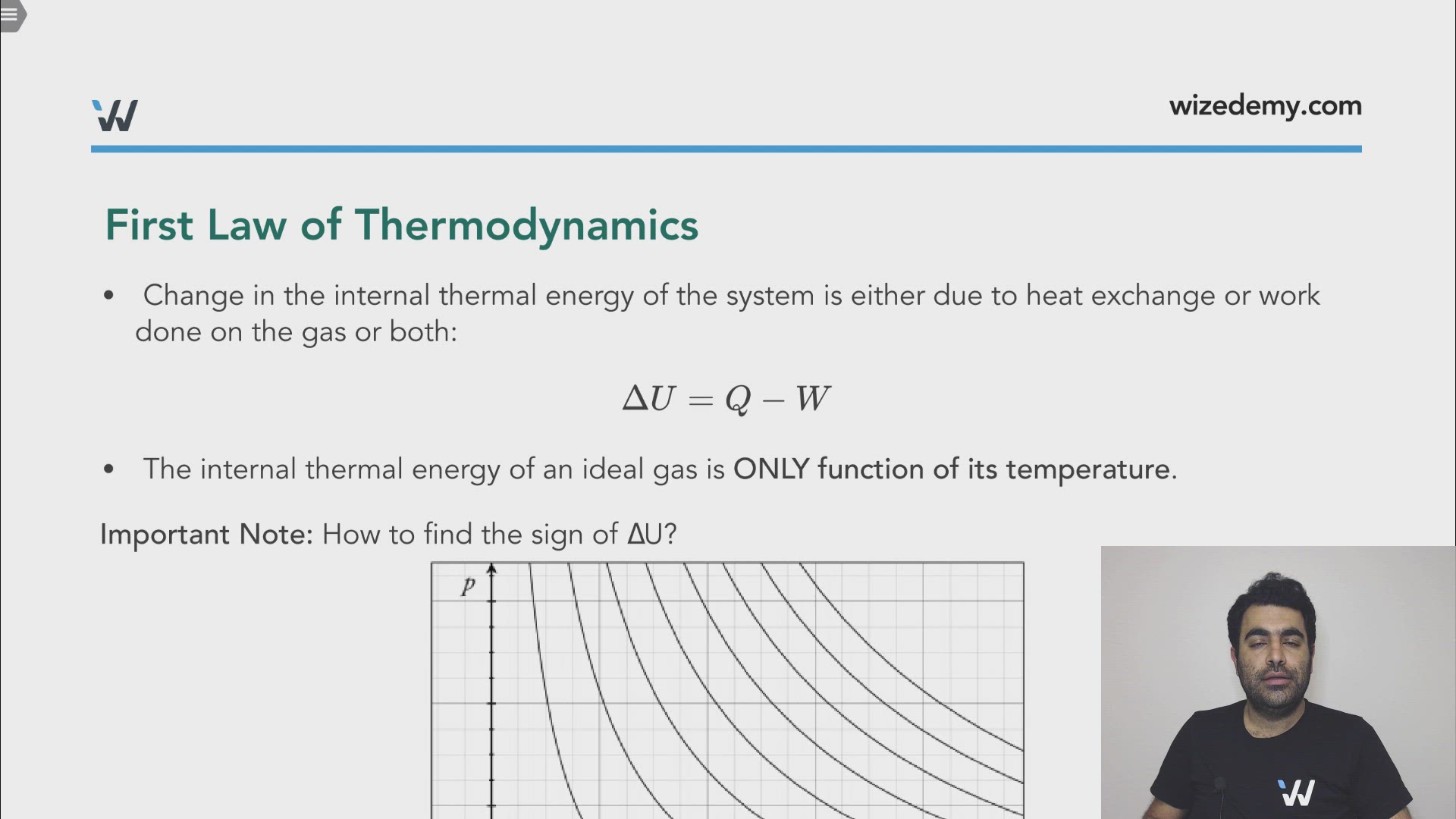
- Change in the internal thermal energy of the system is either due to heat exchange or work done on the gas or both:
- The internal thermal energy of an ideal gas is ONLY function of its temperature.
Important Note: How to find the sign of ∆U?
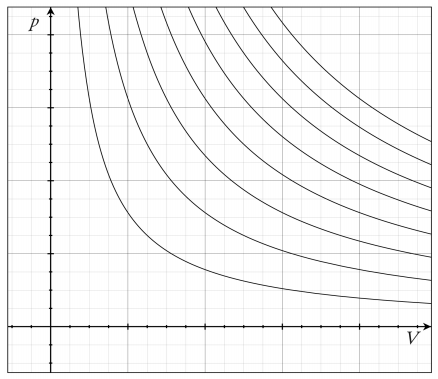
- if and if
- if the heat is added to the gas
- if the heat is removed from the gas
- if the work is done by the gas
- if the work is done on the gas