Wize University Physics Textbook (Master) > Thermodynamics
Thermodynamic Processes
Popular Courses
MCAT
General Course
Intro to Physics
University Study Guides
Physics
General Course
PHYS 157
University of British Columbia
Intro to Physics
University Study Guides
PHYS 223
University of Calgary
PHY 1321
University of Ottawa
PHY 1331
University of Ottawa
PHY 1122
University of Ottawa
PHYS 142
McGill University
ENGG 212
University of Calgary
ENGG 212
University of Calgary
PHYS 111
University of Victoria
PHYS 1050
University of Manitoba
PHYS 101
Simon Fraser University
PHYS-1300
University of Windsor
PHYS 121
University of Waterloo
PHYS 227
University of Calgary
SC/PHYS 1411 3.00
York University
PCS 110
Toronto Metropolitan University
0:00 / 0:00
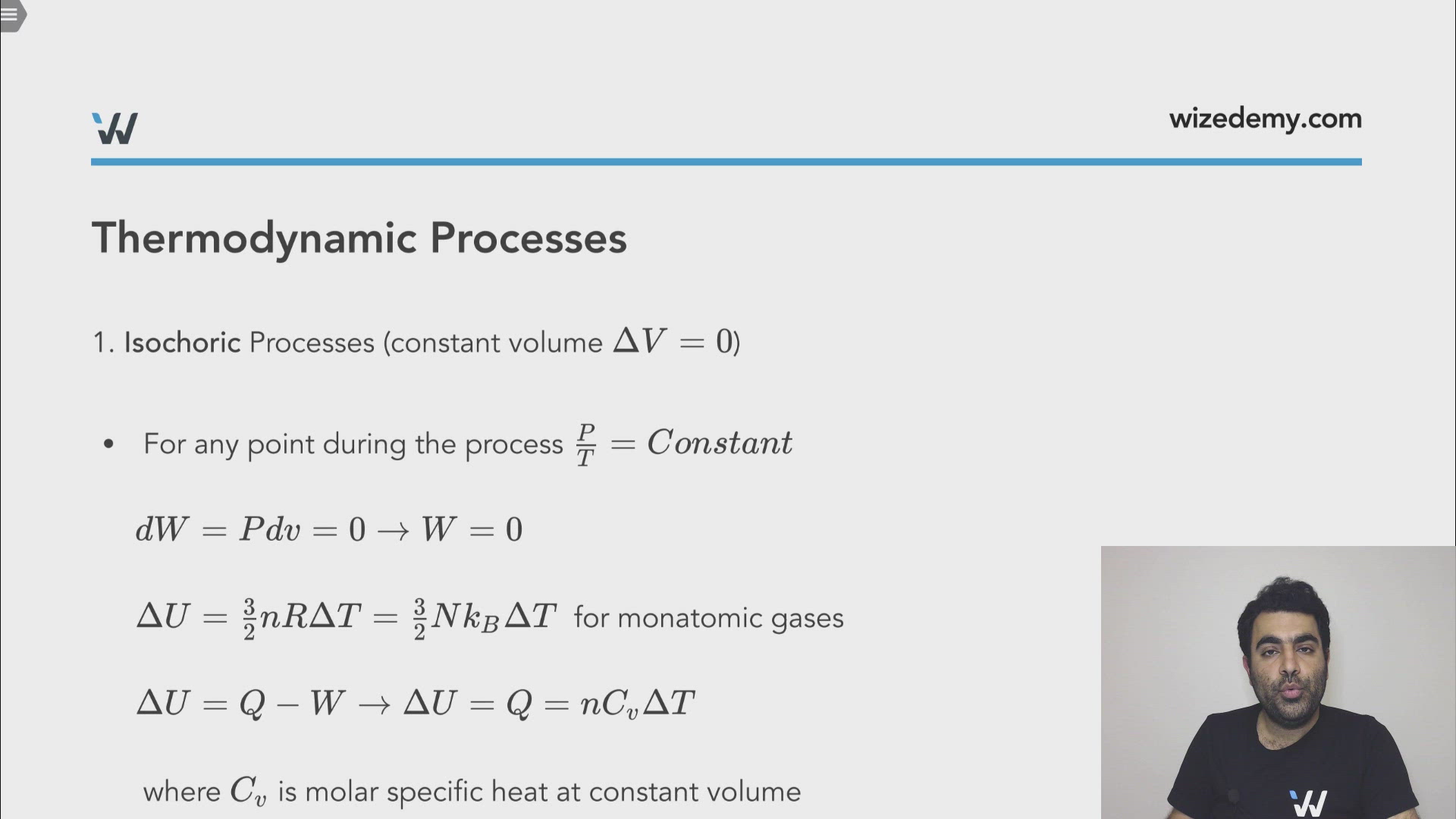
Thermodynamic Processes
1. Isochoric Processes (constant volume )
- For any point during the process for monatomic gases where is molar specific heat at constant volume
- is equal to , and for monatomic, diatomic and multi-atomic gases respectively.
2. Isobaric Processes (Constant pressure )
- For any point during the process where is molar specific heat at Constant Pressure and is equal to
- The change in the internal energy is always equal to independent of the type of the process.
3. Isothermal processes (Constant Temperature )
- For any point during this process
- If compression or expansion happens very slowly, the gas can exchange heat with the environment to keep its temperature constant.
4. Adiabatic Processes (no heat transfer )
- For any point during an adiabatic process In addition, for any point where ( for monatomic gases )
- If compression or expansion happens quickly, the gas does not have time to transfer heat to the environment so, and the process is adiabatic.
0:00 / 0:00
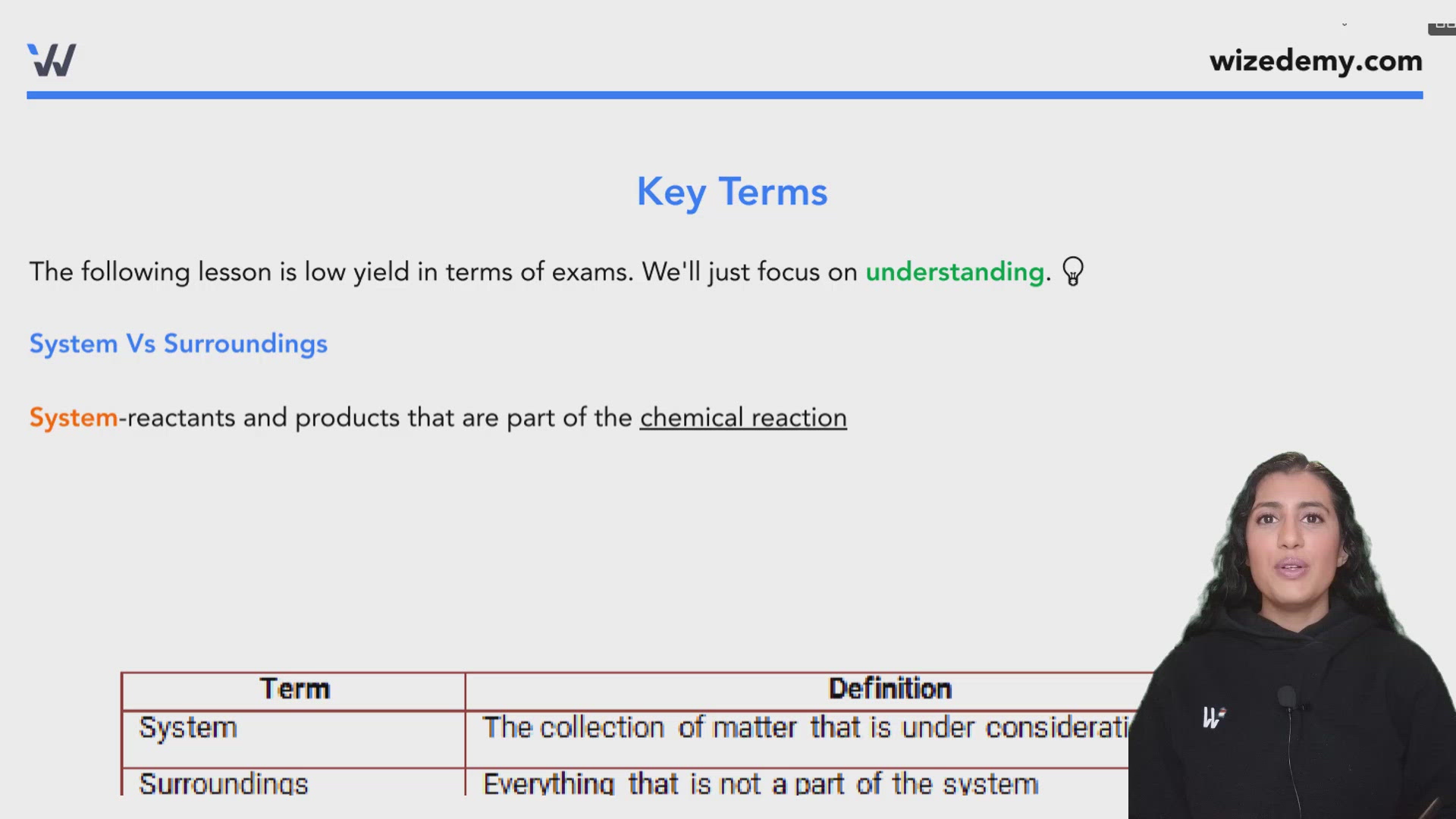
Key Terms
The following lesson is low yield in terms of exams. We'll just focus on understanding. 💡
System Vs Surroundings
System-reactants and products that are part of the chemical reaction

Open Vs Closed Vs Isolated Systems

Examples:
- open system → cup of coffee
- closed system → bottle of pop
- isolated system → perfect thermos
0:00 / 0:00
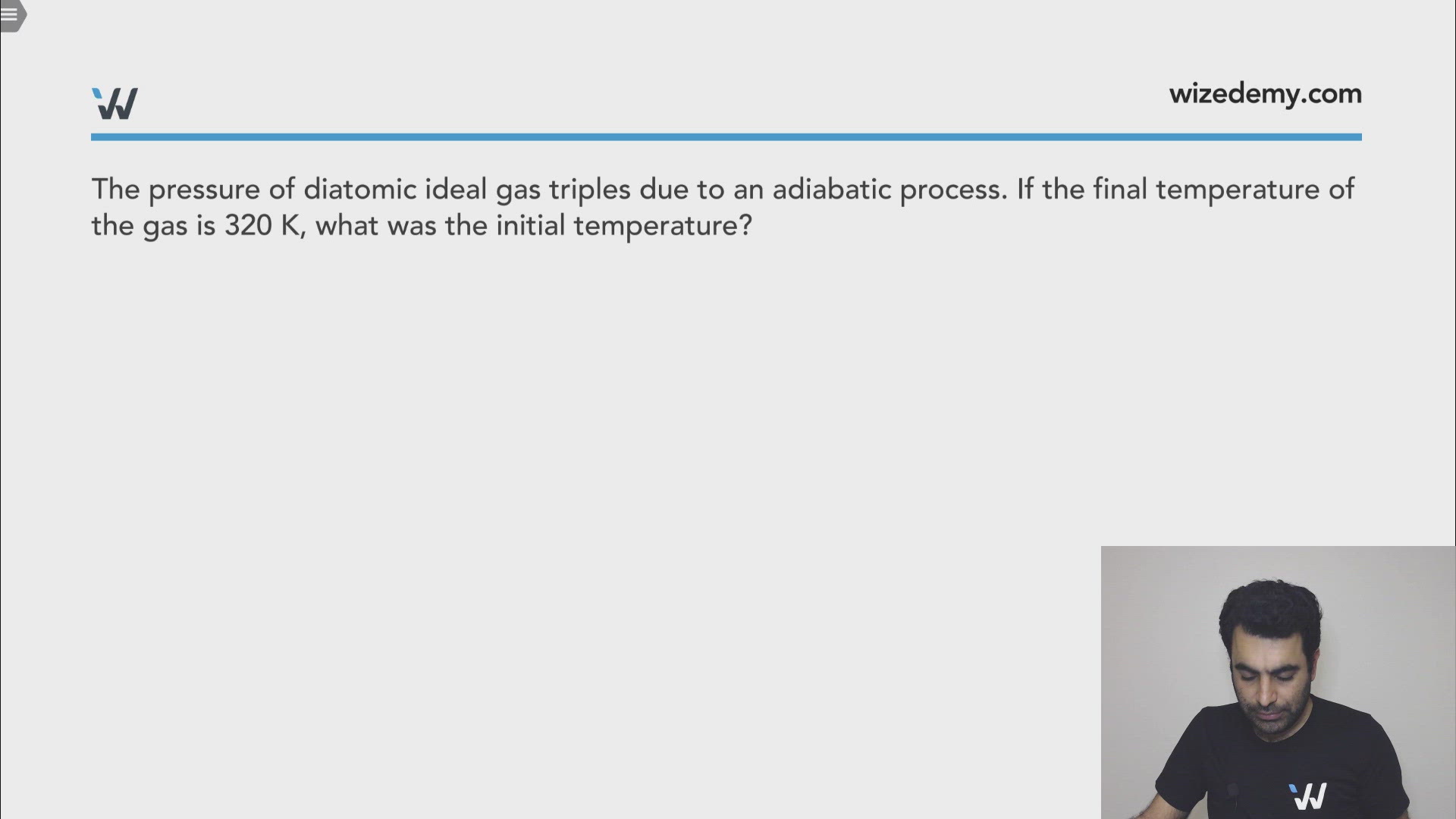
Example: Adiabatic Processes
The pressure of diatomic ideal gas triples due to an adiabatic process. If the final temperature of the gas is 320 K, what was the initial temperature?
We know that:
Isolate what we are solving for
Need to use exponent rules to get rid of 𝛾
Good! Now we may find T;
𝛾= 1.4 for diatomic ideal gas
A system composed of 4.50 L of N2 in a cylinder expands against an external pressure of 300 kPa until its volume is 6.30 L.
- What is the value of w for this process?
- What would the value of w be if the external pressure was 0 kPa?