Popular Courses
PHYSICS 1202A/B
Western University
PHYSICS 1E03
McMaster University
PHYS*1300
University of Guelph
PHYS 223
University of Calgary
APSC 112
Queen's University
PHYSICS 1402A/B
Western University
PHYS 205
Concordia University
PHY 1122
University of Ottawa
PHYS 142
McGill University
ENGG 212
University of Calgary
PHY132H1
University of Toronto
PHY132H1
University of Toronto
PHYS-1300
University of Windsor
PHY 1121
University of Ottawa
PHY 1124
University of Ottawa
PHYS 121
University of Waterloo
PHYSICS 1102A/B
Western University
PHYS 227
University of Calgary
SC/PHYS 2020 3.00
York University
PHYSICS 1AA3
McMaster University
0:00 / 0:00
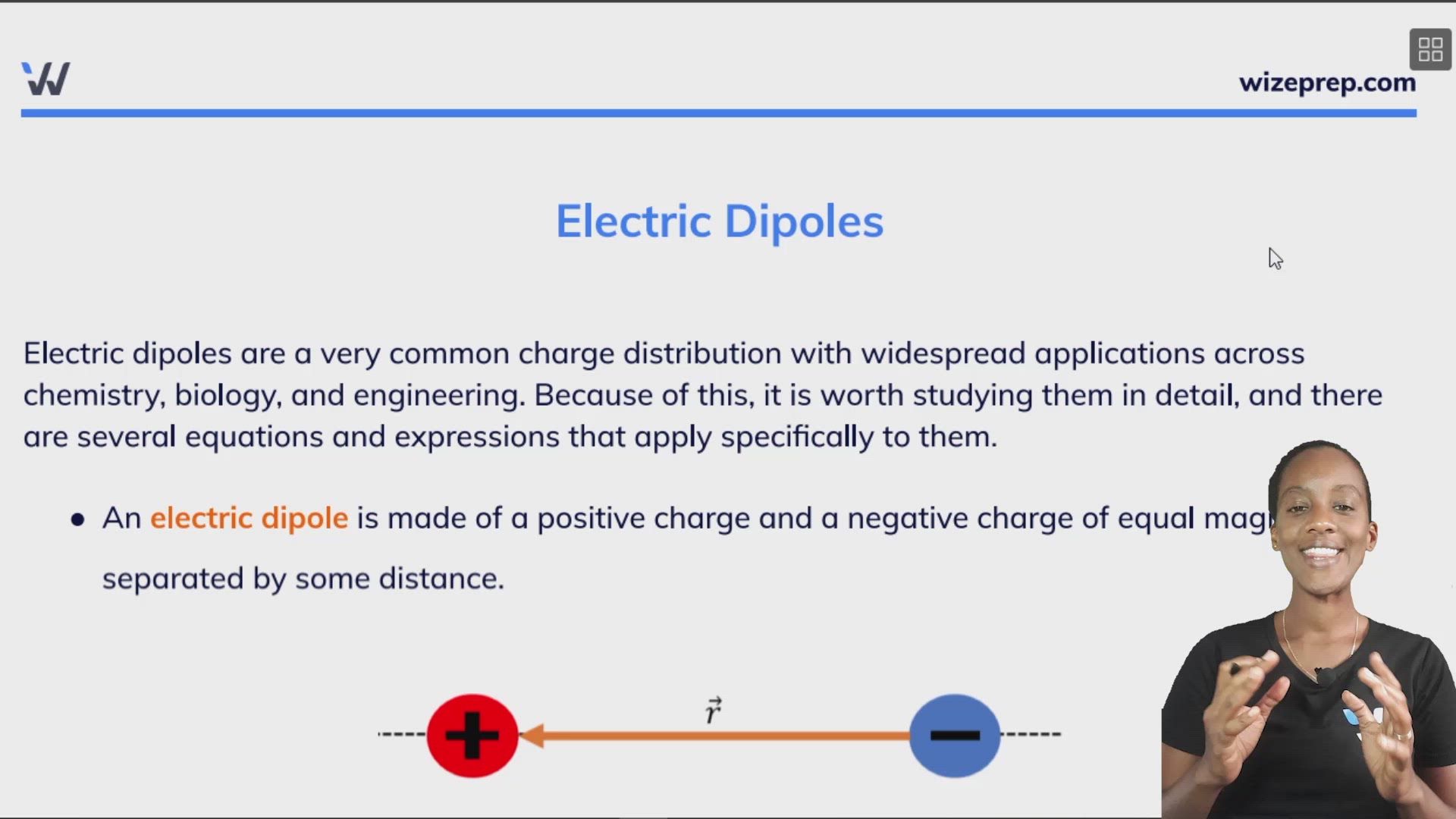
Electric Dipoles
Electric dipoles are a very common charge distribution with widespread applications across chemistry, biology, and engineering. Because of this, it is worth studying them in detail, and there are several equations and expressions that apply specifically to them.
- An electric dipole is made of a positive charge and a negative charge of equal magnitude, separated by some distance.
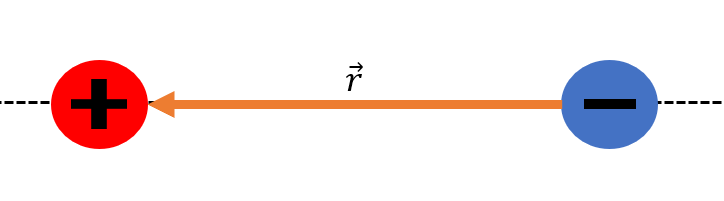
- Usually, we define a displacement vector which points from the negative charge to the positive charge. We can then define the electric dipole moment, , where is the magnitude of charge on one of the charges:
Electric field due to a dipole
- To find the electric field created by an electric dipole, we use the principle of superposition and add the two electric fields produced by the positive and negative charge.
- If we are looking at a point far away from the dipole that is along the axis of the electric dipole, the electric field is in the same direction as the electric dipole moment, and has the following magnitude (y is the distance from the center of the dipole):
- If instead we are looking at a point along the perpendicular bisector of the electric dipole, the electric field is in the opposite direction as the electric dipole moment, and has the following magnitude:
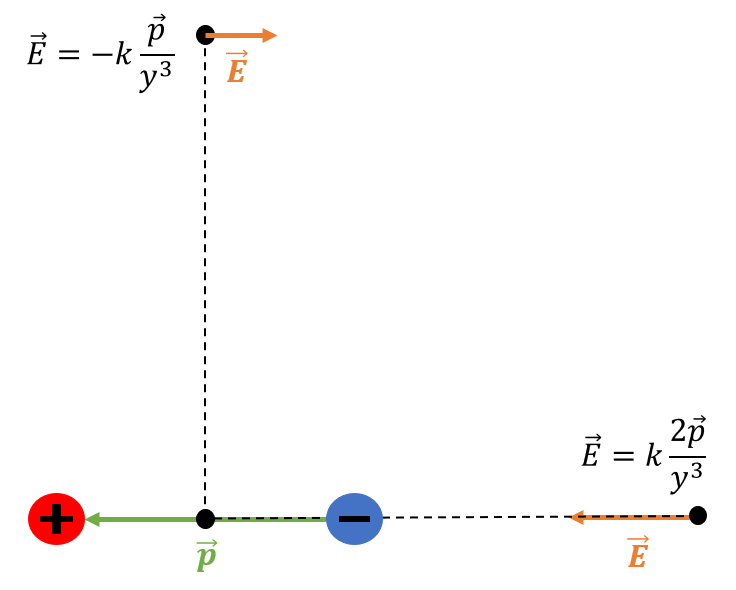
- The electric field strength of a dipole decreases with the cube of the distance from the dipole.
Watch Out!
The two equations above are only valid at large distances from the dipole. The figure is exaggerated to show the relative size and direction of the electric field vectors, but in practice, the distance should be much larger than drawn above.
0:00 / 0:00
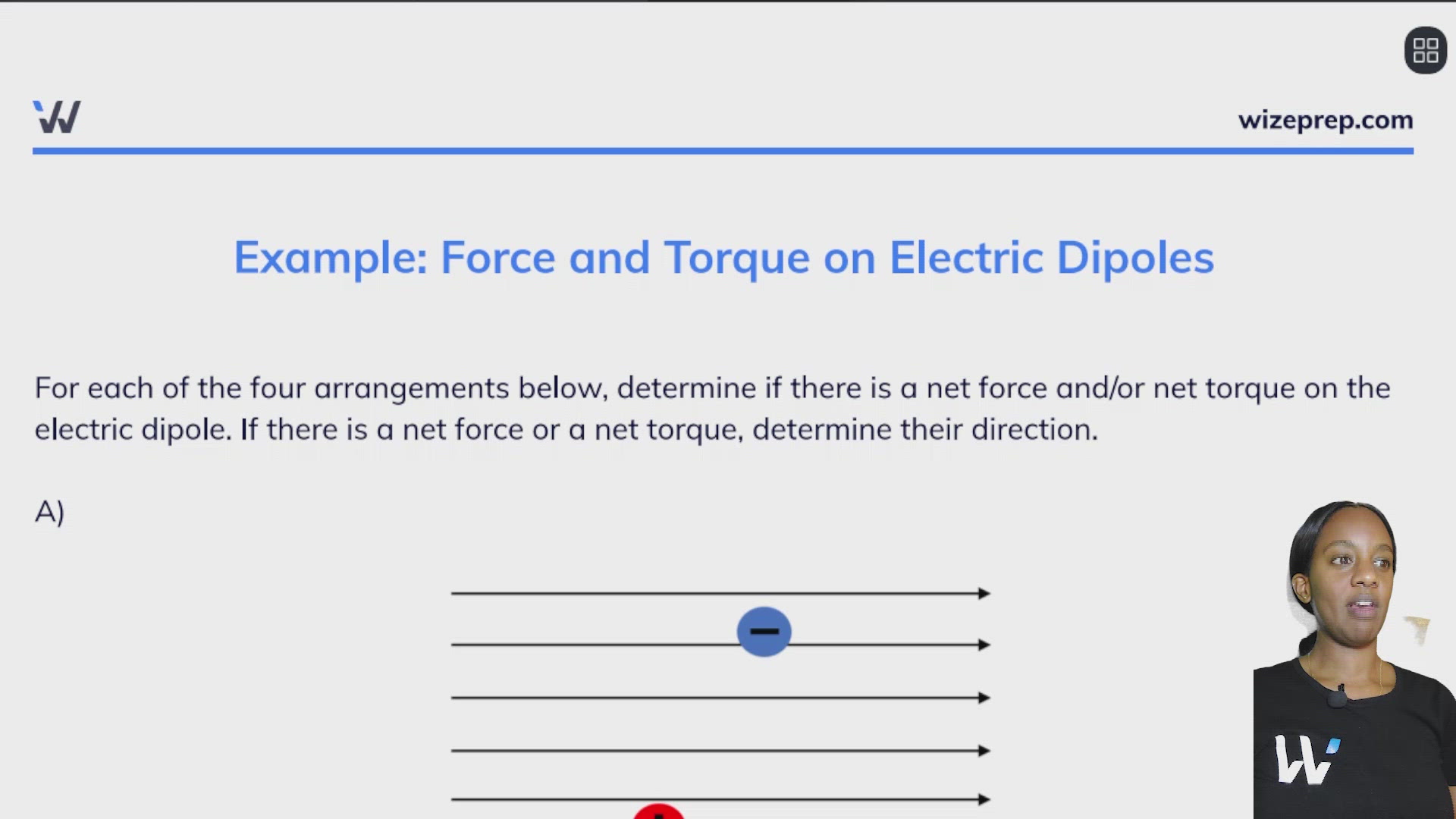
Example: Force and Torque on Electric Dipoles
For each of the four arrangements below, determine if there is a net force and/or net torque on the electric dipole. If there is a net force or a net torque, determine their direction.
A)
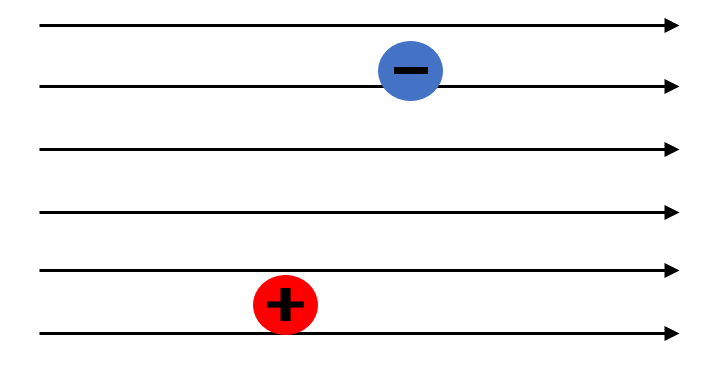
Uniform electric field results in a net zero force for an electric dipole.
In this case, the torque is counterclockwise. This can be seen in one of two ways:
- The negative charge has a force to the left, and the positive charge has a force to the right. If both charges begin to move, it will result in counter-clockwise motion
- The electric dipole vector points from negative to positive. If you point your right-hand fingers in this direction and curl your fingers in the direction of the electric field, your fingers should turn counter-clockwise (thumb sticks out of the page).
B)
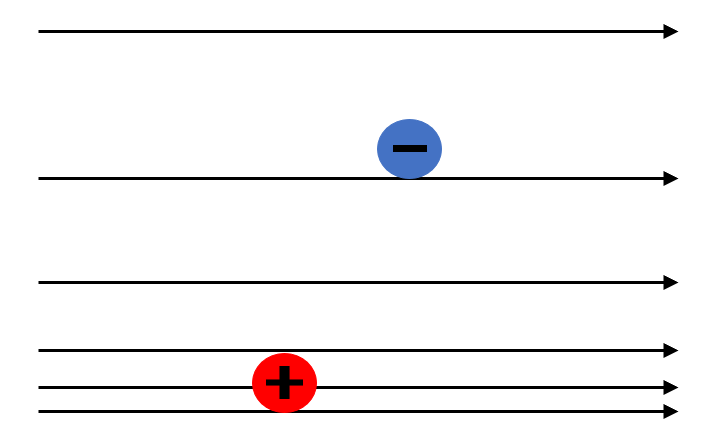
This electric field is not uniform; the positive charge has a much stronger field, and therefore experiences a much stronger force to the right than the small force on the negative charge to the left. Therefore, there is a net force pointing to the right.
The net torque is the same as from part(a); it is counterclockwise.
C)
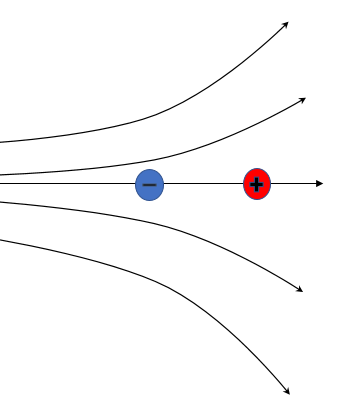
In this case, the electric field lines are closer together near the negative charge, so the field (and resulting force on the negative charge) is stronger, resulting in a net force to the left for this dipole.
Both charges are on the same electric field line. In this case, the direction of the electric dipole moment and the electric field are the same, so the cross product results in a torque of zero.
D)
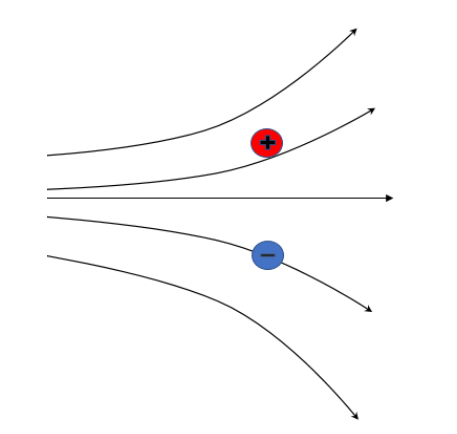
The two charges experience roughly the same field. The electric force on the positive charge is up and to the right, while the force on the negative charge is up and to the left (remember, the electric force on a negative charge is in the opposite direction of the field lines). The two horizontal components cancel out, and the net force points directly upward.
In this case, the electric dipole moment vector points up the page and the electric field points to the right. The right-hand rule results in a clockwise torque (with your right hand, start with your four fingers in the direction of , and then curl them to the right; your fingers should turn clockwise with your thumb pointing into the page.

Mark Yourself Question
- Grab a piece of paper and try this problem yourself.
- When you're done, check the "I have answered this question" box below.
- View the solution and report whether you got it right or wrong.
Practice: Derivation of the Dipole Electric Field
A positive charge and a negative charge are situated on the y-axis at positions and respectively. That is, the positive charge is on the positive y-axis, and vice-versa.
a) Calculate the electric field at any point on the y-axis. Use the variable to represent distance from the center of the dipole to point A below.
b) Calculate the electric field at any point on the x-axis. Use the variable to represent distance from the center of the dipole to point B below.
c) Write down approximate expressions for your answers to parts (a) and (b) in the case where the distance at which the field is being measured is much greater than 𝑑. Write your answers in terms of the electric dipole moment .

0:00 / 0:00
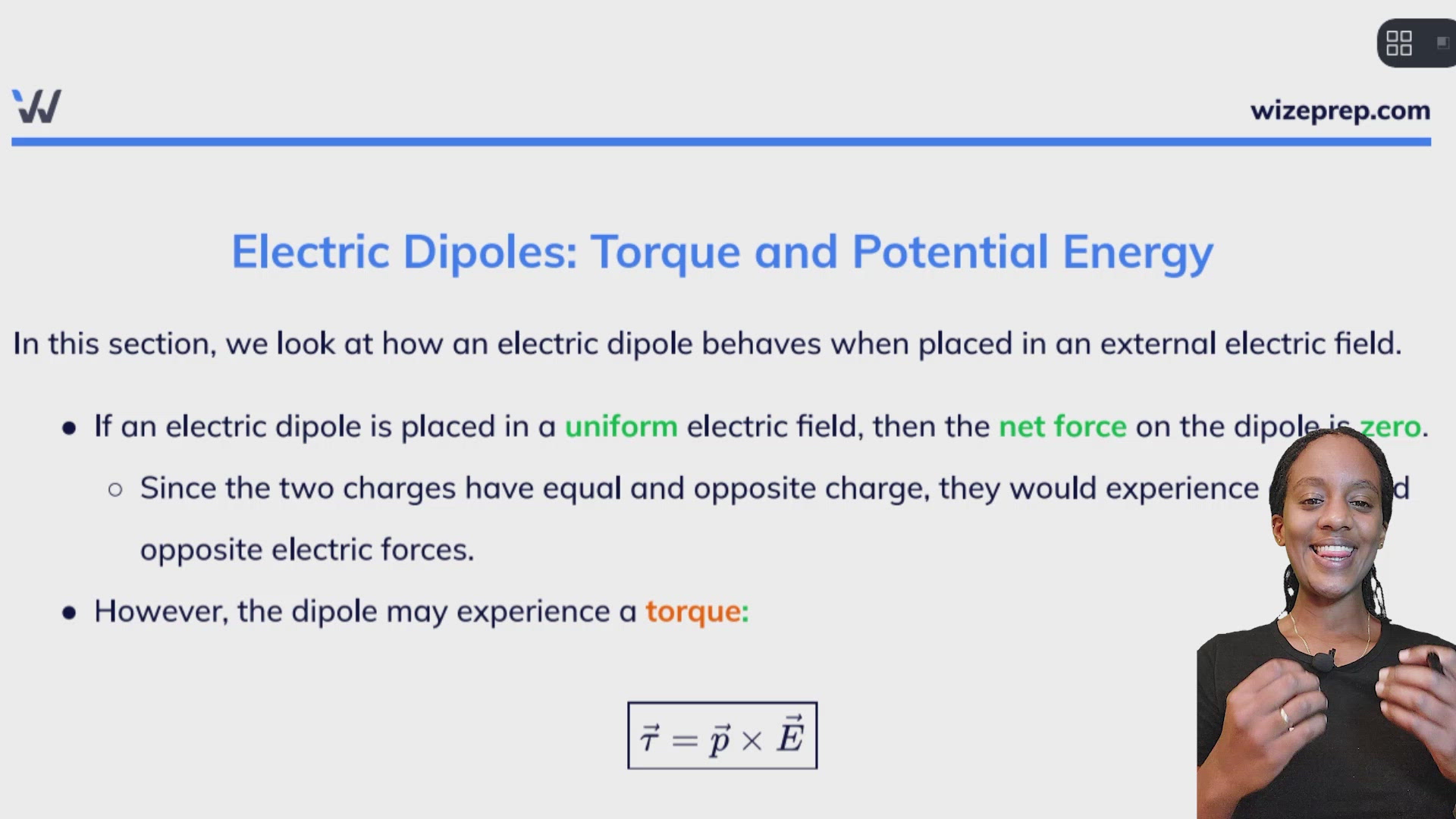
Electric Dipoles: Torque and Potential Energy
In this section, we look at how an electric dipole behaves when placed in an external electric field.
- If an electric dipole is placed in a uniform electric field, then the net force on the dipole is zero.
- Since the two charges have equal and opposite charge, they would experience equal and opposite electric forces.
- However, the dipole may experience a torque:
- To find the magnitude, we can write .
- The direction is found with the right-hand rule.
Wize Concept
To use the right-hand rule, take the four fingers of your right hand and point them in the direction of . Orient your hand so that you can curl your fingers in the direction of . The torque is clockwise or counterclockwise depending on the direction your fingers curled.
- When a dipole rotates, it is doing work against the external electric field. Because the electric field is conservative, electric dipoles in an external electric field are said to have potential energy: