Wize University Physics Textbook (Master) > Magnetic Fields and Magnetic Force
Magnets and Magnetic Field
Popular Courses
MCAT
General Course
Grade 12 Physics
Ontario High School
High School Physics
US High School
Grade 12 Physics
Canada High School
PHYSICS 1202A/B
Western University
PHYSICS 1E03
McMaster University
Physics 30
Alberta High School
PHYS 223
University of Calgary
APSC 112
Queen's University
PHYSICS 1402A/B
Western University
PHYS 205
Concordia University
Physics 12
British Columbia High School
PHYS 118
University of British Columbia
PHYS 142
McGill University
ENGG 212
University of Calgary
PHY132H1
University of Toronto
PHY132H1
University of Toronto
PHYS 102B
University of Victoria
PHYS-1300
University of Windsor
PHY 1121
University of Ottawa

0:00 / 0:00
Magnetism and Magnetic Fields
Did you know that as you sit reading this lesson, there is a magnetic field passing through you? As you learn about magnetism, you will understand where this magnetic field is coming from and why this is nothing to be worried about.
Magnetism
- There are two types of magnetism:
- Permanent magnetism refers to magnetic fields produced by the inherent properties of certain materials (e.g. magnets)
- Electromagnetism refers to magnetic fields that are created by charges in motion. If the charges stop moving, the magnetic field disappears.
Wize Concept
Electricity and magnetism are deeply connected. They are both produced by the electromagnetic interaction, one of the four fundamental forces of physics.
Magnetic Field
- Magnetic field is related to the magnetic force that a moving electric charge would experience at some location.
- Magnetic field is a vector. It usually takes the variable B and is measured in units of Tesla (T).
Wize Concept
Earth has a very weak magnetic field of approximately . There is another non-SI unit of magnetic field called the Gauss () which measures Earth's magnetic field as .
- The total magnetic field due to multiple magnetic fields in the same location is the vector sum of the individual fields:
Magnetic Field Lines
- The strength and direction of magnetic field can be visualized with magnetic field lines.
- The density of magnetic field lines is an indication of magnetic field strength.
- The tangent to a magnetic field line gives the direction of the magnetic field.
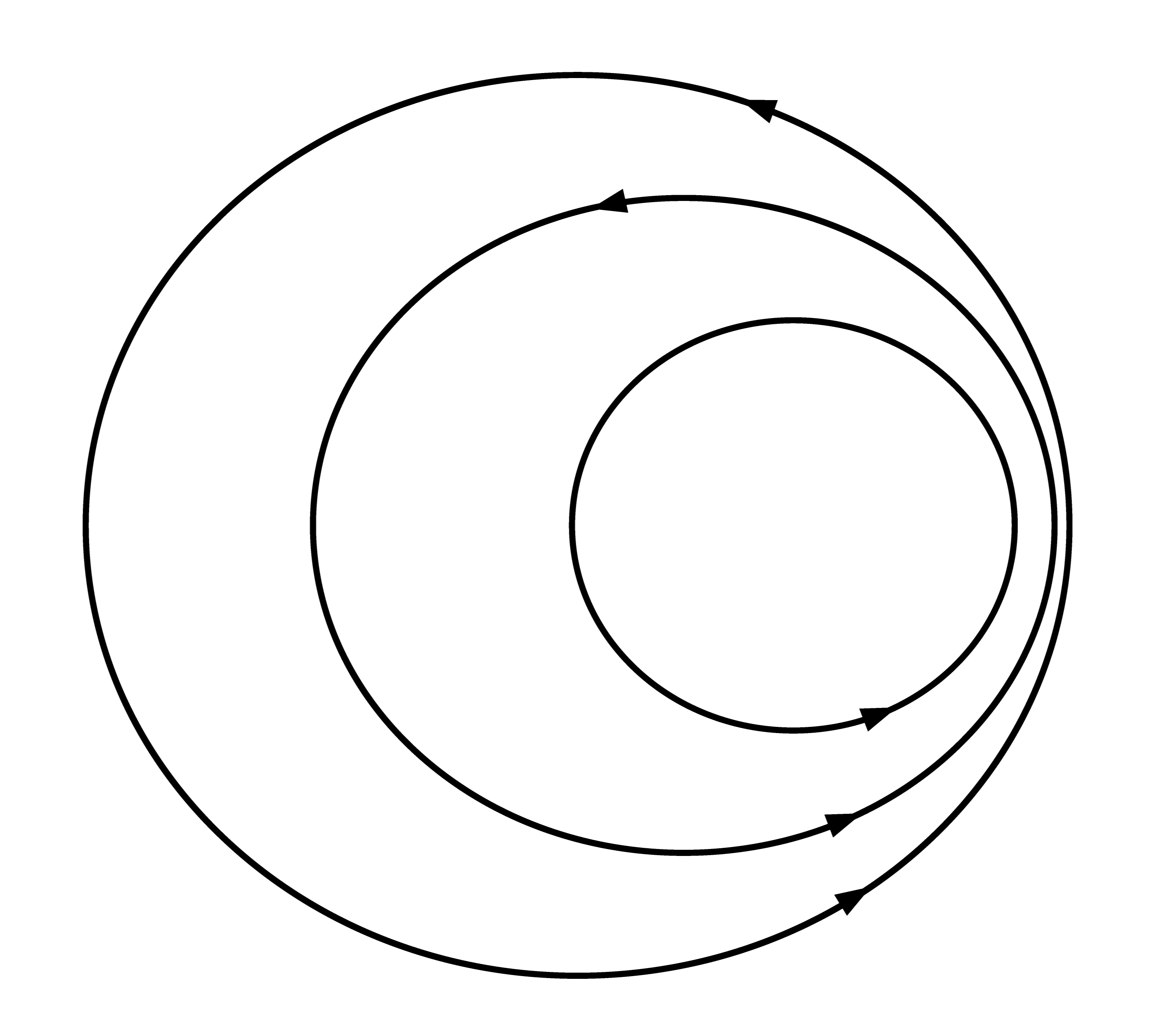
- Unlike electric fields, magnetic fields cannot have starting or ending points - they must form closed loops.
- Another way of saying this is that magnetic monopoles do not exist.
0:00 / 0:00
Magnets and Magnetic Materials
Magnetic fields have many applications and can even be dangerous if not properly managed. Understanding magnetic properties of materials can be helpful to fine-tune engineered magnetic fields or to avoid creating unwanted fields.
Magnets
- The most common type of magnet is a permanent bar magnet which has a North pole and a South pole.
- Two poles of the same type will experience a repulsive interaction, while two poles of the opposite type will experience an attractive interaction.
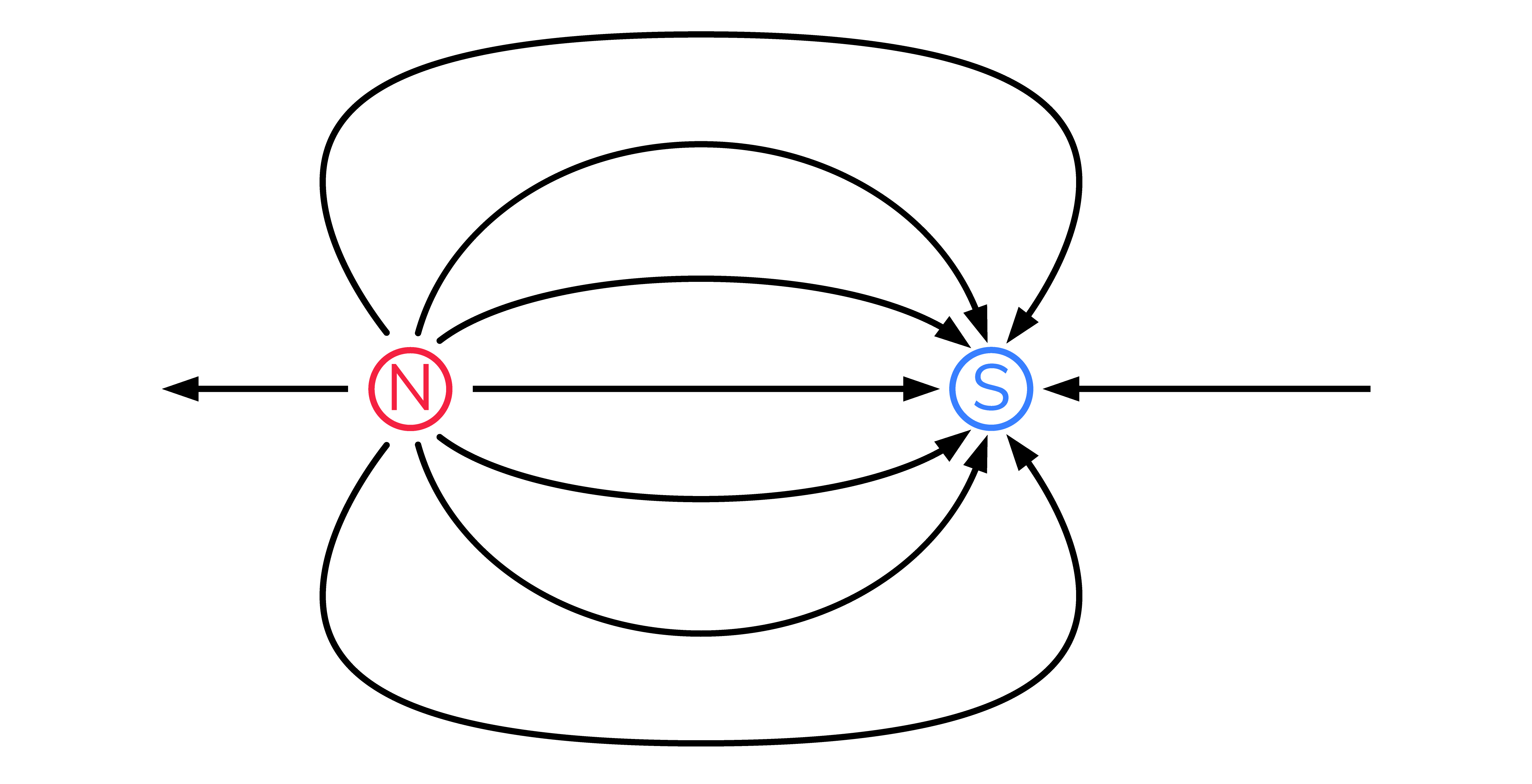
- Outside of the magnet, the magnetic field lines of a bar magnet point from North to South.
- Inside the magnet, the field lines continue and form closed loops.

Wize Concept
Because magnetic monopoles cannot exist, a magnet cannot have only a North or a South pole. If you were to cut a bar magnet into pieces, then each piece will have its own North and South poles.
Magnetic Materials
Materials can be classified as ferromagnetic, paramagnetic, or diamagnetic based on how they behave when placed in a magnetic field.
- When ferromagnetic materials are placed in a magnetic field, a magnetic field is created inside the material that is in the same direction as the external field.
- When ferromagnetic materials are removed from the external field, they retain magnetization.
- Paramagnetic materials behave like ferromagnetic materials.
- However, they do not retain magnetization when removed from the field.
- When diamagnetic materials are placed in a magnetic field, the internal magnetic field produced is in the opposite direction of the external field.

Mark Yourself Question
- Grab a piece of paper and try this problem yourself.
- When you're done, check the "I have answered this question" box below.
- View the solution and report whether you got it right or wrong.
Practice: Magnetic Field Lines
The following three magnetic field patterns are invalid. Explain why each one is invalid.
a)
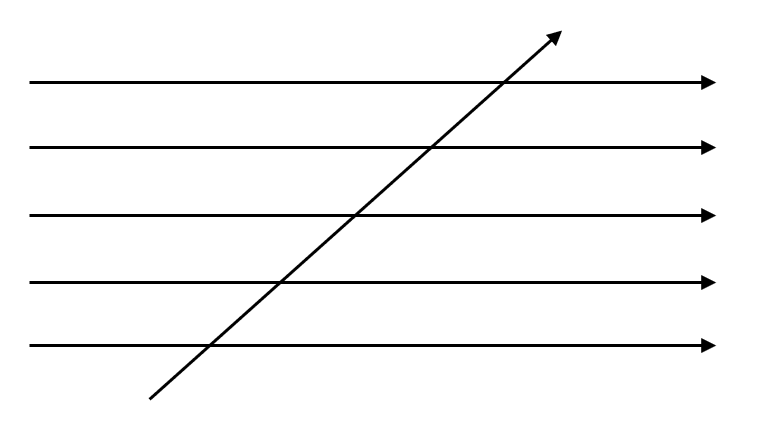
b)
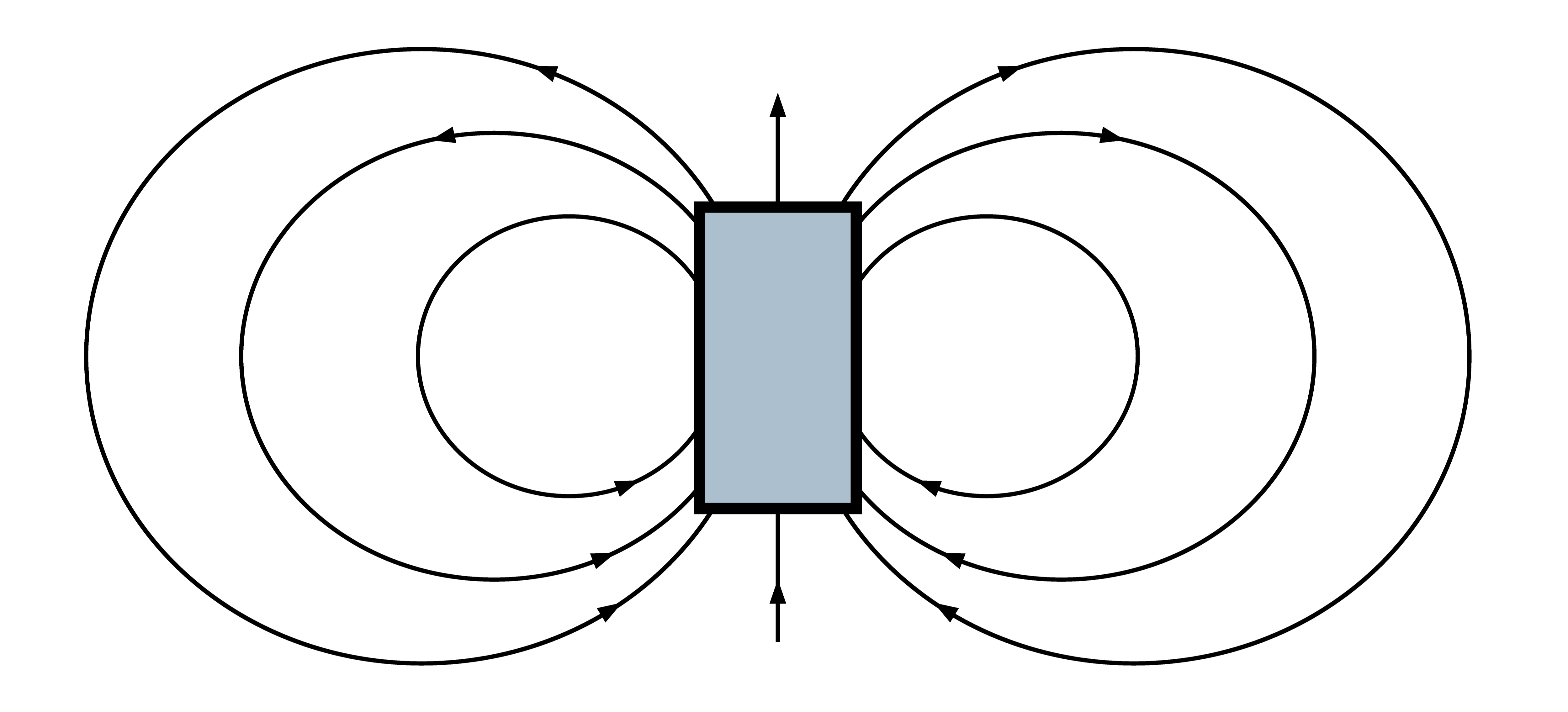
c)