Wize University Physics Textbook (Master) > DC Circuits
Basics of DC Circuits
Popular Courses
MCAT
General Course
PHYSICS 1202A/B
Western University
PHYSICS 1E03
McMaster University
PHYS*1300
University of Guelph
PHYS 223
University of Calgary
APSC 112
Queen's University
PHYSICS 1402A/B
Western University
PHYS 205
Concordia University
PHYS 110
University of Victoria
PHYS 118
University of British Columbia
PHYS 142
McGill University
ENGG 212
University of Calgary
PHY132H1
University of Toronto
PHY132H1
University of Toronto
PHYS-1300
University of Windsor
PHY 1121
University of Ottawa
PHYS 121
University of Waterloo
PHYSICS 1102A/B
Western University
PHYS 227
University of Calgary
SC/PHYS 2020 3.00
York University
0:00 / 0:00
Basics of DC Circuits

A circuit is a closed electrical path through which current can flow.
The simplest circuit consists of a voltage source (e.g. battery), conductors (wires) and resistances. In an ideal circuit, wires have no resistance.
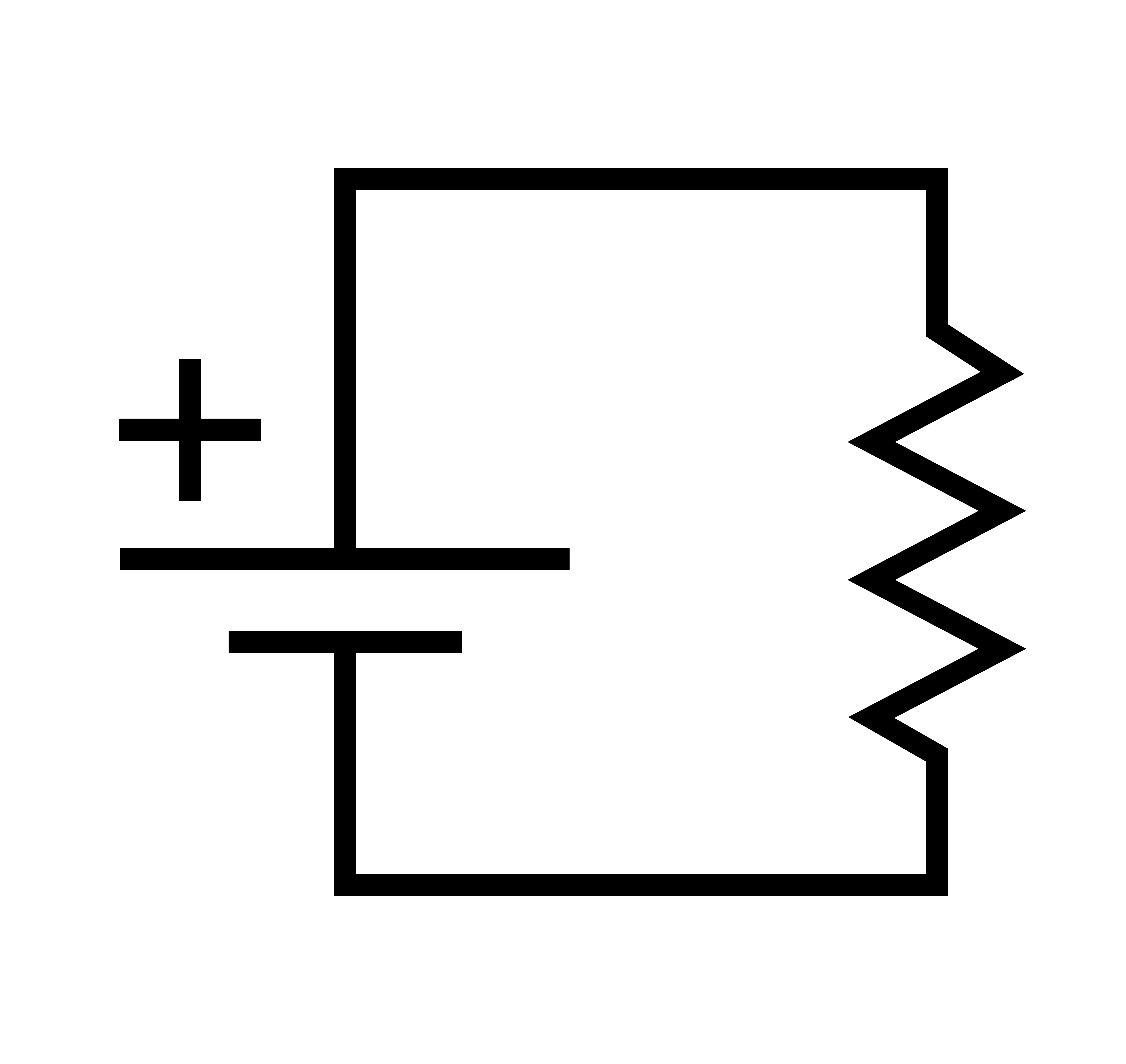
In DC (direct current) circuits, current is flowing in a constant direction.
The voltage source generates an EMF (electromotive force), creating a constant potential difference at its terminals that drives the current around.
Wize Concept
The voltage source “lifts” electrons from the higher potential (positive terminal) to the lower potential (negative terminal). That is, they gain energy from the battery and then spend it all as they travel around the circuit.
The electrons then “fall” through the rest of the circuit (wires, resistors, etc.) until they get back to where they started (the positive terminal of the battery).
Exam Tip
If not specified, you can use any direction for the current as long as you stay consistent within the problem:
- Electron current is also called physical current: it is the actual movement of negative charges (electrons). It flows from the “” terminal to the “” terminal.
- Conventional current is the virtual movement of positive charges (the lack of electrons). It flows from the “” terminal to the “” terminal.
Basic Circuit Configurations
Series: the elements of the circuit are connected one after the other, so that there is only one possible path for the current to go through all of them (a single branch with no junctions).
Parallel: the elements of the circuit are connected as separate branches, so that the current splits up and recombines at the junctions (both ends of parallel elements are directly connected to each other).
0:00 / 0:00
Electrical Measurements
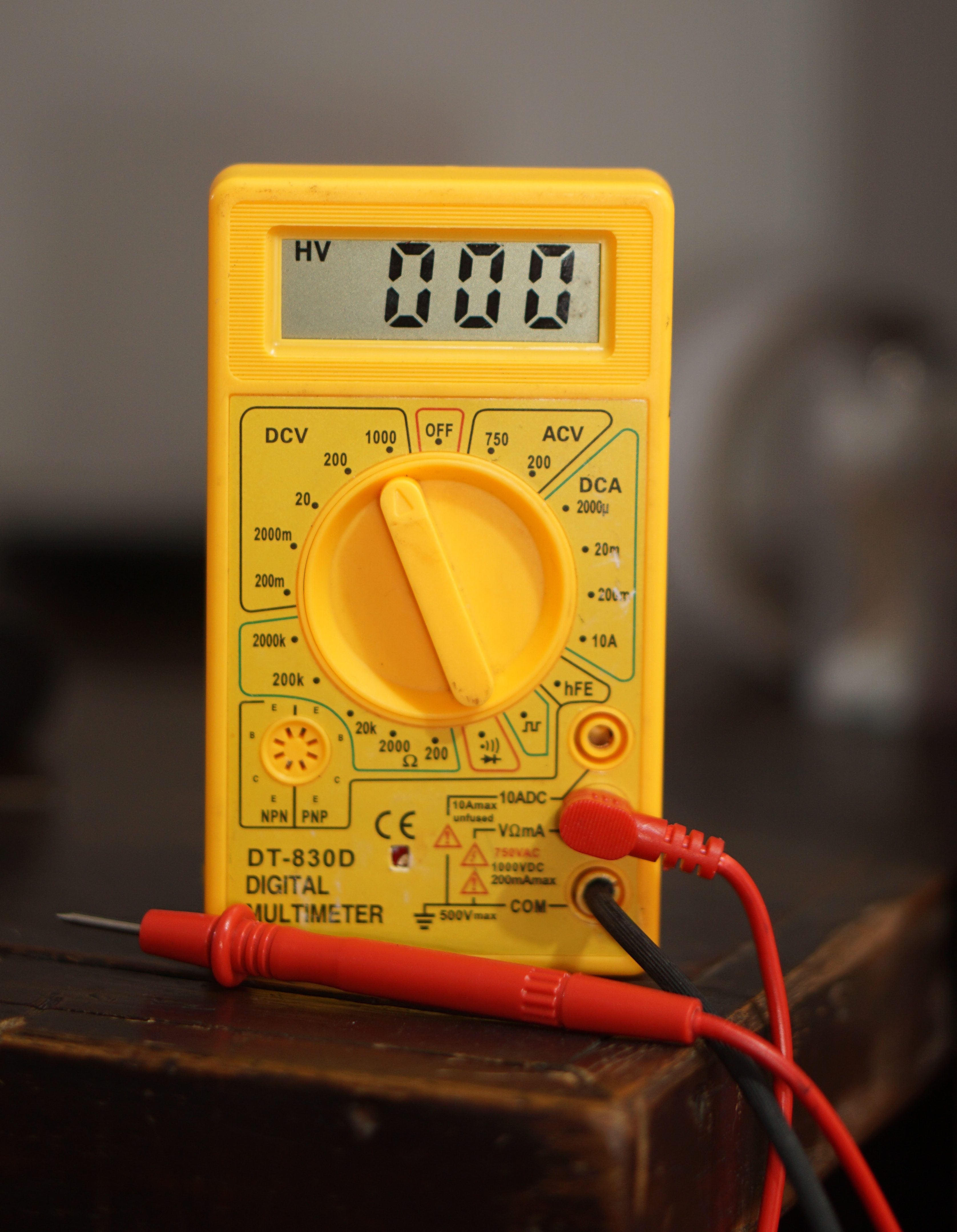
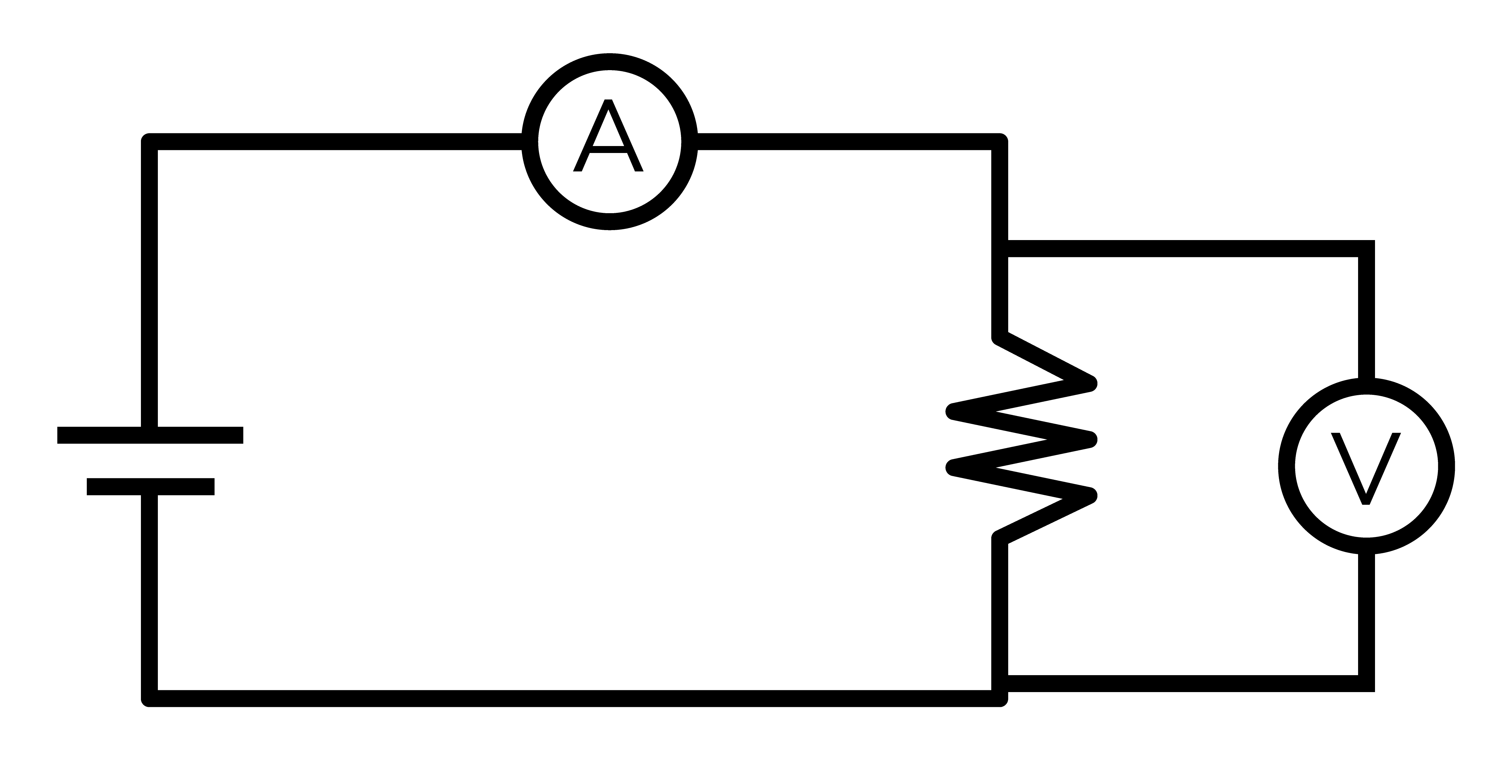
The ammeter measures current.
- It has to be connected in series with the circuit element to be measured.
- Its resistance should be as small as possible, so that it behaves like an ideal wire.
The voltmeter measures voltage.
- It has to be connected in parallel with the circuit element to be measured.
- Its resistance should be as large as possible, so that is behaves like a break in the circuit.