Wize University Physics Textbook (Master) > Geometric Optics
Mirrors and Lenses Summary
Popular Courses
MCAT
General Course
PHYSICS 1201A/B
Western University
PHY 1122
University of Ottawa
PHYS 142
McGill University
ENGG 212
University of Calgary
PHY132H1
University of Toronto
PHY132H1
University of Toronto
PHYS 102B
University of Victoria
PHYS 111
University of Victoria
PHYS-1300
University of Windsor
PHY 1121
University of Ottawa
PHYS 121
University of Waterloo
PHYSICS 1102A/B
Western University
PHYS 206
Concordia University
PHYS 227
University of Calgary
SC/PHYS 2020 3.00
York University
PHYS 116
Queen's University
PHY 9B
University of California - Davis
PHY 131
Arizona State University - Tempe
MCG 1101
University of Ottawa
0:00 / 0:00
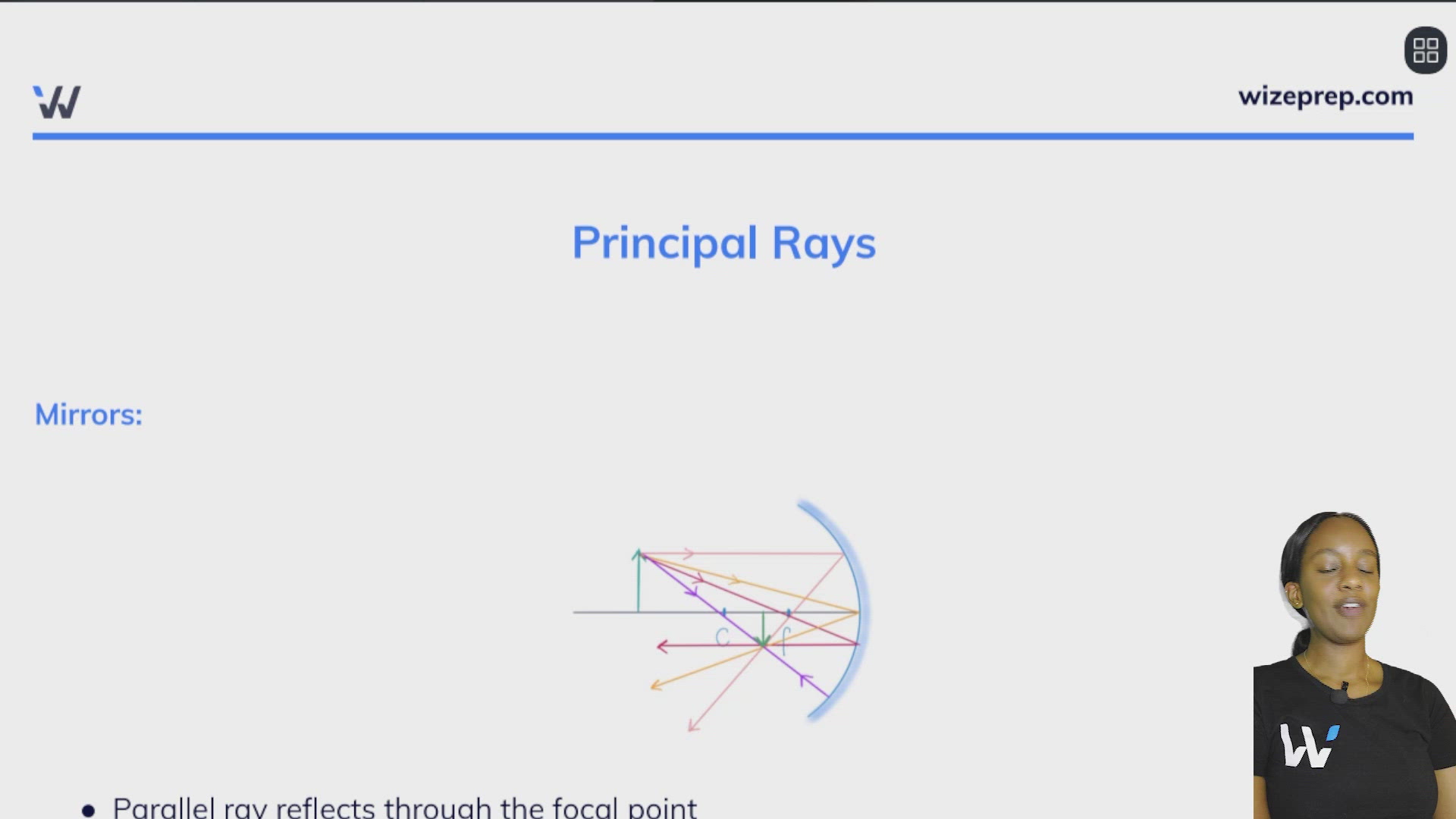
Principal Rays
Mirrors:
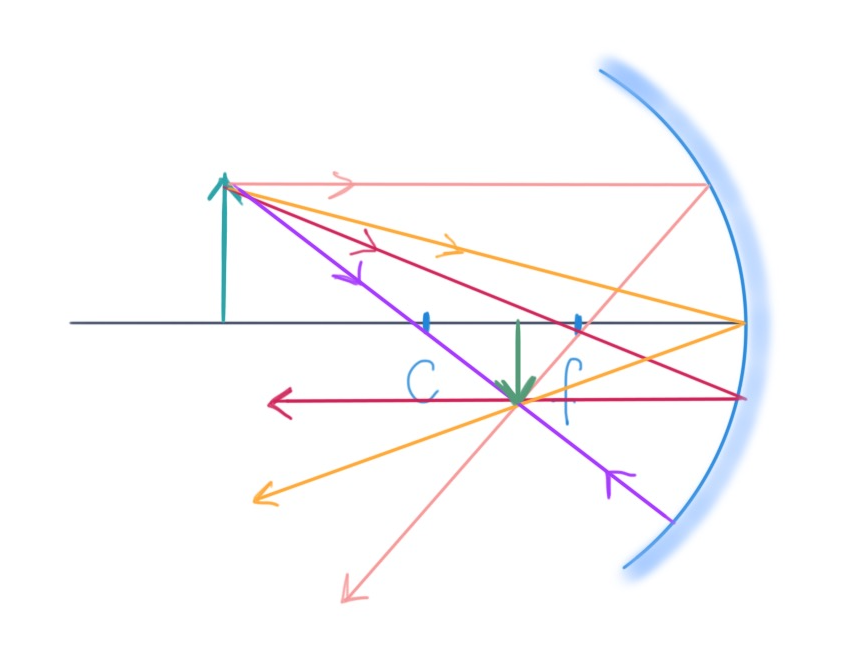
- Parallel ray reflects through the focal point
- Ray through the focal point reflects parallel
- Ray to the center reflects at the same angle below
- Ray through the center reflects back along the same path
Convex (Converging) Lenses:

- Parallel ray refracts through the focal point on the other side
- Ray through the focal point refracts parallel
- Ray through the center refracts straight through
Concave (Diverging) Lenses:

- Parallel ray refracts as if coming from the focal point on the same side
- Ray directed towards the focal point on the other side refracts parallel
- Ray through the center refracts straight through
Wize Concept
- Solid lines are used for actual light rays.
- Dotted lines are used for imaginary light rays (where light appears to be coming from).
- Extend the light rays until they intersect to find the image.
Wize Tip
Focus on understanding how to draw ray diagrams, do not try to memorize the different cases.
0:00 / 0:00
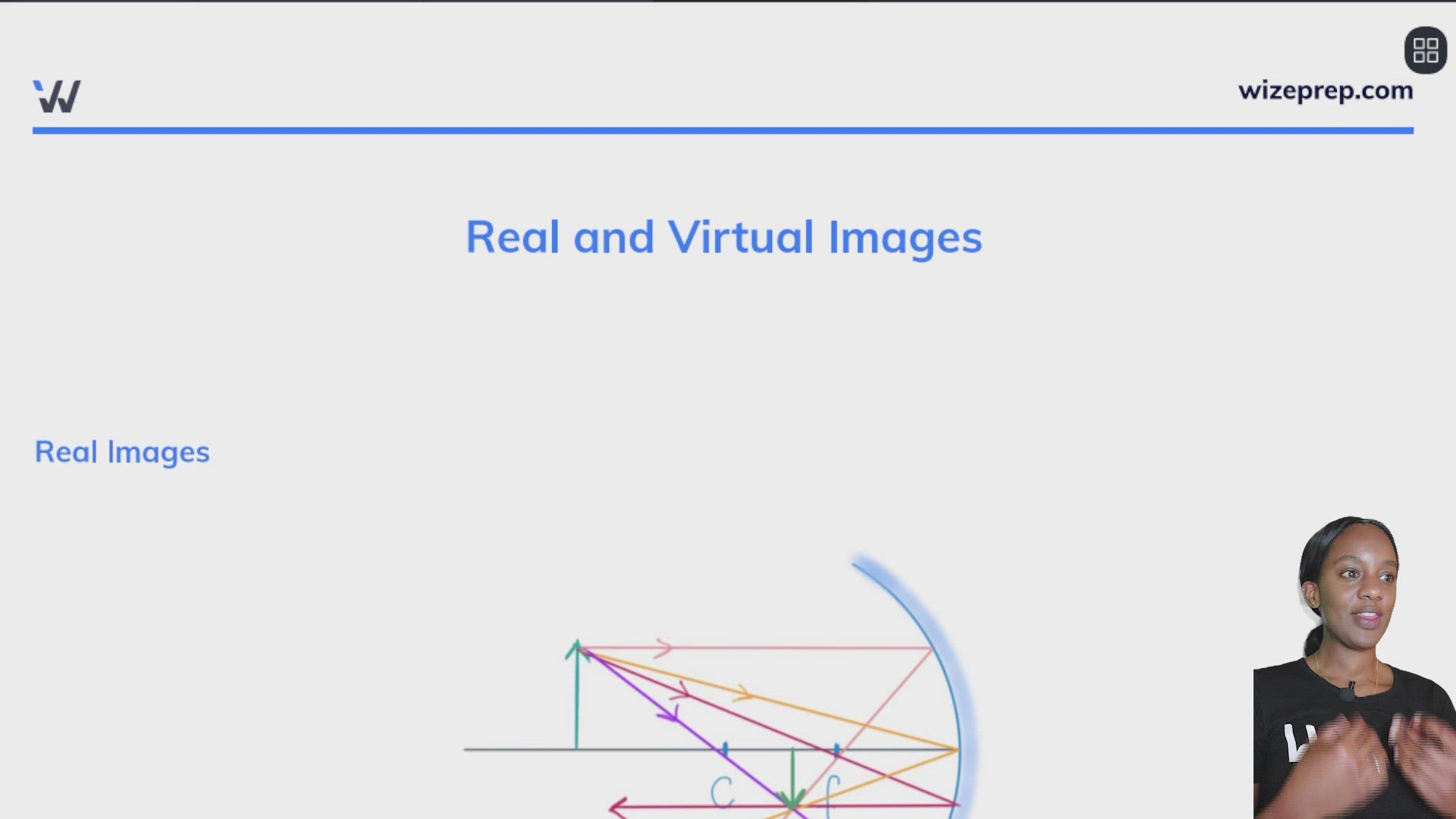
Real and Virtual Images
Real Images
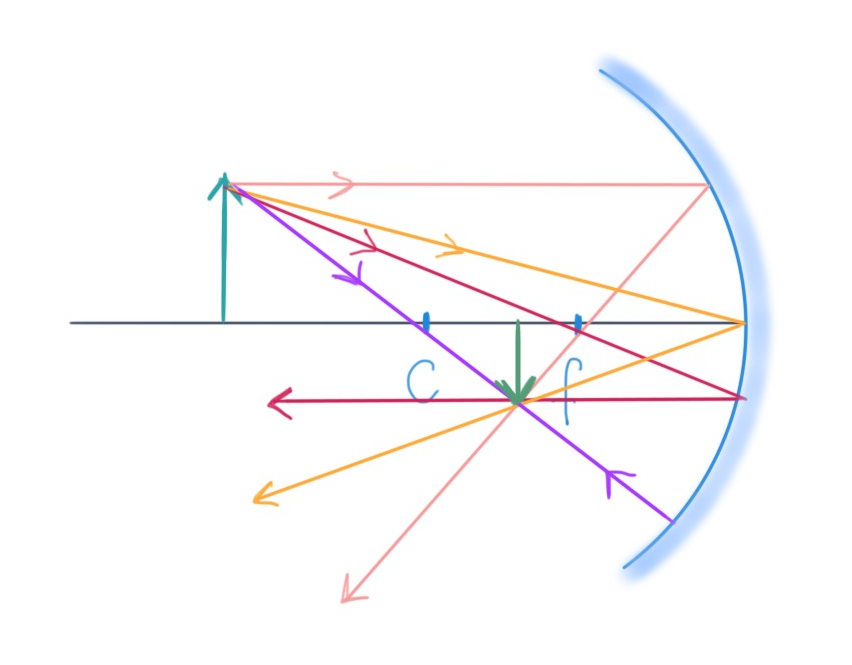
- Real images occur at points where actual light rays intersect.
- They are located at the intersection of solid lines on a ray diagram.
- Real images are always inverted.
- They have a negative magnification.
- The image distance is positive.
- Real images can be captured on a screen.
Virtual Images

- Virtual images occur at points where imaginary light rays intersect: it's where light appears to be coming from, but there are no actual light rays at that location (e.g. behind a mirror)
- They are located at the intersection of dotted lines on a ray diagram.
- Virtual images are always upright.
- They have a positive magnification.
- The image distance is negative.
- Virtual images cannot be captured on a screen. They appear to be formed on the mirror/lens itself.
0:00 / 0:00
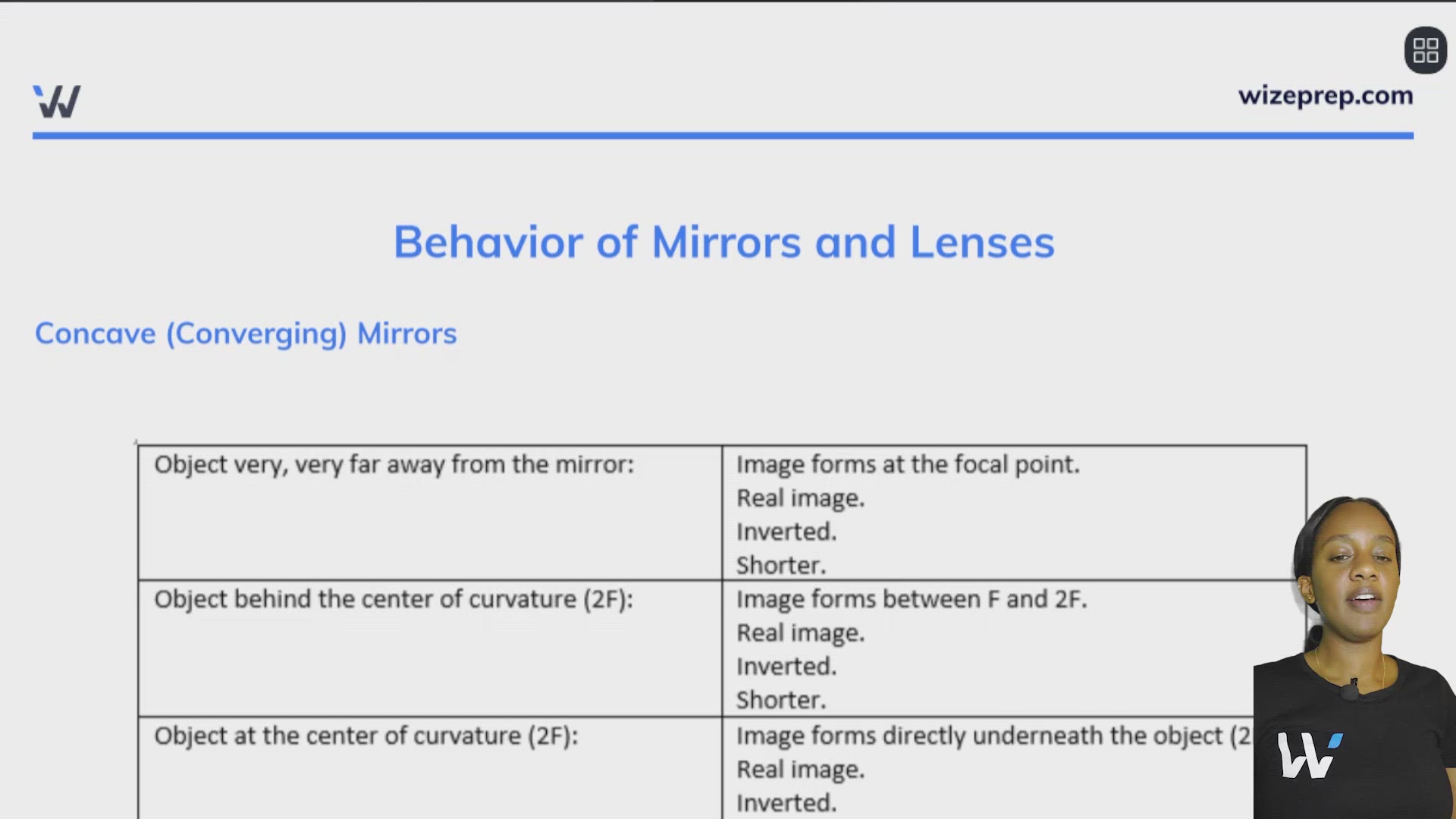
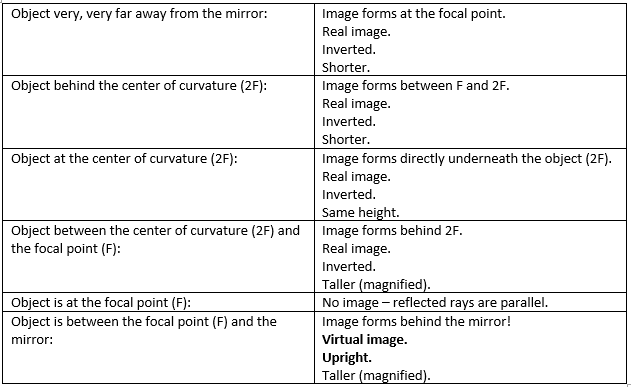
Behavior of Mirrors and Lenses
Concave (Converging) Mirrors
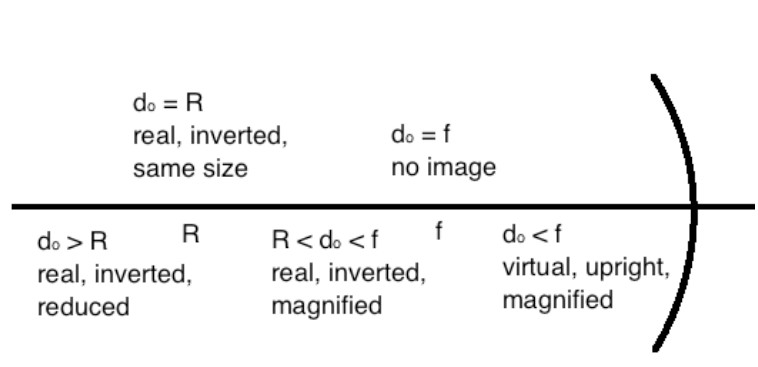
Another way to visualize these rules:
Convex (Diverging) Mirrors
The image is always virtual, upright, smaller than the object, and is formed behind the mirror.
Convex (Converging) Lenses
Same as converging mirrors, except that the image forms on the opposite side.
(For example, for objects between F and the mirror, the image now forms behind the object. For objects behind F, the image now forms on the other side of the lens.)
Concave (Diverging) Lenses
The image is always virtual, upright, smaller than the object, and is formed on the same side of the object between the object and the lens.
Exam Tip
- "Concave" and "convex" are terms that describe curvature. Since mirrors reflect light, while lenses refract it, there's a flip in the definitions as applied to converging and diverging mirrors vs. lenses.
- Don't let this confuse you - simply draw some pictures to remind yourself what each instrument does.