Popular Courses
MCAT
General Course
Intro to Physiology
University Study Guides
PHYSIOL 1021
Western University
PHYS*1080
University of Guelph
PHYSIOL 2130
Western University
Intro to Physiology
University Study Guides
PSL300H1
University of Toronto
PHYSL 210
University of Alberta
PHGY 210
McGill University
PHGY 215
Queen's University
KNES 259
University of Calgary
PHGY 216
Queen's University
BIOL 273
University of Waterloo
BIOL 260
University of British Columbia
PHYSIOL 3120
Western University
KNES 260
University of Calgary
BIOL 116
Case Western Reserve University
PPT 301
University of North Dakota
ANAT 212
McGill University
HTHSCI 2FF3
McMaster University

0:00 / 0:00
The cellular membrane is essential for separating the contents of the cell (intracellular fluid) from everything around it (interstitial fluid or plasma, etc.). It serves as a boundary that only allows for certain components to enter: this is called selective permeability.
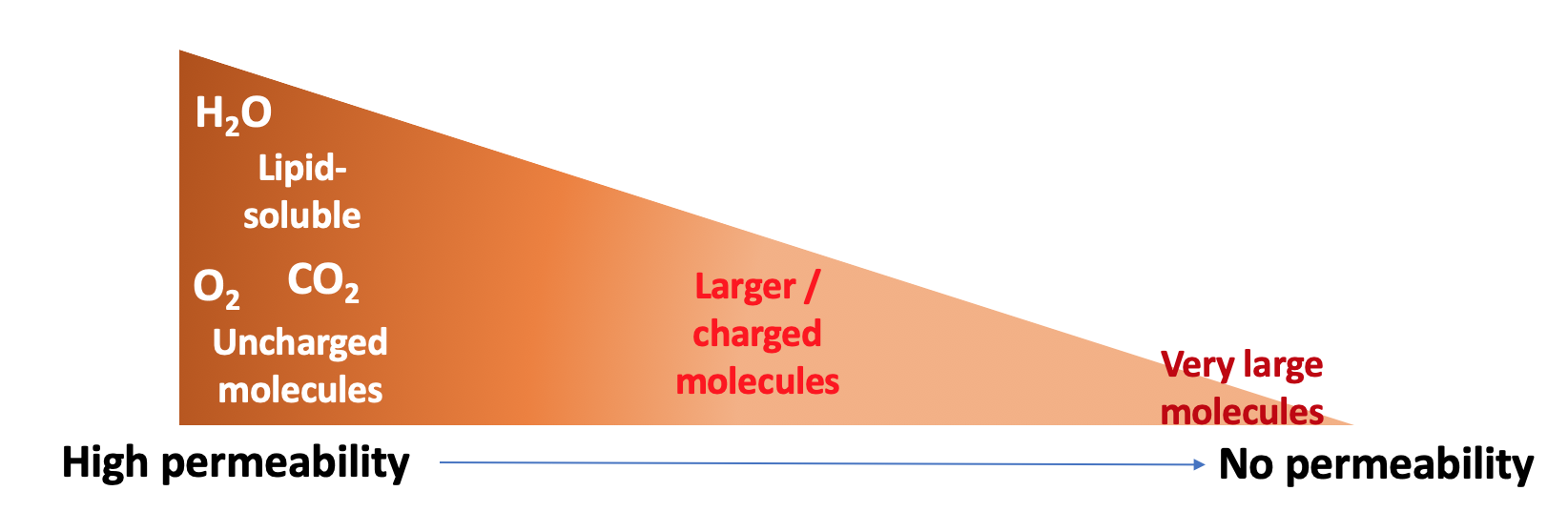
The cell membrane is composed of a phospholipid bilayer and many other proteins, glycolipids and cholesterol.
- The phosphate head groups of the phospholipids are hydrophilic, and therefore face the aqueous environment inside and outside the cell.
- The lipid tails are hydrophobic and face one another, away from the aqueous environment.
- Molecules can only enter the cell either through the lipid bilayer or through channels (proteins).
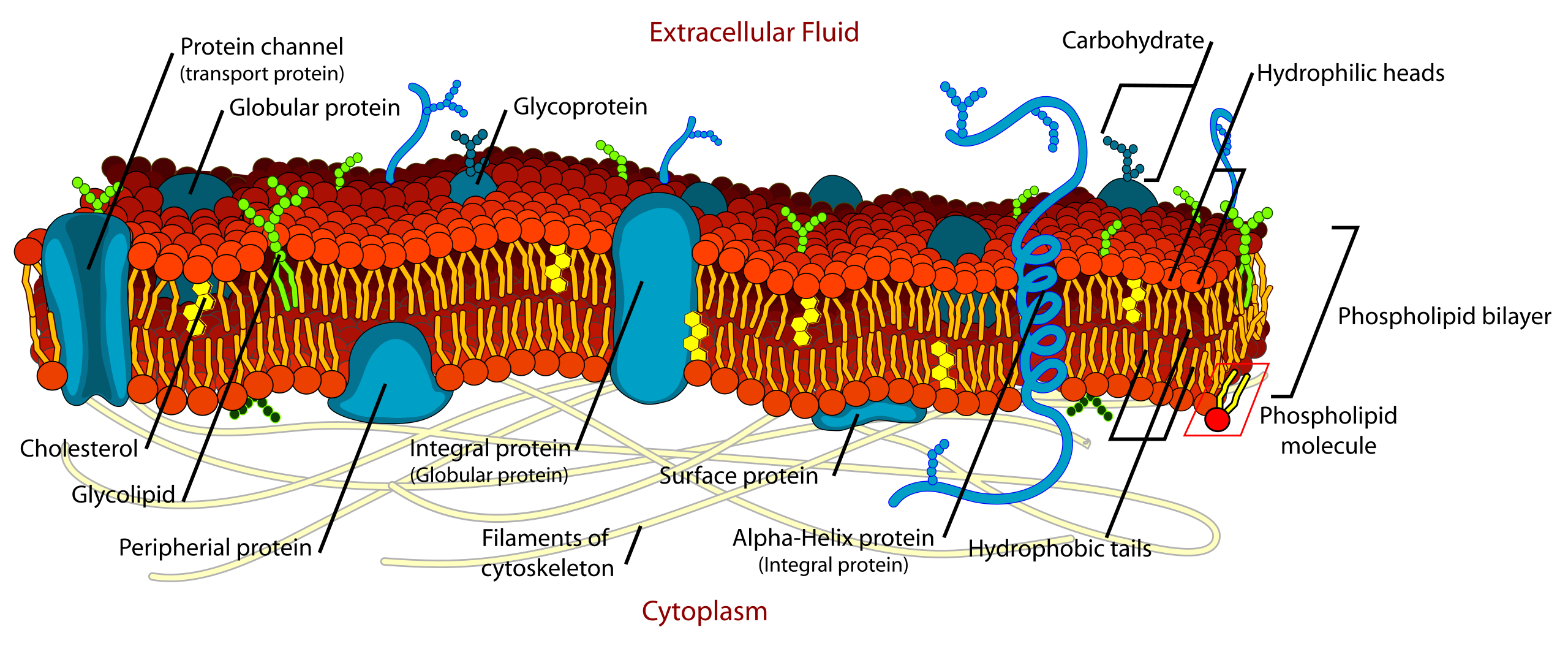
- Proteins can be part of the membrane itself (integral) or only be on the outer edges of the lipid bilayer (peripheral).
- Integral proteins go through the lipid bilayer so the transmembrane portion is not charged
- Peripheral proteins are typically located on the cell interior and can also be involved in cell signaling
- These proteins have many important functions, which include:
- Catalyzing reactions (enzymes)
- Transporting molecules through the lipid bilayer
- Receptors for signaling between internal and external environment
- Anchor internal structures to the cell membrane
- Attach adjacent cells to one another
- Serve as a marker for cell identification
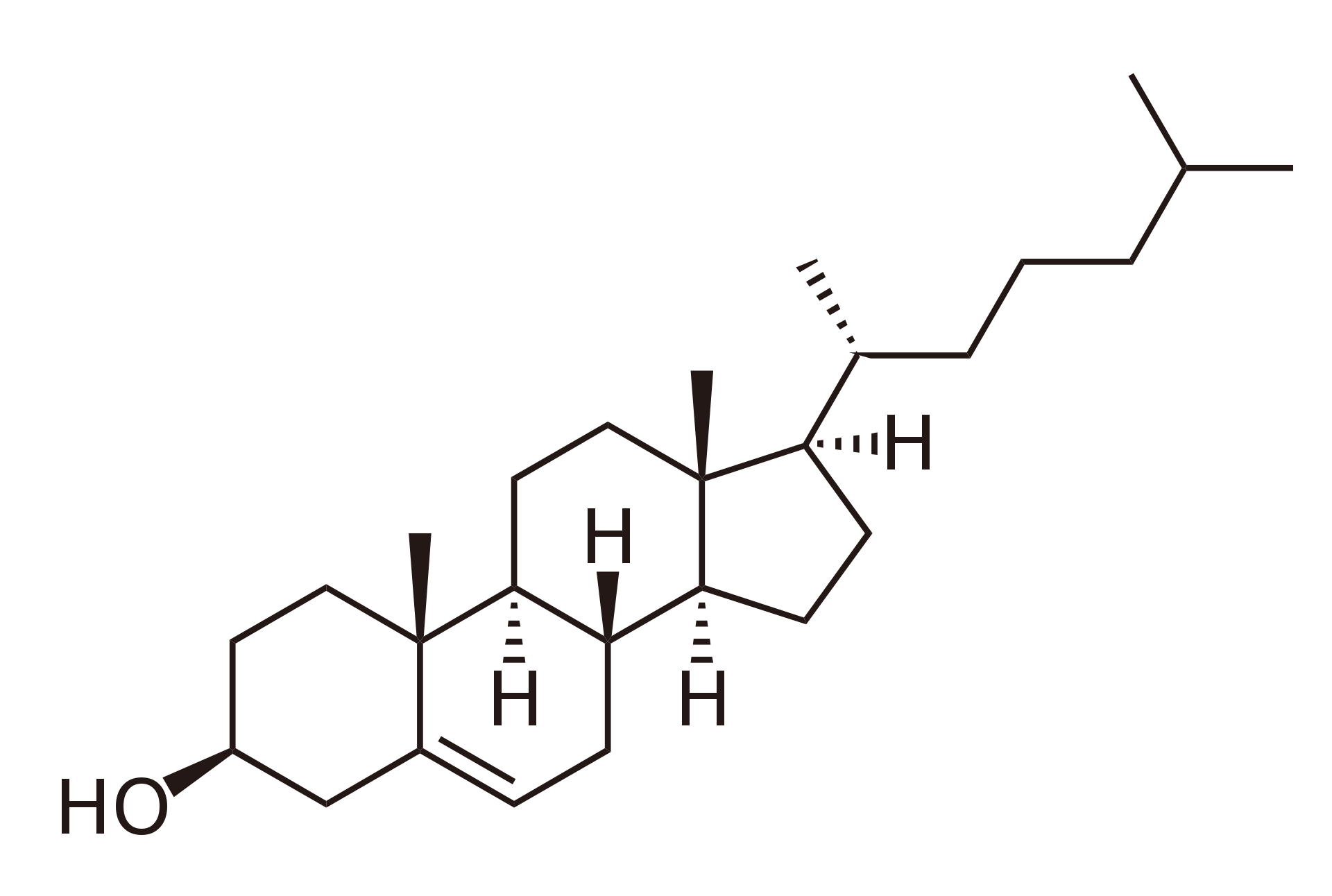
- Cholesterol is a hydrophobic molecule which is inserted in the lipid portion of the phospholipid bilayer. It provides fluidity and rigidity to the membrane.
- 20% by weight of the membrane
- Sensitive to temperature changes
- Reduces membrane permeability
- Glycoproteins are proteins modified with carbohydrates (prefix "glyco-" refers to sugars). Sometimes, the carbohydrates are attached directly to the lipids: these are glycolipids. Together, these form the glycocalix of a cell.
Cholesterol:
Cell membrane proteins can have any of the following functions, EXCEPT: