Wize University Physiology Textbook > Somatic Nervous System (SNS)
Neurons and Reflexes
Popular Courses
MCAT
General Course
DAT
General Course
Intro to Physiology
University Study Guides
PHYSIOL 1021
Western University
PHYSIOL 2130
Western University
Intro to Physiology
University Study Guides
PSL300H1
University of Toronto
PHYSL 210
University of Alberta
PHGY 210
McGill University
PHGY 215
Queen's University
KNES 259
University of Calgary
PHGY 216
Queen's University
BIOL 273
University of Waterloo
BIOL 260
University of British Columbia
PHYSIOL 3120
Western University
KNES 260
University of Calgary
BIOL 116
Case Western Reserve University
PPT 301
University of North Dakota
ANAT 212
McGill University
HTHSCI 2FF3
McMaster University
0:00 / 0:00
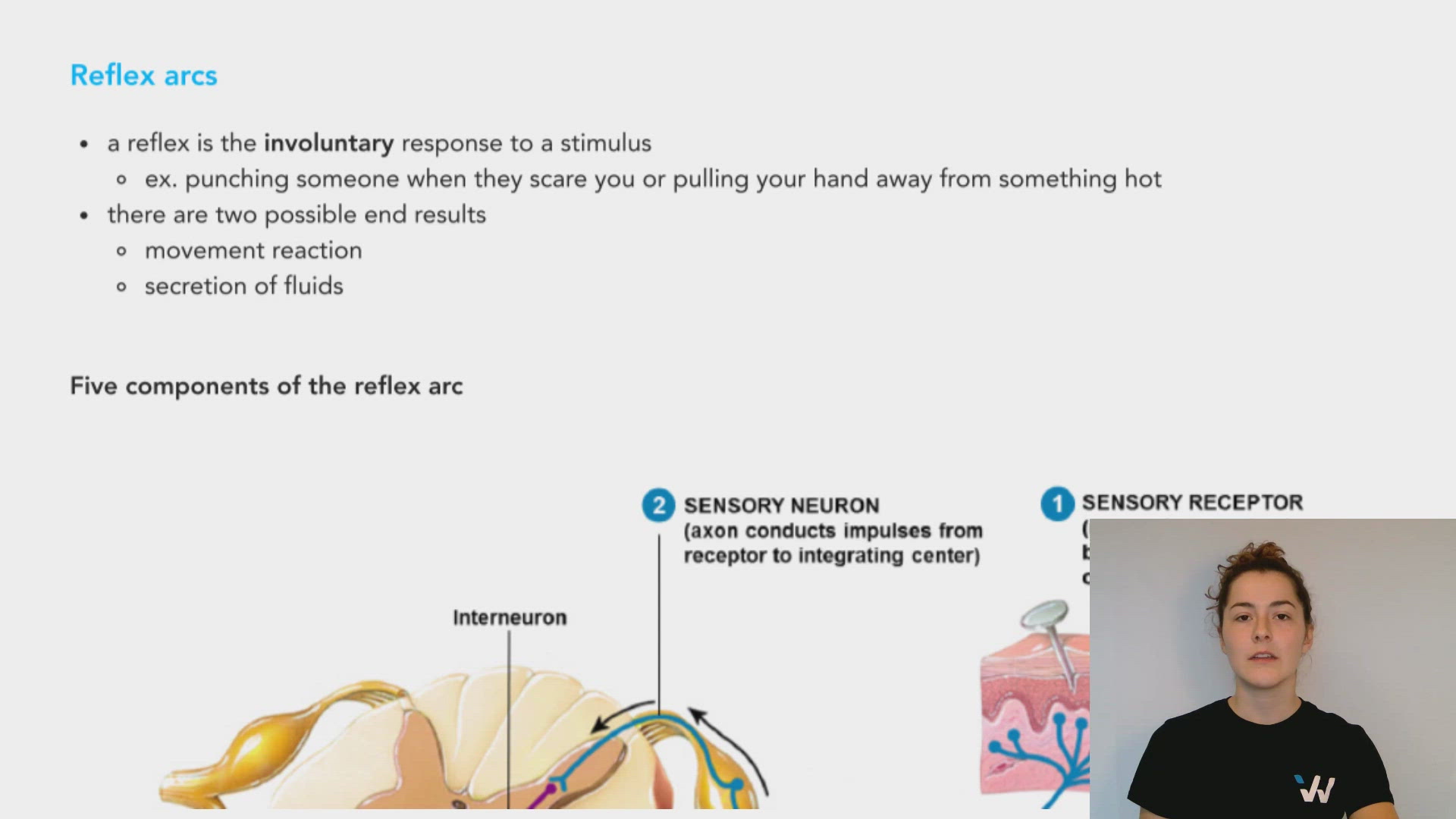
Reflex arcs
- a reflex is the involuntary response to a stimulus
- ex. punching someone when they scare you or pulling your hand away from something hot
- there are two possible end results
- movement reaction
- secretion of fluids
Five components of the reflex arc

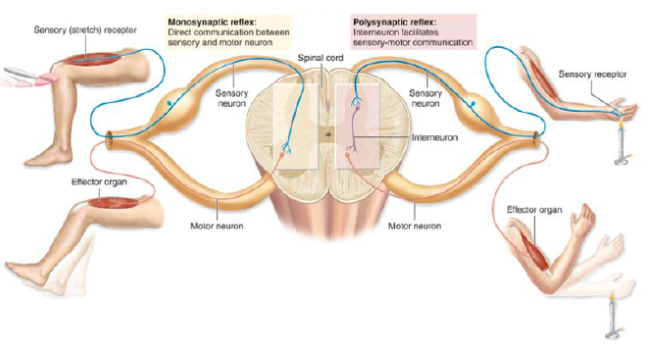
- monosynaptic reflexes - the sensory neurons and the motor neurons are directly connected in the spinal cord.
- polysynaptic reflexes - sensory neurons and motor neurons are connected through an interneuron in the spinal cord
Stretch Reflex
What happens to your bicep muscle when you lift something?
- the muscle stretches, activating 1a afferent nerve
- the interneuron connects the 1a afferent nerve signal to the alpha motor neuron response
- alpha motor neuron fires, causing extrafusal muscle contraction
- this extrafusal contraction stimulated the gamma motor neuron to contract the intrafusal fibers
- the contraction of the muscle body causes increased tension on the muscle tendon, activating the golgi tendon organs
- golgi tendon organs activated 1b afferent neurons
- the signal causes inhibition of alpha motor neurons ––> the muscle relaxes
0:00 / 0:00
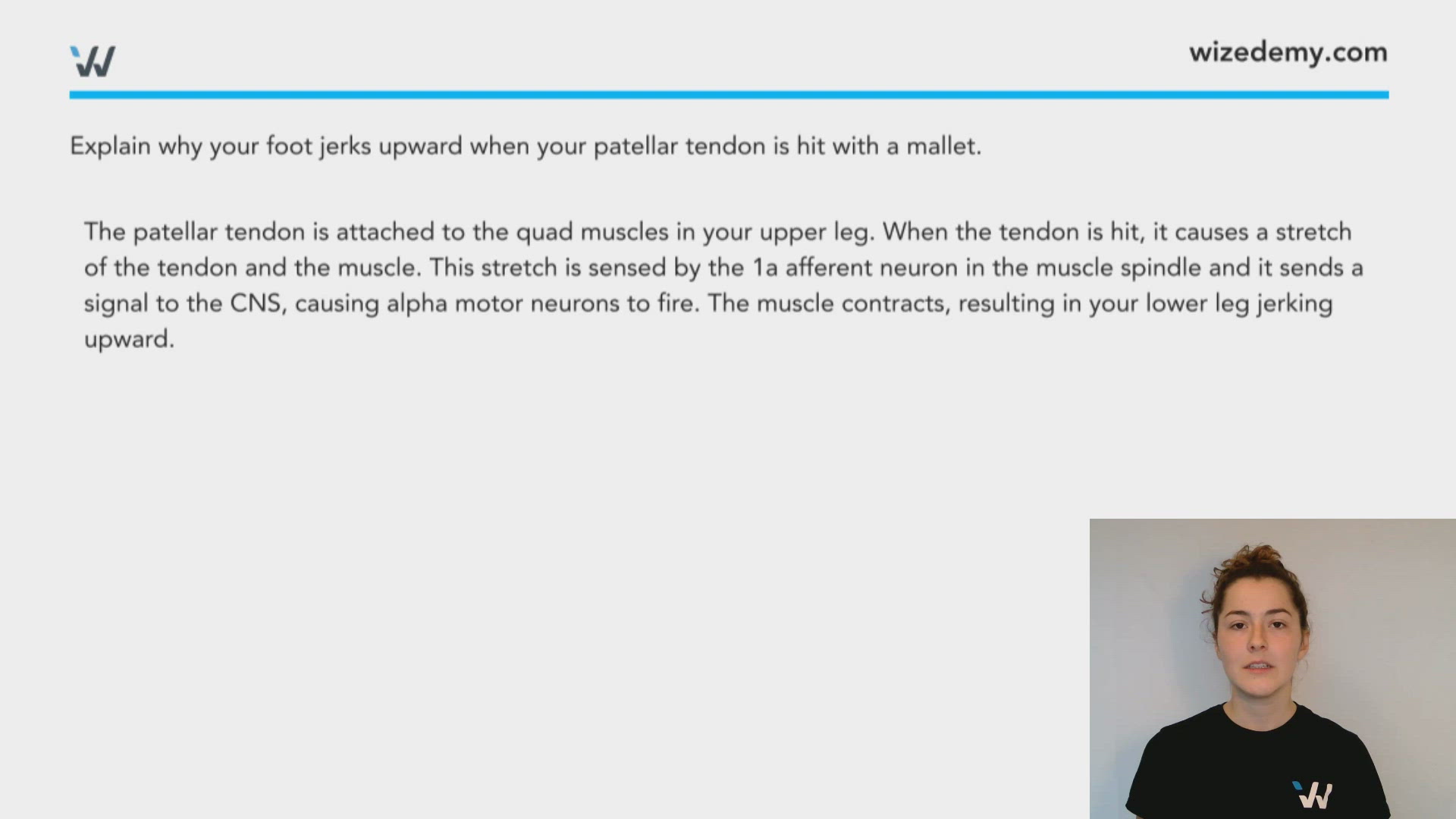
Explain why your foot jerks upward when your patellar tendon is hit with a mallet.
The patellar tendon is attached to the quad muscles in your upper leg. When the tendon is hit, it causes a stretch of the tendon and the muscle. This stretch is sensed by the 1a afferent neuron in the muscle spindle and it sends a signal to the CNS, causing alpha motor neurons to fire. The muscle contracts, resulting in your lower leg jerking upward.
What nerve is firing when a muscle reaches its tension limit?
Wize Concept
Quick review!! We went over this topic in the sensory physiology chapter as well :)
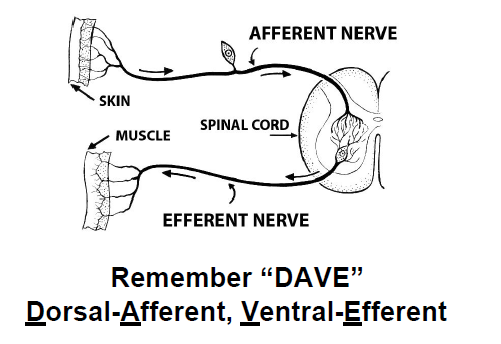
Afferent neurons bring info to to CNS (e.g. sensory info via dorsal root)
Efferent neurons carry info from the CNS (e.g. motor info via ventral root)