Wize University Physiology Textbook > Endocrine Physiology
Cellular communication and Hormones
Popular Courses
MCAT
General Course
DAT
General Course
Intro to Physiology
University Study Guides
PHYSIOL 1021
Western University
PHYSIOL 2130
Western University
Intro to Physiology
University Study Guides
PSL300H1
University of Toronto
PHYSL 210
University of Alberta
PHGY 210
McGill University
PHGY 215
Queen's University
BIOLOGY 2601A/B
Western University
KNES 259
University of Calgary
PHGY 216
Queen's University
BIOL 273
University of Waterloo
BIOL 260
University of British Columbia
PHYSIOL 3120
Western University
KNES 260
University of Calgary
BIOL 116
Case Western Reserve University
PPT 301
University of North Dakota
ANAT 212
McGill University
0:00 / 0:00
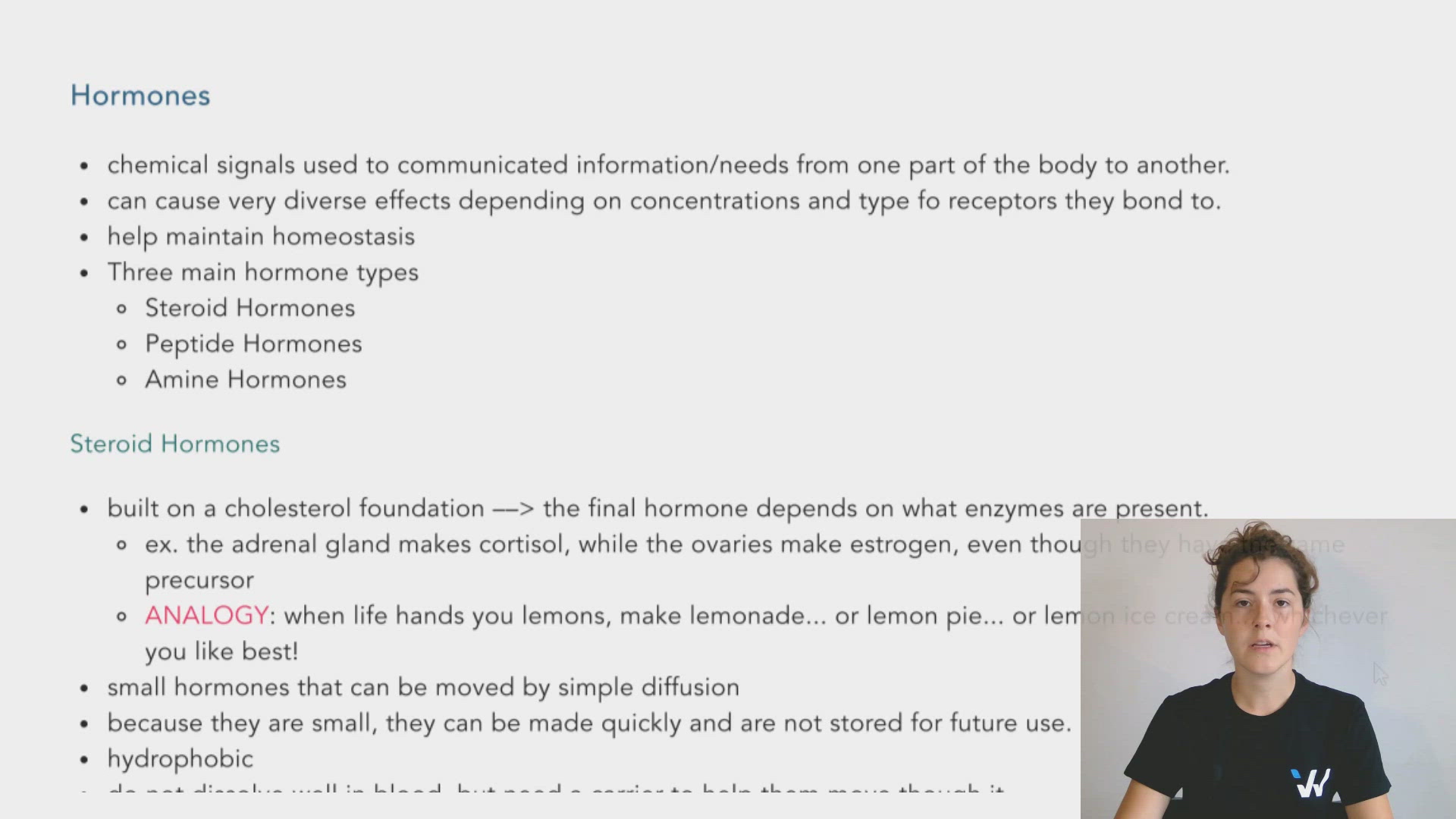
Hormones
- chemical signals used to communicated information/needs from one part of the body to another.
- can cause very diverse effects depending on concentrations and type of receptors they bind to.
- help maintain homeostasis
- Three main hormone types
- Steroid Hormones
- Peptide Hormones
- Amine Hormones
Steroid Hormones
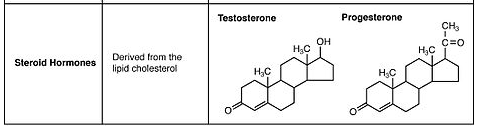
- built on a cholesterol foundation ––> the final hormone depends on what enzymes are present.
- ex. the adrenal gland makes cortisol, while the ovaries make estrogen, even though they have the same precursor
- ANALOGY: when life hands you lemons, make lemonade... or lemon pie... or lemon ice cream.... whichever you like best!
- small hormones that can be moved by simple diffusion
- because they are small, they can be made quickly and are not stored for future use.
- hydrophobic
- do not dissolve well in blood, but need a carrier to help them move though it.
- because it can move through simple diffusion, it can bind to nuclear receptors or receptors in the cytoplasm
Peptide Hormones
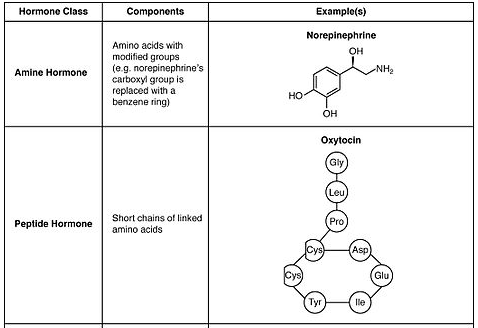
- built on an amino acid foundation
- hydrophilic
- dissolve well in the blood
- bind to cell membrane receptors
- many of these hormones can often be found in one protein/peptide chain
- ex. insulin and other proteins are synthesized in the same chain, then separated at the end.
- made in advance, then released when needed
Amines
- built on a tyrosine or tryptophan foundation
- hydrophobic (thyroid hormones) or hydrophilic (epinephrine).
- Many different types with diverse effects
- catecholamines are stored, but not all amines are. As we said, they are very diverse!
Wize Concept
Below I've added in an image to help you visualize what each of these type of hormones look like, how they are different, and what are some common examples. Enjoy!
commons.wikimedia.org
0:00 / 0:00
What are three main types of hormones and what are their precursors?
- Steroid Hormones - precursor is cholesterol
- Peptide Hormones - precursors are amino acids
- Amine Hormones - precursors are tyrosine or tryptophan
What is true about hormones?