Wize University Physiology Textbook > Endocrine Physiology
Intro to Endocrine & Homeostasis
Popular Courses
MCAT
General Course
DAT
General Course
Intro to Physiology
University Study Guides
PHYSIOL 1021
Western University
PHYSIOL 2130
Western University
Intro to Physiology
University Study Guides
PSL300H1
University of Toronto
PHYSL 210
University of Alberta
PHGY 210
McGill University
PHGY 215
Queen's University
BIOLOGY 2601A/B
Western University
KNES 259
University of Calgary
PHGY 216
Queen's University
BIOL 273
University of Waterloo
BIOL 260
University of British Columbia
PHYSIOL 3120
Western University
KNES 260
University of Calgary
BIOL 116
Case Western Reserve University
PPT 301
University of North Dakota
ANAT 212
McGill University
0:00 / 0:00
The Endocrine System
What is it?
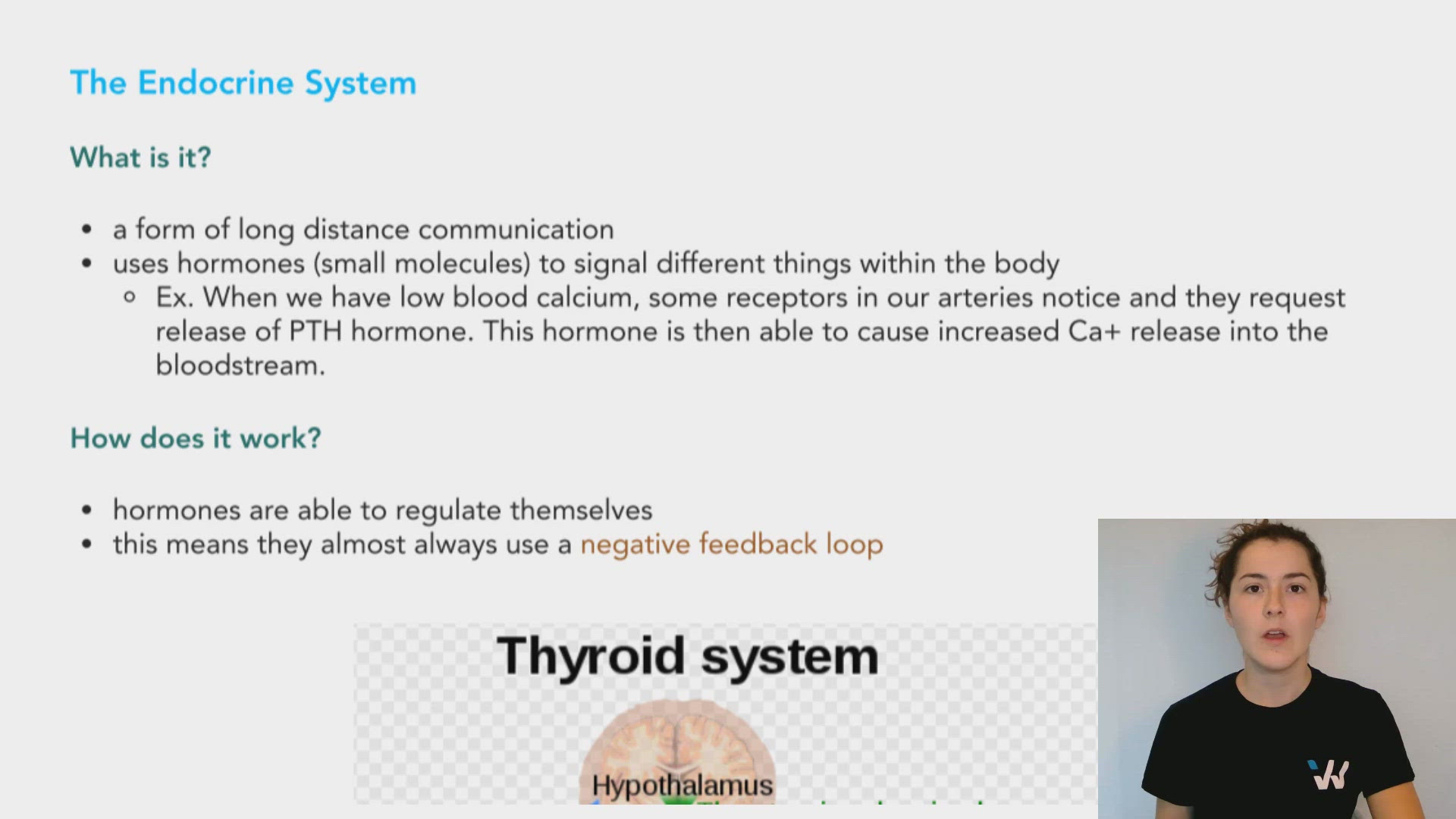
- a form of long distance communication
- uses hormones (small molecules) to signal different things within the body
- Ex. When we have low blood calcium, some receptors in our arteries notice and they request release of PTH hormone. This hormone is then able to cause increased Ca+ release into the bloodstream.
How does it work?
- hormones are able to regulate themselves
- this means they almost always use a negative feedback loop

What are hormones?
- small molecules that are part of long distance signalling
- This sounds very similar to the function of neurotransmitters... but they are NOT the same!!
- hormones travel through the bloodstream -- neurotransmitters travel through nerve synapses
- hormones change physiological processes -- neurotransmitters help the transmission of neural signals
0:00 / 0:00
Homeostasis - What is it?
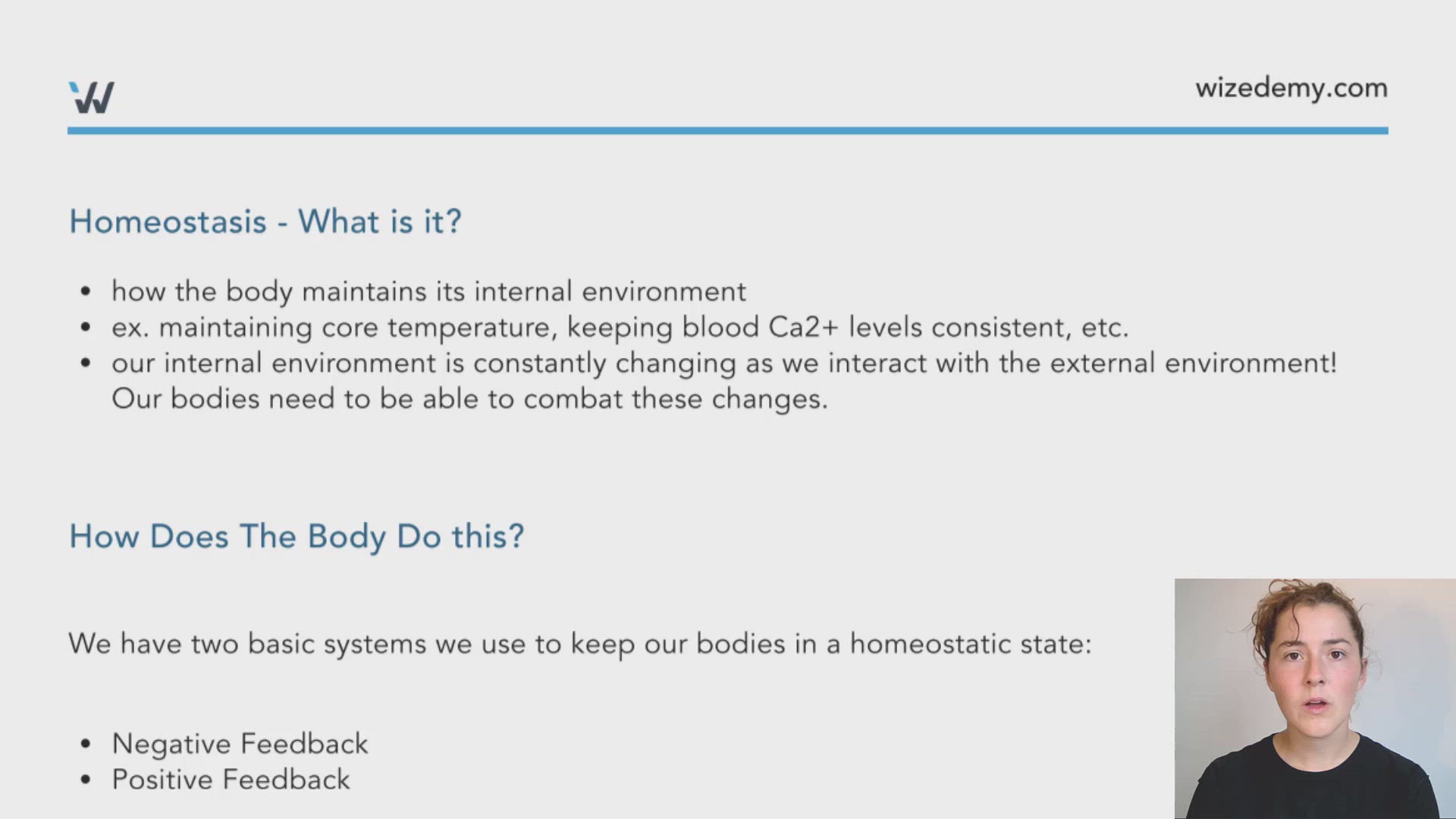
- how the body maintains its internal environment
- ex. maintaining core temperature, keeping blood Ca2+ levels consistent, etc.
- our internal environment is constantly changing as we interact with the external environment! Our bodies need to be able to combat these changes.
How Does The Body Do this?
We have two basic systems we use to keep our bodies in a homeostatic state:
- Negative Feedback
- Positive Feedback
Exam Tip
Negative feedback systems are more abundant than positive feedback systems in the human body. Because of this, it is often involved in at least one exam question. Make sure you understand this concept! If you need extra help, please don't hesitate to send me a message!
ANALOGY: Lets consider the difference between a thermostat and a thermometer. A thermometer reads the temperature of its surroundings. A thermostat reads the temperature of its surroundings and then compares it to a set value. Our body works more like a thermostat. Receptors are able to "read" its surroundings and compare it to the regular value found within the body. If the reading does not match the regular value, a system is triggered that causes the reading value to change. Lets check out an example!
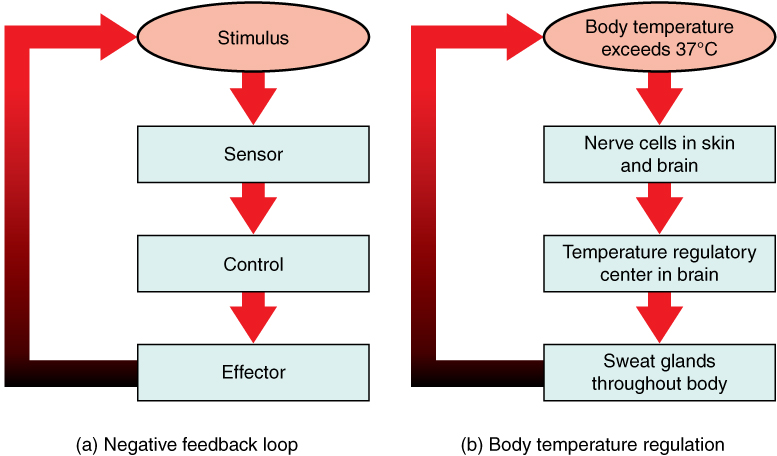
commons.wikimedia.org
On a Cellular Level...
How is this "thermostat" information actually carried out? Well in order for there to be organization in our very complex body, we need to have connected compartments that are able to communicate with one another. On a large scale, our blood allows connection and communication to the organs of our body. On a smaller scale, the plasma in the blood connects to the extracellular fluid, which communicates to the intracellular fluid.
0:00 / 0:00
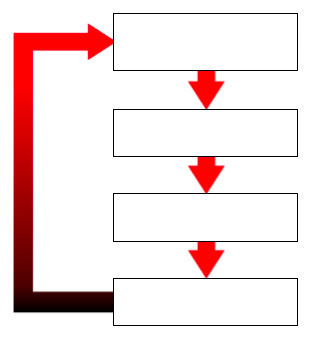
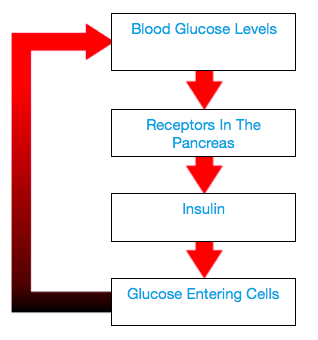
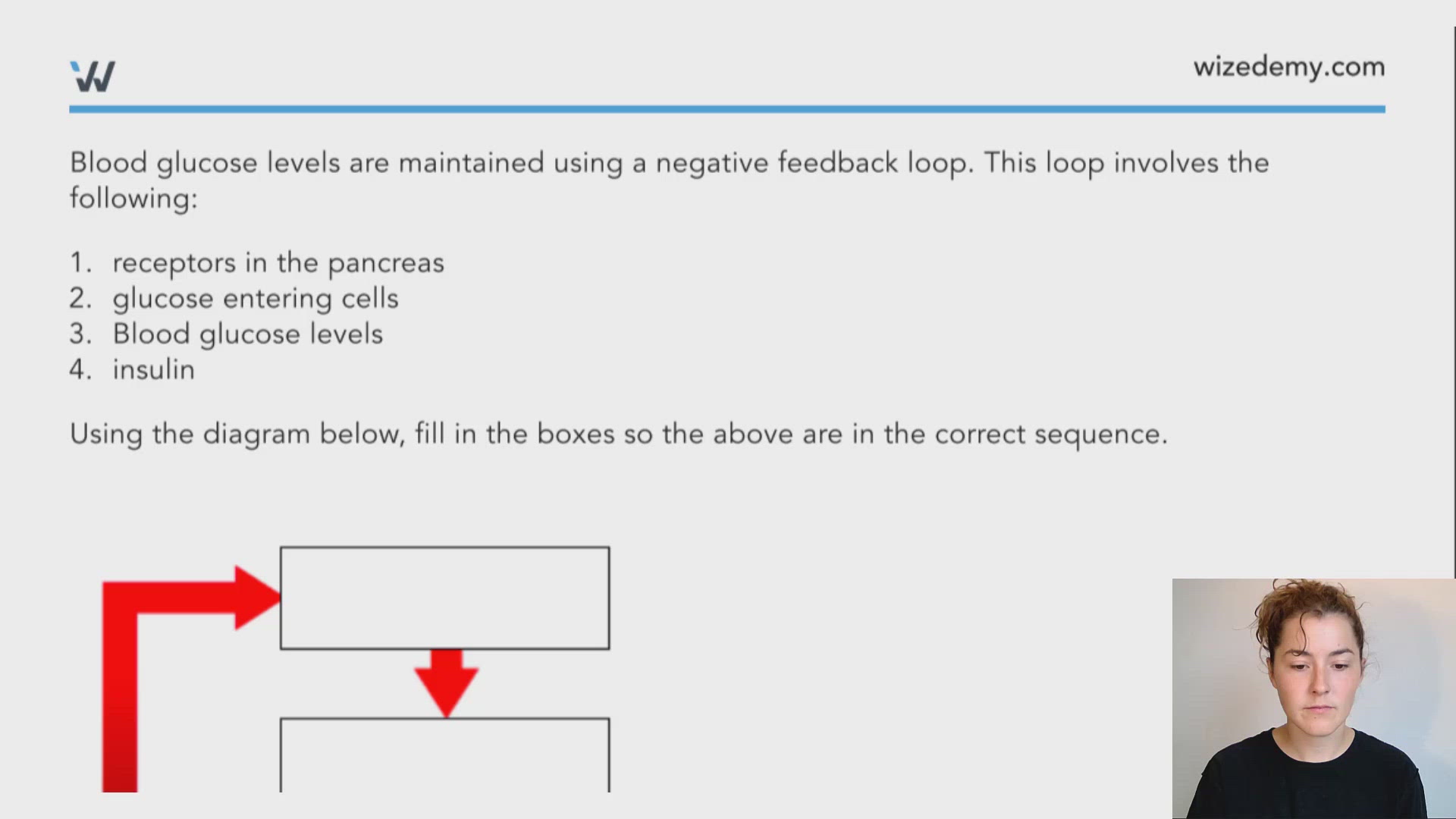
Blood glucose levels are maintained using a negative feedback loop. This loop involves the following:
- receptors in the pancreas
- glucose entering cells
- Blood glucose levels
- insulin
Using the diagram below, fill in the boxes so the above are in the correct sequence.