Wize University Physiology Textbook > Integrative Physiology
Thermoregulation
Popular Courses
MCAT
General Course
DAT
General Course
Intro to Physiology
University Study Guides
PHYSIOL 1021
Western University
PHYSIOL 2130
Western University
Intro to Physiology
University Study Guides
PSL300H1
University of Toronto
PHYSL 210
University of Alberta
PHGY 210
McGill University
PHGY 215
Queen's University
KNES 259
University of Calgary
PHGY 216
Queen's University
BIOL 273
University of Waterloo
BIOL 260
University of British Columbia
PHYSIOL 3120
Western University
KNES 260
University of Calgary
BIOL 116
Case Western Reserve University
PPT 301
University of North Dakota
ANAT 212
McGill University
KNES 323
University of Calgary
0:00 / 0:00
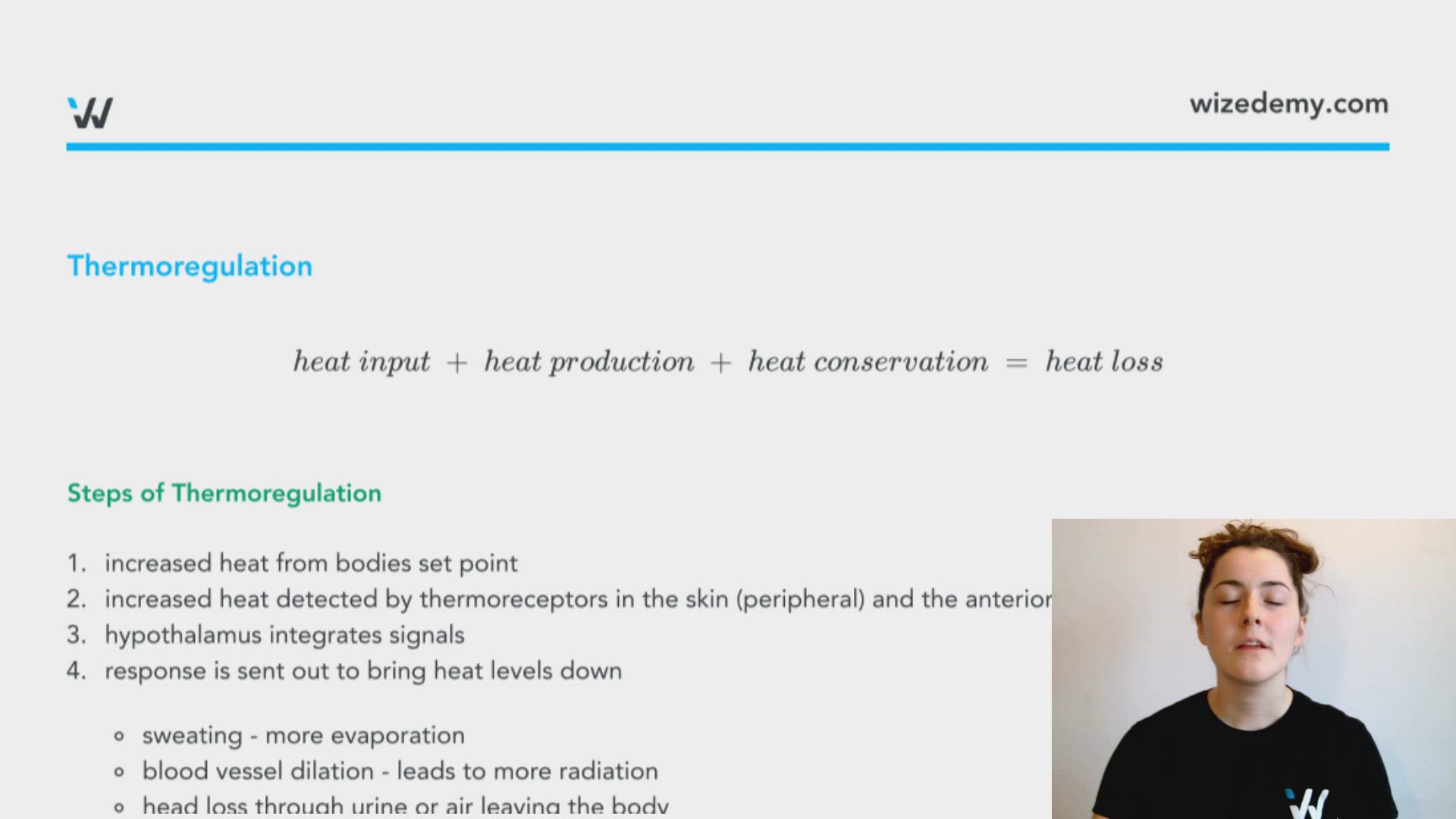
Thermoregulation
Steps of Thermoregulation
- increased heat from bodies set point
- increased heat detected by thermoreceptors in the skin (peripheral) and the anterior hypothalamus (central)
- hypothalamus integrates signals
- response is sent out to bring heat levels down
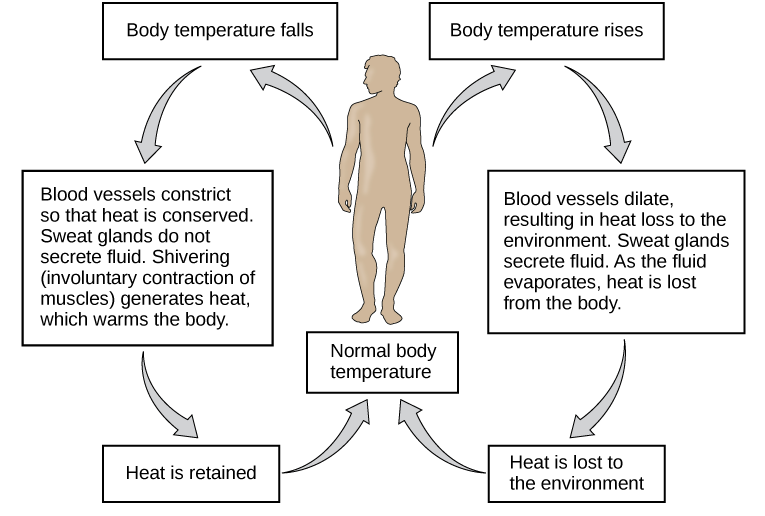
- sweating - more evaporation
- blood vessel dilation - leads to more radiation
- head loss through urine or air leaving the body
If you were too cold, the posterior hypothalamus would initiate a "cold response"
- shivering - activation of skeletal muscles to generate heat
- blood vessel constriction - less radiation
Because we are aware of when we are hot and cold, our behavior will also change when we feel too hot or too cold. Can you think of anything you might do if you feel one or the other?
How is heat lost?
- Conduction: loss through contact with another object
- EXAMPLE: Sitting on a cold chair. it eventually gets warm because your body has heated it up.
- Convection: loss of heat through the movement of air around you
- EXAMPLE: when you sit still in a cold pool and then start moving around, you can feel the change in temperature.
- Radiation: transfer of heat through waves
- EXAMPLE: The sun making you warm
- Evaporation: loss of heat through water leaving the body as a gas
- EXAMPLE: when you break a sweat this is most obvious. The sweat can evaporate off the surface of your body.
Problems with Thermoregulation
Fever
- when we are invaded by a pathogen, one of the defenses is to "smoke it out"
- our bodies temperature rises to kill the bacteria
- a protein called interleukin informs the hypothalamus that the threat is real and the hypothalamus initiates the increase in temperature
Heat Exhaustion
- when we can't get rid of heat fast enough, we end up with heat exhaustion
- excessive heat from working/playing outside on a hot day --> the body tries to cool you down but can't success because there's just too much darn heat!
- excess sweating and dilated blood vessels leads to hypovolemia of the blood
- this decreases cardiac output and puts the body into circulatory shock
- basically your body acts like you're bleeding out. This is life threatening!!
Heat Stroke
- the next level of head exhaustion, just more severe.
- can lead to a coma or to death.
- someone with heat stroke will be weak and tired and may faint or vomit
- treat by rest, drinking fluids and cooling down the person
What is the difference between a fever, heat stroke and heat exhaustion?
Fever: Your body increases your temperature to kill a pathogen
Heat exhaustion: overheating of the body causing dehydration --> decreased cardiac output
Heat stroke: more severe case of heat exhaustion