Wize University Physiology Textbook > Integrative Physiology
Circadian Rythms
Popular Courses
MCAT
General Course
DAT
General Course
Intro to Physiology
University Study Guides
PHYSIOL 1021
Western University
PHYSIOL 2130
Western University
Intro to Physiology
University Study Guides
PSL300H1
University of Toronto
PHYSL 210
University of Alberta
PHGY 210
McGill University
PHGY 215
Queen's University
KNES 259
University of Calgary
PHGY 216
Queen's University
BIOL 273
University of Waterloo
BIOL 260
University of British Columbia
PHYSIOL 3120
Western University
KNES 260
University of Calgary
BIOL 116
Case Western Reserve University
PPT 301
University of North Dakota
ANAT 212
McGill University
HTHSCI 2FF3
McMaster University
0:00 / 0:00
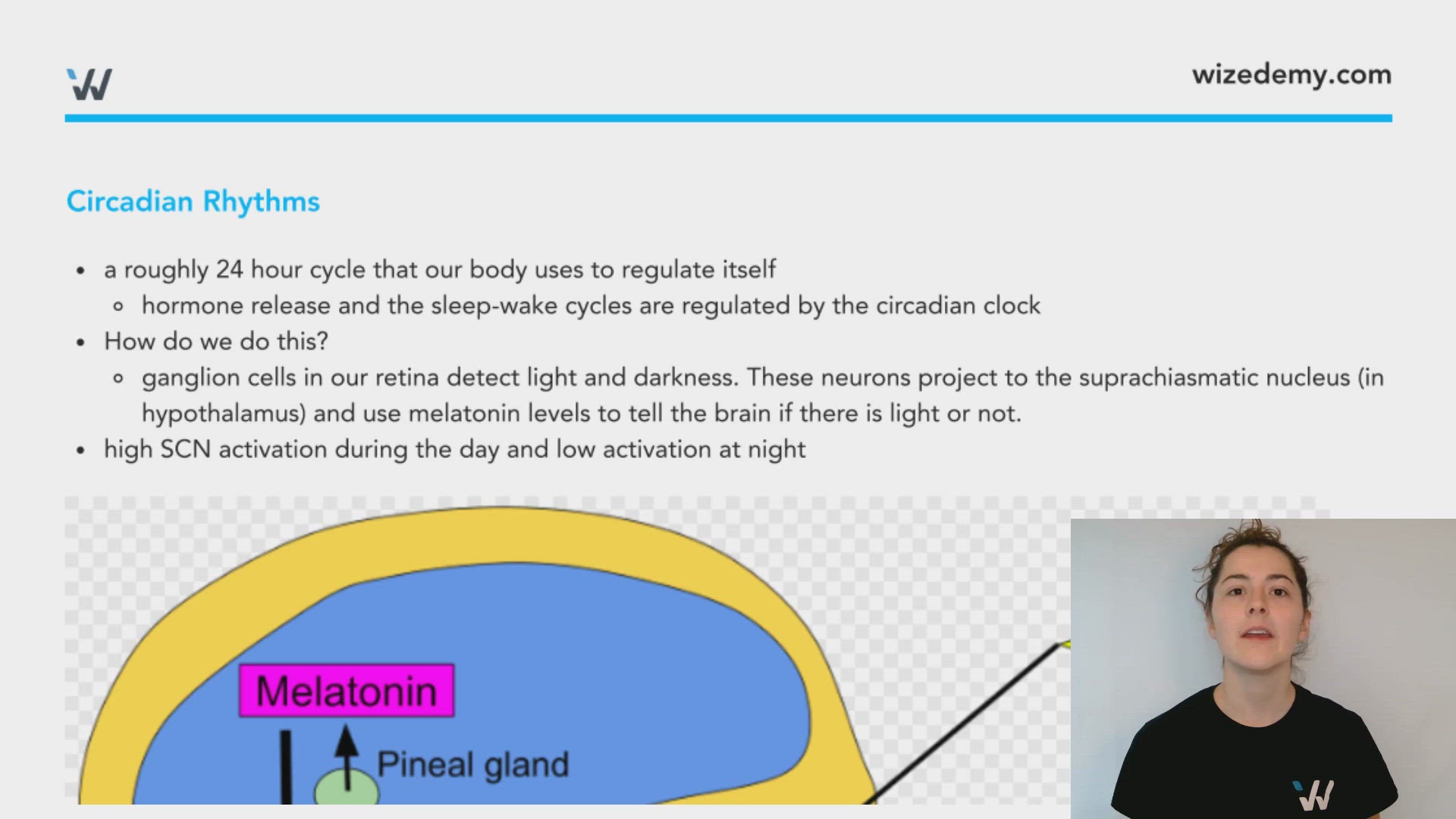
Circadian Rhythms
- a roughly 24 hour cycle that our body uses to regulate itself
- ex. hormone release and the sleep-wake cycles are regulated by the circadian clock
- How do we do this?
- ganglion cells in our retina detect light and darkness. These neurons project to the suprachiasmatic nucleus (SCN in hypothalamus) and use melatonin levels to tell the brain if there is light or not.
- high SCN activation during the day and low activation at night
- when SCN activation is low, it can no longer inhibit the pineal gland and the pineal gland will start producing melatonin

commons.wikimedia.org
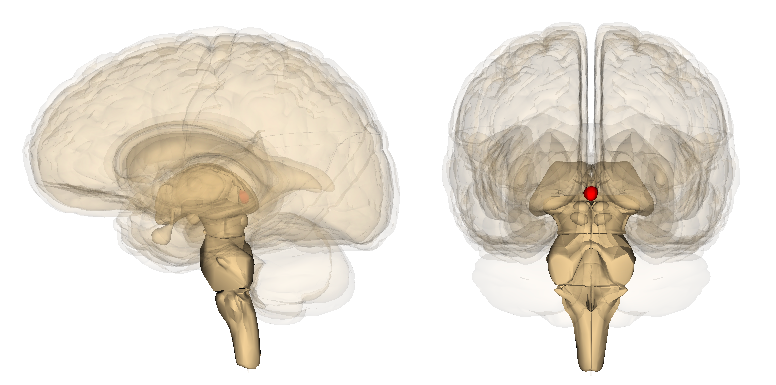
Pineal Body
- part of the brain that is activated SCN activity is low
- if its dark, pineal body secretes melatonin (a neurons-hormone) into bloodstream and CSF system
- if its light, pineal body is inhibited from secreting melatonin by the SCN
commons.wikimedia.org copywrite terms at https://creativecommons.org/licenses/by-sa/2.1/jp/deed.en
Sleep-Wake Cycle
- Sleep cycle
- activated by a single nucleus in the brain called VLPO
- VLPO tells all other brain structures to sleep
- ANALOGY: VLPO is the evil hypnotist
- activated by lack of sleep and circadian clock (daylight/darkness)
- Wake cycle
- SCN tells tuberomamillary nucleus (TMN) to turn on.
- TMN inhibits releases histamine to all areas of the brain including VLPO
- histamine inhibits VLPO which means the rest of the brain wakes up.
- ANALOGY: superhero TMN to the rescue! He slays VLPO.
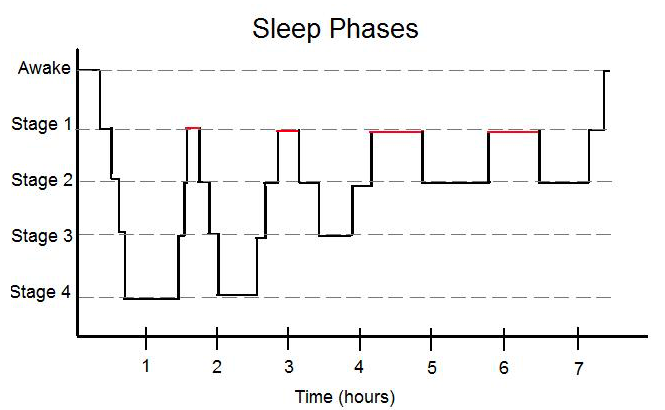
Stages of Sleep
- Stage 1 = REM sleep. This is when we dream. Through each consecutive cycle, REM gets longer
- bodies movement is inhibited, but eyes are moving quickly - rapid eye movement (REM)
- Stage 2 + 3 = short wave sleep.
- Stage 4 = slow/long wave sleep.
- After you go through all the stages, you repeat them every 90 minutes or so. One 90 minute cycle is called an ultradian rhythm.
commons.wikimedia.org
0:00 / 0:00
List the steps from eye to bloodstream regarding circadian rhythms if its dark outside.
retina ganglion cells --> suprachiasmatic nucleus (SCN) --> pineal body --> melatonin release into the bloodstream and CNS
Things that use circadian rhythms
Here is a comprehensive list of things that run on a circadian rhythm in the body.
- Sleep
- Foot and water intake
- Urine Production
- blood pressure
- Platelet Aggregation in the blood
- Blood cell production
- Temperature regulation
- Hormone levels
- Menstrual Cycle