Popular Courses
MCAT
General Course
DAT
General Course
Intro to Physiology
University Study Guides
PHYSIOL 1021
Western University
PHYSIOL 2130
Western University
Intro to Physiology
University Study Guides
PSL300H1
University of Toronto
PHYSL 210
University of Alberta
PHGY 210
McGill University
PHGY 215
Queen's University
KNES 259
University of Calgary
PHGY 216
Queen's University
BIOL 273
University of Waterloo
BIOL 260
University of British Columbia
PHYSIOL 3120
Western University
KNES 260
University of Calgary
BIOL 116
Case Western Reserve University
PPT 301
University of North Dakota
ANAT 212
McGill University
HTHSCI 2FF3
McMaster University
0:00 / 0:00
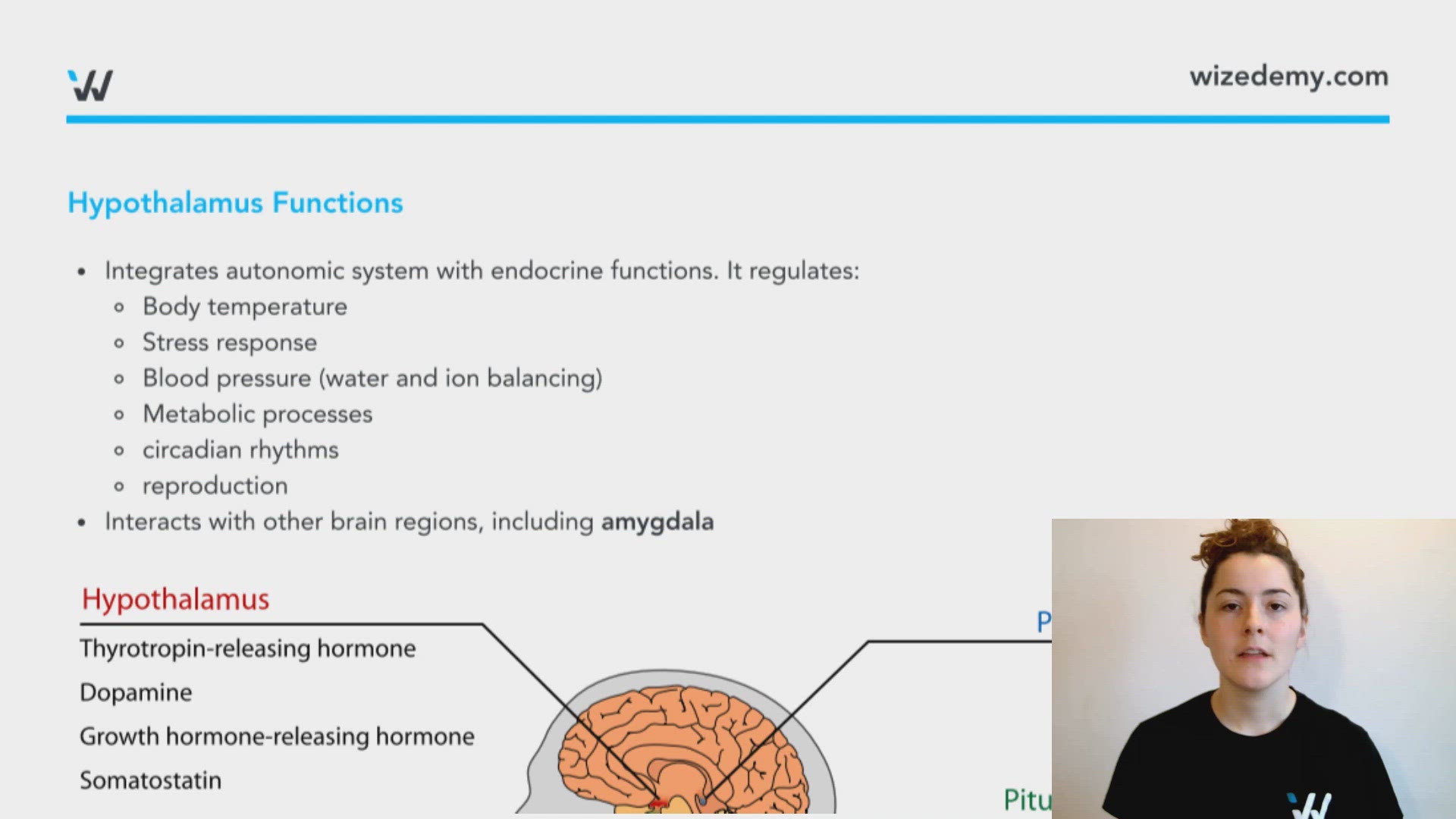
Hypothalamus Functions
- Integrates autonomic system with endocrine functions. It regulates:
- Body temperature
- Stress response
- Blood pressure (water and ion balancing)
- Metabolic processes
- circadian rhythms
- reproduction
- Interacts with other brain regions, including amygdala

commons.wikimedia.org
DO NOT MEMORIZE THIS IMAGE ABOVE, IT IS JUST FOR ILLUSTRATION PURPOSES.
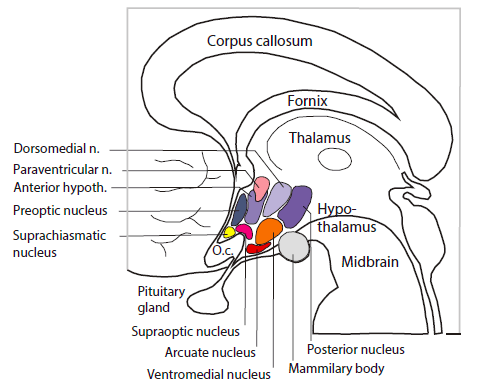
Anatomy of the Hypothalamus
- It is located in the center of the brain just above the pituitary gland
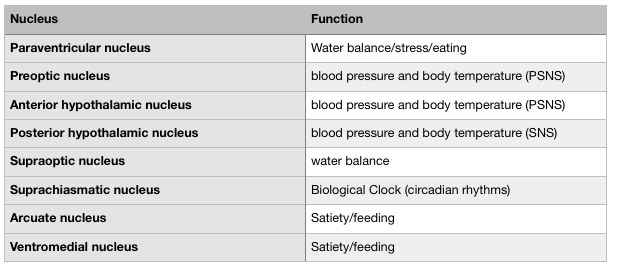
- made up of multiple nuclei
- each nuclei has a different function
commons.wikimedia.org
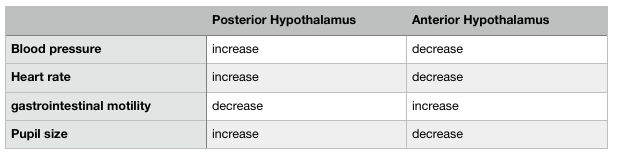
- The anterior and posterior hylopthylamic nuclei respond to the same stimulus, but their responses are different.
- Anterior = parasympathetic response
- Posterior = sympathetic response
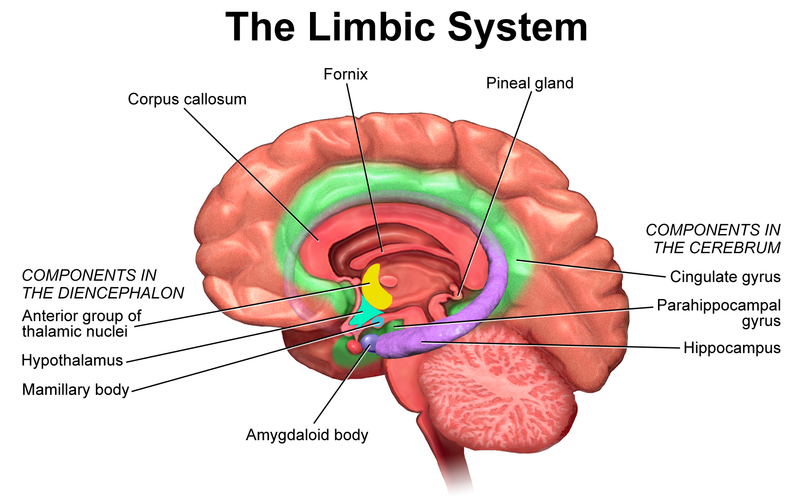
Amygdala and the Limbic System
- part of the limbic system.
- feelings <--> visceral/autonomic responses
- Amygdala lesions = loss of appropriate emotional and physiological responses to situations or others
- For example, loss of fear response and the accompanying increase in heart rate or blood pressure
commons.wikimedia.org
Wize Tip
The hypothalamus and amygdala connect the body's physiological responses to the conscious feelings.
- Sensory input is sent to the hypothalamus and to somatic sensory neurons. The sensory neurons send info to the limbic system and the cortex, while the hypothalamic sensors send info to lower brain structures. These two structures, upper and lower brain regions, then exchange information to get a clearer picture of a situation.
- ANALOGY: the lower brain gets half the puzzle, the upper brain gets the other half, and then they share so they can both complete the puzzle.

commons.wikimedia.org
What is the relationship between the anterior and posterior hypothalamic nuclei?
0:00 / 0:00
Neural Hormonal Reflex
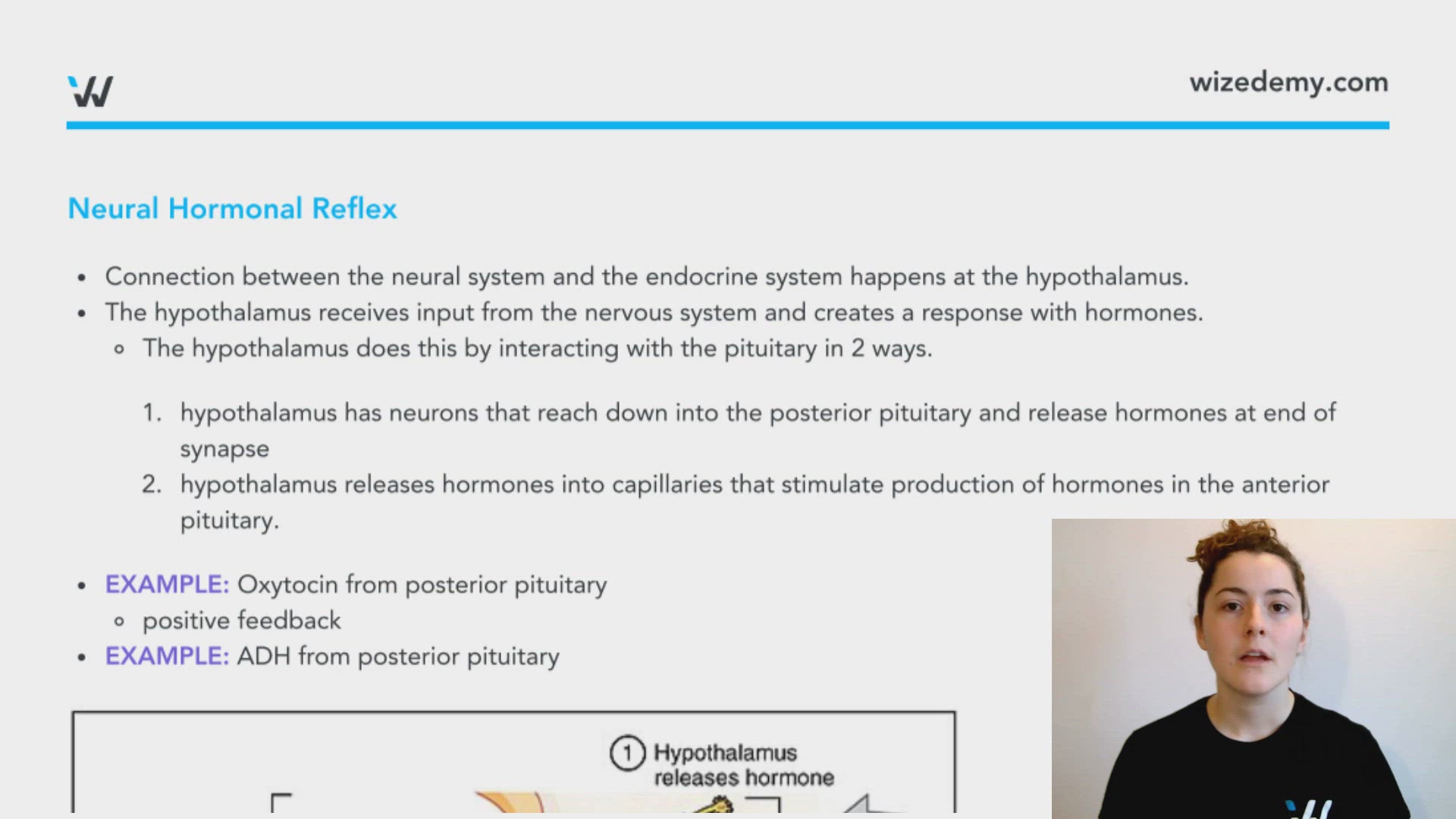
- Connection between the neural system and the endocrine system happens at the hypothalamus.
- The hypothalamus receives input from the nervous system and creates a response with hormones.
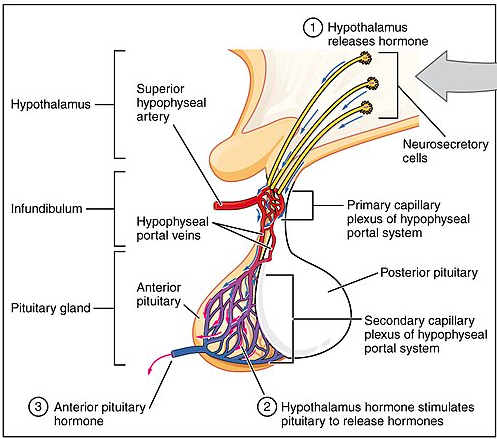
- The hypothalamus does this by interacting with the pituitary in 2 ways.
- hypothalamus has neurons that reach down into the posterior pituitary and release hormones at end of synapse
- hypothalamus releases hormones into capillaries that stimulate production of hormones in the anterior pituitary.
- EXAMPLE: Oxytocin from posterior pituitary
- positive feedback
- EXAMPLE: ADH from posterior pituitary
commons.wikimedia.org
0:00 / 0:00
What Makes Us Feel Hungry?
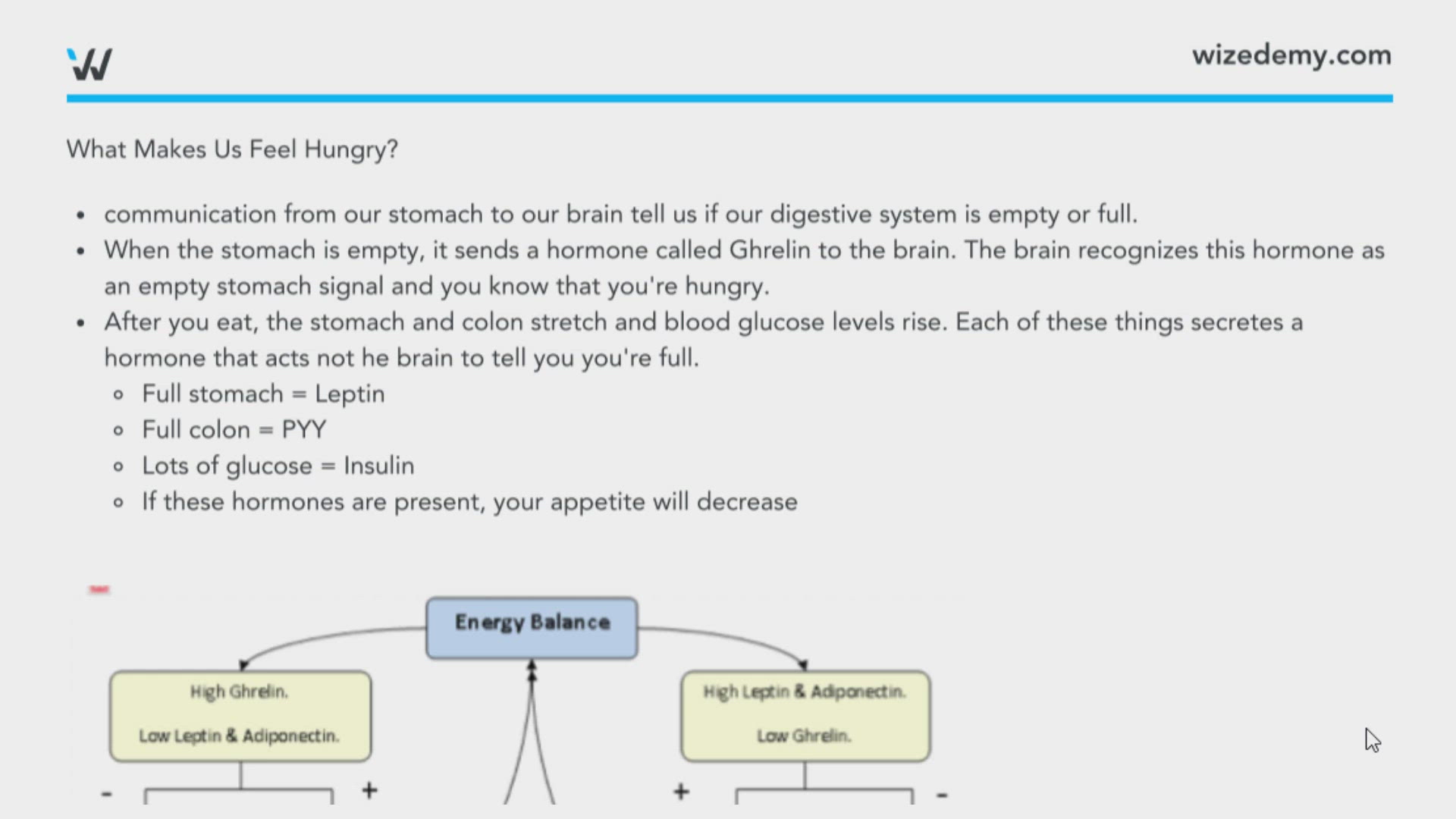
- communication from our stomach to our brain tell us if our digestive system is empty or full.
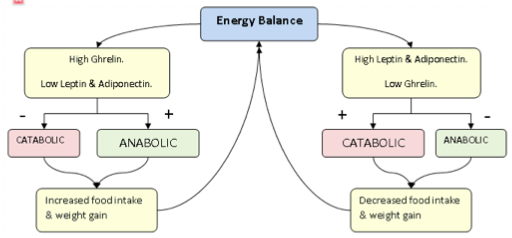
- When the stomach is empty, it sends a hormone called Ghrelin to the brain. The brain recognizes this hormone as an empty stomach signal and you know that you're hungry.
- After you eat, the stomach and colon stretch and blood glucose levels rise. Each of these things secretes a hormone that acts not he brain to tell you you're full.
- Full stomach = Leptin
- Full colon = PYY
- Lots of glucose = Insulin
- If these hormones are present, your appetite will decrease
commons.wikimedia.org
All Animals Are Different
- Some animals eat regularly, some constantly and others can go days without eating.
- EXAMPLE: Humans for example are opportunistic feeders. We eat when the opportunity arises
- EXAMPLE: Horses are continuous feeders. They eat up to 20 hours a day! They need this for proper digestive system function and for heat production in cold weather.
- EXAMPLE: Bears eat large quantities in the summer when their activity level is high, but then consume energy slowly as they sleep through the winter. Their metabolic rate changes which means their internal appetite changes too.
0:00 / 0:00
Obesity
- Obesity rates are rising in North American culture.
- roughly 50% of people are either overweight or obese
- it's not a physical image issue - its a health issue.
- obesity rates in children are rising
How does Obesity happen?
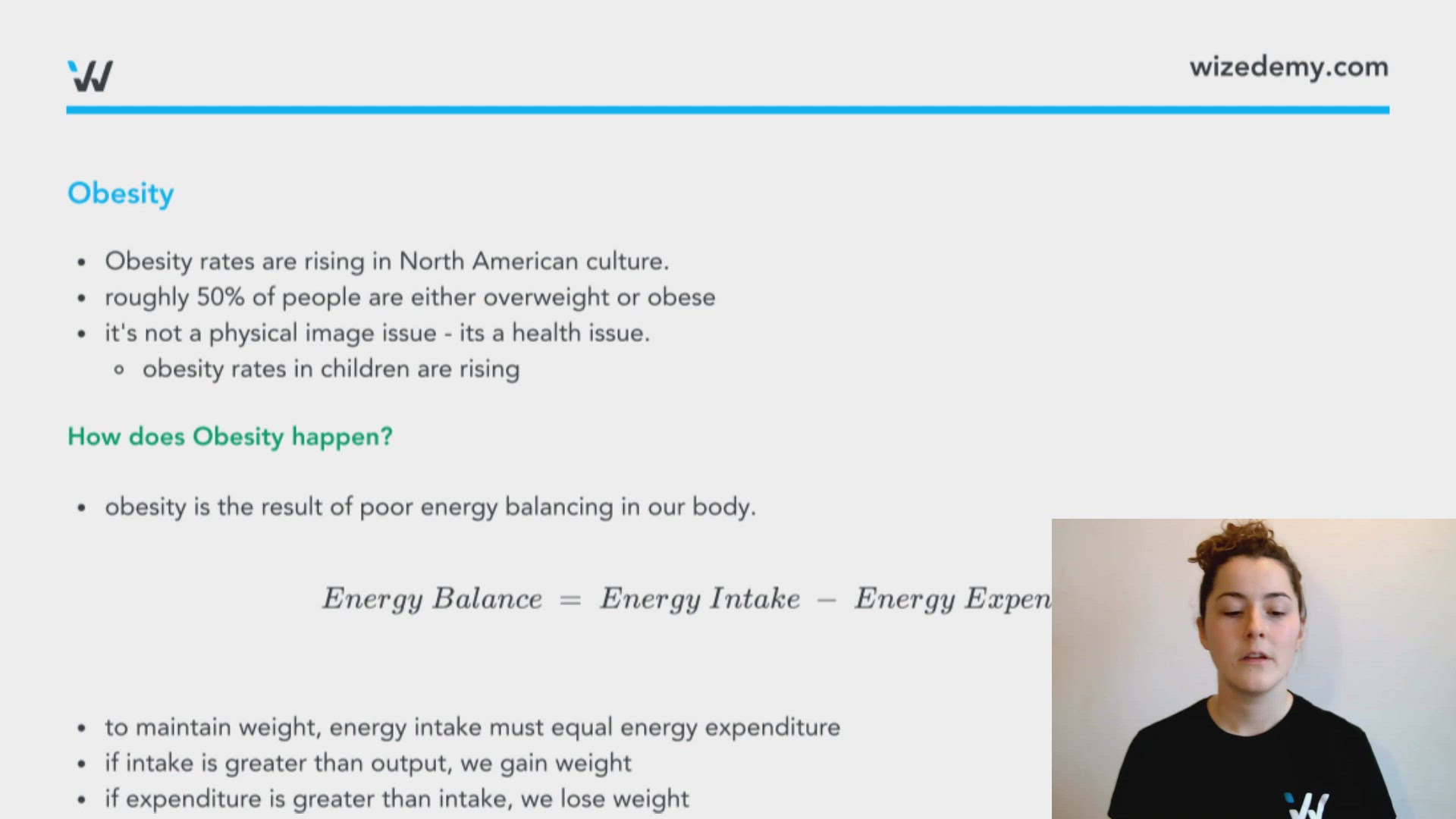
- obesity is the result of poor energy balancing in our body.
- to maintain weight, energy intake must equal energy expenditure
- if intake is greater than output, we gain weight
- if expenditure is greater than intake, we lose weight
- Often times culture has an effect on weight
- North America has a ridiculous amount of fast food places.
- Social habits have us eating out alot
- food is readily available
- food is packed with sugars and fats which smell and taste good - we want more and more!
- Add all of these together with emotional eating and we have a recipe for obesity!
Obesity and Leptin - Whats the link?
- the amount of leptin in the body corresponds to the amount of white adipose tissue you have
- increased weight gain (more adipose tissue) = increased leptin
- leptin signals the Arcuate nucleus (POMC and AgRP cells)
- Arcuate nucleus cells stimulate lateral hypothalamus (LH) cells
- MC4-R cells in the paraventricular nucleus
- NPY-R cells in the dorsomedial hypothalamic nucleus
- MC4-R cells act to increase energy use and inhibit food uptake by releasing Orexin
- MPY-R cells act to increase food uptake and inhibit energy use
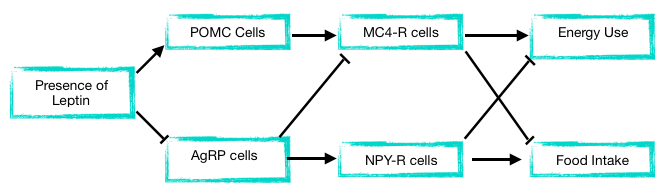
- if leptin is not present, food intake happens
- normally the POMC cells are activated by the presence of Leptin (increased with increased adipose tissue)
Scenario 1 - increased adipose tissue
- MC4-R cells activated
- more energy use and less food uptake (decreased appetite)
- NPY-R cells inhibited
- food intake inhibited and energy expenditure activated
Scenario 2 - decreased adipose tissue
- MC4-R cells inhibited
- decreased energy expenditure
- NPY-R cells activated
- increased food uptake (increased appetite)
Scenario 3 - chronic increase in adipose tissue
- body becomes leptin resistant --> high leptin levels are not recognized by POMC cells
- inhibitory action of nuclei no longer works
- decreased energy expenditure and increased food uptake as a result
Metabolic Syndromes
- sometimes weight gain is caused by more than just excessive leptin.
- high levels of fat are caused by the environment as well as genetics
- obesity can lead to other medical conditions such as...
- diabetes
- hyperlipidemia (lots of fat in the blood)
- hypertension (high blood pressure)
- Atherosclerosis
- low levels of fat are also considered diseases and rightfully so. These diseases show a clear connection between the mind and the physical being.
- Anorexia Nervosa - individuals refusing to eat
- Bulimia - individuals binge food and then remove it by fasting, exercising, vomiting, etc.

Mark Yourself Question
- Grab a piece of paper and try this problem yourself.
- When you're done, check the "I have answered this question" box below.
- View the solution and report whether you got it right or wrong.
What would happen if you lesioned the dorsomedial hypothalamic nucleus?