Wize University Physiology Textbook > Autonomic Nervous System (ANS)
ANS [more detailed]
Popular Courses
MCAT
General Course
DAT
General Course
Intro to Physiology
University Study Guides
PHYSIOL 1021
Western University
PHYSIOL 2130
Western University
Intro to Physiology
University Study Guides
PSL300H1
University of Toronto
PHYSL 210
University of Alberta
PHGY 210
McGill University
PHGY 215
Queen's University
KNES 259
University of Calgary
PHGY 216
Queen's University
BIOL 273
University of Waterloo
BIOL 260
University of British Columbia
PHYSIOL 3120
Western University
KNES 260
University of Calgary
BIOL 116
Case Western Reserve University
PPT 301
University of North Dakota
ANAT 212
McGill University
HTHSCI 2FF3
McMaster University
0:00 / 0:00
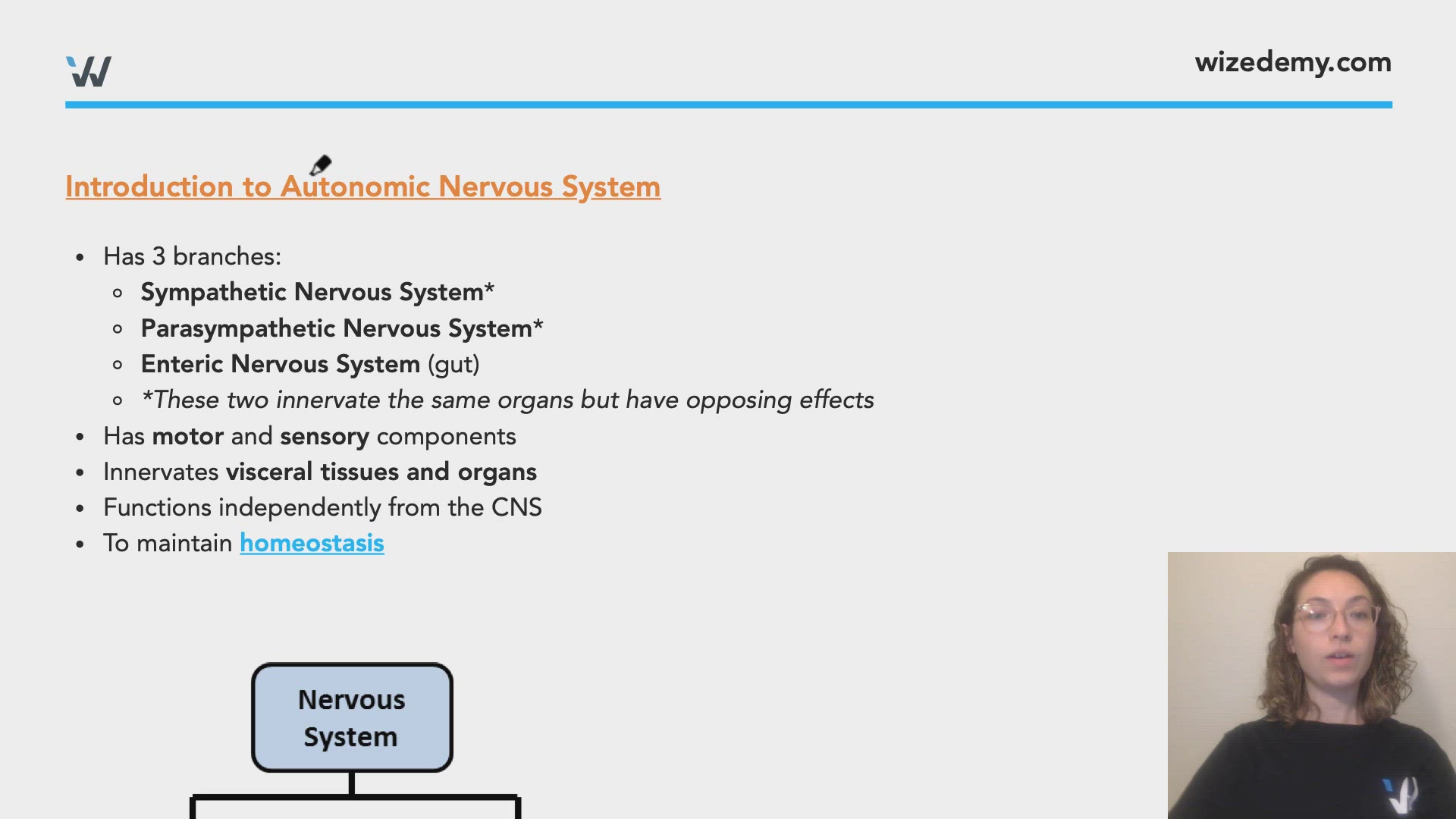
Introduction to Autonomic Nervous System
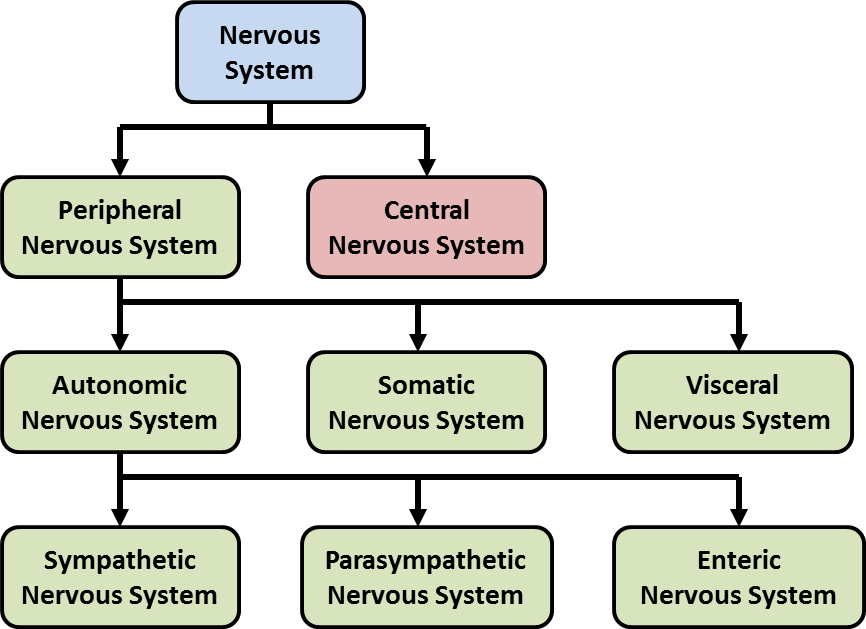
- Has 3 branches:
- Sympathetic Nervous System*
- Parasympathetic Nervous System*
- Enteric Nervous System (gut)
- *These two innervate the same organs but have opposing effects
- Has motor and sensory components
- Innervates visceral tissues and organs
- Functions independently from the CNS
- To maintain homeostasis
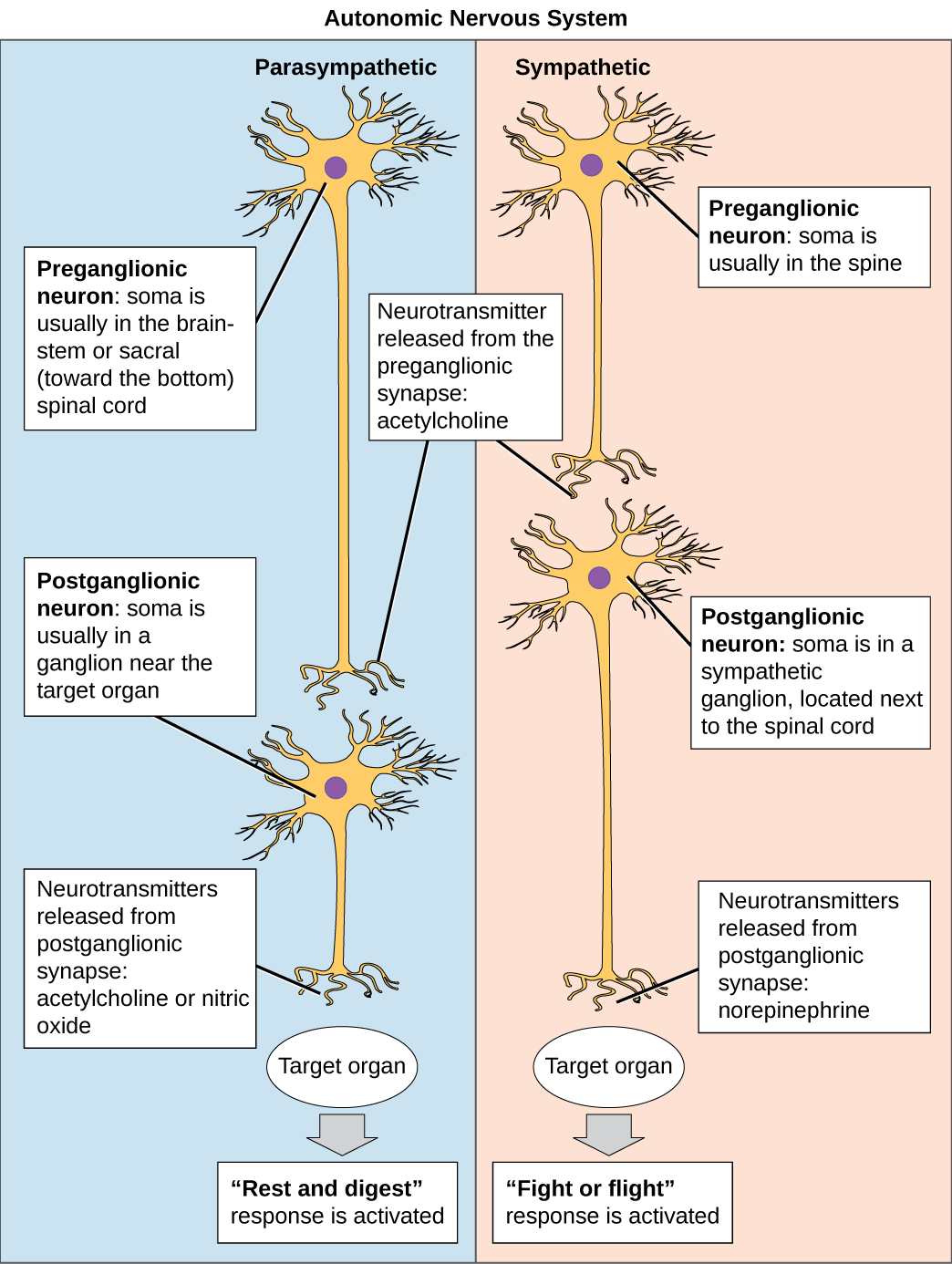
Motor neurons in ANS function differently from somatic motor neurons.
commons.wikipedia.org
0:00 / 0:00
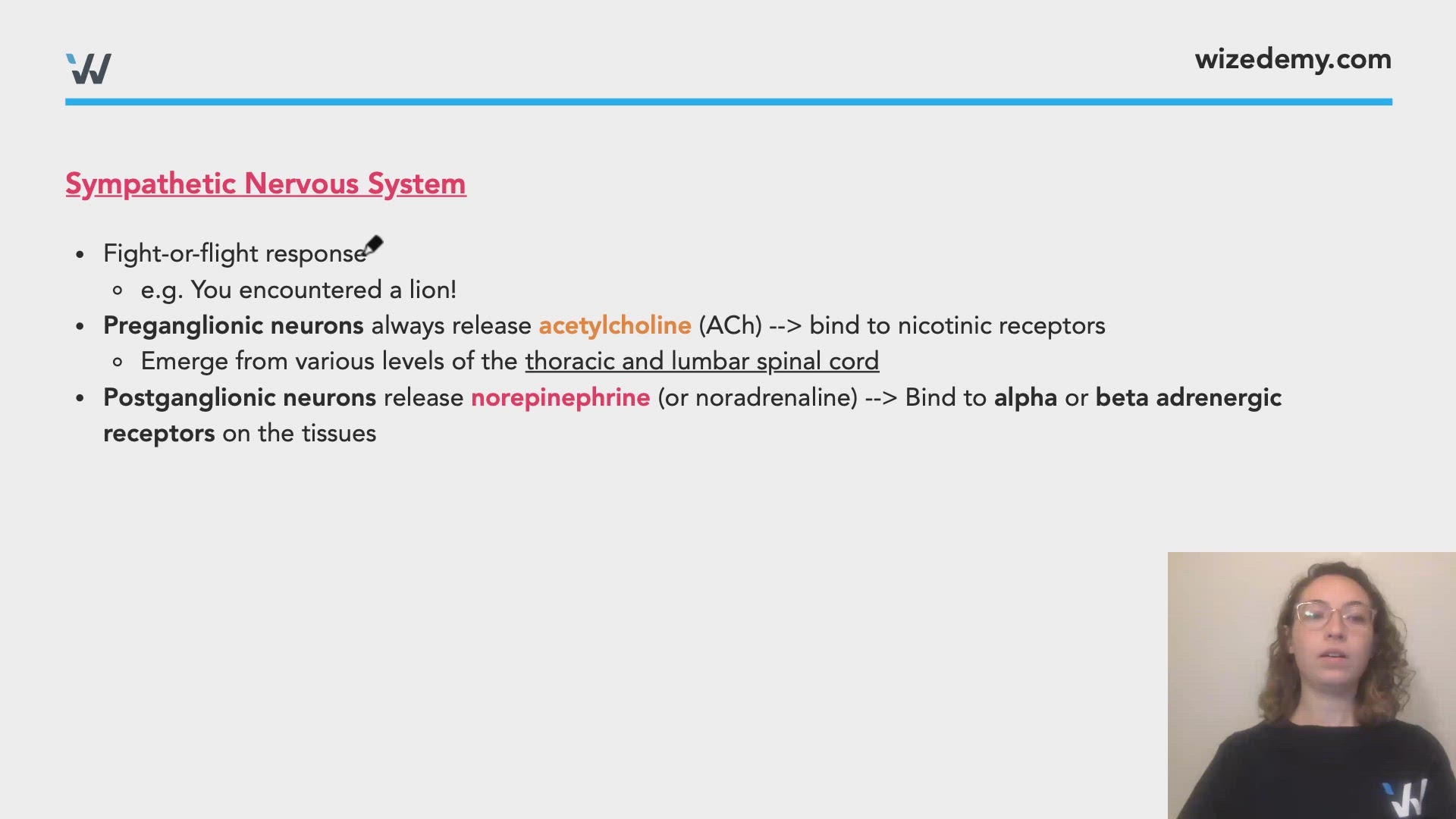
Sympathetic Nervous System
- Fight-or-flight response
- e.g. You encountered a lion!
- Preganglionic neurons always release acetylcholine (ACh) --> bind to nicotinic receptors
- Emerge from various levels of the thoracic and lumbar spinal cord
- Postganglionic neurons release norepinephrine (or noradrenaline) --> Bind to alpha or beta adrenergic receptors on the tissues (metabotropic receptors)

0:00 / 0:00
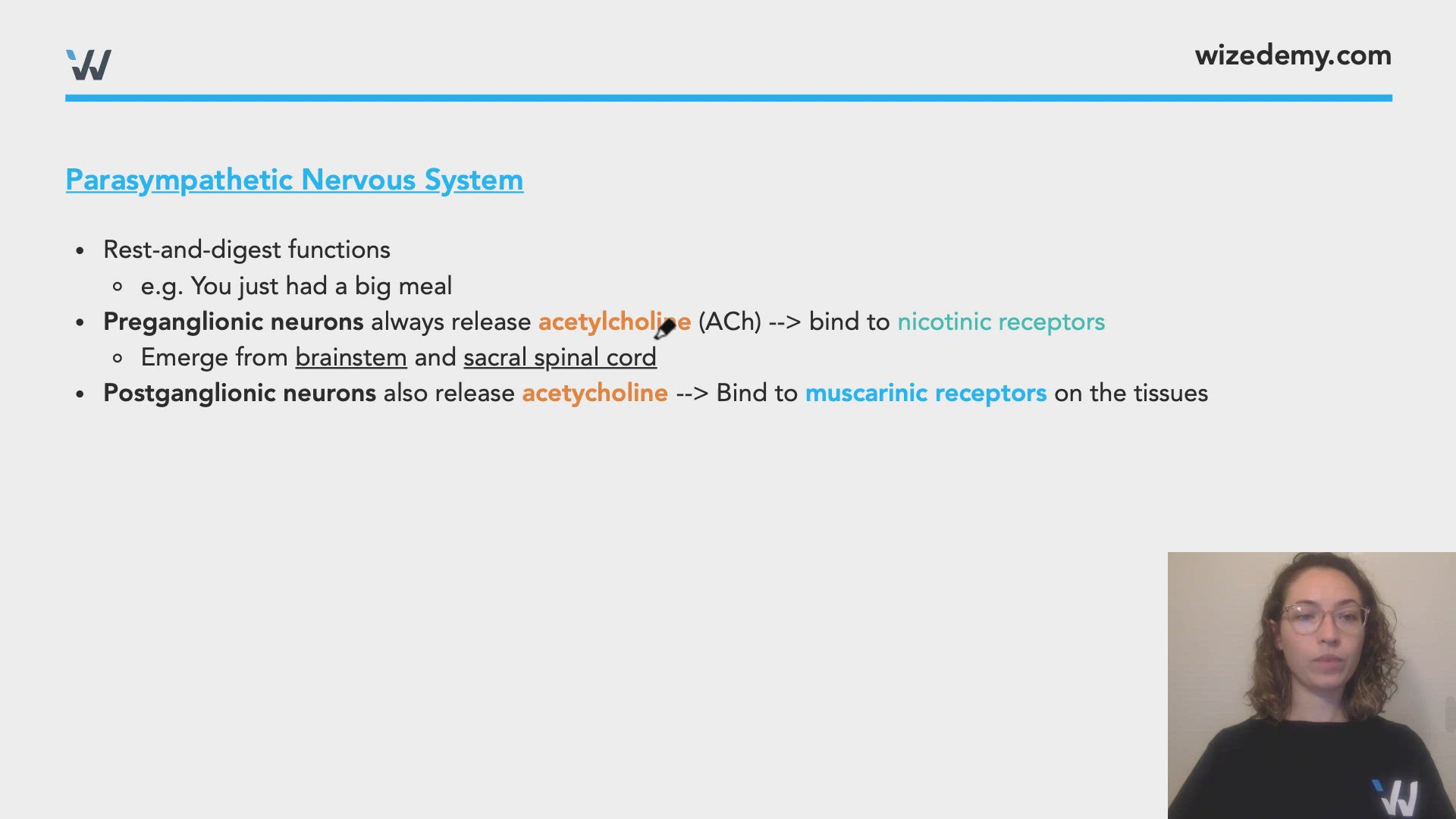
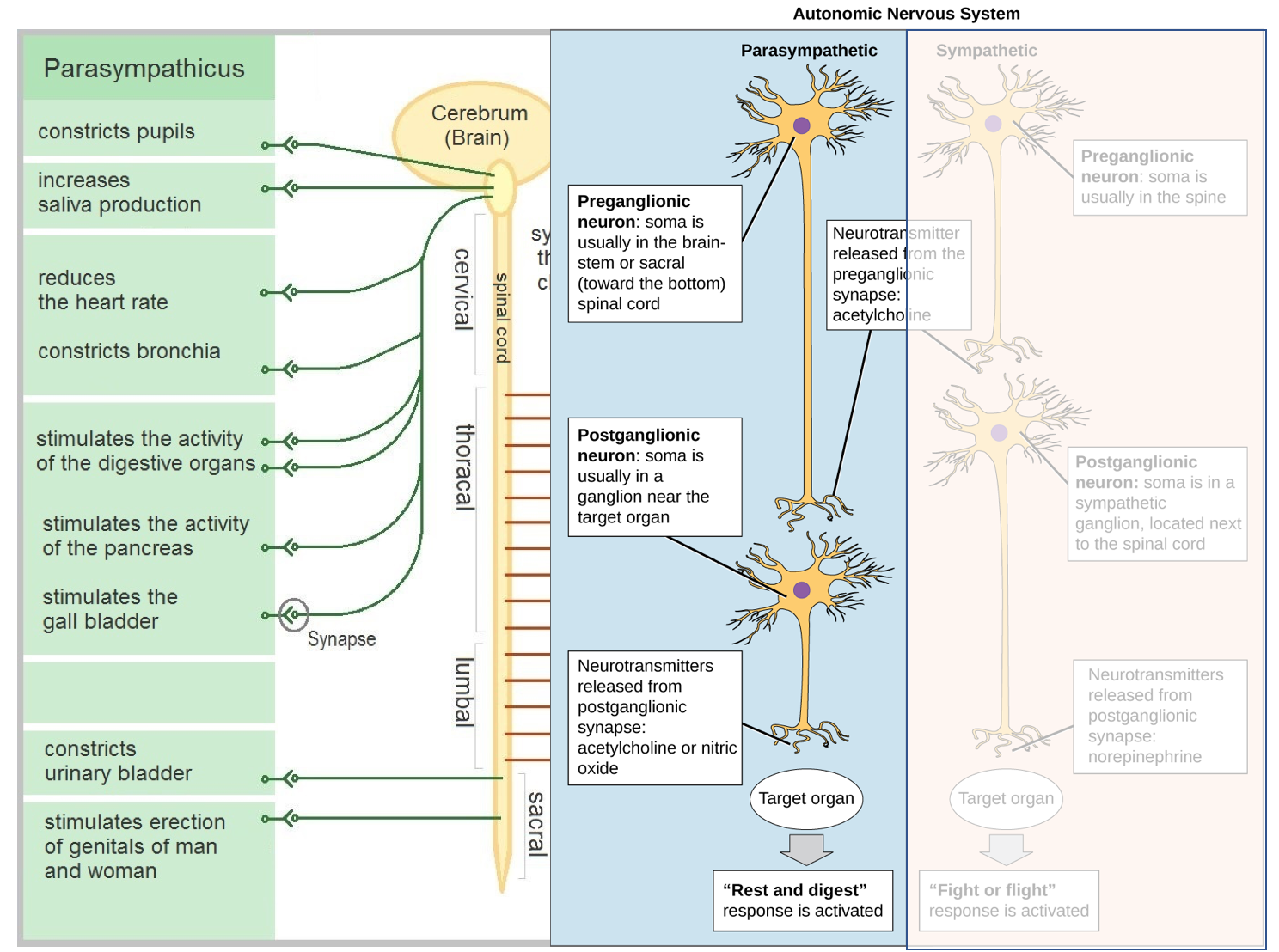
Parasympathetic Nervous System
- Rest-and-digest functions
- e.g. You just had a big meal
- Preganglionic neurons always release acetylcholine (ACh) --> bind to nicotinic receptors
- Emerge from brainstem and sacral spinal cord
- Postganglionic neurons also release acetycholine --> Bind to muscarinic receptors on the tissues (metabotropic receptors)
0:00 / 0:00
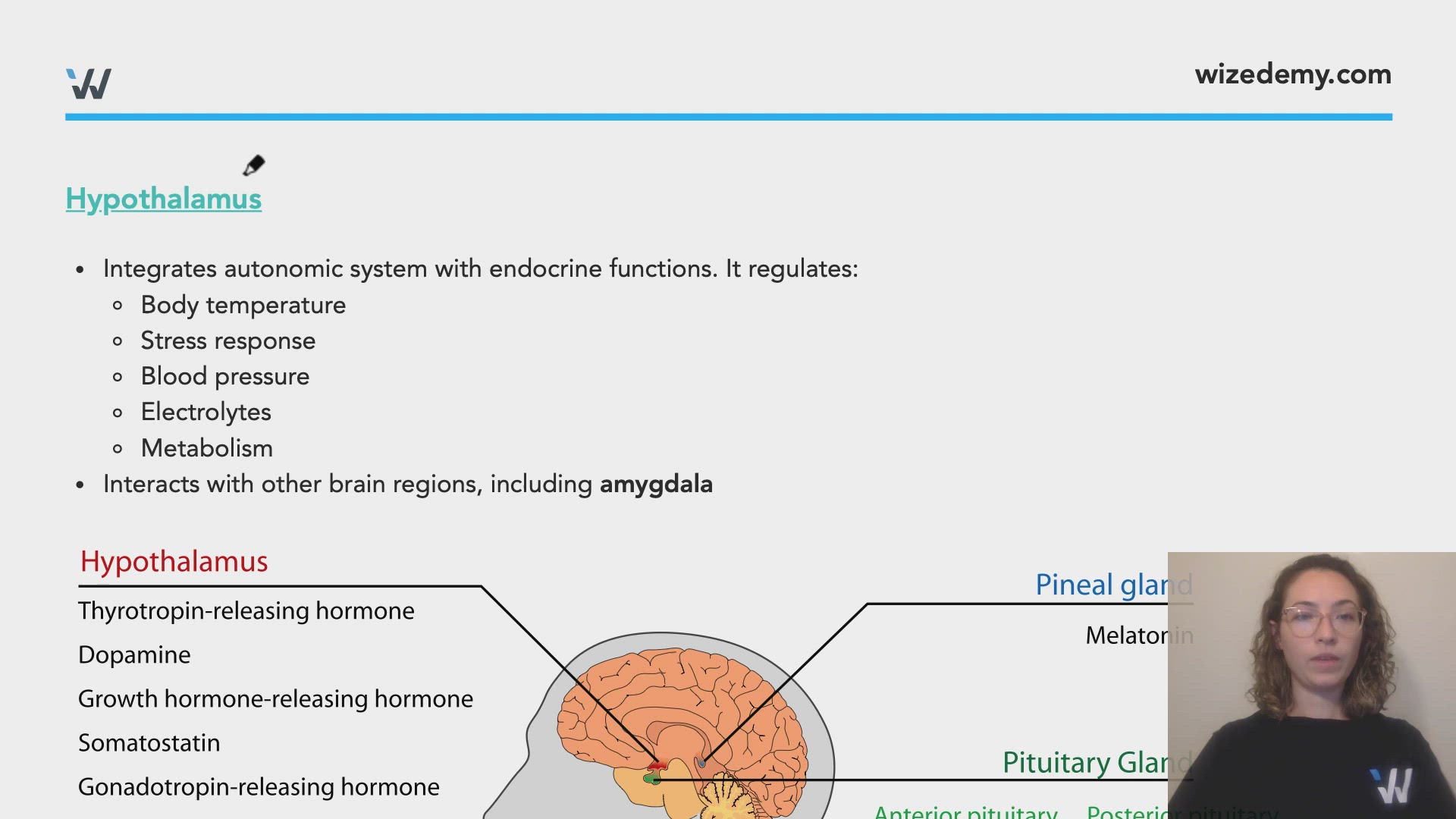
Hypothalamus
- Integrates autonomic system with endocrine functions. It regulates:
- Body temperature
- Stress response
- Blood pressure
- Electrolytes
- Metabolism
- Interacts with other brain regions, including amygdala

DO NOT MEMORIZE THIS IMAGE ABOVE, IT IS JUST FOR ILLUSTRATION PURPOSES.
commons.wikipedia.org
Amygdala
- Feelings <--> visceral/autonomic responses
- Amygdala lesions = loss of appropriate emotional and physiological responses to situations or others
- For example, loss of fear response and the accompanying increase in heart rate or blood pressure
Wize Tip
The hypothalamus and amygdala connect the body's physiological responses to the conscious feelings.
0:00 / 0:00
What is the structure responsible for body temperature regulation? How does body temperature regulation occur?
The hypothalamus is responsible for this. It compares sensory information with biological set points (the normal set point for temperature is 37oC.)
If there's a deviation from a set point, it coordinates autonomic, endocrine and behavioral responses to restore the normal temperature.
Example: you go running and start feeling warmer. You hypothalamus coordinates sweating through the ANS to cool off your body temperature.
Which of the following are true?
About the sympathetic nervous system, which is incorrect?