Popular Courses
MCAT
General Course
DAT
General Course
Intro to Physiology
University Study Guides
PHYSIOL 1021
Western University
PHYSIOL 2130
Western University
Intro to Physiology
University Study Guides
PSL300H1
University of Toronto
PHYSL 210
University of Alberta
PHGY 210
McGill University
PHGY 215
Queen's University
KNES 259
University of Calgary
PHGY 216
Queen's University
BIOL 273
University of Waterloo
BIOL 260
University of British Columbia
PHYSIOL 3120
Western University
KNES 260
University of Calgary
BIOL 116
Case Western Reserve University
PPT 301
University of North Dakota
ANAT 212
McGill University
HTHSCI 2FF3
McMaster University
0:00 / 0:00
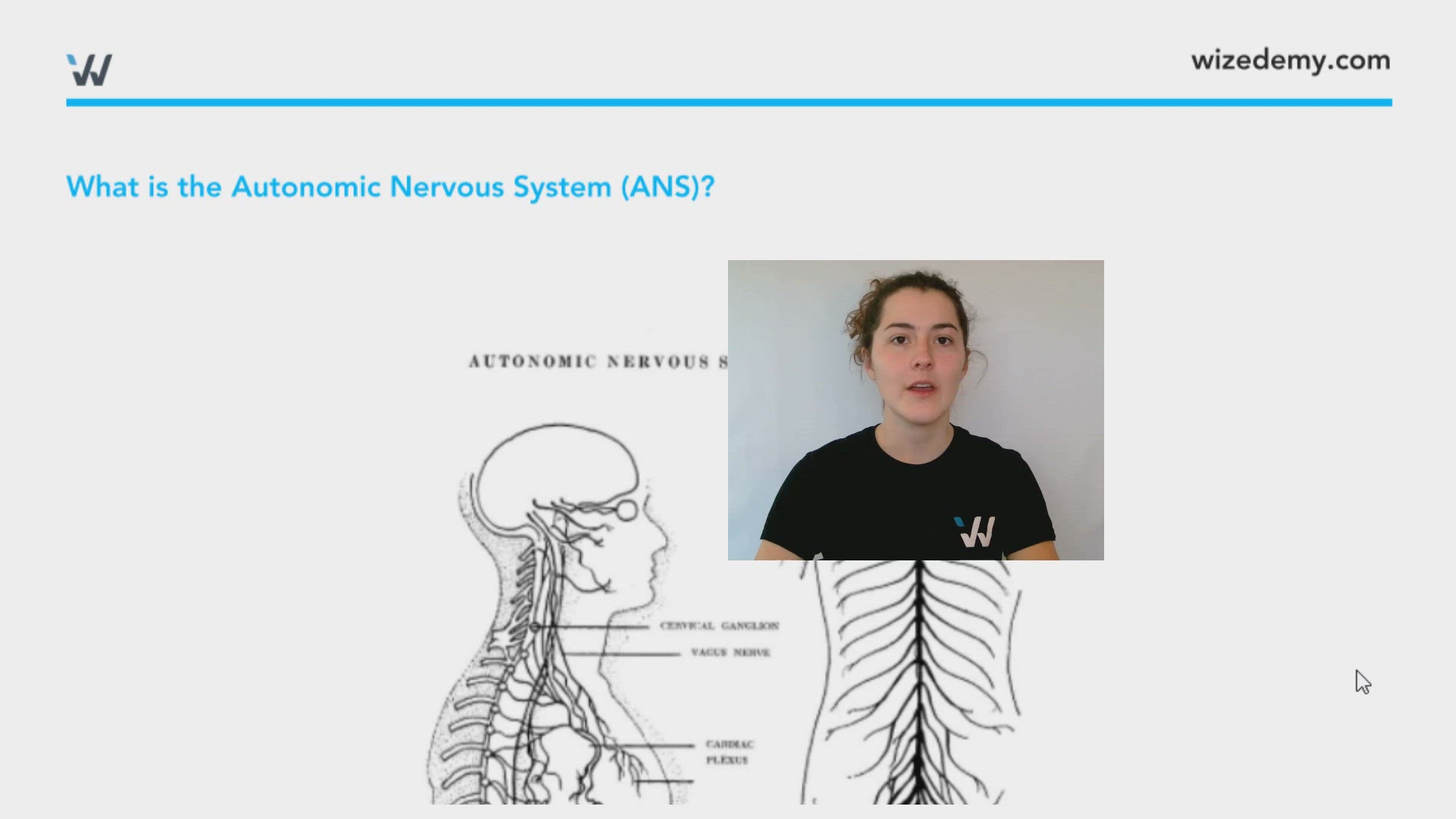
What is the Autonomic Nervous System (ANS)?
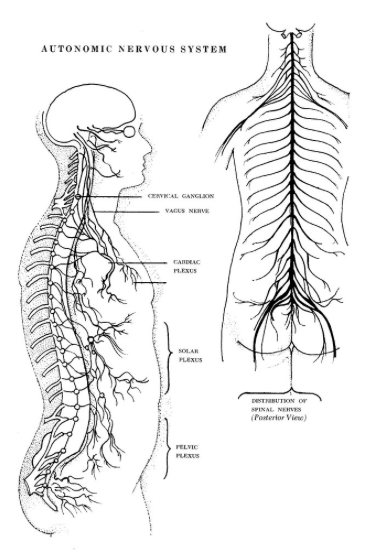
image from flikr.com with licensing found at https://creativecommons.org/licenses/by-sa/2.0/legalcode
The ANS is part of the peripheral nervous system that deals with involuntary control. They often have a polysynaptic pathway, meaning there is a pre and post ganglionic neuron. This is different from the voluntary muscle control because those pathways have a single neuron linked to an effector (ex. muscle). The ANS consists of two main divisions that deal with two different states of the body.
- sympathetic nervous system (SNS)
- parasympathetic nervous system (PSNS)
Watch Out!
These systems cannot be active at the same time on the same organ! They are like a light switch. If the light is not, it can't be "a little bit off". Similarily, if SNS is active, PSNS will not be active ON THE SAME ORGAN. There may, however, be activity of sympathetic on one organ while another organ is stimulated by parasympathetic nerves.
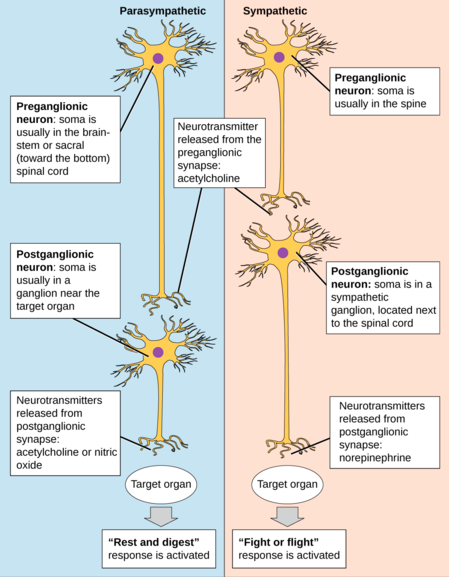
Sympathetic
- this is known as the fight or flight response system. It is active if your heart rate is over 100 bpm.
- it has a short pre-ganglionic neuron and a longer post-ganglionic neuron
- this pre-ganglionic neuron uses Ach neurotransmitters to signal the excitation of the post-ganglionic neuron
- the post-ganglionic neurons releases norepinephrine (NE) onto target tissues
Wize Tip
All pre-ganglionic neuron cell bodies are found in the spinal cord. SNS post-ganglionic cell bodies are found right beside the spinal cord in the peripheral system
- Role of Adrenal Medulla
- this gland is made from modified sympathetic neurons, which is why its easy to understand its function is related to SNS function.
- pre-ganglionic cells act on special chromaffin cells in the adrenal medulla, causing the release of NE. This will cause characteristic signs and symptoms associated with SNS.
- signs of SNS activity include:
- Dialated pupils (think of a cat hunting)
- inhibition of salvation and digestion (if you're running, you're body doesn't have time to digest)
- relaxed airways (more air! please!)
- relaxed bladder (scared people pee themselves)
- increased heart rate (duh)
Parasympathetic
- this is know as the rest and digest response system. It is active when the heart rate is below 100 bpm.
- it has a long pre-ganglionic neurons and a shorter post-ganglionic neurons.
- BOTH neurons release Ach neurotransmitters.
Wize Tip
All pre-ganglionic neuron cell bodies are found in the spinal cord. PSNS post-ganglionic cell bodies are found close to the effected organ in the peripheral system.
- signs of PSNS activity include:
- constricted pupils
- stimulated salvation and digestion
- constricted airways (don't need a lot of air when you're resting)
- inhibited glucose release from liver (we don't need extra energy if we aren't doing anything)
- decreased heart rate (duh)
FUN FACT: Have you ever heard of craniosacral therapy? This type of therapy acts to promote parasympathetic activity over sympathetic activity by stimulating the areas of the spinal cord that contain the nerves of that system (the cranium/brain stem and the sacrum contain parasympathetic neurons). Sympathetic neurons leave the thoracic area of the spine.
0:00 / 0:00
When you were young, you were told that you couldn't swim for 30 minutes after a meal or else you could get a stomach ache. Is this scientifically logical? Explain why using your knowledge of the sympathetic and parasympathetic nervous systems.
Yes this is logical. A child playing in the pool is likely to have an elevated heart rate over 100bpm. If this is the case, their sympathetic nervous system will be activated which draws blood away from the stomach and inhibits proper digestion. By keeping the child in a resting state (heart rate below 100 bpm), they remain in the parasympathetic system which allows proper digestion of food.
The parasympathetic nervous system...