Wize University Physiology Textbook > Gastrointestinal Physiology
Endocrine Glands of the GI Tract
Popular Courses
MCAT
General Course
DAT
General Course
Intro to Physiology
University Study Guides
PHYSIOL 1021
Western University
PHYSIOL 2130
Western University
Intro to Physiology
University Study Guides
PSL300H1
University of Toronto
PHYSL 210
University of Alberta
PHGY 210
McGill University
PHGY 215
Queen's University
KNES 259
University of Calgary
PHGY 216
Queen's University
BIOL 273
University of Waterloo
BIOL 260
University of British Columbia
PHYSIOL 3120
Western University
KNES 260
University of Calgary
BIOL 116
Case Western Reserve University
PPT 301
University of North Dakota
ANAT 212
McGill University
HTHSCI 2FF3
McMaster University
0:00 / 0:00
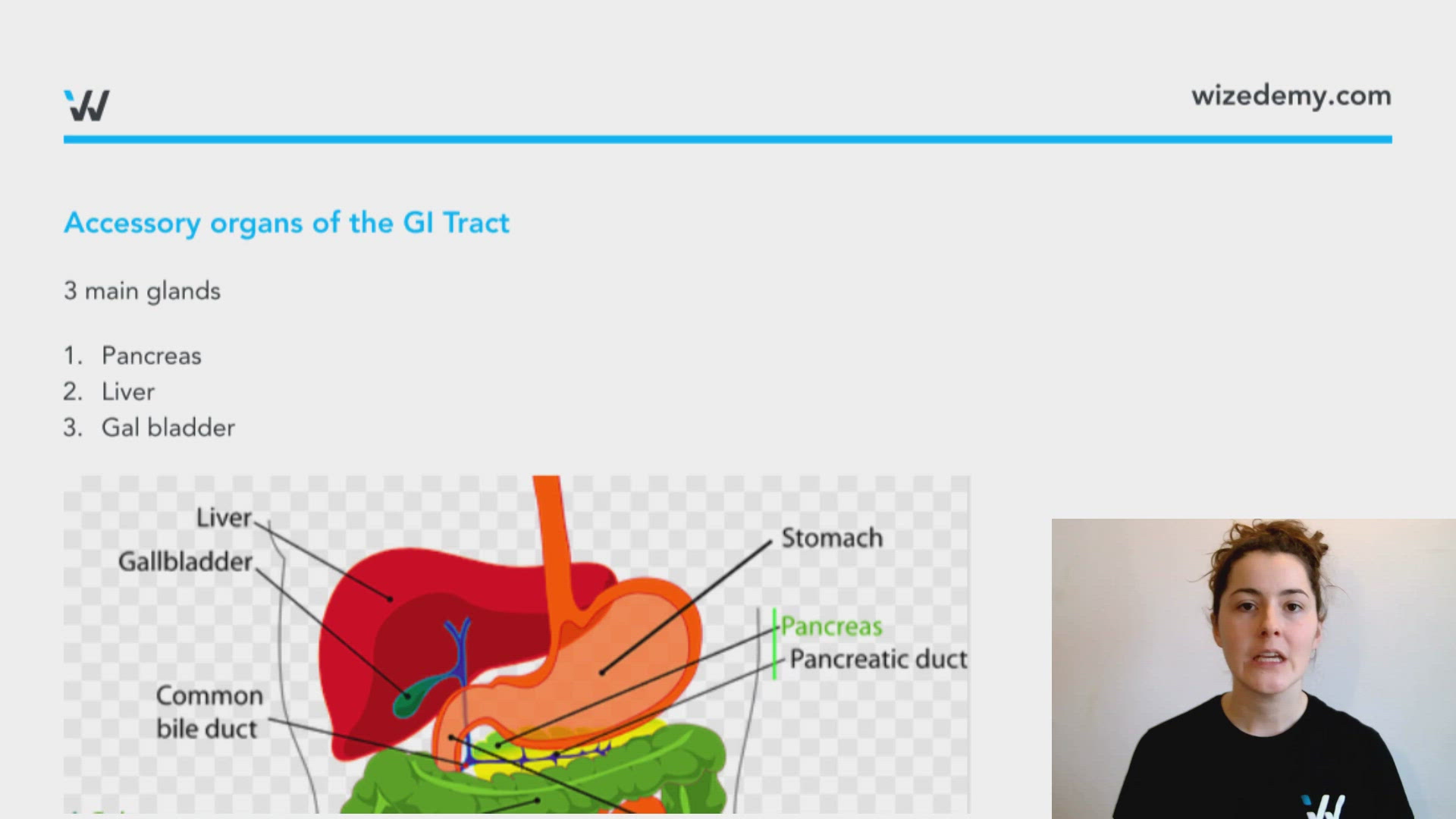
Accessory organs of the GI Tract
3 main glands
- Pancreas
- Liver
- Gal bladder

https://pixabay.com/vectors/digestive-system-human-digestion-41529/
Pancreas
- long shaped gland that feeds hormones into the duodenum of the small intestine
- has a common duct with the gal bladder (bile duct)
- Exocrine secretions of the pancreas include
- Amylase
- Lipase
- Trypsinogen --> trypsin (activated by enteropeptidase from the brush border)
- chymotrypsinogen --> chymotrypsin
- procarboxypeptidase --> carboxypeptidase
- phospholipase
- colipase
- The endocrine hormones insulin and glucagon are secreted from the islets of Langerhans and are spread throughout the body.
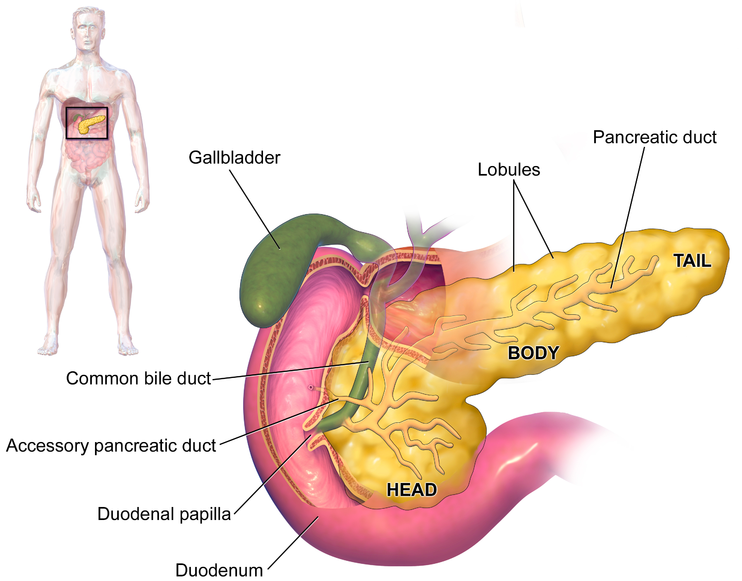
https://commons.wikimedia.org/wiki/File:Blausen_0699_PancreasAnatomy2.png
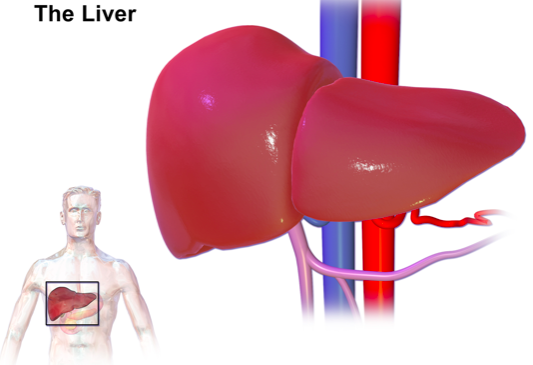
Liver
- made of liver cells called hepatocytes
- highly vascularized, sending and receiving many substances in the body.
- It receives a normal blood supply to keep it healthy (artery and vein for O2 and CO2 exchange
- it also has an other vein attached which comes from other parts of the body and stops by on its way to the heart. It can deliver things to liver from the body. This special vein is called the heptic portal vein.
- jack of all trades... has over 500 functions in the body
- for this class, we just need to know that it:
- secretes bile which is then stored in the gallbladder.
- excretes bilirubin (pigment) into the blood as waste
- stores and produces nutrients
- processes drugs and hormones
- gluconeogenesis (production of glucose from smaller molecules)
commons.wikimedia.org
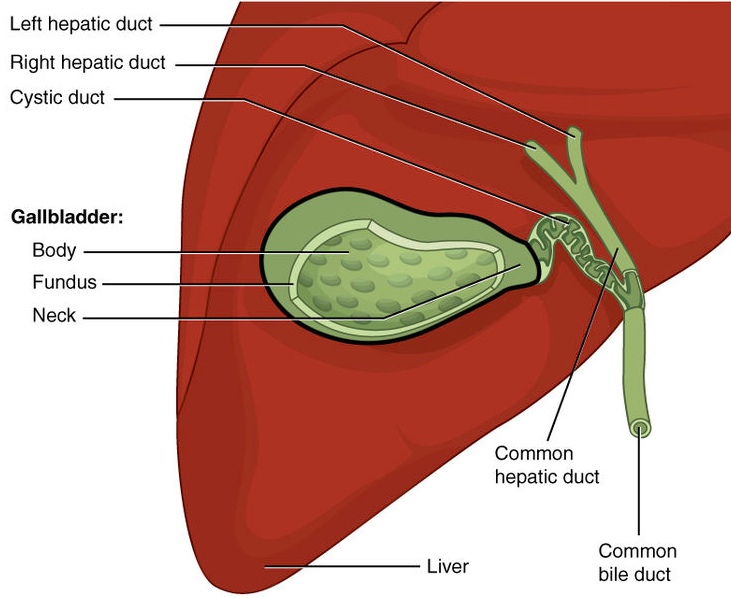
Gallbladder
- Stores bile
- bile is made of...
- bile salts
- cholesterol
- bilirubin
- water and ions
commons.wikimedia.org
0:00 / 0:00
List the main function of each digestive accessory structure in regards to the digestive tract
Liver: Bile production
Gallblader: Bile storage
Pancreas: produce the majority of enzymes needed to breath down chyme in the small intestine including....
- Amylase
- Lipase
- Trypsinogen --> trypsin (activated by enteropeptidase from the brush border)
- chymotrypsinogen --> chymotrypsin
- procarboxypeptidase --> carboxypeptidase
- phospholipase
- colipase
0:00 / 0:00
Regulation of Digestion
Three main phases
- Cephalic Phase
- Gastric Phase
- Intestinal Phase
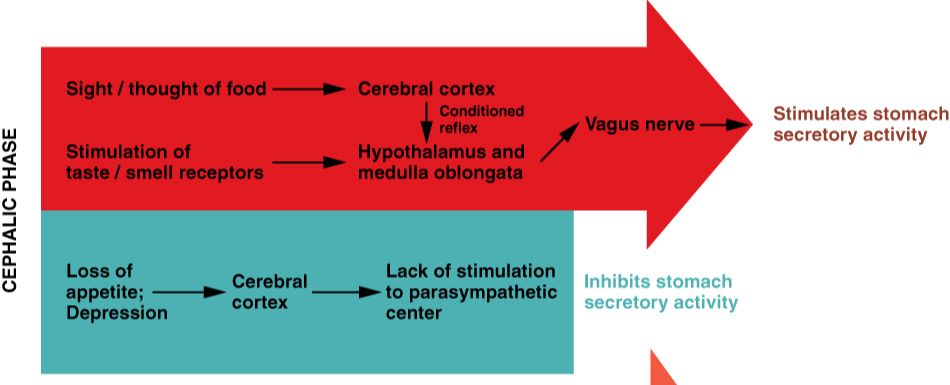
Cephalic Phase
- gastric secretions begin
- starts before food even enters the body. It is triggered by visual, auditory and olfactory sensations
- these sensory signals are integrated in the amygdala and hypothalamus. They then send signals to the intestinal tract to prepare for a meal.
commons.wikimedia.org
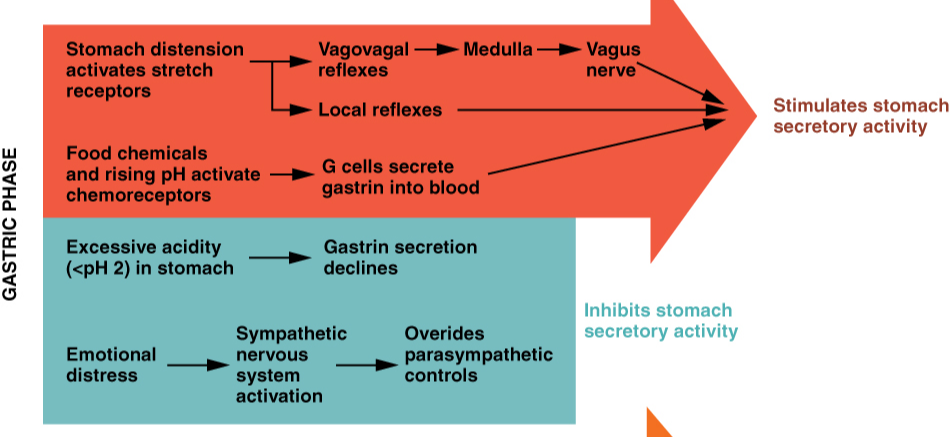
Gastric Phase
- ingested food begins to activate gastric secretions
- lack of food (when we are not eating) leads to inhibition of sensory activity
commons.wikimedia.org
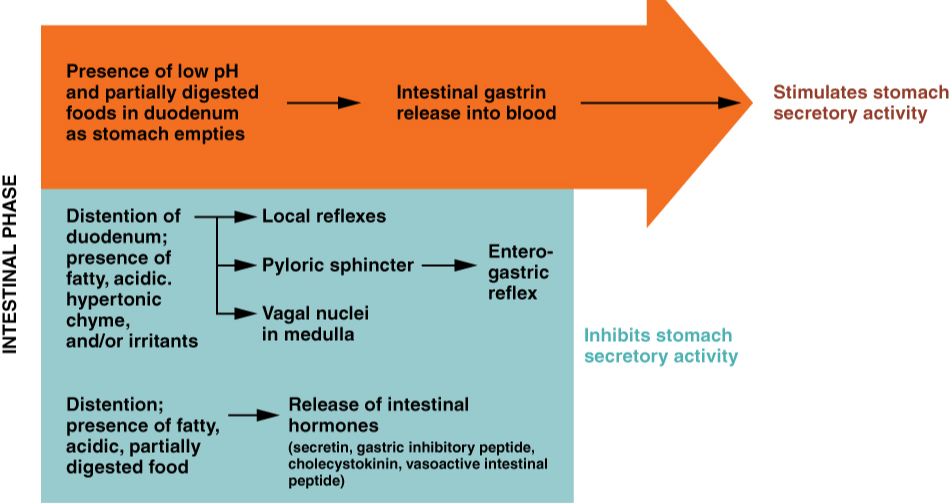
Intestinal Phase
- occurs in duodenum as chyme arrives
- stimulates hormonal responses (gallbadder and pancreas secretions begin)
- Stimulates neural pathways (vagus nerve stimulation)
0:00 / 0:00
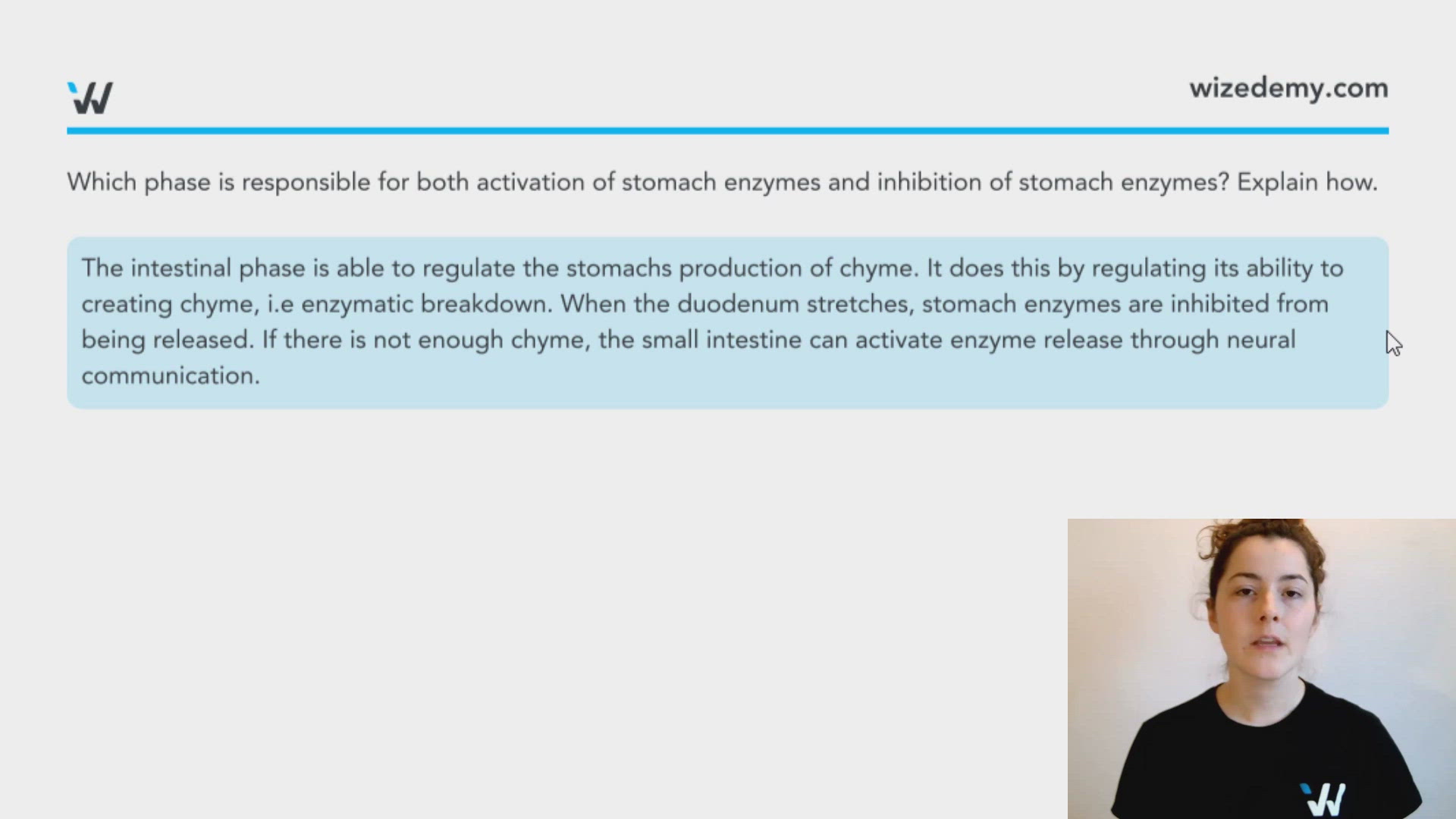
Which phase is responsible for both activation of stomach enzymes and inhibition of stomach enzymes? Explain how.
The intestinal phase is able to regulate the stomachs production of chyme. It does this by regulating its ability to creating chyme, i.e enzymatic breakdown. When the duodenum stretches, stomach enzymes are inhibited from being released. If there is not enough chyme, the small intestine can activate enzyme release through neural communication.