Popular Courses
MCAT
General Course
DAT
General Course
Intro to Physiology
University Study Guides
PHYSIOL 1021
Western University
PHYSIOL 2130
Western University
Intro to Physiology
University Study Guides
PSL300H1
University of Toronto
PHYSL 210
University of Alberta
PHGY 210
McGill University
PHGY 215
Queen's University
KNES 259
University of Calgary
PHGY 216
Queen's University
BIOL 273
University of Waterloo
BIOL 260
University of British Columbia
PHYSIOL 3120
Western University
KNES 260
University of Calgary
BIOL 116
Case Western Reserve University
PPT 301
University of North Dakota
ANAT 212
McGill University
HTHSCI 2FF3
McMaster University
0:00 / 0:00
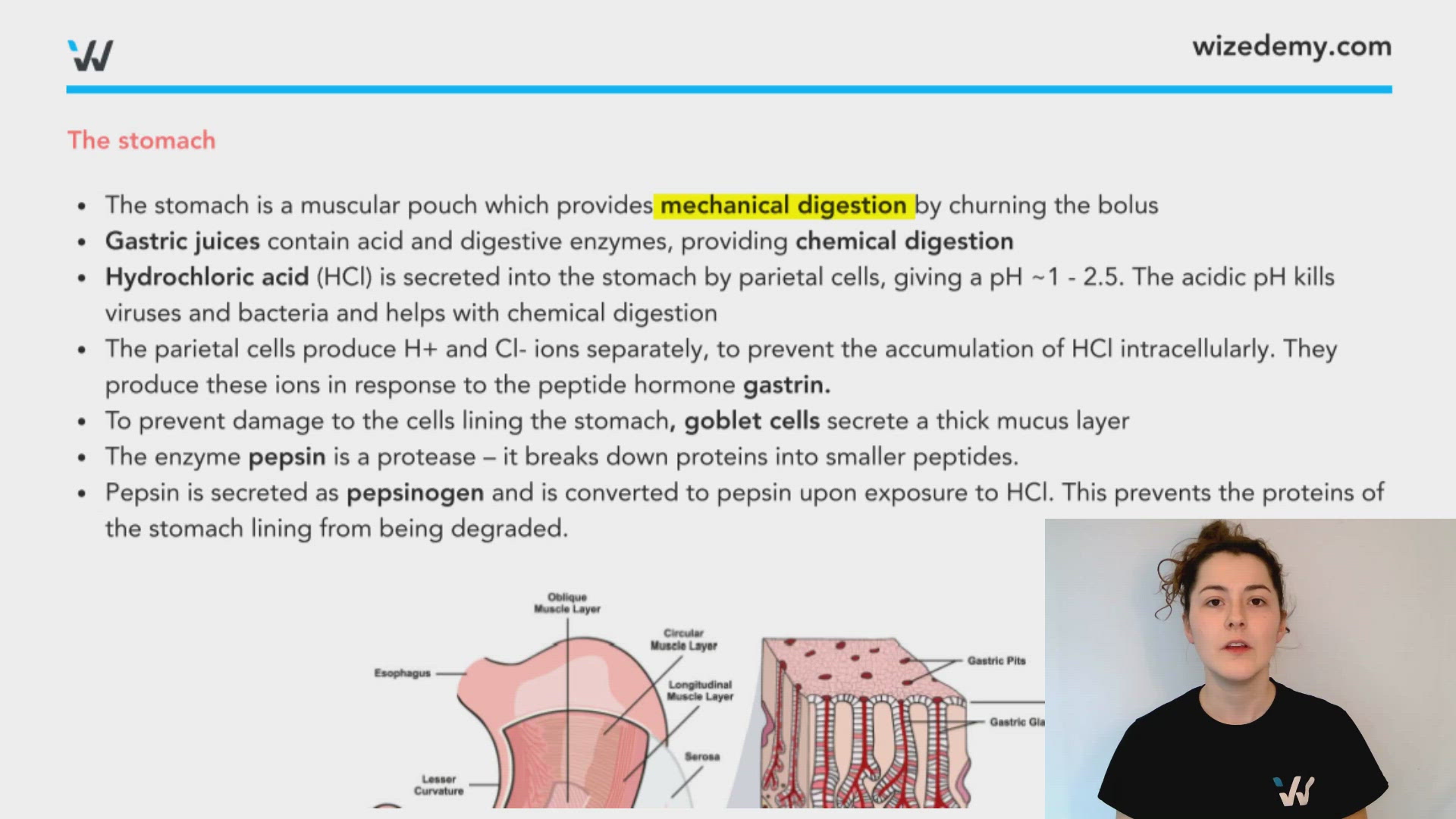
The stomach
- The stomach is a muscular pouch which provides mechanical digestion by churning the bolus
- Propulsion (gentle mixing), grinding (strong mixing) and retropulsion (released into duodenum)
- Gastric juices contain acid and digestive enzymes, providing chemical digestion
- Hydrochloric acid (HCl) is secreted into the stomach by parietal cells, giving a pH ~1 - 2.5. The acidic pH kills viruses and bacteria and helps with chemical digestion
- The parietal cells produce H+ and Cl- ions separately, to prevent the accumulation of HCl intracellularly. They produce these ions in response to the peptide hormone gastrin.
- Gastrin is produced by G cells in the stomach lining
- To prevent damage to the cells lining the stomach, goblet cells aka mucus neck cells secrete a thick mucus layer
- The enzyme pepsin is a protease – it breaks down proteins into smaller peptides.
- Pepsin is secreted as pepsinogen and is converted to pepsin upon exposure to HCl. This prevents the proteins of the stomach lining from being degraded. Pepsinogen is secreted by chief cells
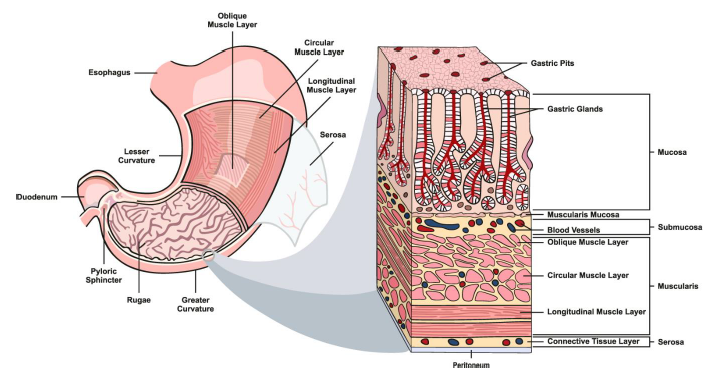
Stomach Ulcers
- Caused by the bacterium Helicobacter pylori
- The bacterium burrows into the mucus layer to protect itself from the acidic pH, and then adheres to the epithelial cells beneath the mucus.
- To further protect itself from the acidic pH, the bacterium produced urease, which helps to neutralize the stomach
- Urease leads to the production of ammonia, which damages the epithelial cells.
- An immune response is triggered, leading to inflammation of the stomach lining, eventually leading to ulcer formation
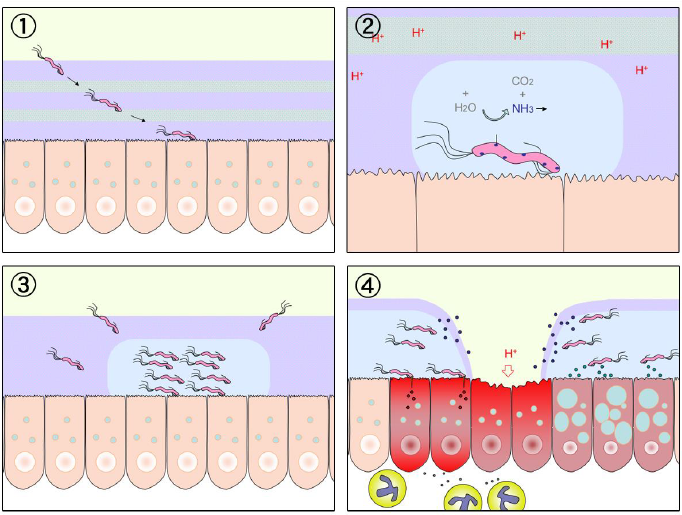
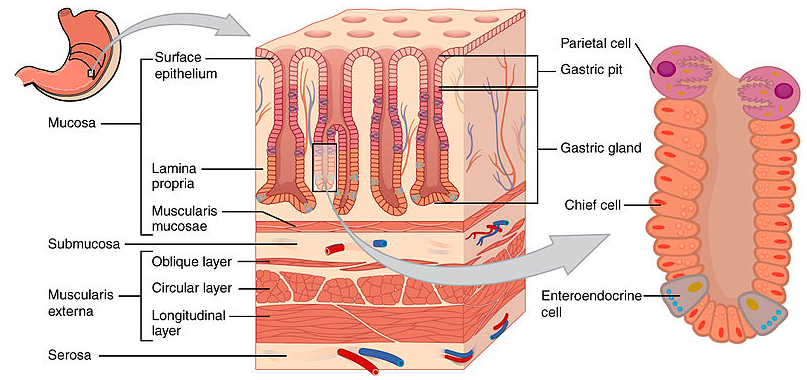
Layers of the Stomach and Small Intestine
We have 4 layers of the stomach and small intestine that all have different functions. All the layers are the same in both organs except for the mucosa layer.
- Mucosa - the innermost layer
- In the stomach the folds are called rugae. These cells are usually endo and exocrine cells.
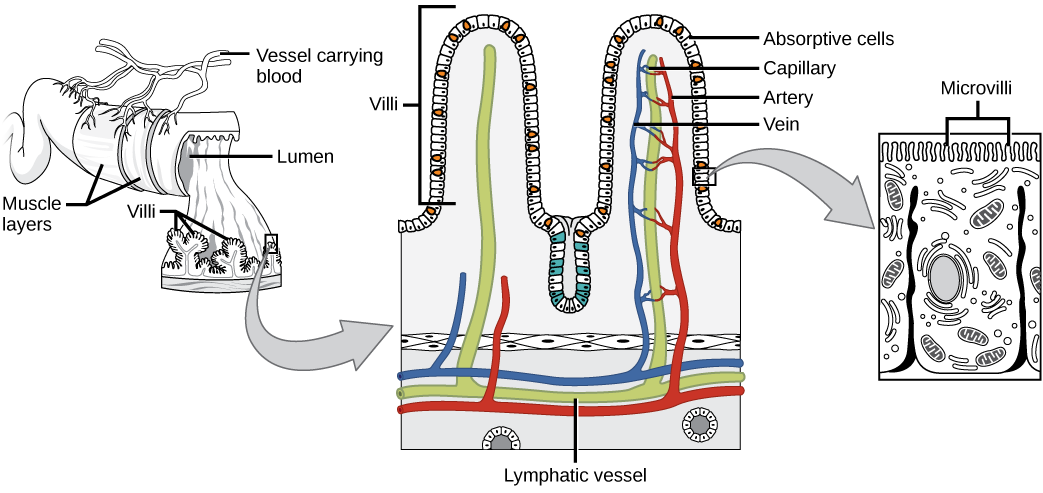
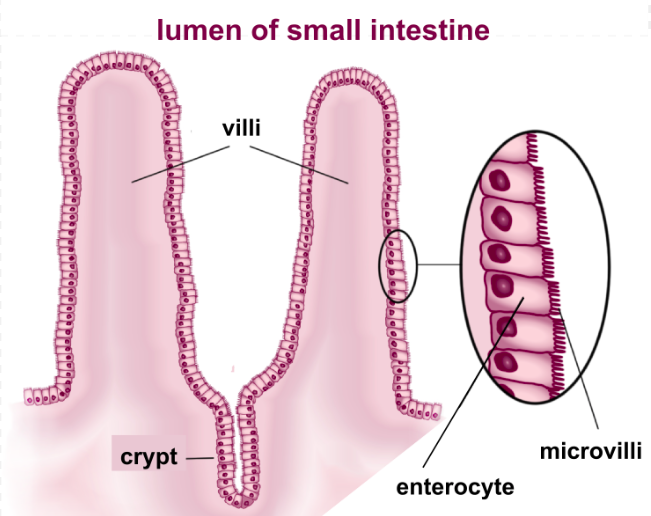
- in the small intestine the valleys of the folds are called crypts and the mountains are called villi. It has epithelial cells, blood vessels and lymph vessels.
2. Submucosa - connective tissue holding the mucosa to the smooth muscle on the other side
3. Smooth muscle (muscularis externa) - muscle that contracts to cause mechanical digestion of food.
4. Serosa - dense connective tissue. this is the outermost layer
commons.wikimedia.org

commons.wikimedia.org
0:00 / 0:00
The Small Intestine
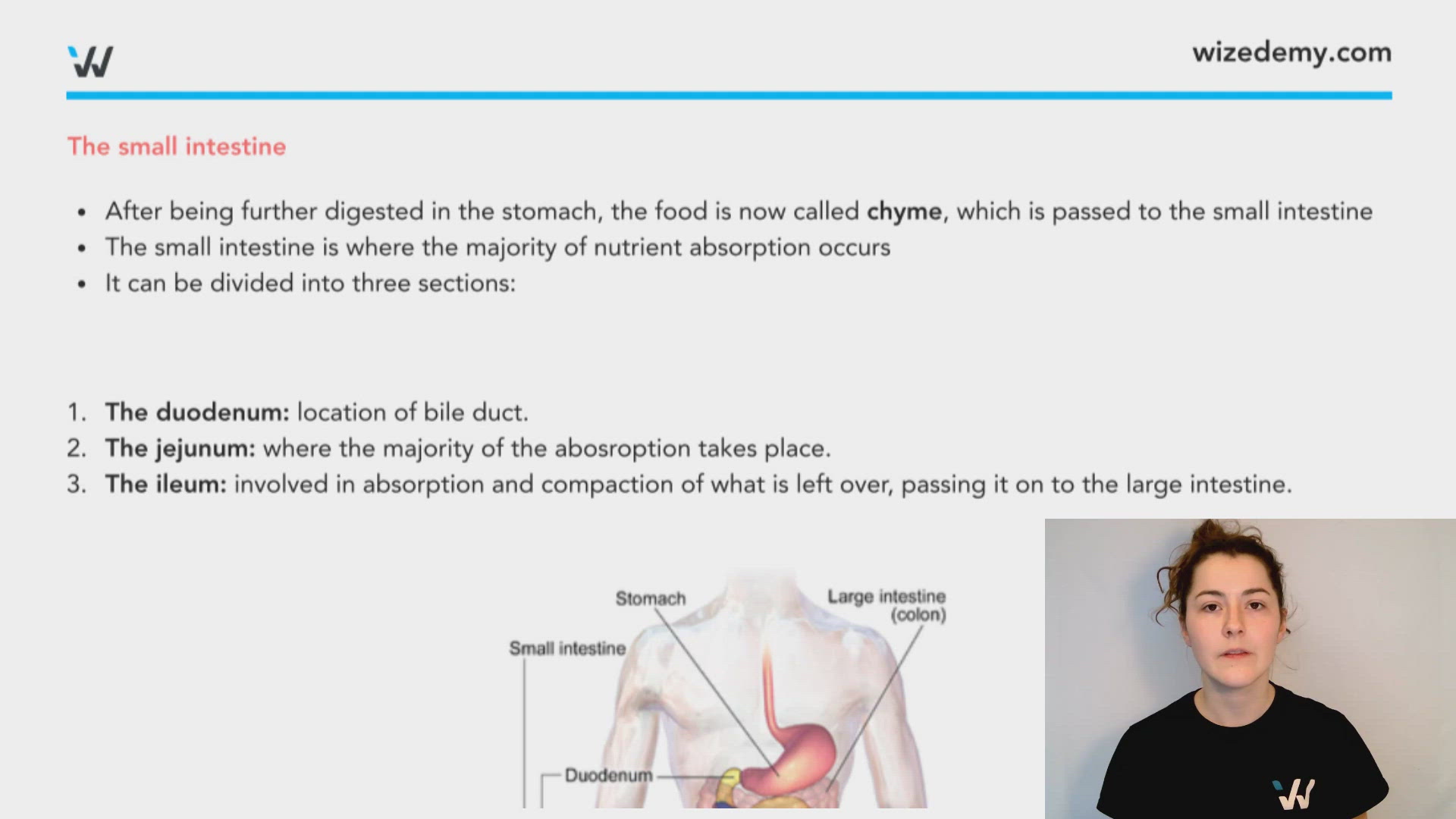
- After being further digested in the stomach, the food is now called chyme, which is passed to the small intestine
- The small intestine is where the majority of nutrient absorption occurs
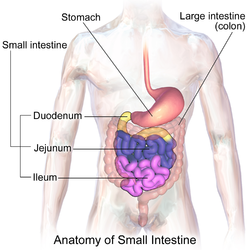
- It can be divided into three sections:
- The duodenum: location of bile duct.
- The jejunum: where the majority of the abosroption takes place.
- The ileum: involved in absorption and compaction of what is left over, passing it on to the large intestine.
Digestive enzymes and chemicals are secreted into the intestine to allow for chemical digestion of the chyme:
- Bile is produced by the liver and aids in chemical digestion by emulsifying the lipids, exposing them to digestive enzymes.
- The pancreas secretes HCO3- to neutralize the pH of the chyme
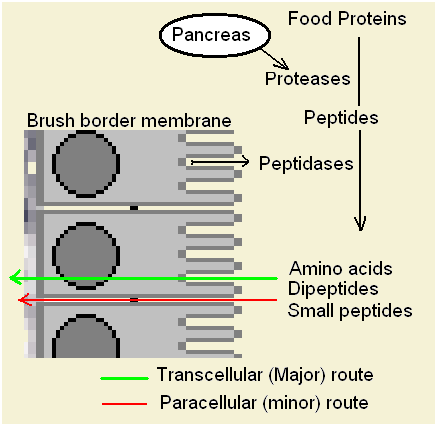
- The pancreas also produced digestive enzymes: pancreatic proteases (eg. Trypsin and chymotrypsin), pancreatic amylase (breaks down carbohydrates), and pancreatic lipase (breaks down fats) and nucleases (break down nucleic acid polymers)
- The intestinal glands produce digestive enzymes: maltase and protease (enterokinase, aminopeptidase, dipeptidase).
- The lining of the small intestine has tiny, finger-like projections called villi, which increase the surface area of the intestine for absorption of nutrients
- Each vilus itself has microvilli, further increasing surface area
Which of the following enzymes are NOT secreted into the small intestine?
0:00 / 0:00
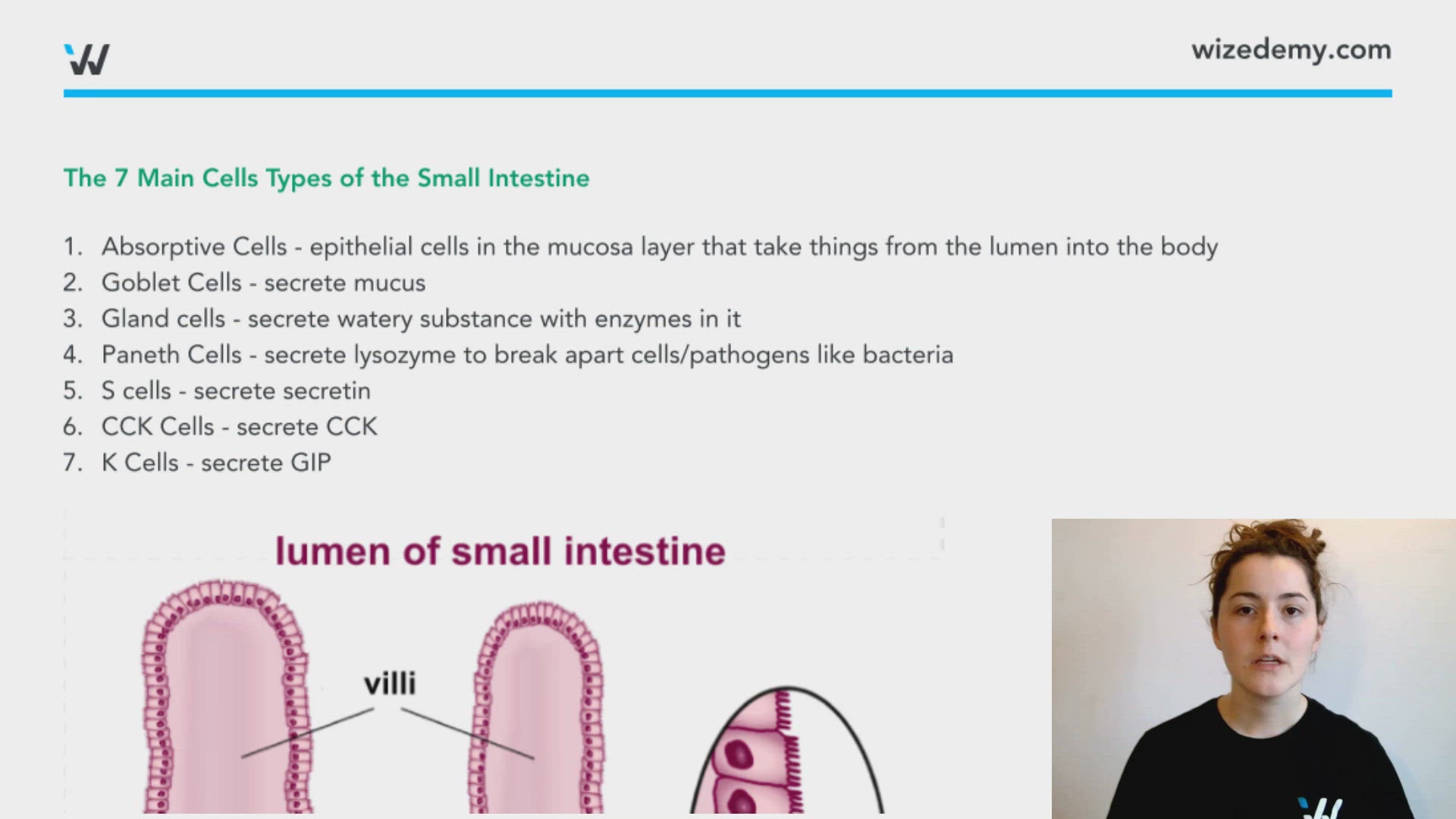
The 7 Main Cells Types of the Small Intestine
- Absorptive Cells - epithelial cells in the mucosa layer that take things from the lumen into the body
- Goblet Cells - secrete mucus
- Gland cells - secrete watery substance with enzymes in it
- Paneth Cells - secrete lysozyme to break apart cells/pathogens like bacteria
- S cells - secrete secretin
- CCK Cells - secrete CCK
- K Cells - secrete GIP
https://en.wikipedia.org/wiki/Intestinal_epithelium
Wize Tip
This is all memorization for the exam. Possibly one question (one point) about this.
Brush Border Enzymes
These are enzymes that are found
- lactase - breaks down lactose into glucose and galactose
- sucrase - breaks down sucres into glucose and fructose
- maltase - breaks down maltose into 2 glucose molecules
- aminopeptidase
- dipeptidase
- enteropeptidase
The first three enzymes are specific to carbohydrate break down only. This will be discussed further in the Absorption section.
commons.wikimedia.org
Which of the following is TRUE regarding the lining of the small intestine?
0:00 / 0:00
The Large Intestine
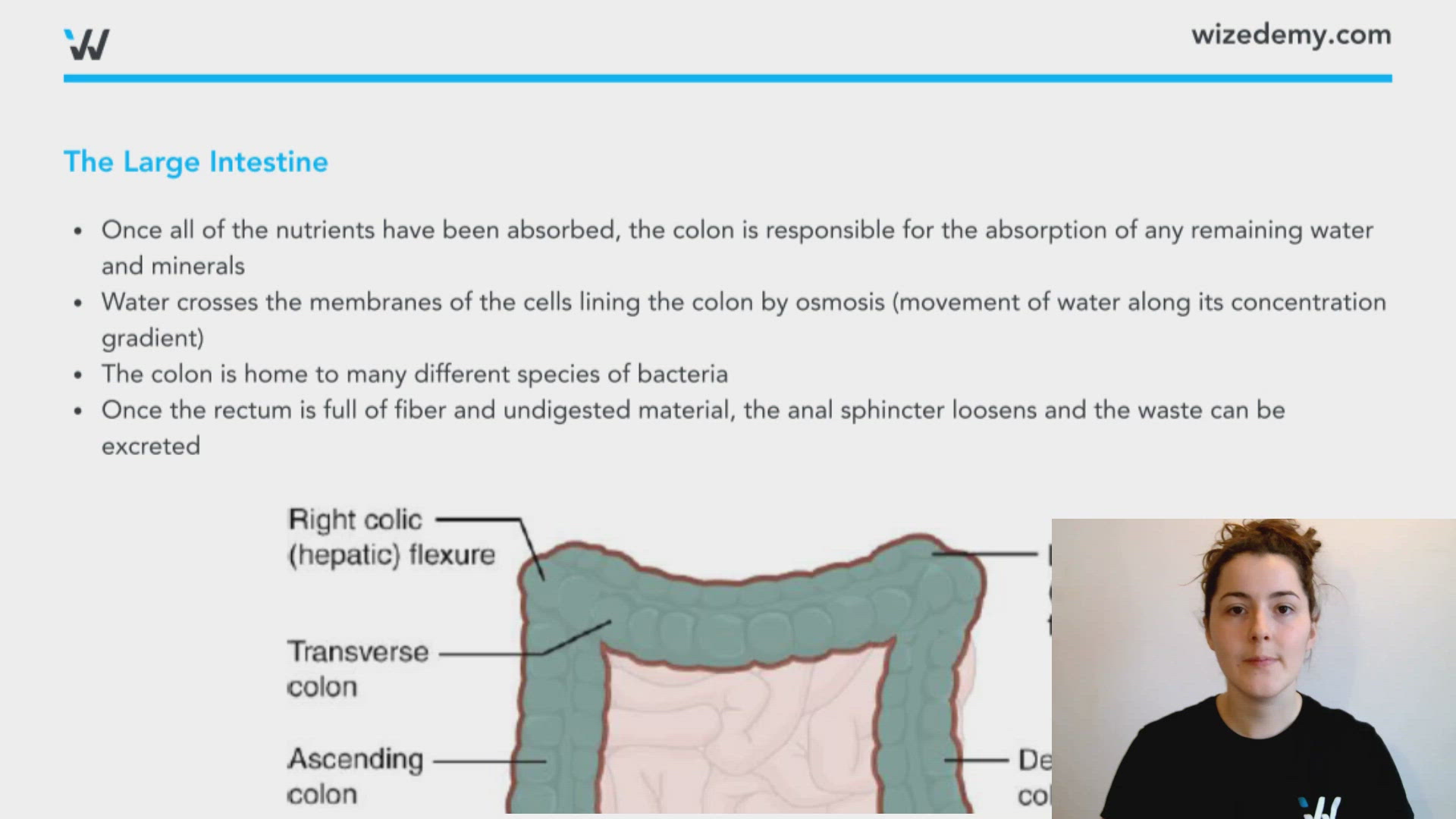
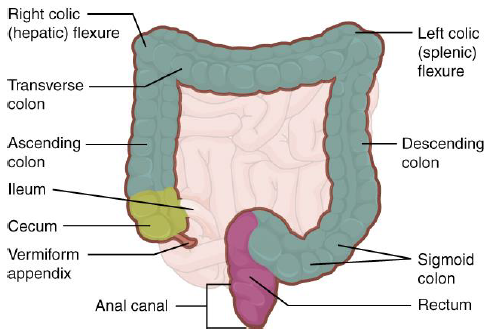
- Once all of the nutrients have been absorbed, the colon is responsible for the absorption of any remaining water and minerals
- Water crosses the membranes of the cells lining the colon by osmosis (movement of water along its concentration gradient)
- The colon is home to many different species of bacteria
- Once the rectum is full of fiber and undigested material, the anal sphincter loosens and the waste can be excreted
Motility
- Gastroileal Reflex - the valve between the ileum of the small intestine and the cecum of the large intestine (ileocecal valve) opens when the stomach senses food has entered
- Haustal Churning - the Haustae are the large kinks int he body of the large intestine. They cause churning of the waste
- Some peristalsis also occurs