Wize University Physiology Textbook > Gastrointestinal Physiology
Digestion, Mouth, Esophagus
Popular Courses
MCAT
General Course
DAT
General Course
Intro to Physiology
University Study Guides
PHYSIOL 1021
Western University
PHYSIOL 2130
Western University
Intro to Physiology
University Study Guides
PSL300H1
University of Toronto
PHYSL 210
University of Alberta
PHGY 210
McGill University
PHGY 215
Queen's University
KNES 259
University of Calgary
PHGY 216
Queen's University
BIOL 273
University of Waterloo
BIOL 260
University of British Columbia
PHYSIOL 3120
Western University
KNES 260
University of Calgary
BIOL 116
Case Western Reserve University
PPT 301
University of North Dakota
ANAT 212
McGill University
HTHSCI 2FF3
McMaster University
4 Processes of Digestion
- Secretion
- Digestion
- Motility
- Absorption
These are not to be confused with the 4 STEPS of digestion which are ingestion, digestion, absorption excretion.
Extra Activity
As we go through each of the parts of the GI tract, try writing down each of the 4 processes that happen in that organ.

Mark Yourself Question
- Grab a piece of paper and try this problem yourself.
- When you're done, check the "I have answered this question" box below.
- View the solution and report whether you got it right or wrong.
You set up an experiment in the lab, and you add the following ingredients to 5 different tubes. For each tube, name which type of macromolecule, if any, would be digested if added.
Water, Pepsin:
Nothing
Water, Trypsin, HCl:
Nothing
Water, Pepsin, HCl:
Protein
Water, Amylase, HCl:
Nothing
Water, Amylase:
Carbohydrates
0:00 / 0:00
The Mouth
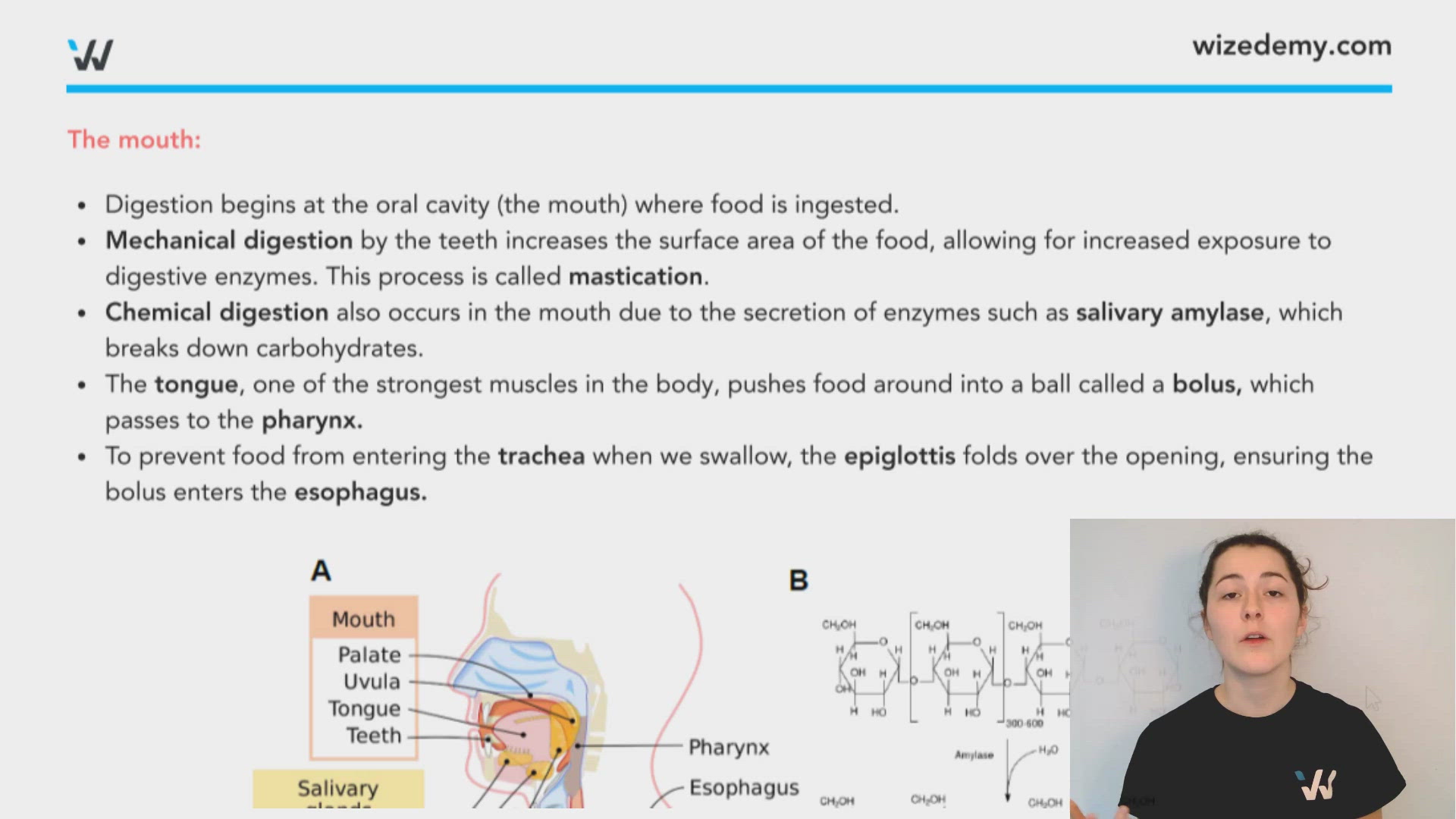
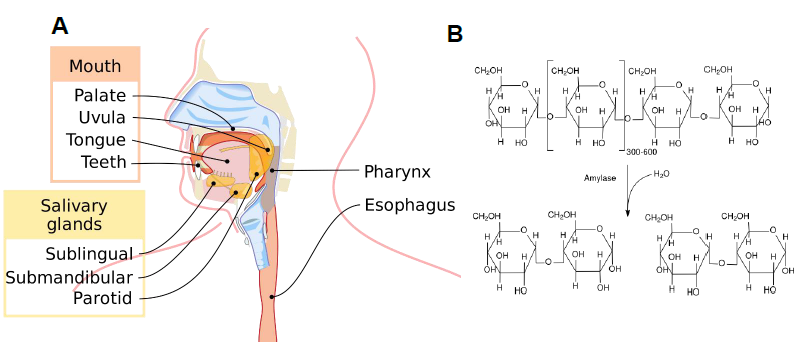
- Digestion begins at the oral cavity (the mouth) where food is ingested.
- Mechanical digestion by the teeth increases the surface area of the food, allowing for increased exposure to digestive enzymes. This process is called mastication.
- Chemical digestion also occurs in the mouth due to the secretion of enzymes such as salivary amylase, which breaks down carbohydrates.
- The tongue, one of the strongest muscles in the body, pushes food around into a ball called a bolus, which passes to the pharynx.
- To prevent food from entering the trachea when we swallow, the epiglottis folds over the opening, ensuring the bolus enters the esophagus.
The Esophagus
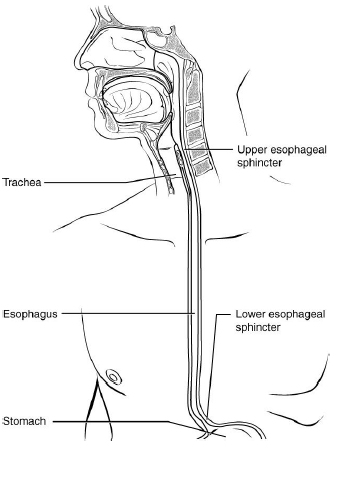
- A ~24 cm long tube connecting the mouth to the stomach
- Circular and longitudinal muscles allow for peristalsis, which mediates the pushing of food through the digestive tract.
- At the end of the esophagus, the bolus reaches the lower esophageal sphincter, a ring of muscles that prevents stomach acid from entering the esophagus, through which food must be pushed to reach the stomach.
What types of digestion happen in the mouth? In the esophagus?
In the mouth: Chemical (saliva) and mechanical (teeth) digestion
In the esophagus: none