Popular Courses
MCAT
General Course
DAT
General Course
Intro to Physiology
University Study Guides
PHYSIOL 1021
Western University
PHYSIOL 2130
Western University
Intro to Physiology
University Study Guides
PSL300H1
University of Toronto
PHYSL 210
University of Alberta
PHGY 210
McGill University
PHGY 215
Queen's University
KNES 259
University of Calgary
PHGY 216
Queen's University
BIOL 273
University of Waterloo
BIOL 260
University of British Columbia
PHYSIOL 3120
Western University
KNES 260
University of Calgary
BIOL 116
Case Western Reserve University
PPT 301
University of North Dakota
ANAT 212
McGill University
HTHSCI 2FF3
McMaster University
0:00 / 0:00
Overview of Hemostasis
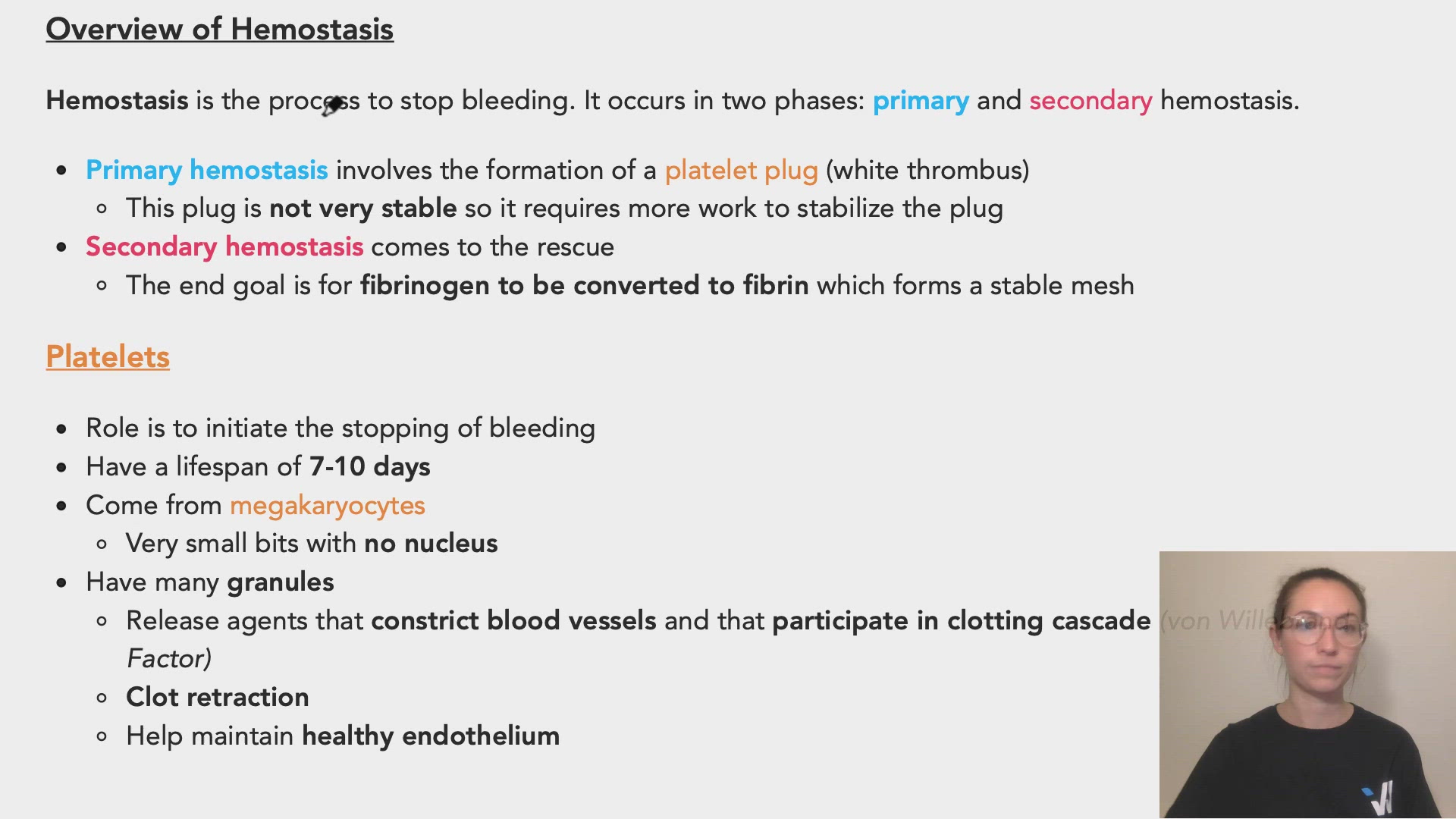
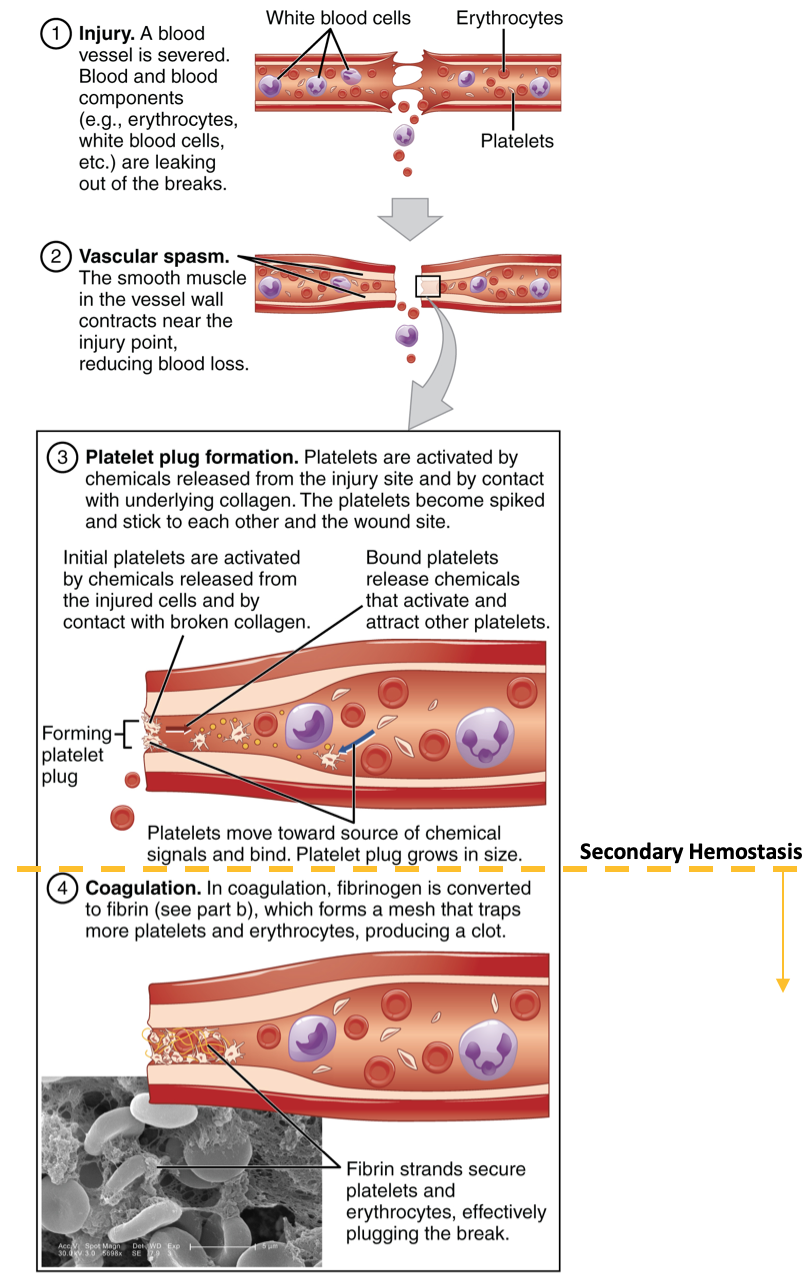
Hemostasis is the process to stop bleeding. It occurs in two phases: primary and secondary hemostasis.
- Primary hemostasis involves the formation of a platelet plug (white thrombus)
- This plug is not very stable so it requires more work to stabilize the plug
- Secondary hemostasis comes to the rescue
- The end goal is for fibrinogen to be converted to fibrin which forms a stable mesh
Platelets
- Role is to initiate the stopping of bleeding
- Have a lifespan of 7-10 days
- Come from megakaryocytes
- Very small bits with no nucleus
- Have many granules
- Release agents that constrict blood vessels and that participate in clotting cascade (von Willebrand Factor)
- Clot retraction
- Help maintain healthy endothelium
0:00 / 0:00
Secondary Hemostasis
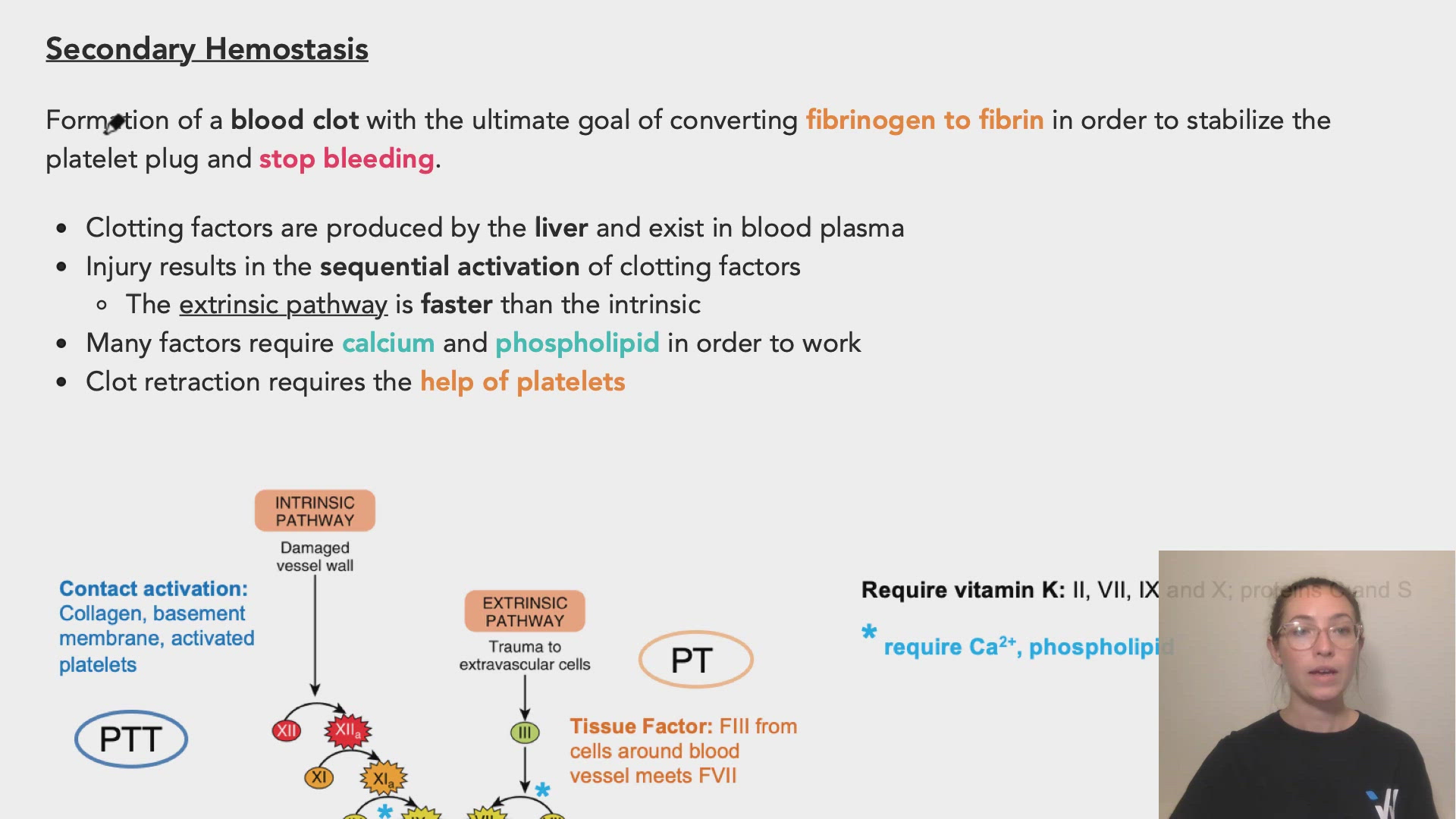
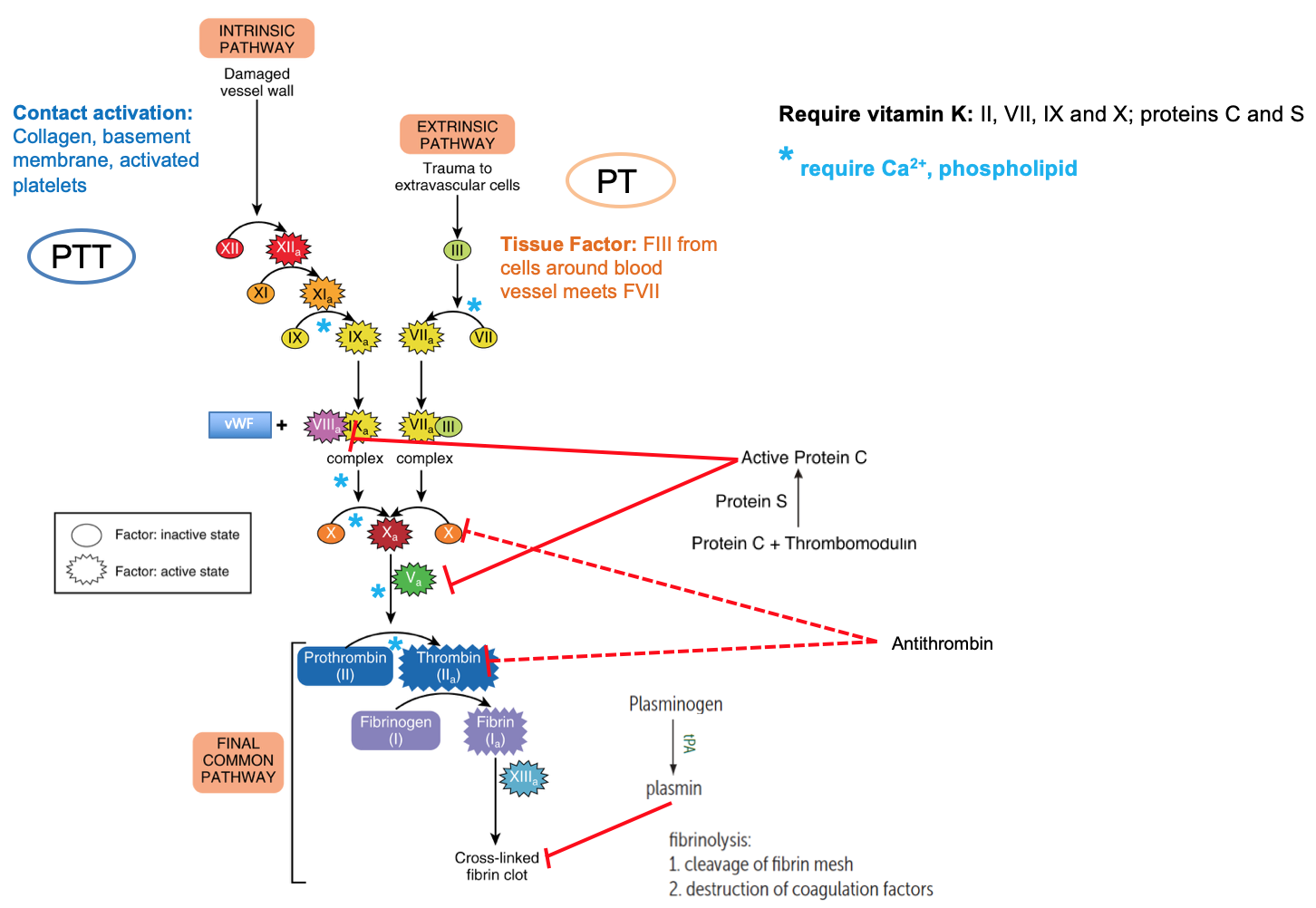
Formation of a blood clot with the ultimate goal of converting fibrinogen to fibrin in order to stabilize the platelet plug and stop bleeding.
- Clotting factors are produced by the liver and exist in blood plasma
- Injury results in the sequential activation of clotting factors
- The extrinsic pathway is faster than the intrinsic
- Many factors require calcium and phospholipid in order to work
- Clot retraction requires the help of platelets
0:00 / 0:00
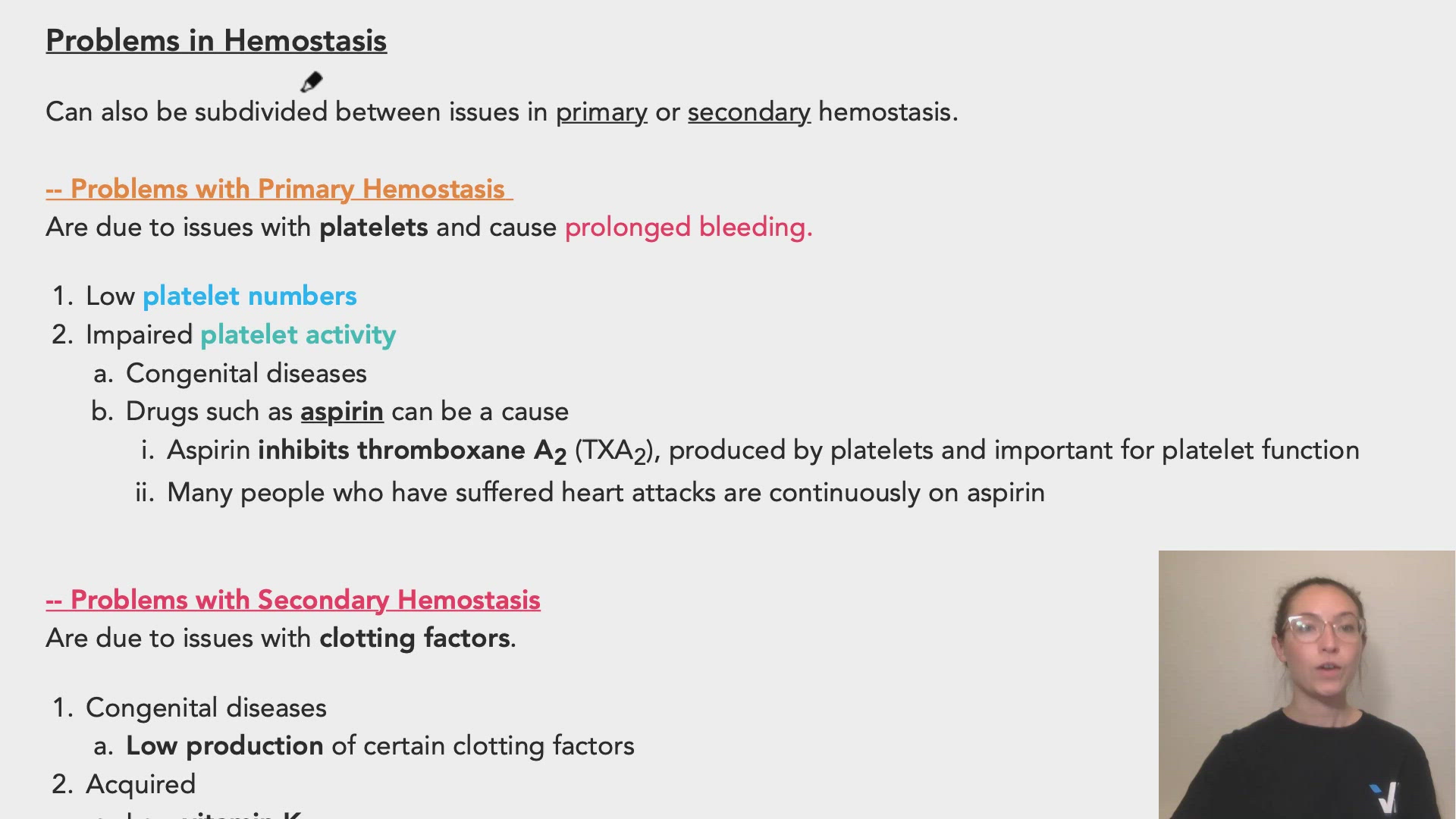
Problems in Hemostasis
Can also be subdivided between issues in primary or secondary hemostasis.
-- Problems with Primary Hemostasis
Are due to issues with platelets and cause prolonged bleeding.
- Low platelet numbers
- Impaired platelet activity
- Congenital diseases
- Drugs such as aspirin can be a cause
- Aspirin inhibits thromboxane A2 (TXA2), produced by platelets and important for platelet function
- Many people who have suffered heart attacks are continuously on aspirin
-- Problems with Secondary Hemostasis
Are due to issues with clotting factors.
- Congenital diseases
- Low production of certain clotting factors
- Acquired
- Low vitamin K
- Anti-coagulant drugs
- Acquired liver disease
Regarding hemostasis, select the correct statement(s):
About primary hemostasis, which of the following are false:
Regarding secondary hemostasis, select the appropriate statements:
Select the incorrect statement: