Wize University Physiology Textbook > Blood
Blood Disorders
Popular Courses
MCAT
General Course
DAT
General Course
Intro to Physiology
University Study Guides
PHYSIOL 1021
Western University
PHYSIOL 2130
Western University
Intro to Physiology
University Study Guides
PSL300H1
University of Toronto
PHYSL 210
University of Alberta
PHGY 210
McGill University
PHGY 215
Queen's University
KNES 259
University of Calgary
PHGY 216
Queen's University
BIOL 273
University of Waterloo
BIOL 260
University of British Columbia
PHYSIOL 3120
Western University
KNES 260
University of Calgary
BIOL 116
Case Western Reserve University
PPT 301
University of North Dakota
ANAT 212
McGill University
KNES 323
University of Calgary
0:00 / 0:00
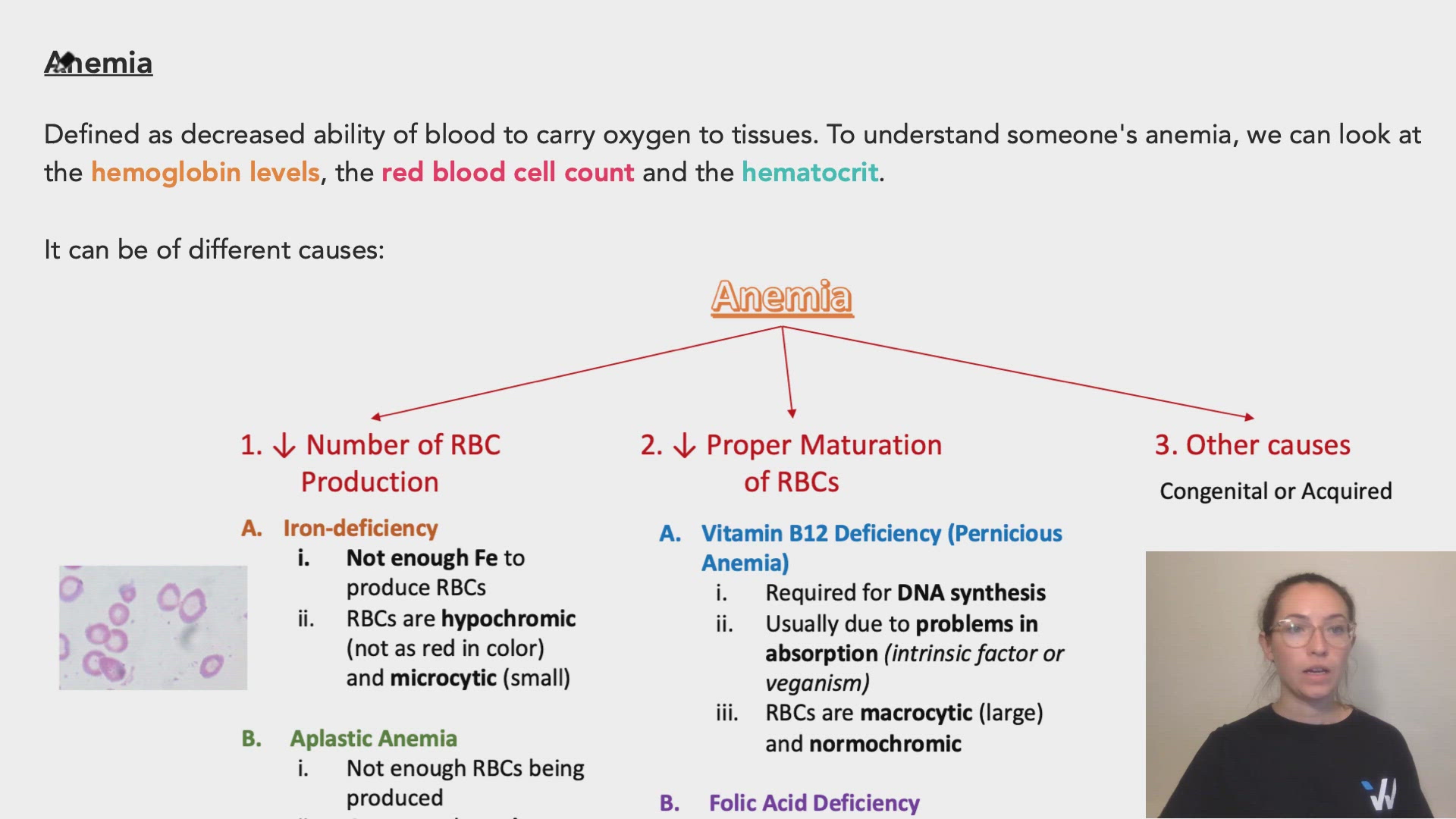
Anemia
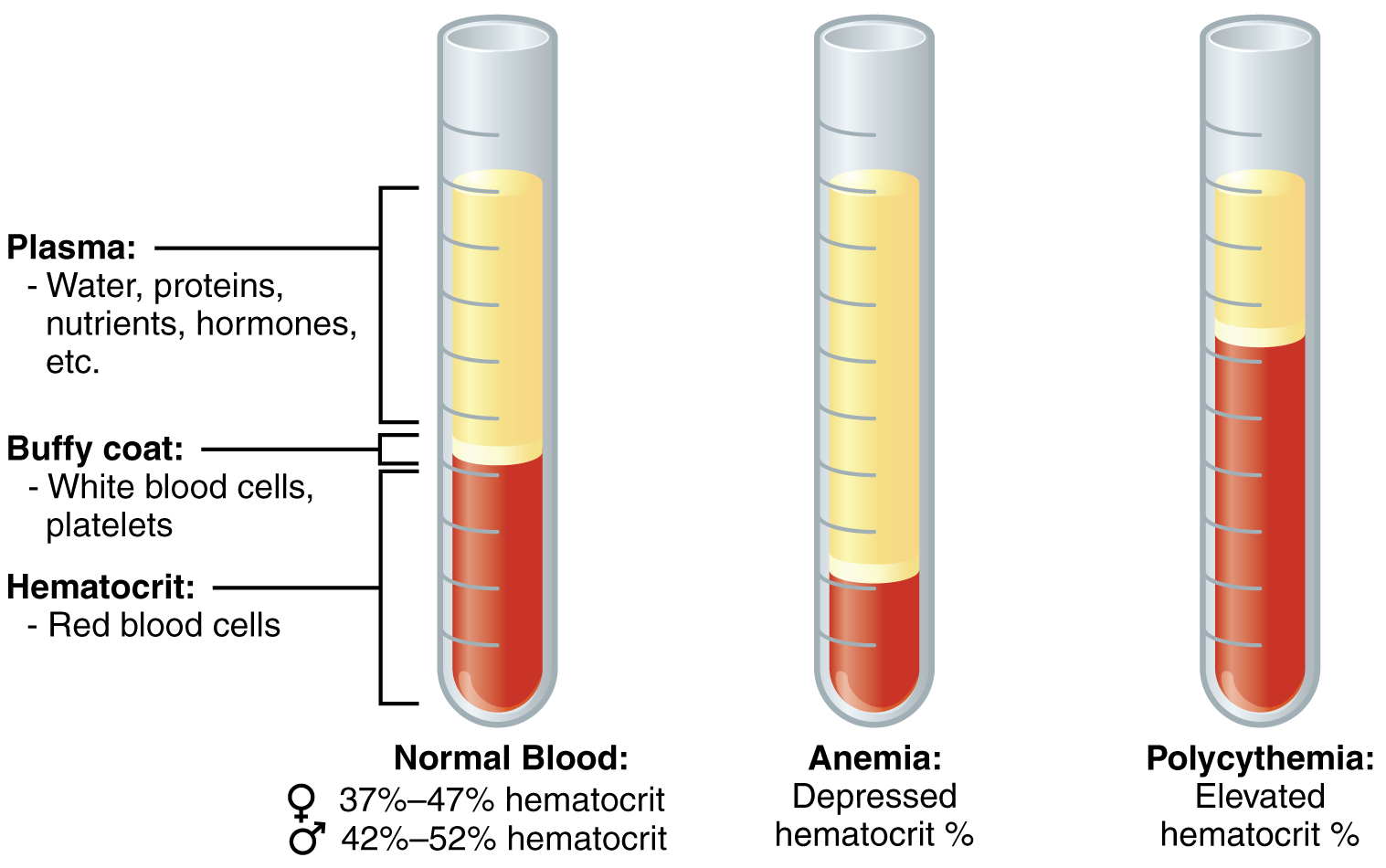
Defined as decreased ability of blood to carry oxygen to tissues. To understand someone's anemia, we can look at the hemoglobin levels, the red blood cell count and the hematocrit.
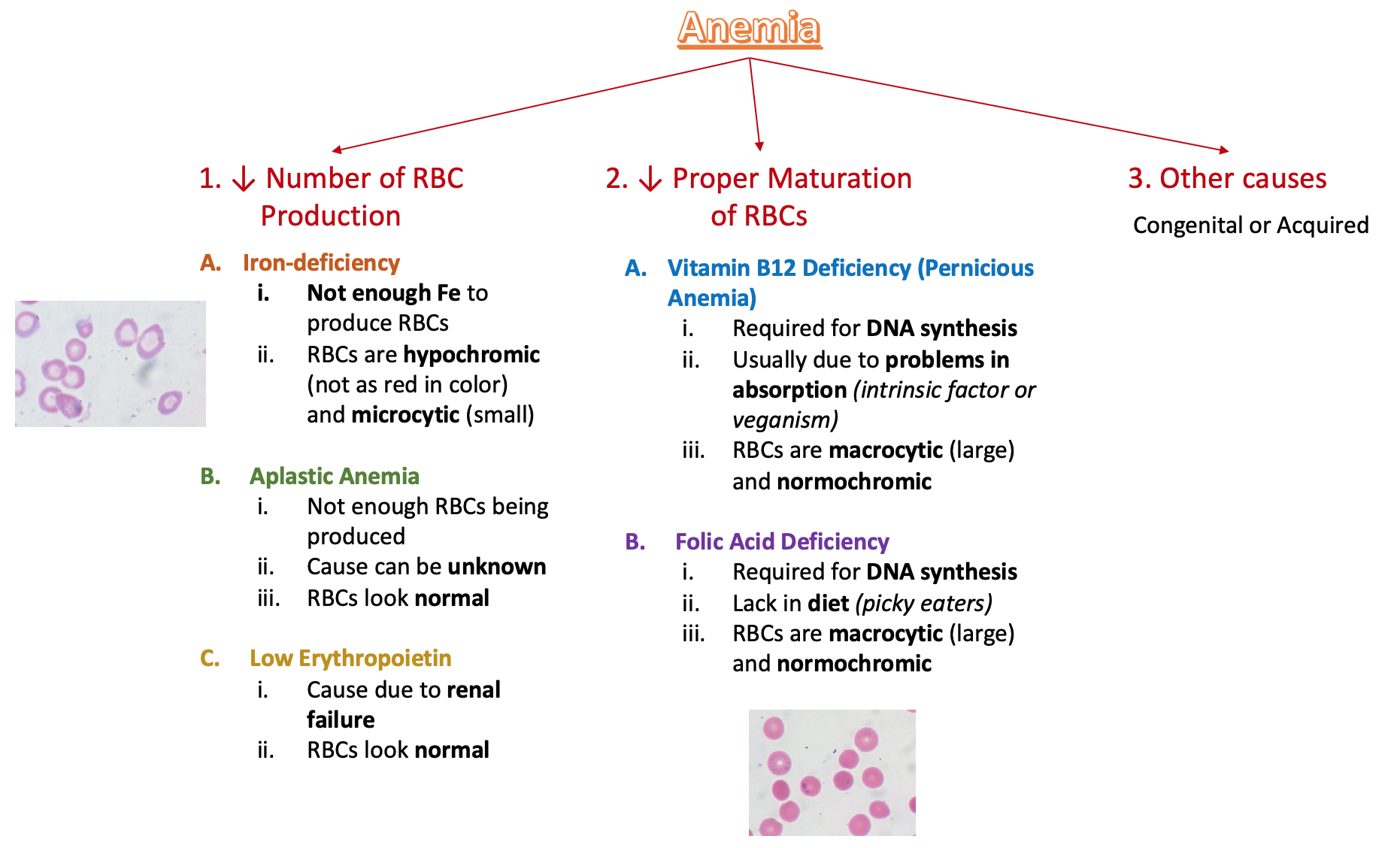
It can be of different causes:
But... is it really disease?
- Look out for other reasons that may cause Hct% to seem lower or higher than normal but are not really anemia
- Fluid retention: appears lower than normal
- Dehydration: appears higher than normal
0:00 / 0:00
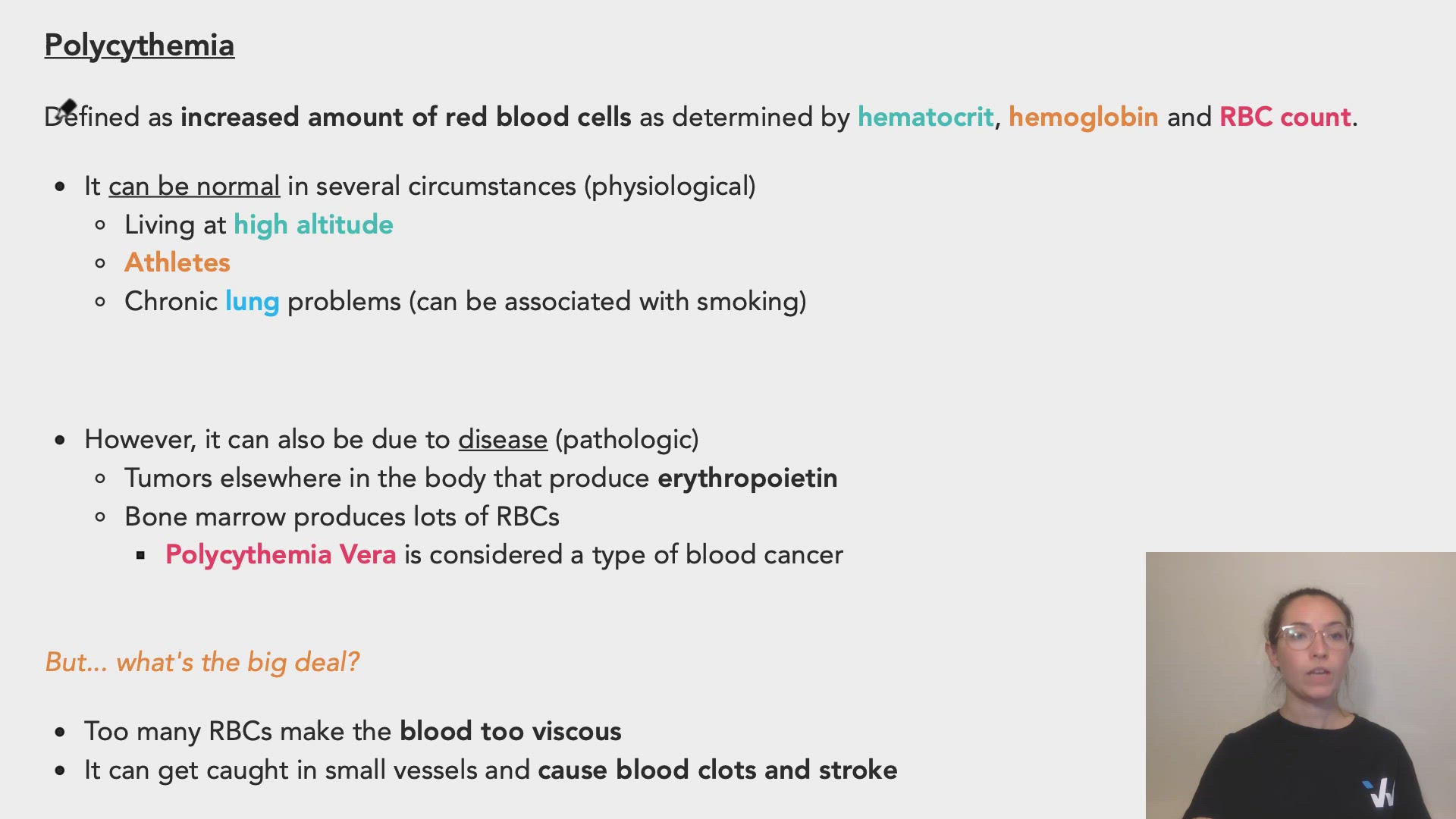
Polycythemia
Defined as increased amount of red blood cells as determined by hematocrit, hemoglobin and RBC count.
- It can be normal in several circumstances (physiological)
- Living at high altitude
- Athletes
- Chronic lung problems (can be associated with smoking)
- However, it can also be due to disease (pathologic)
- Tumors elsewhere in the body that produce erythropoietin
- Bone marrow produces lots of RBCs
- Polycythemia Vera is considered a type of blood cancer
But... what's the big deal?
- Too many RBCs make the blood too viscous
- It can get caught in small vessels and cause blood clots and stroke
0:00 / 0:00
A patient presents with aplastic anemia. What is the sequence of events in terms of how their body will react to this condition?
In aplastic anemia, the bone marrow stops producing normal amounts of red blood cells. The exact cause may vary and includes drugs, certain types of infections or can be unknown.
When this occurs, there will be lower-than-normal oxygen levels in blood (hypoxia) -> this will be sensed by the kidneys -> the kidneys will produce more erythropoietin to try to increase RBC production -> EPO will travel to the bone marrow and try to stimulate RBC precursor proliferation and differentiation into new RBCs.
Unfortunately, often in the case of aplastic anemia, this response will not be effective because the bone marrow lacks the capacity to produce more RBCs. The kidneys will continue to increase EPO production, so its levels can be detected at high levels.
It is more important to understand how the body reacts to these diseased states than all the details about a particular disease!
A heavy smoker of several years has gone to the doctor to obtain a routine blood test. In his exam, what would be expected? Match the results to the correct condition name:
Hct% = hematocrit
Hb = hemoglobin
Which of the following statements is false:
Select the correct statement: